
Kirjojen hintavertailu – 12 903 725 kirjaa ja 27 kauppaa

Kirjailija

Maurice Mitchell

Kirjat ja teokset yhdessä paikassa: 3 kirjaa, julkaisuja vuosilta 1992–2017, suosituimpiin kuuluu Culture, Cash and Housing. Vertaile teosten hintoja ja tarkista saatavuus suomalaisista kirjakaupoista.

3 kirjaa

Kirjojen julkaisuvuodet: 1992–2017.

Loose Fit City

Loose Fit City

Maurice Mitchell; Bo Tang

Routledge
2017
nidottu
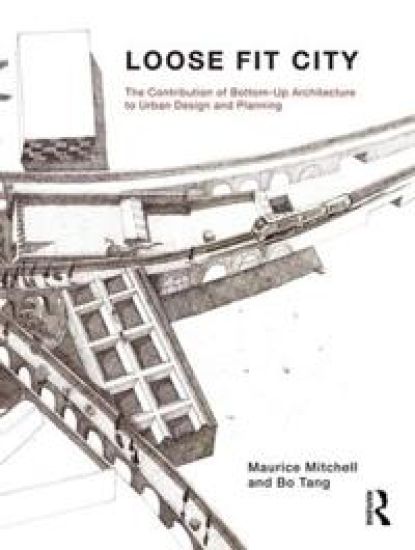
Drawn from a lifetime’s experience of shared city-making from the bottom up, within rapidly expanding urban metabolisms in Delhi, Mumbai, Agra, Kathmandu, West Africa and London, Loose Fit City is about the ways in which city residents can learn through making to engage with the dynamic process of creating their own city. It looks at the nature and processes involved in loosely fitting together elements made by different people at different scales and times, with different intentions, into a civic entity which is greater than the sum of its parts. It shows how bottom-up learning through making can create a more vibrant and democratic city than the more flattened, top-down, centrally planned, factory made version. Loose Fit City provides a new take on the subject of architecture, defined as the study and practice of fitting together physical and cultural topography. It provides a comprehensive view of how the fourth dimension of time fits loosely together with the three spatial dimensions at different scales within the human horizon, so as to layer meaning and depth within the places and metabolism of the city fabric.
Loose Fit City

Loose Fit City

Maurice Mitchell; Bo Tang

Routledge
2017
sidottu
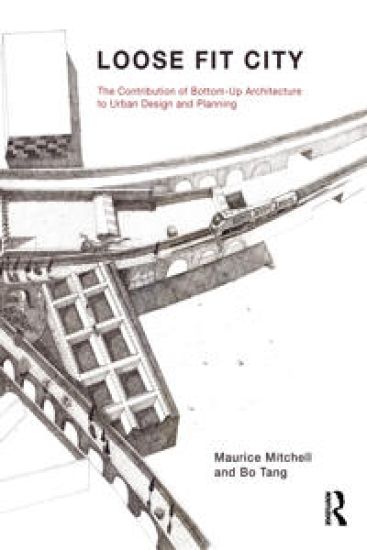
Drawn from a lifetime’s experience of shared city-making from the bottom up, within rapidly expanding urban metabolisms in Delhi, Mumbai, Agra, Kathmandu, West Africa and London, Loose Fit City is about the ways in which city residents can learn through making to engage with the dynamic process of creating their own city. It looks at the nature and processes involved in loosely fitting together elements made by different people at different scales and times, with different intentions, into a civic entity which is greater than the sum of its parts. It shows how bottom-up learning through making can create a more vibrant and democratic city than the more flattened, top-down, centrally planned, factory made version. Loose Fit City provides a new take on the subject of architecture, defined as the study and practice of fitting together physical and cultural topography. It provides a comprehensive view of how the fourth dimension of time fits loosely together with the three spatial dimensions at different scales within the human horizon, so as to layer meaning and depth within the places and metabolism of the city fabric.
Culture, Cash and Housing

Culture, Cash and Housing

Maurice Mitchell; Andy Bevan

Practical Action Publishing
1992
nidottu
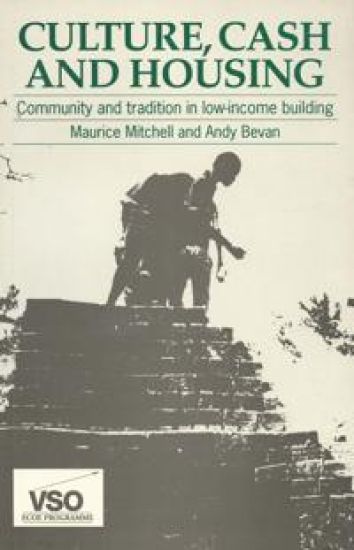
This book examines the role of cultural tradition and the local environment in determining a community's attitude towards housing and its construction. It offers practical advice to enable planners and implementers of building projects (including development agencies) to assess effectively the community's needs and the factors which shape their own requirements for change. While there is a sizeable technical literature available on low-cost building, this book focuses on community involvement. It examines the issue of housing as a basic human need and puts the subject into a social and cultural context - whether this applies to traditional rural housing, or to the problems of an urban population. The book draws attention to the cultural context of housing which will shape a community's perception of its needs and its attitude to change. A range of case studies of VSO volunteers who have worked on community-based low-cost building programmes in a variety of countries and settings helps illustrate the issues, concerns and most importantly, the processes which can determine the success or failure of a building project. Culture, Cash and Housing deals with a large subject and gives an overview of the many issues and concerns which need to be taken into account when working on the problems of the built-up environment in less developed countries, although many of its lessons are equally relevant to the developed world. Essential reading for development agencies, project planners and implementers and fieldworkers, as well as academics and students in developed and developing countries.