Kirjojen hintavertailu – 12 903 725 kirjaa ja 27 kauppaa

Kirjailija

Mavis P. Kelsey

Kirjat ja teokset yhdessä paikassa: 3 kirjaa, julkaisuja vuosilta 1999–2007, suosituimpiin kuuluu Twentieth-Century Doctor. Vertaile teosten hintoja ja tarkista saatavuus suomalaisista kirjakaupoista.

3 kirjaa

Kirjojen julkaisuvuodet: 1999–2007.

The Courthouses of Texas

The Courthouses of Texas

Mavis P. Kelsey; Donald H. Dyal

Texas A M University Press
2007
nidottu
A county courthouse stands not only as the center of government, but also as the center of civic pride. Some with stately towers and arched doors or windows, some with high brick chimneys and mansard roofs, some in modern concrete and glass, the 254 courthouses of Texas provide an invitation to public life, a testament to the ideal of justice, and an introduction to period architecture. It is no wonder, then, that many tourists each year visit these edifices. This new edition of a classic, indispensable, full-color guide - a true collector's item for Texas history fans - will help travelers choose which courthouses they want to add to their trips and view them knowledgeably. For each county a color photograph pictures the courthouse and an account sketches the sequence of the seats of government, the location and style of the current building, and tidbits of fascinating lore about county and county seat names and history. Courthouses and the ""squares"" around many of them offer a bonanza for history buffs, antique collectors, genealogists, architecture enthusiasts, and photographers. Many of them house or are near local history museums, and many display historical markers that introduce the area to visitors. Especially in many smaller county seats, the courthouse square offers a genre scene of a special moment in Texas' life. Included in this updated edition are the latest views of some of Texas' most historic and architecturally significant courthouses, including those restored under the Texas Historical Commission's Historic Courthouse Preservation Program. For all those who plan their travels to see courthouses, and all those who in their travels for other reasons enjoy detours into the heritage and pride of a people, this beautiful and informative book opens the way.

Engraved Prints of Texas, 1554-1900

Engraved Prints of Texas, 1554-1900

Mavis P. Kelsey; Robin Brandt Hutchison

Texas A M University Press
2005
sidottu
For centuries Texas has fired the imagination of artists as well as explorers and settlers. Before modern photography, engravings were the principal type of illustration used by artists to portray images of the state. Now, in this extensive catalogue, authors Mavis P. Kelsey, Sr., and Robin Brandt Hutchison have surveyed all engraved illustrations about Texas published before 1900. Engraved Prints of Texas, 1554-1900 presents the whole range of early Texas history as portrayed in published engravings: from the first printed representation of a buffalo in 1554 to a 1900 view of the University of Texas Medical School in Galveston. Entries include information on more than 2,000 engravings, 470 of which are illustrated in this volume. Presented chronologically by century and decade of publication, each chapter features a brief introduction to the historical background of the era, highlighting key illustrations and placing the art within the context of major events of the period. Several topical discussions address subjects that span decades or recur as pervasive themes in illustration. Historians, teachers, and scholars will find this catalogue a useful reference for locating pictorial representations of particular events, subjects, or persons. It is an indispensable source for lovers of Texas history and an important contribution to preserving the visual record.
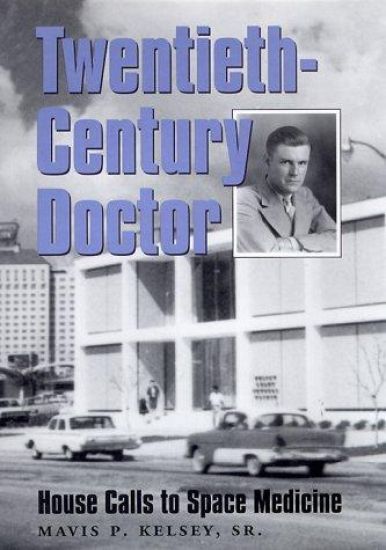
Twentieth-Century Doctor

Twentieth-Century Doctor

Mavis P. Kelsey

Texas A M University Press
1999
sidottu
Dr. Mavis Kelsey’s career spanned some of the most astounding years ever in the development of medicine as a profession. Medical research and technological developments fundamentally transformed the treatment of patients during those years, but perhaps as important was the transformation of what has come to be called the patient-care delivery system. One of the pioneers of multi-specialty clinics, Kelsey was a founder of the prominent Kelsey-Seybold Clinic in Houston. His story is quintessentially the story of how medicine developed from a single-doctor, home-visit practice to the mega-business, high-tech system it now is, especially in urban areas. Mavis Kelsey’s training included general medical education at the University of Texas in Galveston, internship at Bellevue Hospital in New York, work on staff at Scott and White in Temple, and a residency at the Mayo Clinic, where he was impressed by the benefits of the clinic organization. After serving in World War II, he returned to Rochester to join the staff and participate in the innovative studies then being done at the Mayo, becoming particularly involved with research on metabolic disorders and the use of radioiodine tracers in diagnosing them. As a specialist in endocrinology, Kelsey moved to Houston in 1949, just a few years after contruction began on the Texas Medical Center. With two partners, William D. Seybold and William V. Leary, he welcomed the challenge and opportunity of an ambitious medical environment within one of the country’s fastest growing urban populations and founded the now-famous Kelsey-Seybold Clinic. The years of his practice included the development of an intricate business and professional structure linking the Texas Medical Center with private specialists in Houston, the emerging structure of contract-medicine providers for corporations and institutions (including for the Kelsey-Seybold Clinic, Pennzoil and NASA), and the formation of charitable and research foundations based in the wealth generated by medical practice. In understated but compelling prose, Kelsey brings to life this period of unparalleled challenge and growth in the pioneering Houston medical community. Through anecdotes and memories backed by careful notes he took at the time, he reminds readers of the human face of medicine.