Kirjojen hintavertailu – 12 859 818 kirjaa ja 27 kauppaa

Kirjailija

Max Beerbohm

Kirjat ja teokset yhdessä paikassa: 111 kirjaa, julkaisuja vuosilta 1998–2026, suosituimpiin kuuluu Zuleika Dobson: an Oxford love story. Vertaile teosten hintoja ja tarkista saatavuus suomalaisista kirjakaupoista.

111 kirjaa

Kirjojen julkaisuvuodet: 1998–2026.

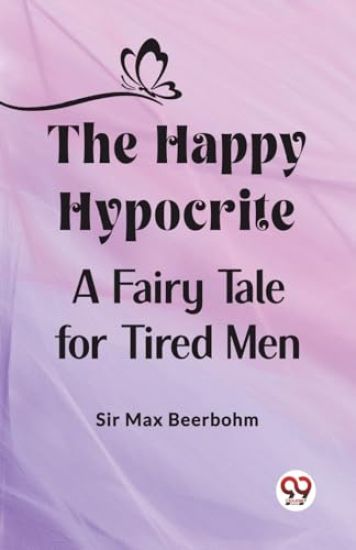
The Happy HypocriteA Fairy Tale for Tired Men (Edition2023)
"The Happy Hypocrite: A Fairy Tale for Tired Men" by Sir Max Beerbohm is a masterpiece of English literature, blending satire and irony to dissect Victorian society's moral hypocrisy. Through clever characterization and literary humor, Beerbohm delivers a scathing social commentary on the duality of human nature. The protagonist, Lord George Hell, embodies the paradox of morality and vanity, leading a double life that exposes the facade of high society. With sharp wit and biting parody, Beerbohm navigates themes of morality and vanity, revealing the underlying tensions between appearance and reality. His exploration of duality reflects the complex nature of human behavior, challenging readers to confront their own hypocrisy. Through the lens of social criticism, Beerbohm unveils the flaws of Victorian society, highlighting its obsession with outward propriety while masking inner corruption. The novel serves as both a critique of its time and a timeless reflection on the human condition. As a work of literary criticism, "The Happy Hypocrite" stands as a testament to Beerbohm's mastery of the English language and his keen insight into the foibles of society. It remains a classic example of satire in English literature, offering a mirror to society's moral ambiguities.
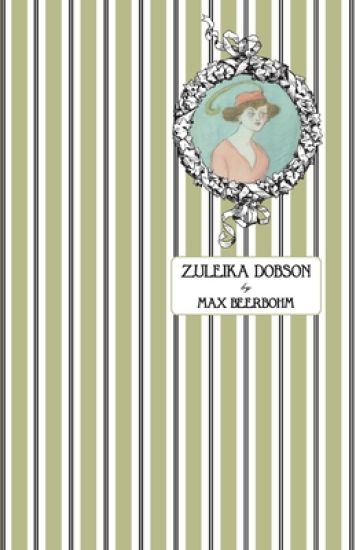
Zuleika Dobson

Zuleika Dobson

Max Beerbohm

Michael Walmer
2023
pokkari
Zuleika Dobson is the granddaughter of the Warden of Judas College, Oxford. She is also a famed prestidigitator, with a somewhat lively reputation and questionable skill However, she is one thing absolutely and without question: a beauty. Youths are reputed to have died for love of her. When she arrives in Oxford on a visit to her grandfather, the many young men of the colleges sit up and take notice. Something about her inspires their unthinking devotion. But these slaves bore Zuleika; she needs someone to love whom she can respect. As she and her grandfather drive to Judas, the young, handsome, lordly and cool-tempered Duke of Dorset rides by their carriage and pays her no attention whatever. Zuleika is thrilled and delighted by his indifference - has she finally found her man? But it is not to be. Later, in a private t te- -t te, Dorset reveals that he too is overwhelmed. In bitter disappointment, her hopes dashed, Zuleika rejects him. He is so overcome that he vows to kill himself in her name, and encourage any young men of the city who feel the same to follow his example. The duke plans this apotheosis to occur down on the river - it is Eights Week. As the fated time approaches, Zuleika begins quietly to enjoy the disturbance she is creating; many, many young men have vowed to join the mass suicide. Through twists and reverses, their egos and amour propre clashing, Dorset and Zuleika approach the moment of truth. Will he carry out his extraordinary plan? How many smitten young fellows will join him? In the end, Oxford undergoes a day that will never be forgotten. Max Beerbohm wrote fiction very rarely. Zuleika Dobson, first published in 1911, his only full-length novel, is an erudite comic masterpiece, superlatively satirising the delusions of romantic love in this legend of a literal femme fatale.
Seven Men and Two Others

Seven Men and Two Others

Max Beerbohm

Hassell Street Press
2021
nidottu
This work has been selected by scholars as being culturally important and is part of the knowledge base of civilization as we know it. This work is in the public domain in the United States of America, and possibly other nations. Within the United States, you may freely copy and distribute this work, as no entity (individual or corporate) has a copyright on the body of the work. Scholars believe, and we concur, that this work is important enough to be preserved, reproduced, and made generally available to the public. To ensure a quality reading experience, this work has been proofread and republished using a format that seamlessly blends the original graphical elements with text in an easy-to-read typeface. We appreciate your support of the preservation process, and thank you for being an important part of keeping this knowledge alive and relevant.
Seven Men and Two Others

Seven Men and Two Others

Max Beerbohm

Hassell Street Press
2021
sidottu
This work has been selected by scholars as being culturally important and is part of the knowledge base of civilization as we know it. This work is in the public domain in the United States of America, and possibly other nations. Within the United States, you may freely copy and distribute this work, as no entity (individual or corporate) has a copyright on the body of the work. Scholars believe, and we concur, that this work is important enough to be preserved, reproduced, and made generally available to the public. To ensure a quality reading experience, this work has been proofread and republished using a format that seamlessly blends the original graphical elements with text in an easy-to-read typeface. We appreciate your support of the preservation process, and thank you for being an important part of keeping this knowledge alive and relevant.
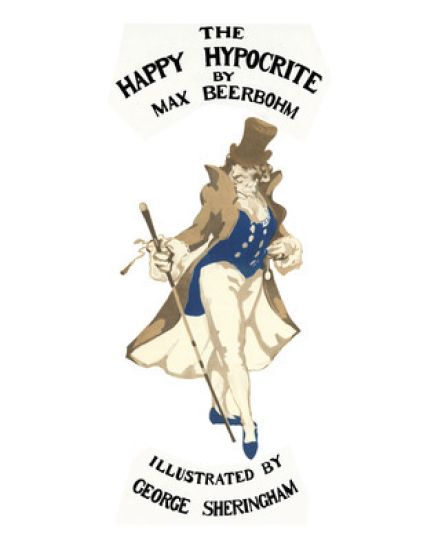
The Happy Hypocrite

The Happy Hypocrite

Max Beerbohm

Graphic Arts Books
2021
pokkari
George Hell is a shallow man, fond of gambling, drinking, and womanizing. Set in his socialite ways, George does whatever it takes to satisfy his desires. However, when cupid strikes George with his arrow, his lavish life is thrown into disarray. Now head over heels for a young dancer named Jenny, George immediately proposes to her, confident that no woman can resist him. But, after Jenny rejects George, claiming that she would only marry a man with the face of a saint, George is forced to reflect on his lifestyle. First, he attempts to buy a solution, going to a shop to buy a mask of a saint’s face. Now assuming a new identity of George Heaven, George proposes to Jenny once again, hoping that his new identity will trick Jenny into falling in love with him. When she agrees to marry him, George is delighted that his plan worked, but cannot abandon his charade. Slowly, with the help of Jenny’s love, George is able to let go of his vain nature, growing to be a better person. However, as Jenny and George enjoy their new, happy life, George’s ex-lover, La Gambogi, resents the sentiment. Determined to prove that George is not the man he says he is, La Gambogi sets out to expose George’s true face. Featuring masterful storytelling and themes of redemption, true love, and morality, The Happy Hypocrite by Max Beerbohm is a bright comedy with a valuable message. With complex characters and exemplary prose, Beerbohm’s work is clever and entertaining, inspiring laughter and reflection. First published in 1897, The Happy Hypocrite continues to be humorous centuries later, appealing to the wit of modern readers. This edition of The Happy Hypocrite by Max Beerbohm features an eye-catching new cover design and is printed in a font that is both modern and readable. With these accommodations, The Happy Hypocrite caters to a contemporary audience while preserving the original levity of Beerbohm’s work.
Zuleika Dobson

Zuleika Dobson

Max Beerbohm

Les Prairies Numeriques
2020
pokkari
Zuleika Dobson, full title Zuleika Dobson, or, an Oxford love story, is the only novel by Max Beerbohm, a very successful satire of undergraduate life at Oxford published in 1911. It includes the famous line "Death cancels all engagements" and presents a corrosive view of Edwardian Oxford. Plot summaryZuleika Dobson-"though not strictly beautiful"-is a devastatingly attractive young woman of the Edwardian era, a true femme fatale, who is a prestidigitator by profession, formerly a governess. Zuleika's current occupation (though, more importantly, perhaps, her enrapturing beauty) has made her something of a small-time celebrity and she manages to gain entrance to the privileged, all-male domain of Oxford University because her grandfather is the Warden of Judas College (based on Merton College, Beerbohm's alma mater). There, she falls in love for the first time in her life with the Duke of Dorset, a snobbish, emotionally detached student who-frustrated with the lack of control over his feelings when he sees her-is forced to admit that she too is his first love, impulsively proposing to her. As she feels that she cannot love anyone unless he is impervious to her charms, however, she rejects all her suitors, doing the same with the astonished Duke. The Duke quickly discovers that Noaks, another Oxford student, also claims to have fallen in love with her, without ever having even interacted with her. Apparently, men immediately fall in love with her upon seeing her. As the first to have his love reciprocated by her (for however brief a time) the Duke decides that he will commit suicide to symbolise his passion for Zuleika and in hopes that he will raise awareness in her of the terrible power of her bewitching allure, as she innocently goes on crushing men's affections. Zuleika is able to interrupt the Duke's first suicide attempt from a river boat, but seems to have a romanticised view of men dying for her, and does not oppose the notion of his suicide altogether. The Duke, instead pledging to kill himself the next day-which Zuleika more or less permits-has dinner that night with his social club where the other members also affirm their love for Zuleika. Upon telling them of his plan to die, the others unexpectedly agree also to commit suicide for Zuleika. This idea soon reaches the minds of all Oxford undergraduates, who inevitably fall in love with Zuleika upon first sight. The Duke eventually decides that the only way he can stop all the undergraduates from killing themselves is by not committing suicide himself, hoping they will follow his example. By an ancient tradition, on the eve of the death of a Duke of Dorset, two black owls come and perch on the battlements of Tankerton Hall, the family seat the owls remain there hooting through the night and at dawn they fly away to an unknown place. After debating whether to follow through with his suicide, while seeming to decide at last to embrace his life as just as valuable as Zuleika's, the Duke receives a telegram from his butler at Tankerton, reporting the portentous return of the owls. The Duke promptly interprets the omen as a sign that the gods have decreed his doom. He proudly tells Zuleika that he will still die, but no longer for her she agrees as long as he makes it appear that he is dying for her by shouting her name as he jumps into the river. Later the same day, a thunderstorm overwhelms the Eights Week boat races while the Duke drowns himself in the River Isis, wearing the robes of a Knight of the Garter. Every fellow undergraduate, except one, promptly follows suit.

A Christmas Garland

A Christmas Garland

Max Beerbohm

Createspace Independent Publishing Platform
2018
nidottu
17 parodies with a Christmas theme of some of the most renowned authors of the period - including Kipling, Henry James, Thomas Hardy, H. G. Wells and Conrad - written by Max Beerbohm, whose reputation as a humourist and writer remains high. It is regarded as one of the finest collection of parodies in the English language.
A Christmas Garland

A Christmas Garland

Max Beerbohm

Createspace Independent Publishing Platform
2017
nidottu
A Christmas Garland, Woven - A Collection of Seventeen Parodies by Max Beerbohm - A Christmas Garland, Woven by Max Beerbohm is a collection of seventeen parodies written by English caricaturist, essayist and parodist Max Beerbohm. It was first published in the United Kingdom in October 1912 by Heinemann and in 1918 in the United States by Dutton & Co. of New York. Beerbohm had a gift for parody, and A Christmas Garland is perhaps the best collection of parodies ever written in English. In his book Beerbohm parodied the style of popular writers of his day. These were Henry James, George Bernard Shaw, Thomas Hardy, Joseph Conrad, Rudyard Kipling, H. G. Wells, George Meredith, John Galsworthy, G. K. Chesterton, George Moore, Edmund Gosse, Maurice Hewlett, Hilaire Belloc, G. S. Street, Arnold Bennett, Frank Harris, and A. C. Benson. Beerbohm's parodies of their work are intermixed with a Christmas theme and the inventiveness of his own comic talents. When A Christmas Garland first appeared in 1912 reviewers agreed that Beerbohm had not only captured the styles or "externals" of his subjects but had "unbared their brains and hearts". He seemed to have obtained "temporary loans of their very minds," from which he "worked outwards to the perfect jest." Henry James, the first author parodied, read A Christmas Garland with "wonder and delight" and called the book "the most intelligent that has been produced in England for many a long day."
A Christmas Garland

A Christmas Garland

Max Beerbohm

Createspace Independent Publishing Platform
2017
nidottu
17 parodies with a Christmas theme of some of the most renowned authors of the period - including Kipling, Henry James, Thomas Hardy, H. G. Wells and Conrad - written by Max Beerbohm, whose reputation as a humourist and writer remains high. It is regarded as one of the finest collection of parodies in the English language. Max Beerbohm's parodies are funny, even now, when the reputations of the writers spoofed have tarnished or faded. George Moore may be all but forgotten. G**rg* M**r* lives: There is but one doorstep worth scrubbing. The doorstep of Charles Dickens.... Did he write many books? I know not, it does not greatly matter, he wrote the "Pickwick Papers"; that suffices. I have read as yet but one chapter, describing a Christmas party in a country house. Strange that anyone should have essayed to write about anything but that Christmas-I see it now-is the only moment in which men and women are really alive, are really worth writing about. At other seasons they do not exist for the purpose of art. I spit on all seasons except Christmas.... One may admire G. K. Chesterton, and still realize that Beerbohm has his number: I find myself in agreement with the cynics in so far that I admit that Christmas, as now observed, tends to create melancholy. But the reason for this lies solely in our own misconception. Christmas is essentially a dies ir . If the cynics will only make up their minds to treat it as such, even the saddest and most atrabilious of them will acknowledge that he has had a rollicking day. In short, whether it's G. B. Shaw, or Henry James, H. G. Wells, or Rudyard Kipling, M*ax B**rb*hm has written a very funny Christmas story in each one's all-too-imitable style. Read 'em and weep.
The Happy Hypocrite

The Happy Hypocrite

Max Beerbohm

Createspace Independent Publishing Platform
2017
nidottu
Lord George called for port and champagne and beckoned the bowing homuncule to his box, that he might compliment him on his skill and pledge him in a bumper of the grape. "On my soul, you have a genius for the bow," his Lordship cried with florid condescension. "Come and sit by me; but first let me present you to my divine companion the Signora Gambogi-Virgo and Sagittarius, egad You may have met on the Zodiac." "Indeed, I met the Signora many years ago," the Dwarf replied, with a low bow. "But not on the Zodiac, and the Signora perhaps forgets me." At this speech the Signora flushed angrily, for she was indeed no longer young, and the Dwarf had a childish face. She thought he mocked her; her eyes flashed. Lord George's twinkled rather maliciously. "Great is the experience of youth," he laughed. "Pray, are you stricken with more than twenty summers?" "With more than I can count," said the Dwarf.