

Kirjailija
Max Eastman
Kirjat ja teokset yhdessä paikassa: 33 kirjaa, julkaisuja vuosilta 2007–2026, suosituimpiin kuuluu Harlem Shadows (Cram Edition). Vertaile teosten hintoja ja tarkista saatavuus suomalaisista kirjakaupoista.
33 kirjaa
Kirjojen julkaisuvuodet: 2007–2026.


First published in 1940, Stalin’s Russia is a close study of the development of the Stalinist regime and the flaws in socialist doctrine that made it possible. The book examines the contrasts between the "free and equal" society heralded by the Marxist-Leninist programme and the totalitarian state that emerged in its place. It makes use of a wealth of material to cast light on the inner workings of Stalin’s regime. It explores the significance of the Stalin-Hitler pact, and argues that the word "socialism" itself became a liability to any genuine movement of liberation as a result.
First published in 1934, Artists in Uniform confronts what the author describes as ‘two of the worst features of the Soviet experiment’ following Lenin’s death – bigotry and bureaucratism – and shows how they have functioned in the sphere of arts and letters. It is divided into three parts: The Artist’s International; A Literary Inquisition; and Art and the Marxian Philosophy.
First published in 1941, Marxism: Is it Science? was written to present the author’s criticisms of Marxism and, in doing so, to further exemplify his ‘Method of Instruction’ first proposed in an earlier work. The book is divided into six parts to provide six complete presentations of Marxism and why the author considers it unscientific. The six different approaches, varying in focus and complexity, work together to give the reader a detailed overview of Marxism and the authors critique of it.
First published in 1941, Marxism: Is it Science? was written to present the author’s criticisms of Marxism and, in doing so, to further exemplify his ‘Method of Instruction’ first proposed in an earlier work. The book is divided into six parts to provide six complete presentations of Marxism and why the author considers it unscientific. The six different approaches, varying in focus and complexity, work together to give the reader a detailed overview of Marxism and the authors critique of it.
First published in 1940, Stalin’s Russia is a close study of the development of the Stalinist regime and the flaws in socialist doctrine that made it possible. The book examines the contrasts between the "free and equal" society heralded by the Marxist-Leninist programme and the totalitarian state that emerged in its place. It makes use of a wealth of material to cast light on the inner workings of Stalin’s regime. It explores the significance of the Stalin-Hitler pact, and argues that the word "socialism" itself became a liability to any genuine movement of liberation as a result.
First published in 1934, Artists in Uniform confronts what the author describes as ‘two of the worst features of the Soviet experiment’ following Lenin’s death – bigotry and bureaucratism – and shows how they have functioned in the sphere of arts and letters. It is divided into three parts: The Artist’s International; A Literary Inquisition; and Art and the Marxian Philosophy.
The result of 10 years' worth of painstaking research, this volume, originally published in 1926 is a sympathetic critique of certain phases of revolutionary dictatorship in Russia. Among other things it focusses on the philosophy and psychology of Marxism, Marxian economics, Bolshevism, the philosophy of Lenin and his role as an engineer of revolution, the Mensheviks, and the anarchist contribution.

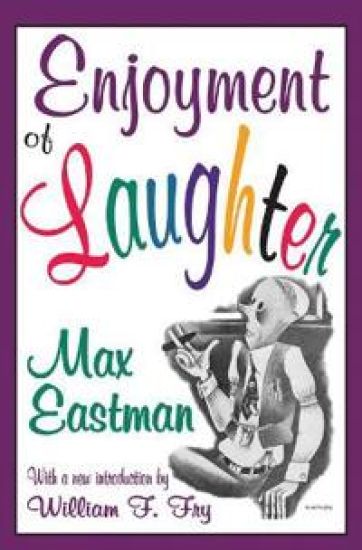
Humor at its best is a somewhat fluid and transitory element, but most books about it are illustrated with hardened old jokes from the comic papers, or classic witticisms jerked out of their context. Max Eastman, in this work, avoids this catastrophe by quoting mainly from contemporary American humor. This is not an anthology in that selections have been made with a view to making a point rather than covering the field. The purpose of Eastman's fabled work is to make the reader laugh. Since his early school days, it has seemed to him that textbooks are wrongly written in that they are conducted in a way which ignores the natural operation of the mind. As a result, the opinion is universal, and under the circumstances a fact, that in order to learn anything you have to study. Since this introduction to humor is itself near to writing a textbook, Eastman uses the very text he constructs to illustrate the manner in which textbooks should be written. Examination and classification of the kinds of humorous experience upon the basis of a theory is a science. As such, this work offers a fair chance to illustrate a method of instruction. However, the distinction between a good joke and a bad one will not prevent the reader from making bad jokes nor enable one to make good ones. There is an artistic and playful element that simply cannot be taught. Enjoyment of Laughter presents a total view of the science of laughter and draws upon some of the great American humorists to do so.
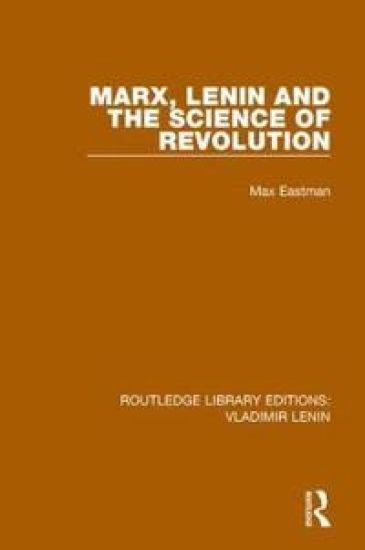
The result of 10 years' worth of painstaking research, this volume, originally published in 1926 is a sympathetic critique of certain phases of revolutionary dictatorship in Russia. Among other things it focusses on the philosophy and psychology of Marxism, Marxian economics, Bolshevism, the philosophy of Lenin and his role as an engineer of revolution, the Mensheviks, and the anarchist contribution.
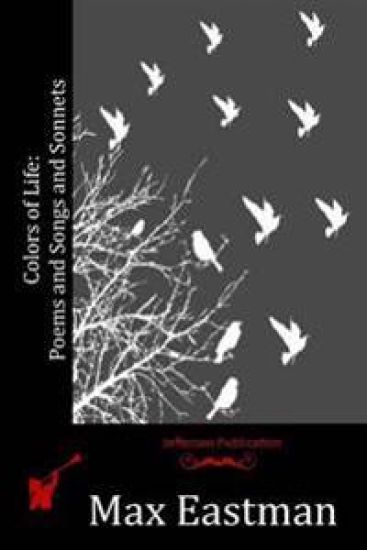
Colors of Life: Poems and Songs and Sonnets
Max Eastman
Createspace Independent Publishing Platform
2016
nidottu
One Who Survived: The Life Story of a Russian Under the Soviets
Alexander Barmine; Max Eastman
Literary Licensing, LLC
2013
nidottu