Kirjailija
Max Frisch
Kirjat ja teokset yhdessä paikassa: 92 kirjaa, julkaisuja vuosilta 1962–2026, suosituimpiin kuuluu Tuhopolttajat. Vertaile teosten hintoja ja tarkista saatavuus suomalaisista kirjakaupoista.
92 kirjaa
Kirjojen julkaisuvuodet: 1962–2026.
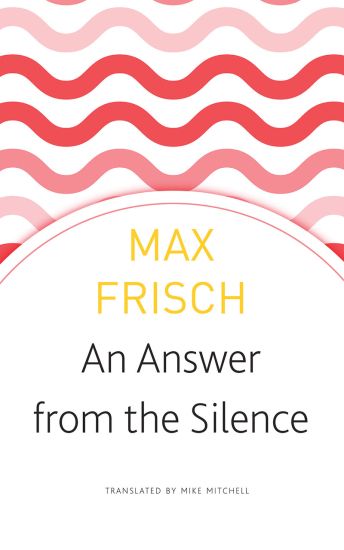
This novel by esteemed Swiss writer Max Frisch is an exploration of the question: “Why don’t we live when we know we’re here just this one time, just one single, unrepeatable time in this unutterably magnificent world?!” This outcry against the emptiness of ordinary everyday life uttered by the hero of Frisch’s book is countered by “an answer from the silence” he meets when face-to-face with death. When An Answer from the Silence begins, the protagonist has just turned thirty and is engaged to be married and about to start work as a teacher. Frightened by the idea of settling down, he journeys to the Alps in a do-or-die effort to climb the unclimbed North Ridge, and by doing so prove he is not ordinary. But having reached the top he returns not in triumph, but in frostbitten shock, having come dangerously close to death. This highly personal early novel reflects a crisis in Frisch’s own life, and perhaps because of this intimate connection, he refused to allow it to be included in his Collected Works in the 1970s. Now available in English, this distinctive book will thrill fans of Frisch’s other works.
STARK Interpretationen Deutsch - Max Frisch: Biedermann und die Brandstifter
Martin Brück; Max Frisch
Stark Verlag GmbH
2019
muu
Skizze eines Unglücks/Skizze eines Verunglückten
Max Frisch; Uwe Johnson
SUHRKAMP VERLAG
2018
nidottu
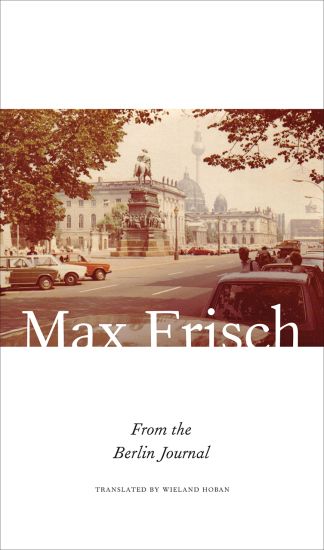
Max Frisch (1911 91) was a giant of twentieth-century German literature. When Frisch moved into a new apartment in Berlin's Sarrazinstrasse, he began keeping a journal, which he came to call the Berlin Journal. A few years later, he emphasized in an interview that this was by no means a "scribbling book," but rather a book "fully composed." The journal is one of the great treasures of Frisch's literary estate, but the author imposed a retention period of twenty years from the date of his death because of the "private things" he noted in it. From the Berlin Journal now marks the first publication of excerpts from Frisch's journal. Here, the unmistakable Frisch is back, full of doubt, with no illusions, and with a playfully sharp eye for the world. From the Berlin Journal pulls from the years 1946 49 and 1966 71. Observations about the writer's everyday life stand alongside narrative and essayistic texts, as well as finely-drawn portraits of colleagues like Gunter Grass, Uwe Johnson, Wolf Biermann, and Christa Wolf, among others. Its foremost quality, though, is the extraordinary acuity with which Frisch observed political and social conditions in East Germany while living in West Berlin.


Andorra - Neubearbeitung. EinFach Deutsch Unterrichtsmodelle
Max Frisch; Udo Volkmann; Ute Volkmann
Schoeningh Verlag
2016
nidottu
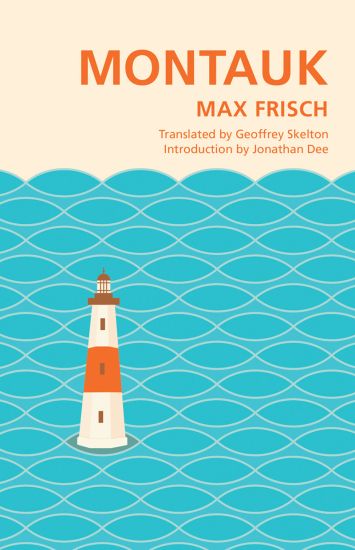
Casting himself as both subject and observer, Frisch reflects on his marriages, children, friendships, and careers; a holiday weekend in Long Island is a trigger to recount and question events and aspects of his own life, along with creeping fears of mortality. He paints a bittersweet portrait that is sometimes painful and sometimes humorous, but always affecting. Emotionally raw and formally innovative, Frisch's novel collapses the distinction between art and life, but leaves the reader with a richer understanding of both.
Includes the full German text, accompanied by German-English vocabulary. Notes and a detailed introduction in English put the work in its social and historical context.
New York... I HATE IT... I LOVE IT... I DON'T KNOW...". These are the reflections of Max Frisch, writing from his apartment in the Big Apple near the end of the twentieth century. Beginning in 1946 and continuing until his death at the age of eighty, the man whom many see as Switzerland's greatest writer kept a series of sketchbooks to record his reactions to events of the time and people he encountered in his daily life. Neither a commonplace book nor a diary, these volumes contain the seeds for many of Frisch's most famous works - including Homo Faber, I'm Not Stiller, and Man in the Holocene - as well as his cynical meditations, fictions, incidents, conversations, meetings, newspaper headlines, and dark fantasies - anything, in short, that the author found significant. Drafts for a Third Sketchbook treats the reader to an even more personal document. Unpublished at the time of Frisch's death, this collection was edited by Peter von Matt, president of the Max Frisch Foundation, with an eye toward expanding our knowledge of this legendary writer's last days. Ranging from a couple of sentences to several pages, the sketches collected in this volume recall the United States of the Reagan years and the author's own growing sense of age as both the threat of nuclear war and some of his most treasured friendships pass on. Representing an unusually personal vista onto the world as Frisch knew it, this is a wonderful self-portrait of an extraordinary intelligence.

Wir tragen wohl alle in uns die Sehnsucht nach einem "Traumsee": Wasserflächen in Silber und Gold, menschenfern, unberührt, Vogelrufe von irgendwo, Nebel, wogendes Schilf, Melodien der Wellen... "Lass Zeit fließen, Jahre, werde ein Teil vom See, und er wird dir seine Geschichten erzählen", so Dietmar Keil zu seinem Meisterwerk. Episoden aus dem Familienleben der Taucher, Rohrsänger und Seeschwalben, von Schwänen, dem weißen und schwarzen Storch, von Libellen, Fröschen und Taumelkäfern. In Schönheit und Licht - die Blüten der Seerosen, eine geheimnisvolle Welt hinter dem Schilfdschungel. Eine Homage an den See in gültigen, noch nie gesehenen Bildern, aufwändig in Farbe, Licht und Ton, sparsam im Wort.
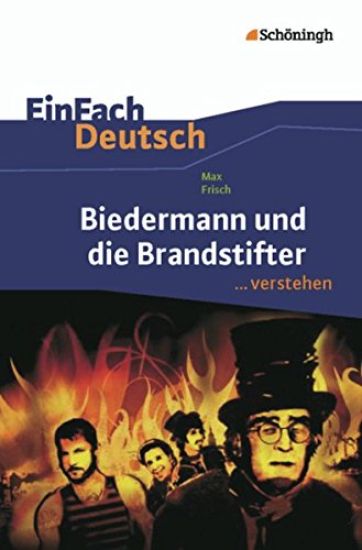
Biedermann und die Brandstifter. EinFach Deutsch ...verstehen
Max Frisch; Benedikt Descourvières
Schoeningh Verlag
2012
nidottu