Kirjailija
Max Hastings
Kirjat ja teokset yhdessä paikassa: 66 kirjaa, julkaisuja vuosilta 1984–2027, suosituimpiin kuuluu The Second World War. Vertaile teosten hintoja ja tarkista saatavuus suomalaisista kirjakaupoista.
66 kirjaa
Kirjojen julkaisuvuodet: 1984–2027.
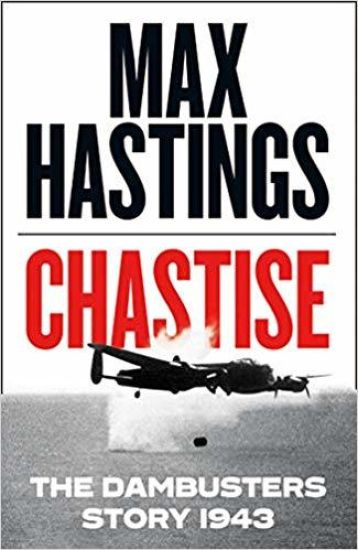
THE SUNDAY TIMES BESTSELLER A masterly history of the Dambusters raid from bestselling and critically acclaimed Max Hastings. Operation Chastise, the overnight destruction of the Möhne and Eder dams in north-west Germany by the RAF’s 617 Squadron, was an epic that has passed into Britain’s national legend. Max Hastings grew up embracing the story, the classic 1955 movie and the memory of Guy Gibson, the 24-year-old wing-commander who won the VC leading the raid. In the 21st Century, however, Hastings urges that we should review the Dambusters in much more complex shades. The aircrew’s heroism was wholly authentic, as was the brilliance of Barnes Wallis, who invented the ‘bouncing bombs’. But commanders who promised their young fliers that success could shorten the war fantasised wildly. What Germans call the Möhnekatastrophe imposed on the Nazi war machine temporary disruption, rather than a crippling blow. Hastings vividly describes the evolution of Wallis’ bomb, and of the squadron which broke the dams at the cost of devastating losses. But he also portrays in harrowing detail those swept away by the torrents. Some 1,400 civilians perished in the biblical floods that swept through the Möhne valley, more than half of them Russian and Polish women, slave labourers under Hitler. Ironically, Air Marshal Sir Arthur ‘Bomber’ Harris gained much of the credit, though he opposed Chastise as a distraction from his city-burning blitz. He also made what the author describes as the operation’s biggest mistake – the failure to launch a conventional attack on the Nazis’ huge post-raid repair operation, which could have transformed the impact of the dam breaches upon Ruhr industry. Chastise offers a fascinating retake on legend by a master of the art. Hastings sets the dams raid in the big picture of the bomber offensive and of the Second World War, with moving portraits of the young airmen, so many of whom died; of Barnes Wallis; the monstrous Harris; the tragic Guy Gibson, together with superb narrative of the action of one of the most extraordinary episodes in British history.
THE SUNDAY TIMES BESTSELLER â?? His masterpieceâ?? Antony Beevor, Spectator â?? A masterful performanceâ?? Sunday Times â?? By far the best book on the Vietnam Warâ?? Gerald Degroot, The Times, Book of the Year
Overlord: D-Day and the Battle for Normandy
Max Hastings
SIMON SCHUSTER
2019
nidottu
Halvin toimitettuna 21,50 €
Max Hastings's "exceptional" (Kirkus Reviews, starred review) account of the famous World War II D-Day landings " will] stand with that of the best journalists and writers who witnessed it" (The New York Times Book Review). On June 6, 1944, the American and British armies staged the greatest amphibious landing in history--called Operation Overlord--the battle for the liberation of Europe. Despite the Allies' absolute command of sea and air and vast firepower, it took ten weeks of fierce fighting for them to overpower the tenacious, superbly skilled German army. Forty years later, British war correspondent and military historian Max Hastings shares a dense, dramatic portrait of the Normandy invasion that overturns the traditional legends. First published in 1984, Overlord "will shock those who regard the invasion of Normandy and the subsequent battles as triumphs of American, British, and Canadian military heroism" (The New York Times). Instead, Hastings provides a brilliant, controversial perspective on the devastating battles, based on the eyewitness accounts of survivors from both sides, plus a wealth of previously untapped sources and documents. "A masterly book, rich in insight, shrewd and weighty in judgement... Max Hastings stands in the first rank of writers on modern war" (Financial Times).
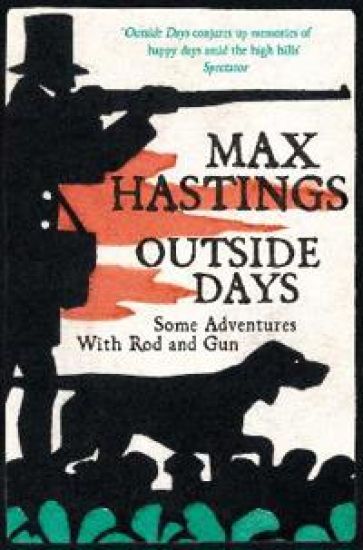
Some Adventures with Rod and Gun.
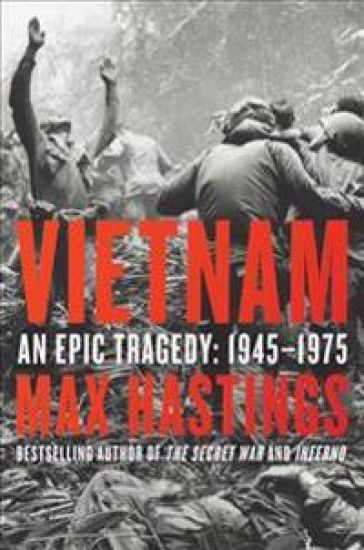
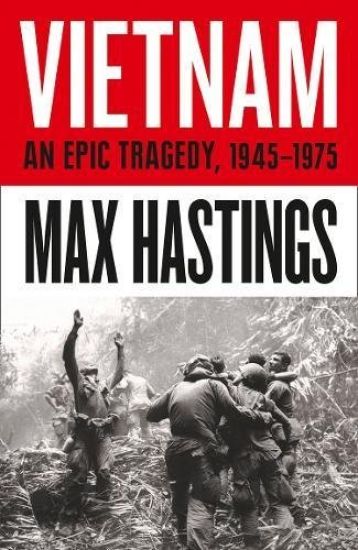
An absorbing and definitive modern history of the Vietnam War from the acclaimed New York Times bestselling author of The Secret War. Vietnam became the Western world's most divisive modern conflict, precipitating a battlefield humiliation for France in 1954, then a vastly greater one for the United States in 1975. Max Hastings has spent the past three years interviewing scores of participants on both sides, as well as researching a multitude of American and Vietnamese documents and memoirs, to create an epic narrative of an epic struggle. He portrays the set pieces of Dienbienphu, the 1968 Tet offensive, the air blitz of North Vietnam, and also much less familiar miniatures such as the bloodbath at Daido, where a US Marine battalion was almost wiped out, together with extraordinary recollections of Ho Chi Minh's warriors. Here are the vivid realities of strife amid jungle and paddies that killed two million people. Many writers treat the war as a US tragedy, yet Hastings sees it as overwhelmingly that of the Vietnamese people, of whom forty died for every American. US blunders and atrocities were matched by those committed by their enemies. While all the world has seen the image of a screaming, naked girl seared by napalm, it forgets countless eviscerations, beheadings, and murders carried out by the communists. The people of both former Vietnams paid a bitter price for the Northerners' victory in privation and oppression. Here is testimony from Vietcong guerrillas, Southern paratroopers, Saigon bargirls, and Hanoi students alongside that of infantrymen from South Dakota, Marines from North Carolina, and Huey pilots from Arkansas. No past volume has blended a political and military narrative of the entire conflict with heart-stopping personal experiences, in the fashion that Max Hastings' readers know so well. The author suggests that neither side deserved to win this struggle with so many lessons for the twenty-first century about the misuse of military might to confront intractable political and cultural challenges. He marshals testimony from warlords and peasants, statesmen and soldiers, to create an extraordinary record.
Within Western culture, World War Two continues to exercise an extraordinary fascination for generations unborn when it took place. The obvious explanation is that it was the greatest and most terrible event in human history. Within the vast compass of the struggle, some individuals scaled summits of courage and nobility, while others plumbed depths of evil, in a fashion that compels the awe of posterity. Among citizens of modern democracies to whom serious hardship and collective peril are unknown, the tribulations which hundreds of millions endured between 1939 and 1945 are almost beyond comprehension. Hastings tells the story of the war in a clear and compelling narrative, ranging across a vast canvas from the agony of Poland in 1939 and the horrors of the Soviet front to the dropping of the atom bombs on Japan in August 1945. This is a book which shows vividly what war meant for individuals from allied soldiers, sailors and airmen, to SS killers, to civilians caught up in the war like British housewives who endured the Blitz and the citizens of Leningrad who suffered through a siege of almost unimaginable horror.
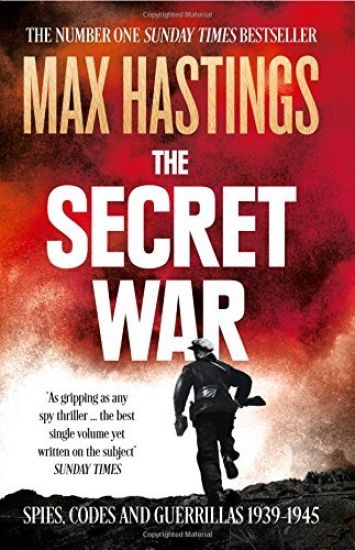
The Secret War: Spies, Ciphers, and Guerrillas, 1939-1945
Max Hastings
HARPER PERENNIAL
2017
nidottu
Halvin toimitettuna 26,10 €
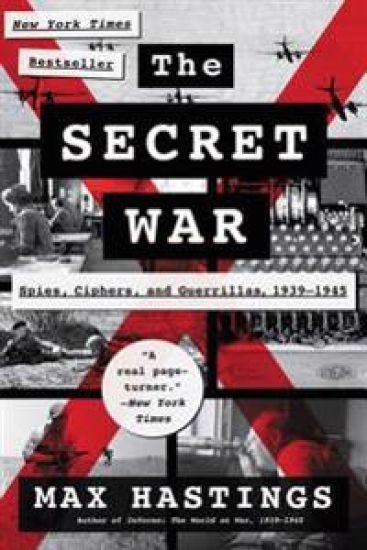
"Monumental." --New York Times Book ReviewNEW YORK TIMES BESTSELLERFrom one of the foremost historians of the period and the acclaimed author of Inferno and Catastrophe: 1914, The Secret War is a sweeping examination of one of the most important yet underexplored aspects of World War II--intelligence--showing how espionage successes and failures by the United States, Britain, Russia, Germany, and Japan influenced the course of the war and its final outcome. Spies, codes, and guerrillas played unprecedentedly critical roles in the Second World War, exploited by every nation in the struggle to gain secret knowledge of its foes, and to sow havoc behind the fronts. In The Secret War, Max Hastings presents a worldwide cast of characters and some extraordinary sagas of intelligence and resistance, to create a new perspective on the greatest conflict in history.
ââ?¬Ë? As gripping as any spy thriller, Hastingsââ?¬â?¢s achievement is especially impressive, for he has produced the best single volume yet written on the subjectââ?¬â?¢ Sunday Times ââ?¬Ë? Authoritative, exciting and notably well writtenââ?¬â?¢ Daily Telegraph ââ?¬Ë? A serious work of rigourous and comprehensive history ââ?¬Â¦ royally entertaining and readableââ?¬â?¢ Mail on Sunday
The Secret War: Spies, Ciphers, and Guerillas, 1939-1945
Max Hastings
Harper Large Print
2016
nidottu
"Monumental." --New York Times Book ReviewNEW YORK TIMES BESTSELLERFrom one of the foremost historians of the period and the acclaimed author of Inferno and Catastrophe: 1914, The Secret War is a sweeping examination of one of the most important yet underexplored aspects of World War II--intelligence--showing how espionage successes and failures by the United States, Britain, Russia, Germany, and Japan influenced the course of the war and its final outcome. Spies, codes, and guerrillas played unprecedentedly critical roles in the Second World War, exploited by every nation in the struggle to gain secret knowledge of its foes, and to sow havoc behind the fronts. In The Secret War, Max Hastings presents a worldwide cast of characters and some extraordinary sagas of intelligence and resistance, to create a new perspective on the greatest conflict in history.
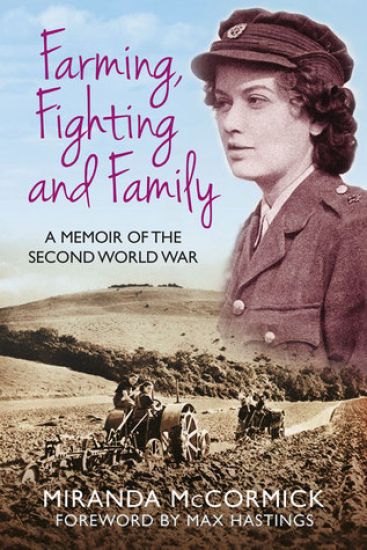
Farmer, author and broadcaster Arthur (A. G.) Street was one of the leading voices of British agriculture during the Second World War. His daughter Pamela – herself an aspiring writer – was 18 when war broke out. David, her future husband, served with the 4th RHA in North Africa. Using their previously unpublished diaries and letters, Miranda McCormick – Pamela’s daughter – tells the candid story of a Wiltshire family living and working at a time when ‘a little German with a black paint-brush moustache turned [the] world upside down’. Their very different experiences of war are woven into one masterful narrative of love, duty and separation during a time of national adversity. Detailing the sudden rise of her tenant farmer father to the status of a national celebrity, Pamela’s service as a VAD nurse and in the ATS, as well as her unofficial fiancé’s detainment in German and Italian prison camps, this is a story told with an almost allegorical simplicity. Intimate and personal, this vivid account of ‘ordinary life’ during extraordinary times is also the chronicle of a generation for whom farming was the fourth line of defence.
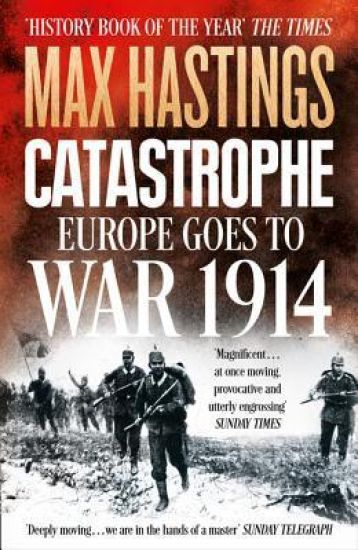
The Amazon History Book of the Year 2013 is a magisterial chronicle of the calamity that befell Europe in 1914 as the continent shifted from the glamour of the Edwardian era to the tragedy of total war.
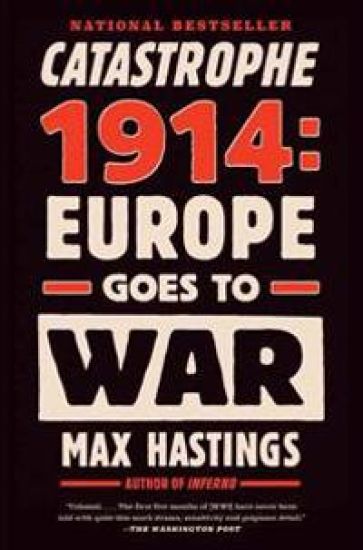
From the acclaimed military historian, a history of the outbreak of World War I: the dramatic stretch from the breakdown of diplomacy to the battles--the Marne, Ypres, Tannenberg--that marked the frenzied first year before the war bogged down in the trenches. In Catastrophe 1914, Max Hastings gives us a conflict different from the familiar one of barbed wire, mud and futility. He traces the path to war, making clear why Germany and Austria-Hungary were primarily to blame, and describes the gripping first clashes in the West, where the French army marched into action in uniforms of red and blue with flags flying and bands playing. In August, four days after the French suffered 27,000 men dead in a single day, the British fought an extraordinary holding action against oncoming Germans, one of the last of its kind in history. In October, at terrible cost the British held the allied line against massive German assaults in the first battle of Ypres. Hastings also re-creates the lesser-known battles on the Eastern Front, brutal struggles in Serbia, East Prussia and Galicia, where the Germans, Austrians, Russians and Serbs inflicted three million casualties upon one another by Christmas. As he has done in his celebrated, award-winning works on World War II, Hastings gives us frank assessments of generals and political leaders and masterly analyses of the political currents that led the continent to war. He argues passionately against the contention that the war was not worth the cost, maintaining that Germany's defeat was vital to the freedom of Europe. Throughout we encounter statesmen, generals, peasants, housewives and private soldiers of seven nations in Hastings's accustomed blend of top-down and bottom-up accounts: generals dismounting to lead troops in bayonet charges over 1,500 feet of open ground; farmers who at first decried the requisition of their horses; infantry men engaged in a haggard retreat, sleeping four hours a night in their haste. This is a vivid new portrait of how a continent became embroiled in war and what befell millions of men and women in a conflict that would change everything.
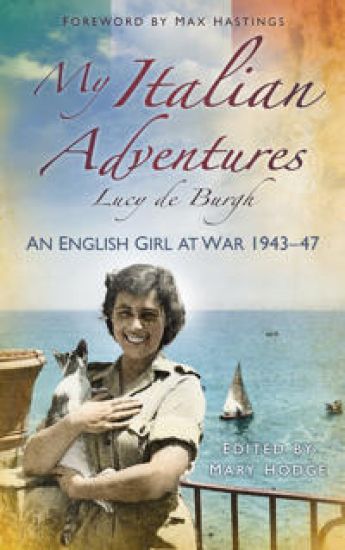
Wartime Italy is a place of sunshine and shadows. A country torn apart by the turbulent dictatorship of Mussolini and the horrors of Nazi occupation, struggling to repair itself during the Allied liberation. Yet, it is also the land of spaghetti and spumante, the shores of Lake Garda and the Dolomite mountains, and into this drops an English girl who is quickly enchanted by the Italian landscape and way of life. A woman’s memoir of wartime is very rare, but Lucy de Burgh writes a sparkling eyewitness account of her time in Italy serving with the Auxiliary Territorial Service – Britain’s famous ‘girls in khaki’. Every day is a new adventure – from receiving a landmine as a love token from a would-be admirer to midnight swimming in ‘a small black lake, reflecting in its passive waters the millions of twinkling stars, the blue-black sky like silk spotted with polka dots’. Although she sees the tragedy and cost of war first-hand, she also makes friends, finds beauty and civility wherever she goes and is moved by the love of life of those who have lost everything. My Italian Adventures is being published as a contribution to The Monte San Martino Trust, a charity dedicated to commemorating the bravery of those Italian who had sacrificed their lives for sheltering Allied soldiers escaping the Nazis.
Winner of the Pritzker Prize for Military HistoryA New York Times Notable BookFrom one of our finest military historians, a monumental work that shows us at once the truly global reach of World War II and its deeply personal consequences. For thirty-five years, Max Hastings has researched and written about different aspects of the war. Now, for the first time, he gives us a magnificent, single-volume history of the entire conflict. Through his strikingly detailed stories of everyday people--of soldiers, sailors and airmen; British housewives and Indian peasants; SS killers and the citizens of Leningrad--Hastings provides a singularly intimate portrait of the world at war. Remarkably informed and wide-ranging, Inferno is both elegantly written and cogently argued. Above all, it is a new and essential understanding of one of the greatest and bloodiest events of the twentieth century.
A magisterial history of the greatest and most terrible event in history, from one of the finest historians of the Second World War. A book which shows the impact of war upon hundreds of millions of people around the world- soldiers, sailors and airmen; housewives, farm workers and children..
A vivid and incisive portrait of Winston Churchill during wartime from acclaimed historian Max Hastings, Winston's War captures the full range of Churchill's endlessly fascinating character. At once brilliant and infuriating, self-important and courageous, Hastings's Churchill comes brashly to life as never before. Beginning in 1940, when popular demand elevated Churchill to the role of prime minister, and concluding with the end of the war, Hastings shows us Churchill at his most intrepid and essential, when, by sheer force of will, he kept Britain from collapsing in the face of what looked like certain defeat. Later, we see his significance ebb as the United States enters the war and the Soviets turn the tide on the Eastern Front. But Churchill, Hastings reminds us, knew as well as anyone that the war would be dominated by others, and he managed his relationships with the other Allied leaders strategically, so as to maintain Britain's influence and limit Stalin's gains. At the same time, Churchill faced political peril at home, a situation for which he himself was largely to blame. Hastings shows how Churchill nearly squandered the miraculous escape of the British troops at Dunkirk and failed to address fundamental flaws in the British Army. His tactical inaptitude and departmental meddling won him few friends in the military, and by 1942, many were calling for him to cede operational control. Nevertheless, Churchill managed to exude a public confidence that brought the nation through the bitter war. Hastings rejects the traditional Churchill hagiography while still managing to capture what he calls Churchill's "appetite for the fray." Certain to be a classic, Winston's War is a riveting profile of one of the greatest leaders of the twentieth century.
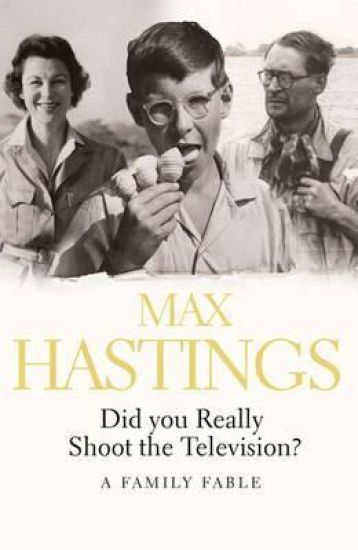
The extraordinary story of the eccentric family of Britain's most outstanding military historian, Max Hastings.
Kampen om Tyskland forteller om den andre verdenskrig - slik virkelig krig er - da tyskerne ble presset fra skanse til skanse både fra øst og vest i krigens siste fase. Max Hastings tar leserne med ut på slagmarken og ned i skyttergravene! Her skildres bl. a. slagene ved Arnhem og i Ardennene - og de russiske styrkers blodige ferd mot Berlin. Hastings stiller - etter å ha intervjuet 170 tidsvitner og gransket arkiver i flere land - også de ubehagelige spørsmålene: Hvem hadde ansvaret for at de allierte ikke vant krigen i 1944? Hvorfor hadde russerne de beste generalene? Dette er militærhistorie på sitt beste! Mange vil bli overrasket over å lese denne boken - som er spennende og godt skrevet.
'I would choose this account over and above the rest. It is a fabulous book: full of perceptive insight that conveys all the tragedy, triumph, humour and intense drama of Churchill's time as wartime leader; and it is incredibly moving as a result' James Holland, Literary Review
Retribution: The Battle for Japan, 1944-45
Max Hastings
VINTAGE
2009
nidottu
Halvin toimitettuna 26,10 €
By the summer of 1944 it was clear that Japan's defeat was inevitable, but how the drive to victory would be achieved remained unclear. The ensuing drama--that ended in Japan's utter devastation--was acted out across the vast theater of Asia in massive clashes between army, air, and naval forces. In recounting these extraordinary events, Max Hastings draws incisive portraits of MacArthur, Mao, Roosevelt, Churchill, Stalin, and other key figures of the war in the East. But he is equally adept in his portrayals of the ordinary soldiers and sailors caught in the bloodiest of campaigns. With its piercing and convincing analysis, Retribution is a brilliant telling of an epic conflict from a master military historian at the height of his powers.