Kirjojen hintavertailu – 12 859 829 kirjaa ja 27 kauppaa

Kirjailija

Maximiliano E. Korstanje

Kirjat ja teokset yhdessä paikassa: 27 kirjaa, julkaisuja vuosilta 2016–2026, suosituimpiin kuuluu Exotic, Dissonant, and Dark Heritage and Tourism: Past, Present and Future Horizons. Vertaile teosten hintoja ja tarkista saatavuus suomalaisista kirjakaupoista.

Nimi esiintyy myös muodoissa: Maximiliano E Korstanje

27 kirjaa

Kirjojen julkaisuvuodet: 2016–2026.

The Rise of Thana-Capitalism and Tourism

The Rise of Thana-Capitalism and Tourism

Maximiliano E. Korstanje

Routledge
2018
nidottu
We live in a society that is bombarded by news of accidents, disasters and terrorist attacks. We are obsessed by the presence of death. It is commodified in newspapers, the media, entertainment and in our cultural consumption. This book explores the notion of an emergent class of “death-seekers” who consume the spectacle of the disaster, exploring spaces of mass death and suffering. Sites that are obliterated by disasters or tragic events are recycled and visually consumed by an international audience, creating a death-seekers economy. The quest for the suffering of others allows for a much deeper reinterpretation of life, and has captivated the attention of many tourists, visiting sites such as concentration camps, disasters zones, abandoned prisons, and areas hit by terrorism. This book explores the notion of the death-seekers economy, drawing on the premise that the society of risk as imagined by postmodern sociology sets the pace to a new society: thana-capitalism. The chapters dissect our fascination with other’s suffering, what this means for our own perceptions of the self, and as a tourist activity. It also explores the notion of an economy of impotence, where citizens feel the world is out of control. This compelling book will be interest to students and scholars researching dark tourism, tourist behaviour, disaster studies, cultural studies and sociology.
The Challenges of Democracy in the War on Terror

The Challenges of Democracy in the War on Terror

Maximiliano E. Korstanje

Routledge
2018
sidottu
This book unravels the role of democracy after the 9/11 terrorist attacks and reflects important debates surrounding the security of Muslim communities in the years to come. It looks at the problems of torture, violence and the legal resources available to contemporary democracies to confront terrorism. While terrorism is often regarded as one of the major threats to the West and the nation-state, this book explores the notion that a disciplined sense of terror is what keeps society working. The strengths and limitations of liberalism are examined, as well as the ethical dilemma of torture and human right violations in the struggle against terrorism. This book carefully dissects the origin of the nation-state and how it keeps society united. The author offers a creative and unique approach to democracy and worldwide terrorism, exploring the consequences for the nation-state. This book looks at the connections between terrorism, mobility, consumption, torture and fear. It will be of interest to researchers as well as postgraduate and postdoctoral students within the fields of Human Geography, Politics, Media and International Relations.
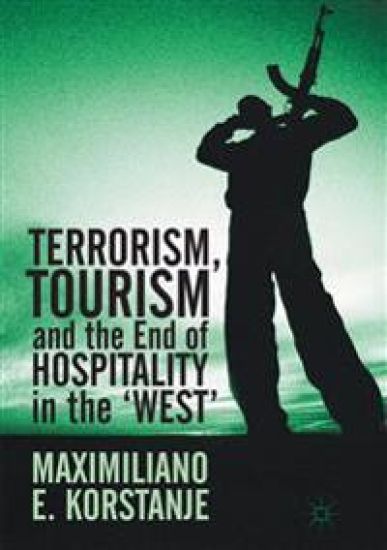
Terrorism, Tourism and the End of Hospitality in the 'West'

Terrorism, Tourism and the End of Hospitality in the 'West'

Maximiliano E. Korstanje

Springer International Publishing AG
2018
nidottu
This book explores how the contemporary threat of terrorism is eroding the concept of hospitality in the West. Going beyond the immediate effects of terrorism that are daily portrayed in the media and have shaped the foreign policy agenda of politicians in Europe and the US, this study explores the conceptual framework of how terrorism emerged and expanded within the West and shows how it interacts with, and targets, leisure consumerism and the international hospitality industry.
Tracing Spikes in Fear and Narcissism in Western Democracies Since 9/11

Tracing Spikes in Fear and Narcissism in Western Democracies Since 9/11

Maximiliano E. Korstanje

Peter Lang Publishing Inc
2018
sidottu
Tracing Spikes in Fear and Narcissism in Western Democracies Since 9/11 discusses critically not only the modern obsession with consuming news related to disasters or terrorism as a primary form of entertainment, but also explores the theory of pleasure as it was formulated by the ancient Greeks and continued by Sigmund Freud. Beyond the principle of pleasure was the touchstone of the sense of scarcity, which was rooted in the logic of capitalism. Throughout the 1970s, the society of producers brought about the advent of a society of consumerists; however, after the attacks on the World Trade Center September 11, 2001, things radically changed. The idea of terror, which had been encapsulated within the society of producers, was expanded to become the centerpiece of a new stage of capitalism, Thana-Capitalism, which made the death of others the main commodity for exchange and consumption.
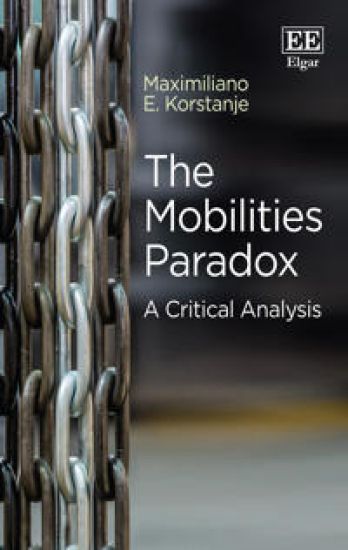
The Mobilities Paradox

The Mobilities Paradox

Maximiliano E. Korstanje

Edward Elgar Publishing Ltd
2018
sidottu
The Mobilities Paradox: A Critical Analysis asks how the mobilities paradigm, arguably one of the most influential theoretical innovations of the 21st century, holds up against the empirical realities of a deeply unequal world. Korstanje's provocative analysis pairs a sweeping overview of the theoretical landscape with specific instances of tourism, terrorism, hospitality, automobility, digital technologies, and non-places to put mobilities theory to the test.'- Jennie Germann Molz, College of the Holy Cross, USThe theory of mobilities has gained great recognition and traction over recent decades, illustrating not only the influence of mobilities in daily life but also the rise and expansion of globalization worldwide. But what if this sense of mobilities is in fact an ideological bubble that provides the illusion of freedom whilst limiting our mobility or even keeping us immobile? This book reviews the strengths and weaknesses of the mobilities paradigm and reminds us that today only a small percentage of the world’s population travel internationally. In doing so the author’s insightful analysis constructs a bridge between Marxism and Cultural theory. Offering a critical discussion of the theory of mobilities, the book explores the concept in the context of colonialism, nation states, consumption, globalization, fear and terrorism. This unique book presents an alternative viewpoint that is vital reading for cultural theorists, sociologists, anthropologists and Marxist scholars seeking a different understanding of the theory of mobilities.
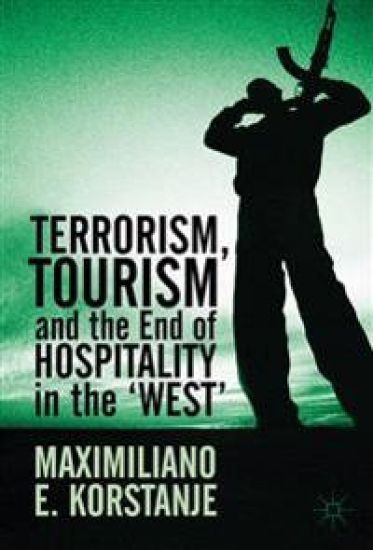
Terrorism, Tourism and the End of Hospitality in the 'West'

Terrorism, Tourism and the End of Hospitality in the 'West'

Maximiliano E. Korstanje

Springer International Publishing AG
2017
sidottu
This book explores how the contemporary threat of terrorism is eroding the concept of hospitality in the West. Going beyond the immediate effects of terrorism that are daily portrayed in the media and have shaped the foreign policy agenda of politicians in Europe and the US, this study explores the conceptual framework of how terrorism emerged and expanded within the West and shows how it interacts with, and targets, leisure consumerism and the international hospitality industry.
The Rise of Thana-Capitalism and Tourism

The Rise of Thana-Capitalism and Tourism

Maximiliano E. Korstanje

Routledge
2016
sidottu
We live in a society that is bombarded by news of accidents, disasters and terrorist attacks. We are obsessed by the presence of death. It is commodified in newspapers, the media, entertainment and in our cultural consumption. This book explores the notion of an emergent class of “death-seekers” who consume the spectacle of the disaster, exploring spaces of mass death and suffering. Sites that are obliterated by disasters or tragic events are recycled and visually consumed by an international audience, creating a death-seekers economy. The quest for the suffering of others allows for a much deeper reinterpretation of life, and has captivated the attention of many tourists, visiting sites such as concentration camps, disasters zones, abandoned prisons, and areas hit by terrorism. This book explores the notion of the death-seekers economy, drawing on the premise that the society of risk as imagined by postmodern sociology sets the pace to a new society: thana-capitalism. The chapters dissect our fascination with other’s suffering, what this means for our own perceptions of the self, and as a tourist activity. It also explores the notion of an economy of impotence, where citizens feel the world is out of control. This compelling book will be interest to students and scholars researching dark tourism, tourist behaviour, disaster studies, cultural studies and sociology.