Kirjojen hintavertailu – 12 903 725 kirjaa ja 27 kauppaa

Kirjailija

Maxine Berg

Kirjat ja teokset yhdessä paikassa: 11 kirjaa, julkaisuja vuosilta 1982–2025, suosituimpiin kuuluu Political Economy in Twentieth Century. Vertaile teosten hintoja ja tarkista saatavuus suomalaisista kirjakaupoista.

11 kirjaa

Kirjojen julkaisuvuodet: 1982–2025.

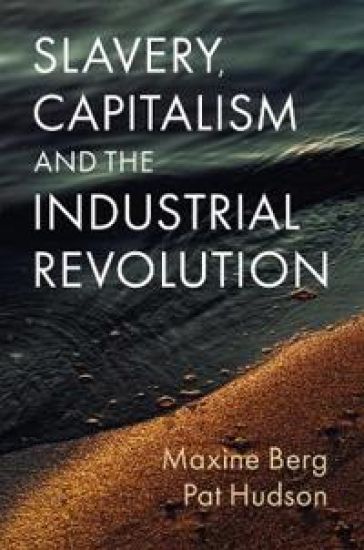
Slavery, Capitalism and the Industrial Revolution

Slavery, Capitalism and the Industrial Revolution

Maxine Berg; Pat Hudson

JOHN WILEY AND SONS LTD
2025
nidottu

Halvin toimitettuna 28,60 €

The role of slavery in driving Britain's economic development is often debated, but seldom given a central place. In their remarkable new book, Maxine Berg and Pat Hudson 'follow the money' to document in revealing detail the role of slavery in the making of Britain’s industrial revolution. Slavery was not just a source of wealth for a narrow circle of slave owners who built grand country houses and filled them with luxuries. The forces set in motion by the slave and plantation trades seeped into almost every aspect of the economy and society. In textile mills, iron and copper smelting, steam power, and financial institutions, slavery played a crucial part. Things we might think far removed from the taint of slavery, such as eighteenth-century fashions for indigo-patterned cloth, sweet tea, snuff boxes, mahogany furniture, ceramics and silverware, were intimately connected. Even London’s role as a centre for global finance was partly determined by the slave trade as insurance, financial trading and mortgage markets were developed in the City to promote distant and risky investments in enslaved people. The result is a bold and unflinching account of how Britain became a global superpower, and how the legacy of slavery persists. Acknowledging Britain's role in slavery is not just about toppling statues and renaming streets. We urgently need to come to terms with slavery's inextricable links with Western capitalism, and the ways in which many of us continue to benefit from slavery to this day.
Slavery, Capitalism and the Industrial Revolution

Slavery, Capitalism and the Industrial Revolution

Maxine Berg; Pat Hudson

JOHN WILEY AND SONS LTD
2023
sidottu
The role of slavery in driving Britain's economic development is often debated, but seldom given a central place. In their remarkable new book, Maxine Berg and Pat Hudson 'follow the money' to document in revealing detail the role of slavery in the making of Britain’s industrial revolution. Slavery was not just a source of wealth for a narrow circle of slave owners who built grand country houses and filled them with luxuries. The forces set in motion by the slave and plantation trades seeped into almost every aspect of the economy and society. In textile mills, iron and copper smelting, steam power, and financial institutions, slavery played a crucial part. Things we might think far removed from the taint of slavery, such as eighteenth-century fashions for indigo-patterned cloth, sweet tea, snuff boxes, mahogany furniture, ceramics and silverware, were intimately connected. Even London’s role as a centre for global finance was partly determined by the slave trade as insurance, financial trading and mortgage markets were developed in the City to promote distant and risky investments in enslaved people. The result is a bold and unflinching account of how Britain became a global superpower, and how the legacy of slavery persists. Acknowledging Britain's role in slavery is not just about toppling statues and renaming streets. We urgently need to come to terms with slavery's inextricable links with Western capitalism, and the ways in which many of us continue to benefit from slavery to this day.
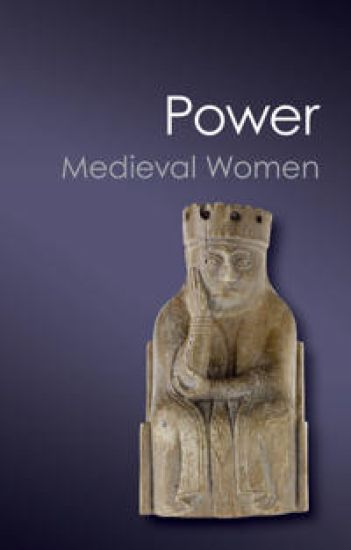
Medieval Women

Medieval Women

Eileen Power; Maxine Berg

Cambridge University Press
2012
pokkari
Throughout her career as a medieval historian, Eileen Power was engaged on a book about women in the Middle Ages. She did not live to write the book but some of the material she collected found its way into her popular lectures on medieval women. These lectures were brought together and edited by M. M. Postan. They reveal the world in which women lived, were educated, worked and worshipped. Power gives a vivid account of the worlds of the lady, the peasant, the townswoman and the nun. The result is a historical yet intimate picture of a period gone by yet with resonances for today. An intimate portrait of the writer and social historian, by Maxine Berg, is also included.
Luxury and Pleasure in Eighteenth-Century Britain

Luxury and Pleasure in Eighteenth-Century Britain

Maxine Berg

Oxford University Press
2007
nidottu
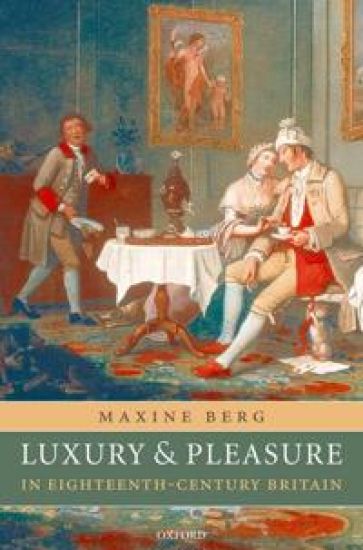
In this book, Maxine Berg explores the invention, making, and buying of new, semi-luxury, and fashionable consumer goods during the eighteenth century. It follows these goods, from china tea ware to all sorts of metal ornaments such as candlesticks, cutlery, buckles, and buttons, as they were made and shopped for, then displayed in the private domestic settings of Britain's urban middling classes. It tells the stories and analyses the developments that led from a global trade in Eastern luxuries beginning in the sixteenth century to the new global trade in British-made consumer goods by the end of the eighteenth century. These new products, regarded as luxuries by the rapidly growing urban and middling-class people of the eighteenth century, played an important part in helping to proclaim personal identities,and guide social interaction. Customers enjoyed shopping for them; they took pleasure in their beauty, ingenuity or convenience. All manner of new products appeared in shop windows; sophisticated mixed-media advertising seduced customers and created new wants. This unparalleled 'product revolution' provoked philosophers and pundits to proclaim a 'new luxury', one that reached out to the middling and trading classes, unlike the elite and corrupt luxury of old. Luxury and Pleasure in Eighteenth Century Britain is cultural history at its best, built on a fresh empirical base drawn directly from customs accounts, advertising material, company papers, and contemporary correspondence. Maxine Berg traces how this new consumer society of the eighteenth century and the products first traded, then invented to satisfy it, stimulated industrialization itself. Global markets for the consumer goods of private and domestic life inspired the industrial revolution and British products 'won the world'.
Luxury and Pleasure in Eighteenth-Century Britain

Luxury and Pleasure in Eighteenth-Century Britain

Maxine Berg

Oxford University Press
2005
sidottu
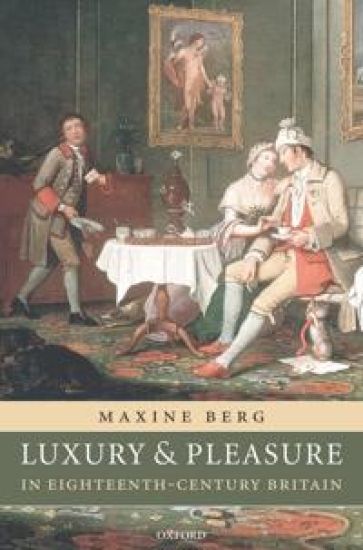
Luxury and Pleasure in Eighteenth-Century Britain explores the invention, making, and buying of new, semi-luxury, and fashionable consumer goods during the eighteenth century. It follows these goods, from china tea ware to all sorts of metal ornaments such as candlesticks, cutlery, buckles, and buttons, as they were made and shopped for, then displayed in the private domestic settings of Britain's urban middling classes. It tells the stories and analyses the developments that led from a global trade in Eastern luxuries beginning in the sixteenth century to the new global trade in British-made consumer goods by the end of the eighteenth century. These new products, regarded as luxuries by the rapidly growing urban and middling-class people of the eighteenth century, played an important part in helping to proclaim personal identities,and guide social interaction. Customers enjoyed shopping for them; they took pleasure in their beauty, ingenuity or convenience. All manner of new products appeared in shop windows; sophisticated mixed-media advertising seduced customers and created new wants. This unparalleled 'product revolution' provoked philosophers and pundits to proclaim a 'new luxury', one that reached out to the middling and trading classes, unlike the elite and corrupt luxury of old. Luxury and Pleasure in Eighteenth-Century Britain is cultural history at its best, built on a fresh empirical base drawn directly from customs accounts, advertising material, company papers, and contemporary correspondence. Maxine Berg traces how this new consumer society of the eighteenth century and the products first traded, then invented to satisfy it, stimulated industrialization itself. Global markets for the consumer goods of private and domestic life inspired the industrial revolution and British products 'won the world'.
A Woman in History

A Woman in History

Maxine Berg

Cambridge University Press
1996
pokkari
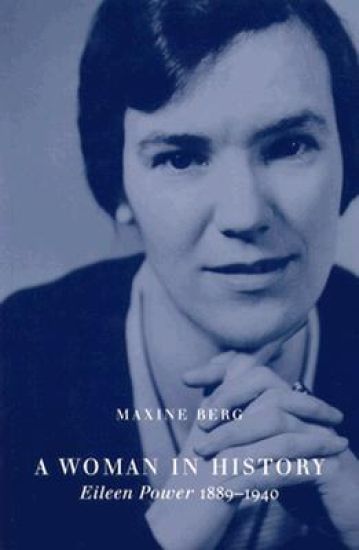
This book tells the fascinating story of the life and work of Eileen Power, a major British historian who once ranked in fame alongside Tawney, Trevelyan and Toynbee. Using letters, diaries and reminiscences, Maxine Berg recreates the life of this charismatic personality, describing, for the first time, Power’s remarkable intellectual and scholarly achievements at a time when she was acting very much outside the conventional female role. Her ability, coupled with her vivid writing and pioneer radio broadcasts, made Eileen Power’s unique approach to history compelling reading and listening to a whole generation. Dr Berg sets Eileen Power’s historical writing in the political and cultural framework of the interwar years, and shows how this early writer of women’s and medieval social history helped to create a broad, comparative economic and social history for the succeeding generations.
A Woman in History

A Woman in History

Maxine Berg

Cambridge University Press
1996
sidottu
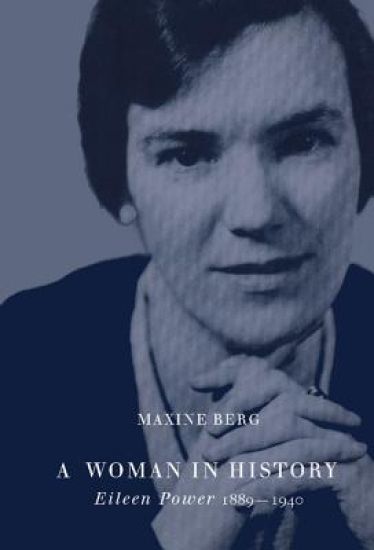
This book tells the fascinating story of the life and work of Eileen Power, a major British historian who once ranked in fame alongside Tawney, Trevelyan and Toynbee. Using letters, diaries and reminiscences, Maxine Berg recreates the life of this charismatic personality, describing, for the first time, Power’s remarkable intellectual and scholarly achievements at a time when she was acting very much outside the conventional female role. Her ability, coupled with her vivid writing and pioneer radio broadcasts, made Eileen Power’s unique approach to history compelling reading and listening to a whole generation. Dr Berg sets Eileen Power’s historical writing in the political and cultural framework of the interwar years, and shows how this early writer of women’s and medieval social history helped to create a broad, comparative economic and social history for the succeeding generations.
The Age of Manufactures, 1700-1820
This new edition of The Age of Manufactures provides an exciting alternative overview of the eighteenth-century British economy. Recent macro-economic history has discounted many of the achievements of the Industrial Revolution. Maxine Berg argues that at the heart of the Industrial Revolution, we find many new consumer industries employing a women's workforce, and bringing with them a rich diversity of technological and organizational change. Four new chapters explore recent perspectives on: * The Industrial Revolution * Eighteenth century industries * Machines and manual labour * The rise of the factory system Statistical summaries, and a thorough revision of the whole text have refreshed and enhanced this well-established and important contribution to British ecomonic history.
The Age of Manufactures, 1700-1820
This new edition of The Age of Manufactures provides an exciting alternative overview of the eighteenth-century British economy. Recent macro-economic history has discounted many of the achievements of the Industrial Revolution. Maxine Berg argues that at the heart of the Industrial Revolution, we find many new consumer industries employing a women's workforce, and bringing with them a rich diversity of technological and organizational change. Four new chapters explore recent perspectives on: * The Industrial Revolution * Eighteenth century industries * Machines and manual labour * The rise of the factory system Statistical summaries, and a thorough revision of the whole text have refreshed and enhanced this well-established and important contribution to British ecomonic history.
Political Economy in Twentieth Century

Political Economy in Twentieth Century

Maxine Berg

Barnes Noble Books-Imports, Div of Rowman Littlefield Pubs., Inc
1990
sidottu
This collection of previously unpublished essays discusses the work of a select number of major intellectuals of the recent past (Joan Robinson, Piero Sraffa, Maurice Dobb, Michal Kalecki, Paul Sweezy and Joseph Schumpeter). These are not the figures who dominated established economic traditions; they stood, rather, outside the mainstream, acting as critics of the capitalist order and of the theory that sought to explain it. More than a study of leading intellectuals, the book also investigates the principal problems and theoretical inheritance which linked together theorists of otherwise disparate social and political contexts. Students and scholars of the history of economic thought will find many interesting ideas here. It will be a fascinating source of reference for many years to come. The contributors are: Geoff Harcourt; A. K. Sen; Malcolm Sawyer; Josef Steindl; Michael Lebowitz and Tom Bottomore.
The Machinery Question and the Making of Political Economy 1815–1848
For those who lived through it, Britain's Industrial Revolution was experienced as the Machinery Question. It was far from clear to contemporaries whether the first forms of mechanized factory production heralded an inevitable economic revolution, or were but one course among several which might be modified or eventually rejected altogether, Opinion about the necessity or beneficence of machines was profoundly divided at all levels of society; the often acrimonious debate that arose reverberated through economic, political, cultural and intellectual life. Crucially important for the development of this debate, because it was the source of the very terms of discussion, was the new discipline of Political Economy. The major contention of this book is that the Machinery Question was also the making of Political Economy. Dr Berg argues that technical change was one of the foremost theoretical concerns of Ricardo and his successors, and the foundation for their distinctly optimistic view of the future. She shows how the Machinery Question fostered the social conditions in which the status of Political Economy as a discipline was established, and concludes that by the 1840s the divisions over machinery were firmly embedded in the great rival creeds of the future, liberalism and socialism. The book will interest teachers and students of British social and economic history, the history of economic thought and the history of science and technology.