Kirjojen hintavertailu – 12 859 819 kirjaa ja 27 kauppaa
Kirjailija
Maya Sen
Kirjat ja teokset yhdessä paikassa: 5 kirjaa, julkaisuja vuosilta 2018–2026, suosituimpiin kuuluu Majority Opinions. Vertaile teosten hintoja ja tarkista saatavuus suomalaisista kirjakaupoista.
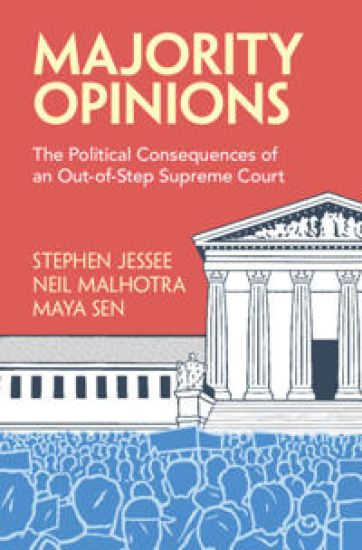
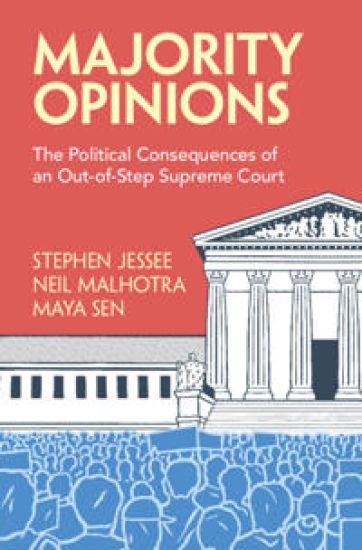
The Supreme Court's composition tends to remain stable over time, yet its docket and rulings change, affecting our understanding of the Court's broader political ramifications. In Majority Opinions, Stephen Jessee, Neil Malhotra and Maya Sen examine how the Supreme Court's alignment with public opinion shifts dramatically, shaping its legitimacy, approval, and vulnerability to reform. Introducing an empirical method and framework that systematically compares Americans' preferences on case outcomes with the Court's actual rulings, the authors uncover yawning gaps and unexpected alignments across issues and terms. They show how changes in court composition-Amy Coney Barrett replacing Ruth Bader Ginsburg, for example-can shift the Court's trajectory rightward, while docket choices can move rulings closer to public sentiment after unpopular rulings. Examining how the Supreme Court navigates a polarized political environment, the authors reveal how its choices have profoundly affect influence, legitimacy, and national policy.
The Supreme Court's composition tends to remain stable over time, yet its docket and rulings change, affecting our understanding of the Court's broader political ramifications. In Majority Opinions, Stephen Jessee, Neil Malhotra and Maya Sen examine how the Supreme Court's alignment with public opinion shifts dramatically, shaping its legitimacy, approval, and vulnerability to reform. Introducing an empirical method and framework that systematically compares Americans' preferences on case outcomes with the Court's actual rulings, the authors uncover yawning gaps and unexpected alignments across issues and terms. They show how changes in court composition-Amy Coney Barrett replacing Ruth Bader Ginsburg, for example-can shift the Court's trajectory rightward, while docket choices can move rulings closer to public sentiment after unpopular rulings. Examining how the Supreme Court navigates a polarized political environment, the authors reveal how its choices have profoundly affect influence, legitimacy, and national policy.
Why have conservatives decried 'activist judges'? And why have liberals - and America's powerful legal establishment - emphasized qualifications and experience over ideology? This transformative text tackles these questions with a new framework for thinking about the nation's courts, 'the judicial tug of war', which not only explains current political clashes over America's courts, but also powerfully predicts the composition of courts moving forward. As the text demonstrates through novel quantitative analyses, a greater ideological rift between politicians and legal elites leads politicians to adopt measures that put ideology and politics front and center - for example, judicial elections. On the other hand, ideological closeness between politicians and the legal establishment leads legal elites to have significant influence on the selection of judges. Ultimately, the judicial tug of war makes one point clear: for good or bad, politics are critical to how judges are selected and whose interests they ultimately represent.
The lasting effects of slavery on contemporary political attitudes in the American SouthDespite dramatic social transformations in the United States during the last 150 years, the South has remained staunchly conservative. Southerners are more likely to support Republican candidates, gun rights, and the death penalty, and southern whites harbor higher levels of racial resentment than whites in other parts of the country. Why haven't these sentiments evolved? Deep Roots shows that the entrenched views of white southerners are a direct consequence of the region's slaveholding history. Today, southern whites who live in areas once reliant on slavery—compared to areas that were not—are more racially hostile and less amenable to policies that could promote black progress. A groundbreaking look at the ways institutions of the past continue to sway attitudes of the present, Deep Roots demonstrates how social beliefs persist long after the formal policies that created those beliefs have been eradicated.
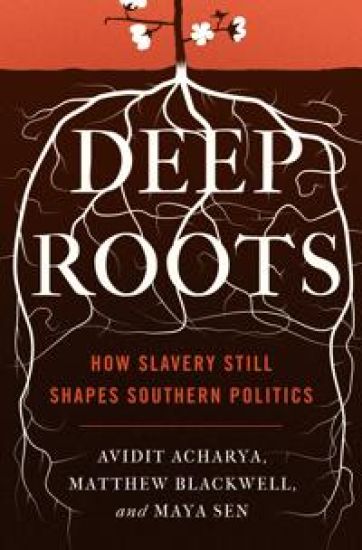
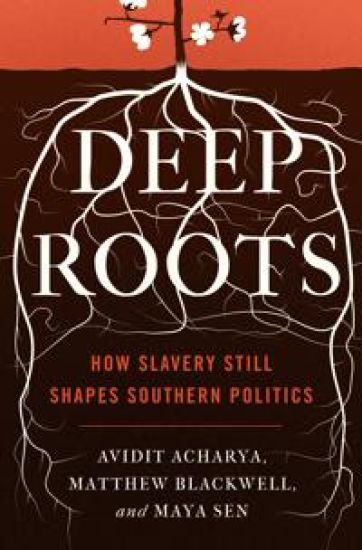
The lasting effects of slavery on contemporary political attitudes in the American SouthDespite dramatic social transformations in the United States during the last 150 years, the South has remained staunchly conservative. Southerners are more likely to support Republican candidates, gun rights, and the death penalty, and southern whites harbor higher levels of racial resentment than whites in other parts of the country. Why haven't these sentiments evolved or changed? Deep Roots shows that the entrenched political and racial views of contemporary white southerners are a direct consequence of the region's slaveholding history, which continues to shape economic, political, and social spheres. Today, southern whites who live in areas once reliant on slavery—compared to areas that were not—are more racially hostile and less amenable to policies that could promote black progress. Highlighting the connection between historical institutions and contemporary political attitudes, the authors explore the period following the Civil War when elite whites in former bastions of slavery had political and economic incentives to encourage the development of anti-black laws and practices. Deep Roots shows that these forces created a local political culture steeped in racial prejudice, and that these viewpoints have been passed down over generations, from parents to children and via communities, through a process called behavioral path dependence. While legislation such as the Civil Rights Act and the Voting Rights Act made huge strides in increasing economic opportunity and reducing educational disparities, southern slavery has had a profound, lasting, and self-reinforcing influence on regional and national politics that can still be felt today. A groundbreaking look at the ways institutions of the past continue to sway attitudes of the present, Deep Roots demonstrates how social beliefs persist long after the formal policies that created those beliefs have been eradicated.