Kirjojen hintavertailu – 12 903 742 kirjaa ja 27 kauppaa

Kirjailija

Meg Rithmire

Kirjat ja teokset yhdessä paikassa: 4 kirjaa, julkaisuja vuosilta 2023–2026, suosituimpiin kuuluu Fronesis 90-91. Staten. Vertaile teosten hintoja ja tarkista saatavuus suomalaisista kirjakaupoista.

4 kirjaa

Kirjojen julkaisuvuodet: 2023–2026.

Fronesis 90-91. Staten

Fronesis 90-91. Staten

Branko Milanovic; Philip Abrams; James C. Scott; Ilias Alami; Adam D. Dixon; Margaret Pearson; Meg Rithmire; Kellee S. Tsai; Evelina Johansson Wilén; Hugo Lundberg; Mikael Omstedt; Vanja Carlsson; Andreas Asplén Lundstedt

Arkiv förlag/A-Z förlag
2026
Vihko
Samhällskriser som pandemin, inflationschocker, en alltmer ansträngd välfärd och geopolitiska spänningar har under de senaste åren omförhandlat relationen mellan staten och andra samhällsaktörer. Nyliberalismen ifrågasätts och statliga interventioner ökar, men inte genom utbyggd välfärd. I stället växer den repressiva statsapparaten och satsningar på försvar, polis och gränskontroll expanderar snabbt. Globaliseringens tillbakagång och stormakters omfattande stöd till inhemska företag markerar samtidigt nationalstatens återkomst. Internationella institutioner som FN och WTO försvagas, medan tech- och finanssektorns politiska inflytande snarare har stärkts. Dagens politiska konflikter handlar därför allt mindre om valet mellan offentligt och privat. I stället har motsättningarna flyttat in i staten själv: det råder bred samsyn om att staten bör spela en stark roll, men oenighet om vad denna roll ska innebära. Frågan är inte längre om staten ska vara stark, utan hur. I Fronesis nummer 90–91 riktas blicken mot denna utveckling och mot de motsägelsefulla riktningar den tar. Statens förändrade roller undersöks ur två övergripande perspektiv. Det ena rör statens kapacitet att organisera, kontrollera och forma vardagslivet. Det andra gäller statens natur och relation till kapitalismen. Sedan den globala finanskrisen 2008 har intresset för statens roll, kapacitet och begränsningar vuxit inom såväl samhällsdebatt som forskning. Med detta nummer vill Fronesis bidra till den pågående renässansen för diskussioner om staten och kapitalet genom texter som ur historiska och samtida perspektiv utforskar statens räckvidd, dess gränser och dess relation till ekonomi, lag och folk. Den serbisk-amerikanske ekonomen Branko Milanovic analyserar övergången från nyliberal globalisering till en mer merkantilistisk världsordning. De amerikanska statsvetarna Margaret Pearson, Meg Rithmire och Kellee S. Tsai undersöker Kinas politiska ekonomi som en auktoritär form av statskapitalism. Förvaltningsforskaren Andreas Asplén Lundstedt analyserar folkbokföringens historia som både välfärdsinstrument och kontrollverktyg i den moderna staten. Genusvetaren Evelina Johansson Wilén undersöker hur samtidens debatt om låga födelsetal präglas av moral, skuld och politiska konflikter kring reproduktion. Juristen Hugo Lundberg diskuterar staten som en historiskt specifik form för kapitalismens sociala relationer. I numret medverkar även James C. Scott, Mikael Omstedt, Ilias Alami, Adam D. Dixon, Vanja Carlsson och Philip Abrams.
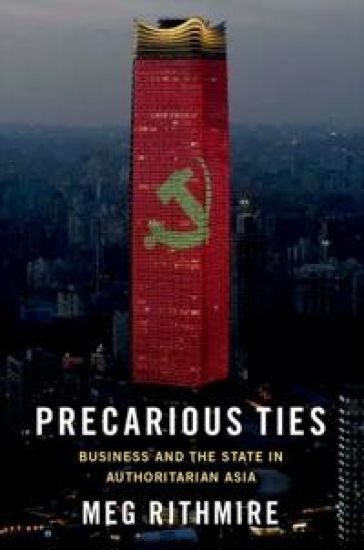
Precarious Ties

Precarious Ties

Meg Rithmire

OXFORD UNIVERSITY PRESS INC
2023
sidottu
Developing Asia has been the site of some of the last century's fastest growing economies as well as some of the world's most durable authoritarian regimes. Many accounts of rapid growth alongside monopolies on political power have focused on crony relationships between the state and business. But these relationships have not always been smooth, as anti-corruption campaigns, financial and banking crises, and dramatic bouts of liberalization and crackdown demonstrate. Why do partnerships between political and business elites fall apart over time? And why do some partnerships produce stable growth and others produce crisis or stagnation? In Precarious Ties, Meg Rithmire offers a novel account of the relationships between business and political elites in three authoritarian regimes in developing Asia: Indonesia under Suharto's New Order, Malaysia under the Barisan Nasional, and China under the Chinese Communist Party. All three regimes enjoyed periods of high growth and supposed alliances between autocrats and capitalists. Over time, however, the relationships between capitalists and political elites changed, and economic outcomes diverged. While state-business ties in Indonesia and China created dangerous dynamics like capital flight, fraud, and financial crisis, Malaysia's state-business ties contributed to economic stagnation. To understand these developments, Rithmire presents two conceptual models of state-business relations that explain their genesis and why variation occurs over time. She shows that mutual alignment occurs when an authoritarian regime organizes its institutions, or even its informal practices, to induce capitalists to invest in growth and development. Mutual endangerment, on the other hand, obtains when economic and political elites are entangled in corrupt dealings and invested in perpetuating each other's dominance. The loss of power on one side would bring about the demise of the other. Rithmire contends that the main factors explaining why one pattern dominates over the other are trust between business and political elites, determined during regime formation, and the dynamics of financial liberalization. Empirically rich and sweeping in scope, Precarious Ties offers lessons for all nations in which the state and the private sector are deeply entwined.
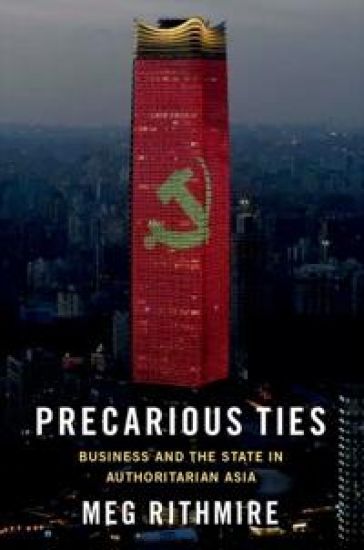
Precarious Ties

Precarious Ties

Meg Rithmire

OXFORD UNIVERSITY PRESS INC
2023
nidottu
Developing Asia has been the site of some of the last century's fastest growing economies as well as some of the world's most durable authoritarian regimes. Many accounts of rapid growth alongside monopolies on political power have focused on crony relationships between the state and business. But these relationships have not always been smooth, as anti-corruption campaigns, financial and banking crises, and dramatic bouts of liberalization and crackdown demonstrate. Why do partnerships between political and business elites fall apart over time? And why do some partnerships produce stable growth and others produce crisis or stagnation? In Precarious Ties, Meg Rithmire offers a novel account of the relationships between business and political elites in three authoritarian regimes in developing Asia: Indonesia under Suharto's New Order, Malaysia under the Barisan Nasional, and China under the Chinese Communist Party. All three regimes enjoyed periods of high growth and supposed alliances between autocrats and capitalists. Over time, however, the relationships between capitalists and political elites changed, and economic outcomes diverged. While state-business ties in Indonesia and China created dangerous dynamics like capital flight, fraud, and financial crisis, Malaysia's state-business ties contributed to economic stagnation. To understand these developments, Rithmire presents two conceptual models of state-business relations that explain their genesis and why variation occurs over time. She shows that mutual alignment occurs when an authoritarian regime organizes its institutions, or even its informal practices, to induce capitalists to invest in growth and development. Mutual endangerment, on the other hand, obtains when economic and political elites are entangled in corrupt dealings and invested in perpetuating each other's dominance. The loss of power on one side would bring about the demise of the other. Rithmire contends that the main factors explaining why one pattern dominates over the other are trust between business and political elites, determined during regime formation, and the dynamics of financial liberalization. Empirically rich and sweeping in scope, Precarious Ties offers lessons for all nations in which the state and the private sector are deeply entwined.
The State and Capitalism in China

The State and Capitalism in China

Margaret M. Pearson; Meg Rithmire; Kellee Tsai

Cambridge University Press
2023
pokkari
China's contemporary political economy features an emboldened role for the state as owner and regulator, and with markets expected to act in the service of party-state goals. How has the relationship between the state and different types of firms evolved? This Element situates China's reform-era political economy in comparative analytic perspective with attention to adaptations of its model over time. Just as other types of economies have generated internal dynamics and external reactions that undermine initial arrangements, so too has China's political economy. While China's state has always played a core role in development, over time prioritization of growth has shifted to a variant of state capitalism best described as, “party-state capitalism,” which emphasizes risk management and leadership by the Chinese Communist Party (CCP). Rather than reflecting long-held intentions of the CCP, the transition to party-state capitalism emerged from reactions to perceived threats and problems, some domestic and some external. These adaptations are refracted in the contemporary crises of global capitalism. This title is also available as open access on Cambridge Core.