Kirjojen hintavertailu – 12 903 735 kirjaa ja 27 kauppaa
Kirjailija
Melanie Joy
Kirjat ja teokset yhdessä paikassa: 10 kirjaa, julkaisuja vuosilta 2015–2025, suosituimpiin kuuluu A Half-Hearted Death Wish. Vertaile teosten hintoja ja tarkista saatavuus suomalaisista kirjakaupoista.
Sosiaalipsykologi Melanie Joyn teos Miksi rakastamme koiria, syömme sikoja ja pukeudumme lehmiin on palkittu kirja eläinten hyväksikäyttöä ohjaavasta ajattelusta ja sen vaikutuksesta yhteiskuntaan. Teos tarjoaa kattavan katsauksen karnismiin - vaiettuun uskomusjärjestelmään, joka vaikuttaa useimpien ihmisten toimintaan. Karnismin tunnistaminen ja kyseenalaistaminen auttaa meitä kaikkia tekemään vastuullisia, kestäviä ja oikeudenmukaisia valintoja.
In How to End Injustice Everywhere, psychologist Melanie Joy reveals the common denominator driving all forms of injustice and offers both an examination of unjust systems and behaviors as well as practical tools to help raise awareness, reduce infighting, and build more resilient and impactful justice movements. In her newest book, How to End Injustice Everywhere, psychologist Melanie Joy reveals the common denominator driving all forms of injustice, from sexism to speciesism to abusive interpersonal relationships and group dynamics. Joy explains that all injustices--such as racism, patriarchy, animal exploitation, environmental degradation, and domestic abuse--share a common denominator, which is relational dysfunction, or dysfunctional ways of relating: to other individuals, between social groups, and to nonhuman animals and the environment. Relational dysfunction stems from a particular psychology, a "nonrelational mentality." This mentality causes us to think, feel, and act in ways that violate integrity, harm dignity and lead to unjust power imbalances. Joy sheds light on the nonrelational mentality and explains how it shapes and is shaped by the various oppressive, or "nonrelational" systems in our world that cause widespread injustice. Until those of us who are helping to bring about justice understand relational dysfunction and know how to change it, we risk recreating injustice even as we work to end it, and our movements are at risk of cannibalizing themselves. How to End Injustice Everywhere is a call for anyone working toward justice for humans, animals, or the environment to unify behind a shared "metamission" of creating a more relational world. The book provides an empowering and unique approach to ending injustice, and it offers not only an examination of nonrelational systems and behaviors, but also practical tools to help raise awareness, reduce infighting, and build more resilient and impactful justice movements.
"An important and groundbreaking contribution to the struggle for the welfare of animals." --Yuval Harari, New York Times best-selling author of Sapiens: A Brief History of HumankindThe book offers an absorbing look at why and how humans can so wholeheartedly devote ourselves to certain animals and then allow others to suffer needlessly, especially those slaughtered for our consumption. Social psychologist Melanie Joy explores the many ways we numb ourselves and disconnect from our natural empathy for farmed animals. She coins the term "carnism" to describe the belief system that has conditioned us to eat certain animals and not others. In Why We Love Dogs, Eat Pigs, and Wear Cows, Joy investigates factory farming, exposing how cruelly the animals are treated, the hazards that meatpacking workers face, and the environmental impact of raising 10 billion animals for food each year. Controversial and challenging, this book will change the way you think about food forever." An absorbing examination of why humans feel affection and compassion for certain animals but are callous to the suffering of others." --Publishers Weekly"I think Gandhi would have loved Why We Love Dogs, Eat Pigs, and Wear Cows. For this is a book that can change the way you think and change the way you live. It will lead you from denial to awareness, from passivity to action, and from resignation to hope." --John Robbins, author of Diet for a New America and The Food Revolution
Relationships are complicated. Yet it's an unfortunate reality that while most of us have to learn complex geometry that we'll probably never use, we don't get a single formal lesson in how to relate to others. In this one-stop guide, psychologist Melanie Joy reveals the common psychological dynamics that underlie all kinds of relationships-with a romantic partner, friends, family members, colleagues-in short, with anyone in any situation. Understanding these dynamics will help you make all your relationships healthier and more resilient.
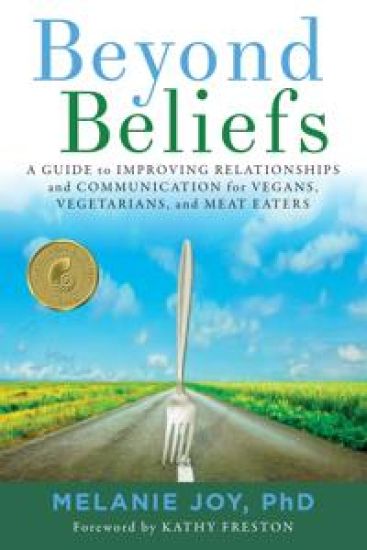
Vegans, vegetarians, and meat eaters can feel like they're living in different worlds. Many vegans and vegetarians struggle to feel understood and respected in a meat-eating culture, where some of their most pressing concerns and cherished beliefs are invisible, and where they are often met with defensiveness when they try to talk about the issue. They can become frustrated and struggle to feel connected with meat eaters. And meat eaters can feel disconnected from vegans and vegetarians whose beliefs they don't fully understand and whose frustration may spill over into their interactions. The good news is that relationship and communication breakdown among vegans, vegetarians, and meat eaters is not inevitable, and it is reversible. With the right tools, healthy connections can be cultivated, repaired, and even strengthened. In Beyond Beliefs, internationally recognized food psychology expert and longtime relationship coach Dr. Melanie Joy provides easy-to-understand, actionable advice so you can: - Learn the principles and tools for creating healthy relationships - Understand how to communicate about even the most challenging topics effectively - Recognize how the psychology of being vegan/vegetarian or of being a meat eater affects your relationships with others, and with yourself
Et banebrydende værk om CARNISMEN, som i vores globale kultur er blevet til en indgroet og usynlig ideologi. Om vores moralske og etiske ansvar og om hvorfor veganisme er sundt for mennesker og for hele vores klode. Og om misbrug af de dyr vi opdrætter og spiser og byder elendige forhold. - Bogen er oversat til mange sprog og forfatteren holder workshops også i Danmark.