

Kirjojen hintavertailu – 12 903 725 kirjaa ja 27 kauppaa

Kirjailija

Melina De Dijn

Kirjat ja teokset yhdessä paikassa: 2 kirjaa, julkaisuja vuosilta 2025–2026, suosituimpiin kuuluu Ageism in Job Interviews. Vertaile teosten hintoja ja tarkista saatavuus suomalaisista kirjakaupoista.

2 kirjaa

Kirjojen julkaisuvuodet: 2025–2026.

Ageism in Job Interviews

Ageism in Job Interviews

Dorien Van De Mieroop; Federica Previtali; Melina De Dijn

Springer International Publishing AG
2026
Nidottu
This book investigates age categorizations and stereotyping in job interviews by drawing on a multimodal discourse analytical approach. While previous research on ageism has focused on what happens before or after the job interview, there is substantial evidence supporting the idea that the job interview is a pivotal moment in this respect as well. This is because the way in which the interaction unfolds significantly influences not only recruiters’ ultimate hiring decisions, but also candidates’ interest in pursuing the job offer further. This phase in the recruitment process is thus deserving of further scrutiny when it comes to ageism. The authors delve into age stereotypes regarding ‘old’ as well as ‘young’ age and tease out how they are ‘talked into being’ during job interviews, both by recruiters and candidates. By shedding light on the discursive dynamics of age-based prejudice, stereotyping and discrimination, this books thus aims to further understanding regarding how ageism actually plays out in in real life job interview interactions. The book will be of interest to academics working in fields including interactional sociolinguistics, pragmatics, diversity studies, human resource management and discursive psychology.
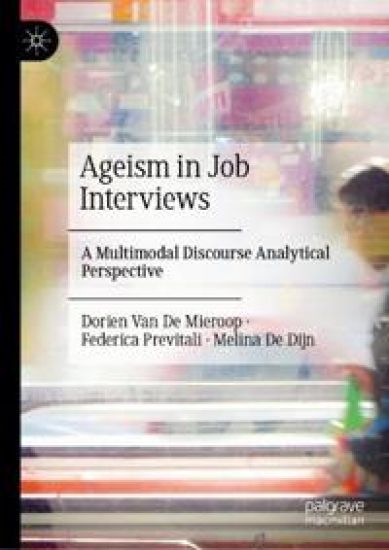
Ageism in Job Interviews

Ageism in Job Interviews

Dorien Van De Mieroop; Federica Previtali; Melina De Dijn

Springer International Publishing AG
2025
sidottu
This book investigates age categorizations and stereotyping in job interviews by drawing on a multimodal discourse analytical approach. While previous research on ageism has focused on what happens before or after the job interview, there is substantial evidence supporting the idea that the job interview is a pivotal moment in this respect as well. This is because the way in which the interaction unfolds significantly influences not only recruiters’ ultimate hiring decisions, but also candidates’ interest in pursuing the job offer further. This phase in the recruitment process is thus deserving of further scrutiny when it comes to ageism. The authors delve into age stereotypes regarding ‘old’ as well as ‘young’ age and tease out how they are ‘talked into being’ during job interviews, both by recruiters and candidates. By shedding light on the discursive dynamics of age-based prejudice, stereotyping and discrimination, this books thus aims to further understanding regarding how ageism actually plays out in in real life job interview interactions. The book will be of interest to academics working in fields including interactional sociolinguistics, pragmatics, diversity studies, human resource management and discursive psychology.