Kirjojen hintavertailu – 12 859 818 kirjaa ja 27 kauppaa

Kirjailija

Melisa Moore

Kirjat ja teokset yhdessä paikassa: 3 kirjaa, julkaisuja vuosilta 2013–2026, suosituimpiin kuuluu The Good Sleep Guide for Neurodivergent Kids. Vertaile teosten hintoja ja tarkista saatavuus suomalaisista kirjakaupoista.

3 kirjaa

Kirjojen julkaisuvuodet: 2013–2026.

The Good Sleep Guide for Neurodivergent Kids

The Good Sleep Guide for Neurodivergent Kids

Melisa Moore

NEW WORLD LIBRARY
2026
nidottu
A compassionate, science-backed guide to improving sleep in children and teens with ADHD, autism, and other neurodiversities -- written by a renowned pediatric sleep expert who is also the parent of a neurodivergent child. When pediatric sleep expert Melisa Moore realized her son was neurodivergent, she already had a decade of experience helping families navigate sleep issues -- but nothing had prepared her for the reality of managing sleep in her own household. The advice she had learned felt too rigid, unrealistic, or simply ineffective for kids like hers. What she needed was a different kind of guide -- one that blended evidence-based science with real-life parenting wisdom and offered support without judgment. The Good Sleep Guide for Neurodivergent Kids is that guide: warm, practical, and rooted in clinical knowledge. Moore brings together her decades of professional experience and research with her personal journey as a mother of a child with ADHD and autism to offer a radically compassionate blueprint for improving sleep in neurodivergent children and teens. Readers will learn how to: - identify the unique biological, sensory, and behavioral sleep challenges common in neurodivergent kids - develop flexible, personalized routines that prioritize consistency and connection over perfection - use communication strategies that actually work for kids who think and experience the world differently - assess the pros and cons of medications, supplements, and alternative therapies - safeguard their own rest and mental health, too With humor, validation, and true empathy, Moore breaks down the myths of sleep training and redefines "healthy sleep" for neurodiverse families. This is not another set of unrealistic rules or one-size-fits-all solutions. It's a toolkit for finding what works -- for your child, in your life, right now, even if it doesn't look the way anyone told you it should. As Moore shows, good sleep is possible, and her book will get your family there.

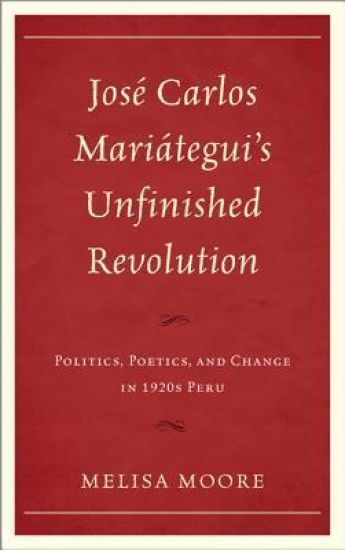
José Carlos Mariátegui’s Unfinished Revolution

José Carlos Mariátegui’s Unfinished Revolution

Melisa Moore

Bucknell University Press
2013
sidottu
The years 1909–1930, the eleven-year presidency of the businessman-turned-politician Augusto B. Leguía, mark a formative period of Peruvian modernity, witnessing the continuity of a process of reconstruction and the development of an intellectual and cultural tradition after a humbling defeat during the War of the Pacific (1879–1883). But these years were also fraught with conflict generated by long-standing divisions and new rivalries. A postwar generation of intellectuals and artists, led by José Carlos Mariátegui and galvanized by left-wing thinking and an avant-garde aesthetic, sought representation in the fields of politics and the arts to realize the modernizing potentialities opened up by a Positivist oligarchy. New political and artistic conceptions raised their awareness of the fractured sense of nationhood in Peru and the need for a new project of nation-formation based on a common political and cultural consciousness. Crucially, this gave rise to divergent political and artistic positions and practices. Mariátegui’s Indigenist-Marxist politics and Modernist-inspired poetics, through his influential journal Amauta, were pivotal in revitalizing, conciliating and channeling those of his cohorts and challengers. Comprising six full-length chapters, a comprehensive introduction and conclusion, this monograph is ambitious in scope and depth. It provides fresh readings of key writings of Mariátegui, one of Latin America’s most important and revolutionary political, cultural and aesthetic theorists, through the lens of his poetics, emphasizing the value of this approach for a fuller understanding of his work’s political meaning and impact. It does so through detailed analysis of the poetic, expressive language employed in seminal political essays, aimed at forging a new Marxist position in 1920s Peru. Furthermore, it offers powerful and original critiques of under-studied intellectuals of this time, especially aprista-Futurists, Socialists and Indigenists, including female writers and artists such as Magda Portal, Ángela Ramos, and Julia Codesido whose work he championed. These readings are fully contextualized in terms of detailed critical study of complex sociopolitical conditions and positions, and biographical, intellectual backgrounds of Mariátegui and his contemporaries. This monograph underscores the fundamental importance of Mariátegui in the development of political and artistic practices and projects that shaped a national, shared, yet also heterogeneous, political culture and cultural tradition in Peru during and after his lifetime.