Kirjojen hintavertailu – 12 859 819 kirjaa ja 27 kauppaa

Kirjailija

Melissa Bingmann

Kirjat ja teokset yhdessä paikassa: 5 kirjaa, julkaisuja vuosilta 2015–2023, suosituimpiin kuuluu The Museum Educator's Manual. Vertaile teosten hintoja ja tarkista saatavuus suomalaisista kirjakaupoista.

5 kirjaa

Kirjojen julkaisuvuodet: 2015–2023.

The Museum Educator's Manual

The Museum Educator's Manual

Anna Johnson; Kimberly A. Huber; Nancy Cutler; Melissa Bingmann; Tim Grove

Rowman Littlefield Publishers
2017
sidottu
The Museum Educator's Manual addresses the role museum educators play in today's museums from an experience-based perspective. Seasoned museum educators author each chapter, emphasizing key programs along with case studies that provide successful examples, and demonstrate a practical foundation for the daily operations of a museum education department, no matter how small. The book covers: volunteer and docent management and training; exhibit development; program and event design and implementation; working with families, seniors, and teens; collaborating with schools and other institutions; and funding. This second edition interweaves technology into every aspect of the manual and includes two entirely new chapters, one on Museums - An Educational Resource for Schools and another on Active Learning in Museums. With invaluable checklists, schedules, organizational charts, program examples, and other how-to documents included throughout, The Museum Educator's Manual is a 'must have' book for any museum educator.
The Museum Educator's Manual

The Museum Educator's Manual

Anna Johnson; Kimberly A. Huber; Nancy Cutler; Melissa Bingmann; Tim Grove

Rowman Littlefield Publishers
2017
pokkari

Halvin toimitettuna 79,30 €

The Museum Educator's Manual addresses the role museum educators play in today's museums from an experience-based perspective. Seasoned museum educators author each chapter, emphasizing key programs along with case studies that provide successful examples, and demonstrate a practical foundation for the daily operations of a museum education department, no matter how small. The book covers: ·volunteer and docent management and training; ·exhibit development; ·program and event design and implementation; ·working with families, seniors, and teens; ·collaborating with schools and other institutions; and ·funding. This second edition interweaves technology into every aspect of the manual and includes two entirely new chapters, one on Museums - An Educational Resource for Schools and another on Active Learning in Museums. With invaluable checklists, schedules, organizational charts, program examples, and other how-to documents included throughout, The Museum Educator's Manual is a 'must have' book for any museum educator.

Telling America's Stories Through Places
Telling America’s Stories Through Places combines the methodologies of the public historian, practitioner, and the participant and observer to survey several types of historic sites with an emphasis on how to provide meaningful experiences for visitors. Coverage expands beyond the traditional interpreter-led tour to include videos, exhibitions, and other types of interpretive media as well as sites that are not typically categorized as a house museum. Part I of the book examines different types of sites, from historic homes to battlefields to urban neighborhoods. Part II introduces characteristics of different forms of site stewardship. Part III presents the exemplary techniques identified in Part I as a practical set of tools.
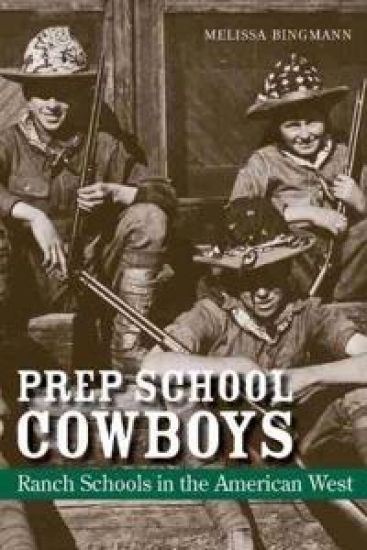
Prep School Cowboys

Prep School Cowboys

Melissa Bingmann

University of New Mexico Press
2015
sidottu
Ranch schools in Arizona, California, New Mexico, and Wyoming in the 1920s and 1930s portrayed that the West embodied the moral attributes believed to be lacking in urban America. Advocates of character education saw the courage and self-reliance of the Old West as the qualities necessary to preserve the nation through the next generation. Bingmann uses ranch schools, designed to counteract the problems of inherited wealth, as a lens through which to examine citizenship, class, gender, and region during this era while illustrating that these schools, in transmitting such values to American youth, created a network of elite private schools that gave pampered boys from the urban centers of the Atlantic Seaboard and Great Lakes region the opportunity to grow into gentlemen cowboys ready to take the reins of power in family businesses and government.