Kirjojen hintavertailu – 12 903 733 kirjaa ja 27 kauppaa

Kirjailija

Melton A. McLaurin

Kirjat ja teokset yhdessä paikassa: 6 kirjaa, julkaisuja vuosilta 1998–2024, suosituimpiin kuuluu The North Carolina State Fair. Vertaile teosten hintoja ja tarkista saatavuus suomalaisista kirjakaupoista.

Nimi esiintyy myös muodoissa: Melton a McLaurin

6 kirjaa

Kirjojen julkaisuvuodet: 1998–2024.

African American Photographs of the World War II Home Front
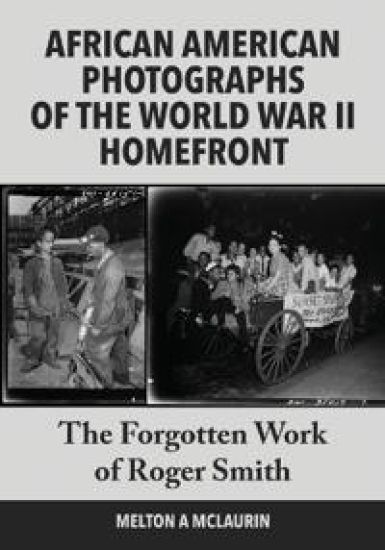
For less than eighteen months in 1942 and 1943, a young African American photographer named Roger Smith was the sole photographer for the Negro Section of the segregated United States Office of War Information (OWI). From the agency's office in Washington, DC, he worked in a rigidly segregated city and in an equally segregated federal government civil service. Despite the handicaps under which he labored, in that brief time Smith created a remarkable photographic record of the African American home front in and around the nation's capital. His photographs, many of them arresting candid shots, provide a vivid record of African Americans supporting and contributing to the war effort of a nation that deemed them inferior and continued to treat them as second-class citizens. While Smith himself, about whom we know little, slipped from the pages of history, his photographs remain to attest to both African American support for the war and to a people's continued hope that the nation would someday redeem its promise of equality for all. Despite his accomplishments, the rules of segregation that governed the society in which he lived restrained Smith and his work for the OWI has gone largely unrecognized. The primary history of the OWI to date mentions neither the Negro Section nor Smith. Yet during his time with the OWI, Smith encountered any number of talented white photographers, many of whom would go on to exceptional careers, some to fame. In the exact period Smith worked with the OWI, the Farm Security Administration (FSA), one of Roosevelt's Depression era agencies, was merged with the OWI until it was eliminated at the end of 1943. The cadre of photographers in the FSA photographic unit headed by Roy Stryker had gained a national reputation presenting the American public with graphic images of the human suffering endured during the Depression, images that still loom large in the public recollection of that era. Among their ranks were Stryker, Walker Evans, Dorothea Lange, Ben Shahn, Jack Delano, Arthur Rothstein, and the African American photographer Gordon Parks. As the Negro Section's sole photographer, Smith produced the photographs the OWI sent to some 240 black-owned newspapers located in every region of the country. Among the largest African American-owned papers at the time were the Atlanta World (the nation's only black-owned daily) and the large weekly papers with circulations in the hundreds of thousands, including the Pittsburg Courier, the Chicago Defender, and the New York Amsterdam News, each enormously influential and each reaching numerous subscribers beyond their city. Papers with a more local circulation in cities such as Boston, Baltimore, Cleveland, Dallas, and Los Angles each reached an additional audience of tens of thousands. The Negro Section also sent its stories and photographs to the few black-owned papers published in Southern cities, including Nashville, Tennessee, and Greensboro and Wilmington, North Carolina, all of which found a small local readership.
Celia, a Slave

Celia, a Slave

Melton A. McLaurin; Daina Ramey Berry; Jennifer L. Morgan

University of Georgia Press
2021
nidottu
Originally published in 1991, Celia, a Slave illuminates the moral dilemmas that lie at the heart of a slaveholding society by telling the story of a young slave who was sexually exploited by her enslaver and ultimately executed for his murder. Melton A. McLaurin uses Celia’s story to reveal the tensions that strained the fabric of antebellum southern society by focusing on the role of gender and the manner in which the legal system was used to justify slavery. An important addition to our understanding of the pre–Civil War era, Celia, a Slave is also an intensely compelling narrative of one woman pushed beyond the limits of her endurance by a system that denied her humanity at the most basic level.
The Marines of Montford Point

The Marines of Montford Point

Melton a McLaurin

Readhowyouwant
2009
pokkari
Unlike the Buffalo Soldiers or the Tuskegee Airmen, whose stories have received considerable scholarly attention and exposure in the popular media, the men of Mont ford Point remain virtually unknown. I personally have spoken with young black Marines on the grounds of the original Camp Mont ford Point who knew nothing of its history. Conversations with numerous white career veterans of the Corps revealed that they were equally unaware of the historical significance of Mont ford Point and the men who trained there. This work is intended primarily to acquaint the public with the experience of a remarkable group of men, to give those men the opportunity to present their experiences and accomplishments to the public in their own words. The words in this volume are powerful words, spoken by men who have endured much. They are words spoken with flashes of anger and humor, sometimes with sorrow, sometimes with great wisdom, always with a pride fostered by incredible accomplishment in the face of adversity. They are words to be heard, words to be pondered, words that hold deep meaning and significance for American society in the twenty-first century.
Separate Pasts

Separate Pasts

Melton A. McLaurin

University of Georgia Press
1998
pokkari
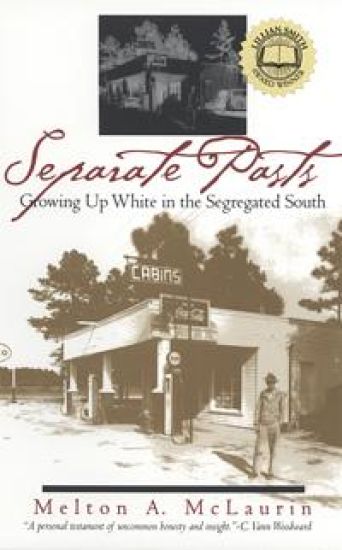
In Separate Pasts Melton A. McLaurin honestly and plainly recalls his boyhood during the 1950s, an era when segregation existed unchallenged in the rural South. In his small hometown of Wade, North Carolina, whites and blacks lived and worked within each other's shadows, yet were separated by the history they shared. Separate Pasts is the moving story of the bonds McLaurin formed with friends of both races—a testament to the power of human relationships to overcome even the most ingrained systems of oppression. A new afterword provides historical context for the development of segregation in North Carolina. In his poignant portrayal of contemporary Wade, McLaurin shows that, despite integration and the election of a black mayor, the legacy of racism remains.