Kirjojen hintavertailu – 12 859 818 kirjaa ja 27 kauppaa

Kirjailija

Melvyn Stokes

Kirjat ja teokset yhdessä paikassa: 7 kirjaa, julkaisuja vuosilta 2007–2023, suosituimpiin kuuluu Cinema Memories. Vertaile teosten hintoja ja tarkista saatavuus suomalaisista kirjakaupoista.

7 kirjaa

Kirjojen julkaisuvuodet: 2007–2023.

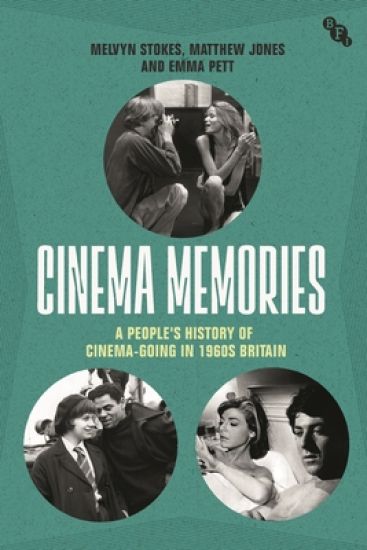
Cinema Memories

Cinema Memories

Melvyn Stokes; Matthew Jones; Emma Pett

BLOOMSBURY PUBLISHING PLC
2023
nidottu
Cinema Memories brings together and analyses the memories of almost a thousand people of going to the cinema in Britain during the 1960s. It offers a fresh perspective on the social, cultural and film history of what has come to be seen as an iconic decade, with the release of films such as A Taste of Honey, The Sound of Music, Darling, Blow-Up, Alfie, The Graduate, and Bonnie and Clyde. Drawing on first-hand accounts, authors Melvyn Stokes, Matthew Jones and Emma Pett explore how cinema-goers constructed meanings from the films they watched - through a complex process of negotiation between the films concerned, their own social and cultural identities, and their awareness of changes in British society. Their analysis helps the reader see what light the cultural memory of 1960s cinema-going sheds on how the Sixties in Britain is remembered and interpreted. Positioning their study within debates about memory, 1960s cinema, and the seemingly transformative nature of this decade of British history, the authors reflect on the methodologies deployed, the use of memories as historical sources, and the various ways in which cinema and cinema-going came to mean something to their audiences.
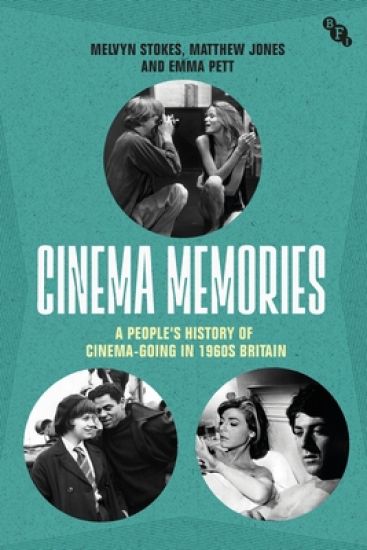
Cinema Memories

Cinema Memories

Melvyn Stokes; Matthew Jones; Emma Pett

BFI Publishing
2022
sidottu
Cinema Memories brings together and analyses the memories of almost a thousand people of going to the cinema in Britain during the 1960s. It offers a fresh perspective on the social, cultural and film history of what has come to be seen as an iconic decade, with the release of films such as A Taste of Honey, The Sound of Music, Darling, Blow-Up, Alfie, The Graduate, and Bonnie and Clyde. Drawing on first-hand accounts, authors Melvyn Stokes, Matthew Jones and Emma Pett explore how cinema-goers constructed meanings from the films they watched - through a complex process of negotiation between the films concerned, their own social and cultural identities, and their awareness of changes in British society. Their analysis helps the reader see what light the cultural memory of 1960s cinema-going sheds on how the Sixties in Britain is remembered and interpreted. Positioning their study within debates about memory, 1960s cinema, and the seemingly transformative nature of this decade of British history, the authors reflect on the methodologies deployed, the use of memories as historical sources, and the various ways in which cinema and cinema-going came to mean something to their audiences.
American History through Hollywood Film

American History through Hollywood Film

Melvyn Stokes

Bloomsbury Academic USA
2013
sidottu
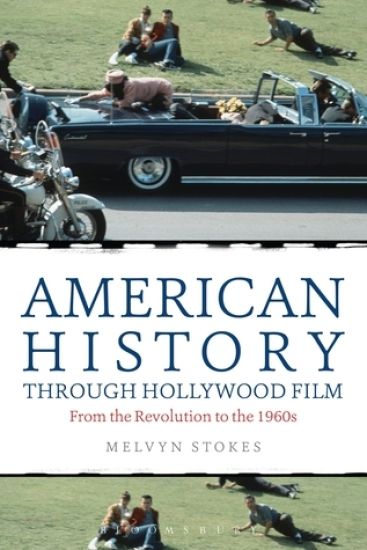
American History through Hollywood Film offers a new perspective on major issues in American history from the 1770s to the end of the twentieth century and explores how they have been represented in film. Melvyn Stokes examines how and why representation has changed over time, looking at the origins, underlying assumptions, production, and reception of an important cross-section of historical films. Chapters deal with key events in American history including the American Revolution, the Civil War and its legacy, the Great Depression, and the anti-communism of the Cold War era. Major themes such as ethnicity, slavery, Native Americans and Jewish immigrants are covered and a final chapter looks at the way the 1960s and 70s have been dealt with by Hollywood. This book is essential reading for anyone studying American history and the relationship between history and film.
American History through Hollywood Film

American History through Hollywood Film

Melvyn Stokes

Bloomsbury Academic USA
2013
nidottu
American History through Hollywood Film offers a new perspective on major issues in American history from the 1770s to the end of the twentieth century and explores how they have been represented in film. Melvyn Stokes examines how and why representation has changed over time, looking at the origins, underlying assumptions, production, and reception of an important cross-section of historical films. Chapters deal with key events in American history including the American Revolution, the Civil War and its legacy, the Great Depression, and the anti-communism of the Cold War era. Major themes such as ethnicity, slavery, Native Americans and Jewish immigrants are covered and a final chapter looks at the way the 1960s and 70s have been dealt with by Hollywood. This book is essential reading for anyone studying American history and the relationship between history and film.
D.W. Griffith's The Birth of a Nation

D.W. Griffith's The Birth of a Nation

Melvyn Stokes

Oxford University Press Inc
2008
sidottu
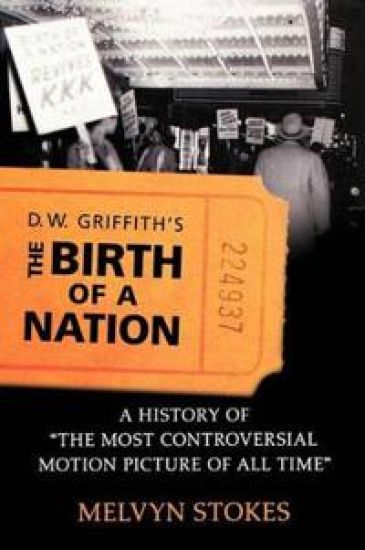
In this deeply researched and vividly written volume, Melvyn Stokes illuminates the origins, production, reception and continuing history of this ground-breaking, aesthetically brilliant, and yet highly controversial movie landmark. By going back to the original archives, particularly the NAACP and D. W. Griffith Papers, Stokes explodes many of the myths surrounding The Birth of a Nation (1915). Yet the story that remains is fascinating: the longest American film of its time, Griffith's film incorporated many new features, including the first full musical score compiled for an American film. It was distributed and advertised by pioneering methods that would quickly become standard. Through the high prices charged for admission and the fact that it was shown, at first, only in "live" theaters with orchestral accompaniment, Birth played a major role in reconfiguring the American movie audience by attracting more middle-class patrons. But if the film was a milestone in the history of cinema, it was also undeniably racist. Stokes shows that the darker side of this classic movie has its origins in the racist ideas of Thomas Dixon, Jr. and Griffith's own Kentuckian background and earlier film career. The book reveals how, as the years went by, the campaign against the film became increasingly successful. In the 1920s, for example, the NAACP exploited the fact that the new Ku Klux Klan, which used Griffith's film as a recruiting and retention tool, was not just anti-black, but also anti-Catholic and anti-Jewish, as a way to mobilize new allies in opposition to the film. This crisply written book sheds light on both the film's racism and the aesthetic brilliance of Griffith's filmmaking. It is a must-read for anyone interested in the cinema.
D.W. Griffith's The Birth of a Nation

D.W. Griffith's The Birth of a Nation

Melvyn Stokes

Oxford University Press Inc
2008
nidottu
In this deeply researched and vividly written volume, Melvyn Stokes illuminates the origins, production, reception and continuing history of this ground-breaking, aesthetically brilliant, and yet highly controversial movie. By going back to the original archives, particularly the NAACP and D. W. Griffith Papers, Stokes explodes many of the myths surrounding The Birth of a Nation (1915). Yet the story that remains is fascinating: the longest American film of its time, Griffith's film incorporated many new features, including the first full musical score compiled for an American film. It was distributed and advertised by pioneering methods that would quickly become standard. Through the high prices charged for admission and the fact that it was shown, at first, only in "live" theaters with orchestral accompaniment, Birth played a major role in reconfiguring the American movie audience by attracting more middle-class patrons. But if the film was a milestone in the history of cinema, it was also undeniably racist. Stokes shows that the darker side of this classic movie has its origins in the racist ideas of Thomas Dixon, Jr. and Griffith's own Kentuckian background and earlier film career. The book reveals how, as the years went by, the campaign against the film became increasingly successful. In the 1920s, for example, the NAACP exploited the fact that the new Ku Klux Klan, which used Griffith's film as a recruiting and retention tool, was not just anti-black, but also anti-Catholic and anti-Jewish, as a way to mobilize new allies in opposition to the film. This crisply written book sheds light on both the film's racism and the aesthetic brilliance of Griffith's filmmaking. It is a must-read for anyone interested in the cinema.
Hollywood Abroad

Hollywood Abroad

Melvyn Stokes; Richard Maltby

BFI Publishing
2007
sidottu
Hollywood Abroad is the first book to examine the reception of Hollywood movies by non-American audiences. Although numerous books on film history have analyzed the ways in which American films came to dominate world markets, there has so far been very little published work on how audiences outside the United States have responded to Hollywood-produced films. Hollywood Abroad explores the reception of U. S. films in Britain, France, Belgium, Turkey, Australia, India, Japan, and Central Africa. The book covers topics from the first major penetration of American films into France, Britain, and Australia to the impact of such films as The Best Years of Our Lives to the response of Belgian young people in the age of the multiplex. It demonstrates that the story of the reception of American films overseas is less one of domination than of a complex adoption of Hollywood into various cultures.