Kirjojen hintavertailu – 12 903 725 kirjaa ja 27 kauppaa
Kirjailija
Menachem Fisch
Kirjat ja teokset yhdessä paikassa: 7 kirjaa, julkaisuja vuosilta 1997–2025, suosituimpiin kuuluu The View from Within. Vertaile teosten hintoja ja tarkista saatavuus suomalaisista kirjakaupoista.
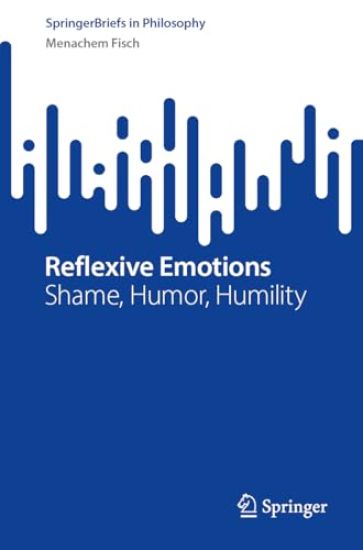
This book looks closely at three first-order reflexive emotions—shame, humor and humility—that are shown to be not only exclusively human, but definitive of major aspects of human selfhood, agency and normativity. A separate chapter that covers second-order emotions, shows that when negative, they display a crucial and equally exclusive aspect of human normative self-critique. In addition to jointly delineating agency, sapience, normativity, rationality, and the ability to critically self-reflect, this book further demonstrates the inevitable role of the we in the I (to paraphrase Axel Honneth), namely, how realizing one’s full human potential necessarily requires engaging others. This book appeals to students as well as researchers and looks closely at how these three reflexive emotions bestow categorical value on otherness, rendering normative diversity not merely something to be tolerated or rationally overcome, but a rare and necessary blessing.
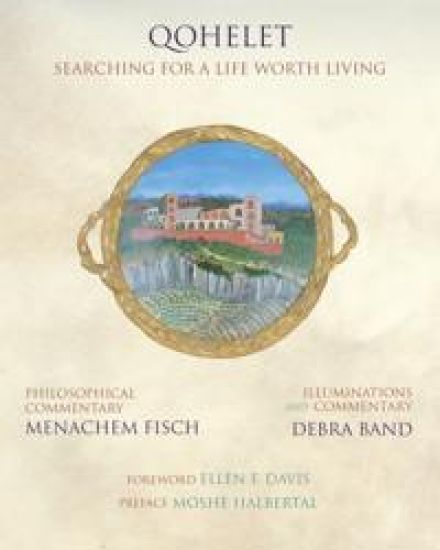
How to live a life of wisdom and fulfillment in a far-from-perfect world? Philosopher Menachem Fisch and artist Debra Band together probe Qohelet's inquiry into the value of life "under the sun" in this brilliant work—the first illuminated manuscript of the entire biblical text, the first philosophical analysis tracing the coherent path of this biblical thinker's full argument. Whereas modern readers influenced by the famous declaration "vanity, vanity, all is vanity" from the 1611 King James Bible have commonly understood that Qohelet found only futility and hopelessness in human life, Fisch restores the literal meaning, "vapor," to Qohelet's key word, hevel, with implications that reveal Qohelet's path to wisdom and even serenity. Through linguistic precision and careful unfolding of the book's philosophical argument, Fisch uncovers Qohelet's twin concerns: life is short, and situated as we are, far below the heavens, we can never be assured of comprehending our world, or understanding divine will and intent. He reveals Qohelet's understanding that since we can never fully predict or understand our fortunes or the heritage we leave behind us, the best we can do is to live our lives fully, relating to others attentively, always aware of the limits of human life. In her glowing, immersive, and discursive illuminated paintings of the entire text, Band imagines Qohelet's teachings, employing the grandest of palaces, the Alhambra, as the central metaphor for the beauty and impermanence of human life and accomplishments. She fills its halls and gardens with often surprising imagery, symbolism, and related poetry, creating a visual midrash that reveals the relationship of Qohelet's thought to other biblical texts and Jewish lore and its reverberations across the centuries and cultures of Western civilization, from ancient Israel to today's America. Each illuminated page is complemented by lucid commentary explaining its full meaning. Renowned scholars Ellen F. Davis and Moshe Halbertal crown the work with a penetrating foreword and preface.
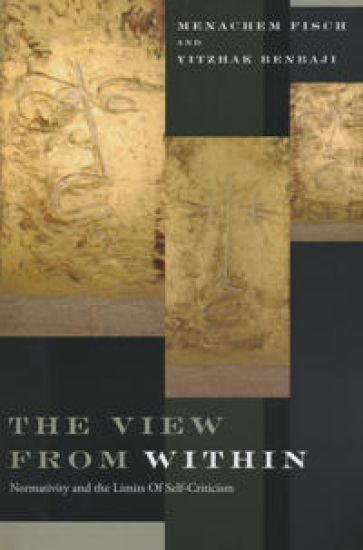
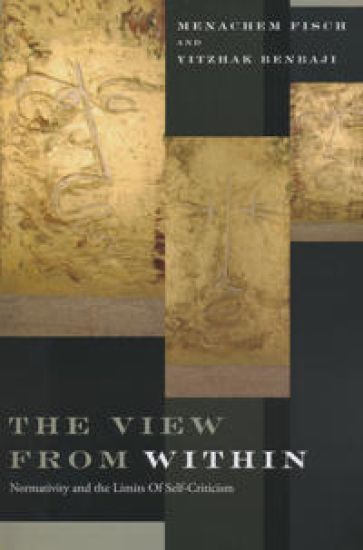
The View from Within examines the character of reason and the ability of an individual to effectively distance himself from the normative framework in which he functions in order to be self-critical and innovative. To accomplish this task, Menachem Fisch and Yitzhak Benbaji critically employ or reject the recent writings of Brandom, Friedman, Frankfurt, Walzer, Davidson, Williams, Habermas, Rorty, and McDowell to offer a fundamental analysis of the character of reason and the problem of relativism. This ambitious book forcefully raises the problem of rational normative change and makes the unique and insightful claim that although we cannot be convinced by normative criticism to modify or replace our norms, we can be rationally motivated to do so by the effect of exposure to trusted critics. Its unprecedented analysis, with its solution to the problem of normative self-criticism that has baffled philosophers for the past sixty years, will be welcomed by both students and scholars of philosophy.
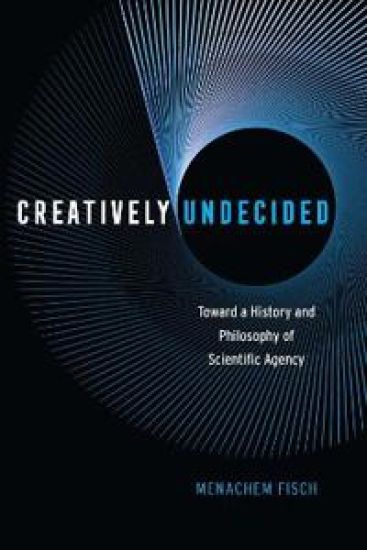
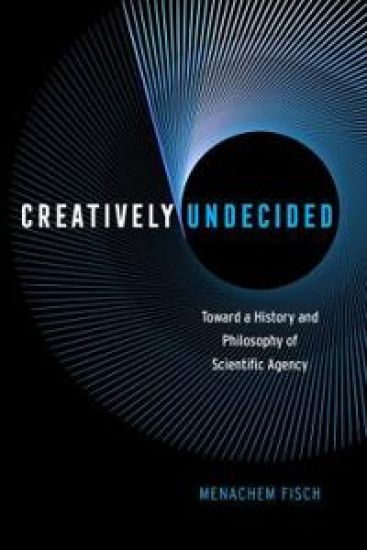
Thomas Kuhn and Karl Popper are believed by many who study science to be the two key thinkers of the twentieth century. Each addressed the question of how scientific theories change, but they came to different conclusions. By turning our attention to ambiguity and indecision in science, Menachem Fisch, in Creatively Undecided, offers a new way to look at how scientific understandings change. Following Kuhn, Fisch argues that scientific practice depends on the framework in which it is conducted, but he also shows that those frameworks can be understood as the possible outcomes of the rational deliberation that Popper viewed as central to theory change. How can a scientist subject her standards to rational appraisal if that very act requires the use of those standards? The way out, Fisch argues, is by looking at the incentives scientists have to create alternative frameworks in the first place. Fisch argues that while science can only be transformed from within, by people who have standing in the field, criticism from the outside is essential. We may not be able to be sufficiently self-critical on our own, but trusted criticism from outside, even if resisted, can begin to change our perspective at which point transformative self-criticism becomes a real option.
Thomas Kuhn and Karl Popper are believed by many who study science to be the two key thinkers of the twentieth century. Each addressed the question of how scientific theories change, but they came to different conclusions. By turning our attention to ambiguity and indecision in science, Menachem Fisch, in Creatively Undecided, offers a new way to look at how scientific understandings change. Following Kuhn, Fisch argues that scientific practice depends on the framework in which it is conducted, but he also shows that those frameworks can be understood as the possible outcomes of the rational deliberation that Popper viewed as central to theory change. How can a scientist subject her standards to rational appraisal if that very act requires the use of those standards? The way out, Fisch argues, is by looking at the incentives scientists have to create alternative frameworks in the first place. Fisch argues that while science can only be transformed from within, by people who have standing in the field, criticism from the outside is essential. We may not be able to be sufficiently self-critical on our own, but trusted criticism from outside, even if resisted, can begin to change our perspective at which point transformative self-criticism becomes a real option.
The View from Within examines the character of reason and the ability of an individual to effectively distance himself from the normative framework in which he functions in order to be self-critical and innovative. To accomplish this task, Menachem Fisch and Yitzhak Benbaji critically employ or reject the recent writings of Brandom, Friedman, Frankfurt, Walzer, Davidson, Williams, Habermas, Rorty, and McDowell to offer a fundamental analysis of the character of reason and the problem of relativism. This ambitious book forcefully raises the problem of rational normative change and makes the unique and insightful claim that although we cannot be convinced by normative criticism to modify or replace our norms, we can be rationally motivated to do so by the effect of exposure to trusted critics. Its unprecedented analysis, with its solution to the problem of normative self-criticism that has baffled philosophers for the past sixty years, will be welcomed by both students and scholars of philosophy.
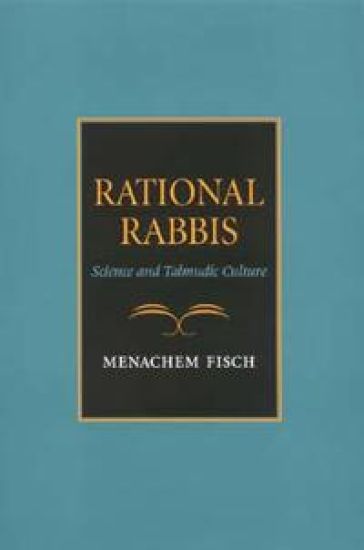
" . . . a fascinating and thought-provoking book . . . " —The Jewish Quarterly "The best introduction to the talmudic literature that is available. . . . An extraordinarily important book, brilliant, and lucid." —Daniel Boyarin "Menachem Fisch has written a rich, thoughtful book. One will come away from Rational Rabbis with a deeper understanding of just what the Talmud is." —Hilary Putnam Talmudic culture is often viewed as bound by its traditions. Menachem Fisch maintains that a close reading of talmudic texts frequently reveals their authors as rabbis who, rather than conform uncritically to tradition, knowingly set out to expose and resolve problems inherent in the received traditions.