

Kirjailija
Mencius
Kirjat ja teokset yhdessä paikassa: 19 kirjaa, julkaisuja vuosilta 2004–2026, suosituimpiin kuuluu Chinese literature. Vertaile teosten hintoja ja tarkista saatavuus suomalaisista kirjakaupoista.
19 kirjaa
Kirjojen julkaisuvuodet: 2004–2026.



Chinese literature; Comprising the Analects of Confucius, the Sayings of Mencius, the Shi-King, the Travels of Fâ-Hien, and the Sorrows of Han
Confucius; Faxian; Mencius
Antigonos Verlag
2025
nidottu
An advocate of Confucian morality, Mencius exhorted ruling through virtue during the Warring States, when sundry ideas of effectual governance prospered. Like Confucius had done two centuries before him, Mencius wandered from state to state, lobbying sovereigns. Mencian virtue politics has been pivotal to political thinking in China, though most appealing, it may be argued, to scholars. From Mencius, Mingyuan Hu selects and translates four dialogues exemplary of this thinking. This book is part of the Erstwhile Series.
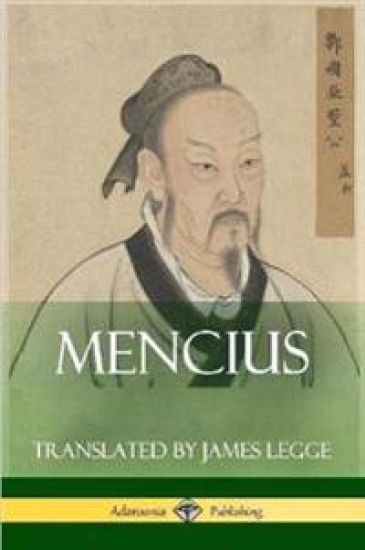
The book of wisdom by Mencius, a philosopher and sage of Ancient China, is presented here complete in an authoritative English translation. Written during and shortly after the Warring States period of Chinese antiquity, the book of Mencius is a selection of conversational dialogues between the philosopher and his various disciples. Together they discuss all manner of topics, from living a happy and virtuous life to the principles of raising a family and educating the young. Breaking with Confucius himself, who venerated rulers and strong governance, Mencius argues for the right of common people to overthrow a repressive or brutal regime. The book is rich with analogy, examining the actions of the ancient kings and dukes of China in order to draw comparisons and enhance the lessons offered. In life, Mencius was a prominent figure who traveled and lectured widely, serving variously as an educator, official and scholar in the realms of ancient China.
Confucius Und Mencius: Die Vier Bücher Der Moral- Und Staatsphilosophie China's.
Mencius
Creative Media Partners, LLC
2018
pokkari
Mencius (Classics of Chinese Philosophy and Literature) (Hardcover)
Mencius; James Legge
Lulu.com
2018
sidottu
Halvin toimitettuna 31,90 €
The book of wisdom by Mencius, a philosopher and sage of Ancient China is presented here in hardcover with an authoritative English translation. Written during and shortly after the Warring States period of Chinese antiquity, the book of Mencius is a selection of conversational dialogues between the philosopher and his various disciples. Together they discuss all manner of topics, from living a happy and virtuous life to the principles of raising a family and educating the young. Breaking with Confucius himself, who venerated rulers and strong governance, Mencius argues for the right of common people to overthrow a repressive or brutal regime. The book is rich with analogy, examining the actions of the ancient kings and dukes of China in order to draw comparisons and enhance the lessons offered. In life, Mencius was a prominent figure who traveled and lectured widely, serving variously as an educator, official and scholar in the realms of ancient China.

The Mind Of Mencius: Or Political Economy Founded Upon Moral Philosophy
Mencius
Literary Licensing, LLC
2014
nidottu
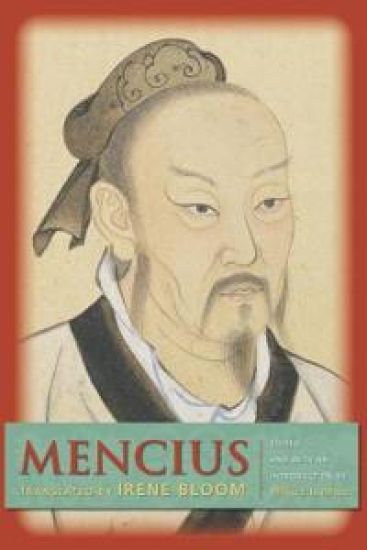
Known throughout East Asia as Mengzi, or "Master Meng," Mencius (391-308 B. C. E.) was a Chinese philosopher of the late Zhou dynasty, an instrumental figure in the spread of the Confucian tradition, and a brilliant illuminator of its ideas. Mencius was active during the Warring States Period (403-221 B. C. E.), in which competing powers sought to control the declining Zhou empire. Like Confucius, Mencius journeyed to one feudal court after another, searching for a proper lord who could put his teachings into practice. Only a leader who possessed the moral qualities of a true king could unify China, Mencius believed, and in his defense of Zhou rule and Confucian philosophy, he developed an innovative and highly nuanced approach to understanding politics, self-cultivation, and human nature, profoundly influencing the course of Confucian thought and East Asian culture. Mencius is a record of the philosopher's conversations with warring lords, disciples, and adversaries of the Way, as well as a collection of pronouncements on government, human nature, and a variety of other philosophical and political subjects. Mencius is largely concerned with the motivations of human actors and their capacity for mutual respect. He builds on the Confucian idea of ren, or humaneness, and places it alongside the complementary principle of yi, or rightness, advancing a complex notion of what is right for certain individuals as they perform distinct roles in specific situations. Consequently, Mencius's impact was felt not only in the thought of the intellectual and social elite but also in the value and belief systems of all Chinese people.
Mencius was the philosopher whose influence upon ancient Chinese thought was second only to that of Confucius, whose teachings Mencius defended and expanded. The Mencius, in which he recounts his dialogues with kings, dukes, and military men, as well as other philosophers, is one of the four books that make up the essential Confucian corpus. It takes up Confucius's theories of jen, or goodness, and yi, righteousness, explaining that the individual can achieve harmony with mankind and the universe by perfecting his innate moral nature and acting with benevolence and justice. Mencius's remarkably modern views on the duties of subjects and their rulers and on the evils of war created a Confucian orthodoxy that has remained intact since the third century BCE.
Mencius: Mind of Mencius Or Political Economy Founded Upon M
Mencius
KESSINGER PUBLISHING, LLC
2010
sidottu
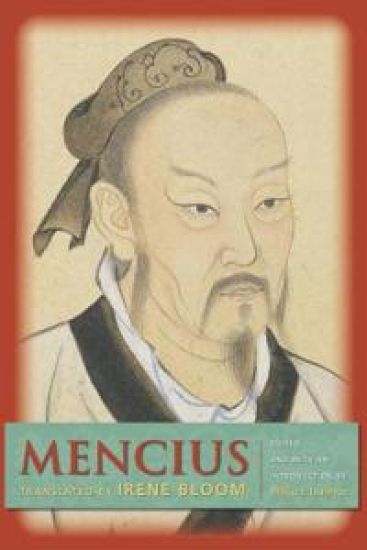
Known throughout East Asia as Mengzi, or "Master Meng," Mencius (391-308 B. C. E.) was a Chinese philosopher of the late Zhou dynasty, an instrumental figure in the spread of the Confucian tradition, and a brilliant illuminator of its ideas. Mencius was active during the Warring States Period (403-221 B. C. E.), in which competing powers sought to control the declining Zhou empire. Like Confucius, Mencius journeyed to one feudal court after another, searching for a proper lord who could put his teachings into practice. Only a leader who possessed the moral qualities of a true king could unify China, Mencius believed, and in his defense of Zhou rule and Confucian philosophy, he developed an innovative and highly nuanced approach to understanding politics, self-cultivation, and human nature, profoundly influencing the course of Confucian thought and East Asian culture. Mencius is a record of the philosopher's conversations with warring lords, disciples, and adversaries of the Way, as well as a collection of pronouncements on government, human nature, and a variety of other philosophical and political subjects. Mencius is largely concerned with the motivations of human actors and their capacity for mutual respect. He builds on the Confucian idea of ren, or humaneness, and places it alongside the complementary principle of yi, or rightness, advancing a complex notion of what is right for certain individuals as they perform distinct roles in specific situations. Consequently, Mencius's impact was felt not only in the thought of the intellectual and social elite but also in the value and belief systems of all Chinese people.
The Elements of Moral Science and Its Practical Exhibition
Mencius; E. (TRN) Faber
Kessinger Pub
2005
pokkari
Moral Development and the Organization of the State
Mencius; E. (TRN) Faber
Kessinger Pub
2005
pokkari
Mencius was one of the great philosophers of ancient China, second only in influence to Confucius, whose teachings he defended and expanded. The Mencius, in which he recounts his dialogues with kings, dukes and military men, as well as other philosophers, is one of the Four Books that make up the essential Confucian corpus. It takes up Confucius's theories of jen, or goodness and yi, righteousness, explaining that the individual can achieve harmony with mankind and the universe by perfecting his innate moral nature and acting with benevolence and justice. Mencius' strikingly modern views on the duties of subjects and their rulers or the evils of war, created a Confucian orthodoxy that has remained intact since the third century BCE.