Kirjojen hintavertailu – 12 859 819 kirjaa ja 27 kauppaa

Kirjailija

MengChu Zhou

Kirjat ja teokset yhdessä paikassa: 13 kirjaa, julkaisuja vuosilta 1992–2023, suosituimpiin kuuluu Petri Net Synthesis for Discrete Event Control of Manufacturing Systems. Vertaile teosten hintoja ja tarkista saatavuus suomalaisista kirjakaupoista.

13 kirjaa

Kirjojen julkaisuvuodet: 1992–2023.

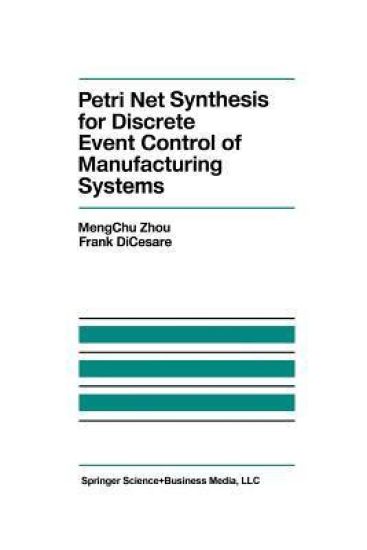
Petri Net Synthesis for Discrete Event Control of Manufacturing Systems
Petri Net Synthesis for Discrete Event Control of Manufacturing Systems develops two essential resource-sharing concepts: parallel and sequential mutual exclusions and theoretical results in Petri synthesis. A parallel mutual exclusion (PME) is defined to model a resource shared by independent distributed processes, and a sequential mutual exclusion is a sequential composition of PMEs, modeling a resource shared by sequentially-related processes. A hybrid synthesis methodology for Petri net models and controllers is proposed using top-down, modular, and bottom-up design ideas and the mutual exclusion theory. An aggregate Petri net model is refined by replacing places and /or transitions with basic design modules which are mathematically and graphically described. Petri net design methods are presented for such buffers as automatic storage and retrieval systems. Using the proposed method synthesizes both Petri net structure and feasible initial markings, guaranteeing that resulting Petri nets have desirable system properties such as freedom from deadlock and cyclic behavior. A Petri net controller is extended to error recovery for automated manufacturing systems. The theory can guarantee that the desired system properties achieved by the original design will be preserved when the controller is augmented to deal with an error in the prescribed methods. Control code has been directly generated from Petri net definitions. The algorithm and implementation details are given for a flexible manufacturing system. Using the approach presented in Petri Net Synthesis for Discrete Event Control of Manufacturing Systems, engineers and research workers can develop their own discrete event control applications and experiments.
Learning Automata and Their Applications to Intelligent Systems

Learning Automata and Their Applications to Intelligent Systems

JunQi Zhang; MengChu Zhou

JOHN WILEY SONS INC
2023
sidottu
Comprehensive guide on learning automata, introducing two variants to accelerate convergence and computational update speed Learning Automata and Their Applications to Intelligent Systems provides a comprehensive guide on learning automata from the perspective of principles, algorithms, improvement directions, and applications. The text introduces two variants to accelerate the convergence speed and computational update speed, respectively; these two examples demonstrate how to design new learning automata for a specific field from the aspect of algorithm design to give full play to the advantage of learning automata. As noisy optimization problems exist widely in various intelligent systems, this book elaborates on how to employ learning automata to solve noisy optimization problems from the perspective of algorithm design and application. The existing and most representative applications of learning automata include classification, clustering, game, knapsack, network, optimization, ranking, and scheduling. They are well-discussed. Future research directions to promote an intelligent system are suggested. Written by two highly qualified academics with significant experience in the field, Learning Automata and Their Applications to Intelligent Systems covers such topics as: Mathematical analysis of the behavior of learning automata, along with suitable learning algorithmsTwo application-oriented learning automata: one to discover and track spatiotemporal event patterns, and the other to solve stochastic searching on a lineDemonstrations of two pioneering variants of Optimal Computing Budge Allocation (OCBA) methods and how to combine learning automata with ordinal optimizationHow to achieve significantly faster convergence and higher accuracy than classical pursuit schemes via lower computational complexity of updating the state probabilityA timely text in a rapidly developing field, Learning Automata and Their Applications to Intelligent Systems is an essential resource for researchers in machine learning, engineering, operation, and management. The book is also highly suitable for graduate level courses on machine learning, soft computing, reinforcement learning and stochastic optimization.
Sustainable Manufacturing Systems: An Energy Perspective
Sustainable Manufacturing Systems Learn more about energy efficiency in traditional and advanced manufacturing settings with this leading and authoritative resource Sustainable Manufacturing Systems: An Energy Perspective delivers a comprehensive analysis of energy efficiency in sustainable manufacturing. The book presents manufacturing modeling methods and energy efficiency evaluation and improvement methods for different manufacturing systems. It allows industry professionals to understand the methodologies and techniques being embraced around the world that lead to advanced energy management. The book offers readers a comprehensive and systematic theoretical foundation for novel manufacturing system modeling, analysis, and control. It concludes with a summary of the insights and applications contained within and a discussion of future research issues that have yet to be grappled with. Sustainable Manufacturing Systems answers the questions that energy customers, managers, decision makers, and researchers have been asking about sustainable manufacturing. The book’s release coincides with recent and profound advances in smart grid applications and will serve as a practical tool to assist industrial engineers in furthering the green revolution. Readers will also benefit from: A thorough introduction to energy efficiency in manufacturing systems, including the current state of research and research methodologies An exploration of the development of manufacturing methodologies, including mathematical modeling for manufacturing systems and energy efficiency characterization in manufacturing systems An analysis of the applications of various methodologies, including electricity demand response for manufacturing systems and energy control and optimization for manufacturing systems utilizing combined heat and power systems A discussion of energy efficiency in advanced manufacturing systems, like stereolithography additive manufacturing and cellulosic biofuel manufacturing systems Perfect for researchers, undergraduate students, and graduate students in engineering disciplines, especially for those majoring in industrial, mechanical, electrical, and environmental engineering, Sustainable Manufacturing Systems will also earn a place in the libraries of management and business students interested in manufacturing system cost performance and energy management.
Supervisory Control and Scheduling of Resource Allocation Systems
Presents strategies with reachability graph analysis for optimizing resource allocation systems Supervisory Control and Scheduling of Resource Allocation Systems offers an important guide to Petri net (PN) models and methods for supervisory control and system scheduling of resource allocation systems (RASs). Resource allocation systems are common in automated manufacturing systems, project management systems, cloud data centers, and software engineering systems. The authors—two experts on the topic—present a definition, techniques, models, and state-of-the art applications of supervisory control and scheduling problems. The book introduces the basic concepts and research background on resource allocation systems and Petri nets. The authors then focus on the deadlock-free supervisor synthesis for RASs using Petri nets. The book also investigates the heuristic scheduling of RASs based on timed Petri nets. Conclusions and open problems are provided in the last section of the book. This important book: Includes multiple methods for supervisory control and scheduling with reachability graphs, and provides illustrative examplesReveals how to accelerate the supervisory controller design and system scheduling of RASs based on PN reachability graphs, with optimal or near-optimal resultsHighlights both solution quality and computational speed in RAS deadlock handling and system scheduling Written for researchers, engineers, scientists, and professionals in system planning and control, engineering, operation, and management, Supervisory Control and Scheduling of Resource Allocation Systems provides an essential guide to the supervisory control and scheduling of resource allocation systems (RASs) using Petri net reachability graphs, which allow for multiple resource acquisitions and ?exible routings.
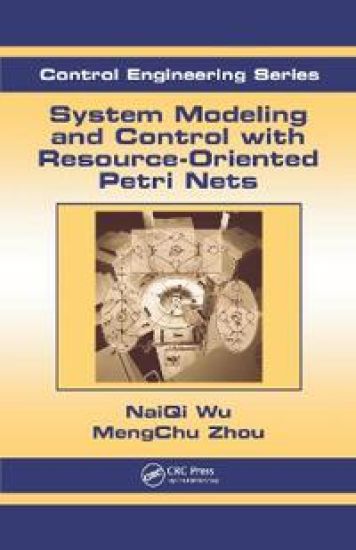
System Modeling and Control with Resource-Oriented Petri Nets
Petri nets are widely used in modeling, analysis, and control of discrete event systems arising from manufacturing, transportation, computer and communication networks, and web service systems. However, Petri net models for practical systems can be very large, making it difficult to apply such models to real-life problems. System Modeling and Control with Resource-Oriented Petri Nets introduces a new resource-oriented Petri net (ROPN) model that was developed by the authors. Not only does it successfully reduce model size, but it also offers improvements that facilitate effective modeling, analysis, and control of automated and reconfigurable manufacturing systems. Presenting the latest research in this novel approach, this cutting-edge volume provides proven theories and methodologies for implementing cost and time-saving improvements to contemporary manufacturing systems. It provides effective tools for deadlock avoidance—deadlock-free routing and deadlock-free scheduling. The authors supply simple and complex industrial manufacturing system examples to illustrate time-tested concepts, theories, and approaches for solving real-life application problems. Written in a clear and concise manner, the text covers applications to automated and reconfigurable manufacturing systems, automated guided vehicle (AGV) systems, semiconductor manufacturing systems, and flexible assembly systems. Explaining complex concepts in a manner that is easy to understand, the authors provide the understanding and tools needed for more effective modeling, analysis, performance evaluation, control, and scheduling of engineering processes that will lead to more flexible and efficient manufacturing systems.
Contemporary Issues in Systems Science and Engineering

Contemporary Issues in Systems Science and Engineering

MengChu Zhou; Han-Xiong Li; Margot Weijnen

John Wiley Sons Inc
2015
sidottu
Various systems science and engineering disciplines are covered and challenging new research issues in these disciplines are revealed. They will be extremely valuable for the readers to search for some new research directions and problems. Chapters are contributed by world-renowned systems engineersChapters include discussions and conclusionsReaders can grasp each event holistically without having professional expertise in the field
Business and Scientific Workflows

Business and Scientific Workflows

Wei Tan; MengChu Zhou

John Wiley Sons Inc
2013
sidottu
Focuses on how to use web service computing and service-based workflow technologies to develop timely, effective workflows for both business and scientific fields Utilizing web computing and Service-Oriented Architecture (SOA), Business and Scientific Workflows: A Web Service? Oriented Approach focuses on how to design, analyze, and deploy web service?based workflows for both business and scientific applications in many areas of healthcare and biomedicine. It also discusses and presents the recent research and development results. This informative reference features application scenarios that include healthcare and biomedical applications, such as personalized healthcare processing, DNA sequence data processing, and electrocardiogram wave analysis, and presents: Updated research and development results on the composition technologies of web services for ever-sophisticated service requirements from various users and communitiesFundamental methods such as Petri nets and social network analysis to advance the theory and applications of workflow design and web service compositionPractical and real applications of the developed theory and methods for such platforms as personalized healthcare and Biomedical Informatics GridsThe authors' efforts on advancing service composition methods for both business and scientific software systems, with theoretical and empirical contributions With workflow-driven service composition and reuse being a hot topic in both academia and industry, this book is ideal for researchers, engineers, scientists, professionals, and students who work on service computing, software engineering, business and scientific workflow management, the internet, and management information systems (MIS).
Petri Net Synthesis for Discrete Event Control of Manufacturing Systems

Petri Net Synthesis for Discrete Event Control of Manufacturing Systems

MengChu Zhou; F. Dicesare

Springer-Verlag New York Inc.
2012
nidottu
Petri Net Synthesis for Discrete Event Control of Manufacturing Systems develops two essential resource-sharing concepts: parallel and sequential mutual exclusions and theoretical results in Petri synthesis. A parallel mutual exclusion (PME) is defined to model a resource shared by independent distributed processes, and a sequential mutual exclusion is a sequential composition of PMEs, modeling a resource shared by sequentially-related processes. A hybrid synthesis methodology for Petri net models and controllers is proposed using top-down, modular, and bottom-up design ideas and the mutual exclusion theory. An aggregate Petri net model is refined by replacing places and /or transitions with basic design modules which are mathematically and graphically described. Petri net design methods are presented for such buffers as automatic storage and retrieval systems. Using the proposed method synthesizes both Petri net structure and feasible initial markings, guaranteeing that resulting Petri nets have desirable system properties such as freedom from deadlock and cyclic behavior. A Petri net controller is extended to error recovery for automated manufacturing systems. The theory can guarantee that the desired system properties achieved by the original design will be preserved when the controller is augmented to deal with an error in the prescribed methods. Control code has been directly generated from Petri net definitions. The algorithm and implementation details are given for a flexible manufacturing system. Using the approach presented in Petri Net Synthesis for Discrete Event Control of Manufacturing Systems, engineers and research workers can develop their own discrete event control applications and experiments.
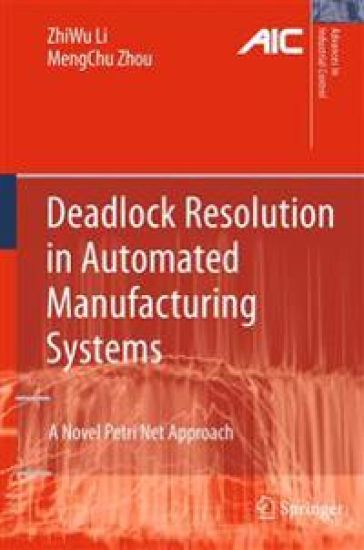
Deadlock Resolution in Automated Manufacturing Systems

Deadlock Resolution in Automated Manufacturing Systems

ZhiWu Li; MengChu Zhou

Springer London Ltd
2010
nidottu
Deadlock problems in flexible manufacturing systems (FMS) have received more and more attention in the last two decades. Petri nets are one of the more promising mathematical tools for tackling deadlocks in various resource allocation systems. In a system modeled with Petri nets, siphons are tied to the occurrence of deadlock states as a structural object. The book systematically introduces the novel theory of siphons, traps, and elementary siphons of Petri nets as well as the deadlock control strategies for FMS developed from it. Deadlock prevention methods are examined comparatively. The many FMS examples presented to demonstrate the concepts and results of this book range from the simple to the complex. Importantly, to inspire and motive the reader’s interest in further research, a number of interesting and open problems in this area are proposed at the end of each chapter.
System Modeling and Control with Resource-Oriented Petri Nets
Petri nets are widely used in modeling, analysis, and control of discrete event systems arising from manufacturing, transportation, computer and communication networks, and web service systems. However, Petri net models for practical systems can be very large, making it difficult to apply such models to real-life problems. System Modeling and Control with Resource-Oriented Petri Nets introduces a new resource-oriented Petri net (ROPN) model that was developed by the authors. Not only does it successfully reduce model size, but it also offers improvements that facilitate effective modeling, analysis, and control of automated and reconfigurable manufacturing systems. Presenting the latest research in this novel approach, this cutting-edge volume provides proven theories and methodologies for implementing cost and time-saving improvements to contemporary manufacturing systems. It provides effective tools for deadlock avoidance—deadlock-free routing and deadlock-free scheduling. The authors supply simple and complex industrial manufacturing system examples to illustrate time-tested concepts, theories, and approaches for solving real-life application problems. Written in a clear and concise manner, the text covers applications to automated and reconfigurable manufacturing systems, automated guided vehicle (AGV) systems, semiconductor manufacturing systems, and flexible assembly systems. Explaining complex concepts in a manner that is easy to understand, the authors provide the understanding and tools needed for more effective modeling, analysis, performance evaluation, control, and scheduling of engineering processes that will lead to more flexible and efficient manufacturing systems.
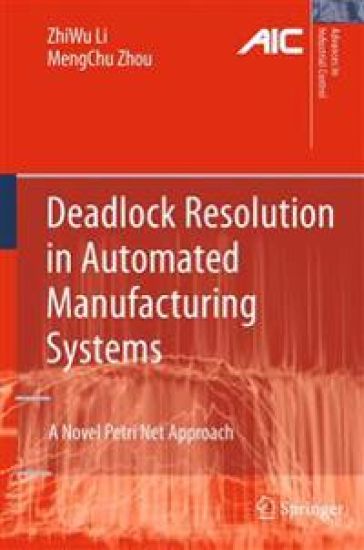
Deadlock Resolution in Automated Manufacturing Systems

Deadlock Resolution in Automated Manufacturing Systems

ZhiWu Li; MengChu Zhou

Springer London Ltd
2009
sidottu
Deadlock problems in flexible manufacturing systems (FMS) have received more and more attention in the last two decades. Petri nets are one of the more promising mathematical tools for tackling deadlocks in various resource allocation systems. In a system modeled with Petri nets, siphons are tied to the occurrence of deadlock states as a structural object. The book systematically introduces the novel theory of siphons, traps, and elementary siphons of Petri nets as well as the deadlock control strategies for FMS developed from it. Deadlock prevention methods are examined comparatively. The many FMS examples presented to demonstrate the concepts and results of this book range from the simple to the complex. Importantly, to inspire and motive the reader’s interest in further research, a number of interesting and open problems in this area are proposed at the end of each chapter.
Modeling and Control of Discrete-event Dynamic Systems

Modeling and Control of Discrete-event Dynamic Systems

Branislav Hrúz; MengChu Zhou

Springer London Ltd
2007
nidottu
Discrete-event dynamic systems (DEDs) permeate our world, being of great importance in modern manufacturing processes, transportation and various forms of computer and communications networking. “Modeling and Control of Discrete-event Dynamic Systems” begins with the mathematical basics required for the study of DEDs and moves on to present various tools used in their modeling and control. Among the instruments explained are many forms of Petri net, the sequential function chart, state charts, formal languages and max-plus algebra. Industrial examples illustrate the concepts and methods discussed. Using them, readers will be able to understand DEDs quickly and to master the control methods to analyze and improve the performance of their systems. Final-year undergraduates and graduates embarking on further courses in control, manufacturing and process engineering, computer studies or operations research will find this text an invaluable aid in learning about the control of this important class of systems.
Modeling, Simulation, And Control Of Flexible Manufacturing Systems: A Petri Net Approach

Modeling, Simulation, And Control Of Flexible Manufacturing Systems: A Petri Net Approach

Kurapati Venkatesh; Mengchu Zhou

World Scientific Publishing Co Pte Ltd
1999
sidottu
One critical barrier leading to successful implementation of flexible manufacturing and related automated systems is the ever-increasing complexity of their modeling, analysis, simulation, and control. Research and development over the last three decades has provided new theory and graphical tools based on Petri nets and related concepts for the design of such systems. The purpose of this book is to introduce a set of Petri-net-based tools and methods to address a variety of problems associated with the design and implementation of flexible manufacturing systems (FMSs), with several implementation examples. There are three ways this book will directly benefit readers. First, the book will allow engineers and managers who are responsible for the design and implementation of modern manufacturing systems to evaluate Petri nets for applications in their work. Second, it will provide sufficient breadth and depth to allow development of Petri-net-based industrial applications. Third, it will allow the basic Petri net material to be taught to industrial practitioners, students, and academic researchers much more efficiently. This will foster further research and applications of Petri nets in aiding the successful implementation of advanced manufacturing systems.