Kirjojen hintavertailu – 12 903 725 kirjaa ja 27 kauppaa

Kirjailija

Mercedes García-Arenal

Kirjat ja teokset yhdessä paikassa: 5 kirjaa, julkaisuja vuosilta 2006–2022, suosituimpiin kuuluu Ahmad al-Mansur. Vertaile teosten hintoja ja tarkista saatavuus suomalaisista kirjakaupoista.

Nimi esiintyy myös muodoissa: Mercedes Garcia-Arenal

5 kirjaa

Kirjojen julkaisuvuodet: 2006–2022.

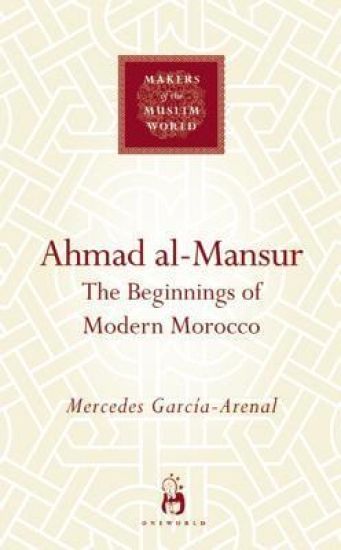
Ahmad al-Mansur

Ahmad al-Mansur

Mercedes Garcia-Arenal

Oneworld Publications
2008
sidottu
Sultan Ahmad al-Mansur (1578-1603) was one of the most important rulers in the history of Morocco, which to this day bears the mark of his twenty-five year rule in the sixteenth century. Though famed for his cunning diplomacy in the power struggle over the Mediterranean, and his allegiance with Britain against Spain in the conquest for the newly discovered Americas, he was more than a political and military tactician. A descendent of the Prophet Muhammad himself, al-Mansur was a charismatic religious authority with ambitions to become Caliph and ruler of all Muslims. Spanning four continents, Dr. García-Arenal places this fascinating figure in a context of political intrigue, discovery and military conquest. With insightful analysis, a glossary and a guide to further reading, this book is the ideal introduction to a multifaceted figure who fully deserves the epithet "Maker of the Muslim World".
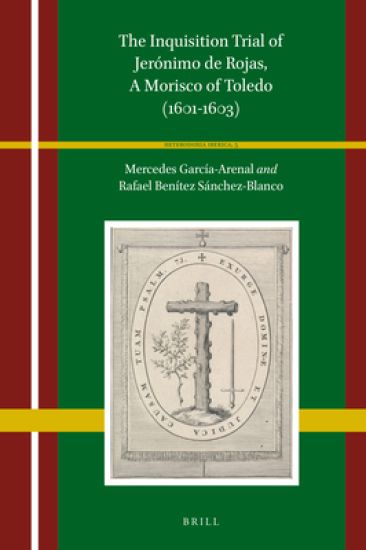
The Inquisition Trial of Jerónimo de Rojas, A Morisco of Toledo (1601-1603)

The Inquisition Trial of Jerónimo de Rojas, A Morisco of Toledo (1601-1603)

Mercedes García-Arenal; Rafael Benitez Sanchez-Blanco

BRILL
2022
sidottu
This book includes the whole transcription of the trial of a converted Muslim (Morisco) from Toledo, condemned to die at the stake at the beginning of the 17th century. In their study of the trial, the authors address the question of how and to what extent Inquisition documents can be used as an historical source by contextualizing and analysing its multifaceted aspects as well as its protagonists and participants, victim, witnesses, and inquisitors. The authors elucidate the beliefs and practices of the culprit, situating his ordeal in the framework of Morisco life and its connections with North African Islam. By so doing they shed light on questions of Inquisitorial procedure, witnessing and testimony, the extent of confession, the effects of life in prison, the relations of trust between inmates and the consequences of isolation.
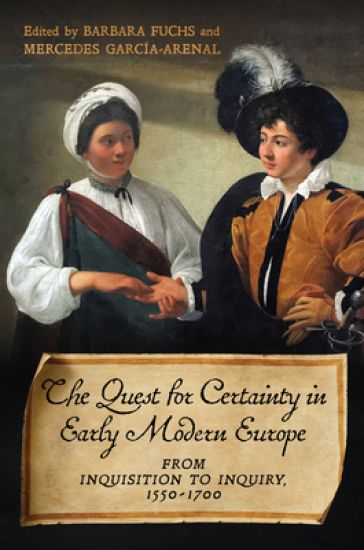
The Quest for Certainty in Early Modern Europe

The Quest for Certainty in Early Modern Europe

Barbara Fuchs; Mercedes García-Arenal

University of Toronto Press
2020
sidottu
This interdisciplinary collection explores how the early modern pursuit of knowledge in very different spheres – from Inquisitional investigations to biblical polemics to popular healing – was conditioned by a shared desire for certainty, and how epistemological crises produced by the religious upheavals of early modern Europe were also linked to the development of new scientific methods. Questions of representation became newly fraught as the production of knowledge increasingly challenged established orthodoxies. The volume focuses on the social and institutional dimensions of inquiry in light of political and cultural challenges, while also foregrounding the Hispanic world, which has often been left out of histories of scepticism and modernity. Featuring essays by historians and literary scholars from Europe and the United States, The Quest for Certainty in Early Modern Europe reconstructs the complexity of early modern epistemological debates across the disciplines, in a variety of cultural, social, and intellectual locales.
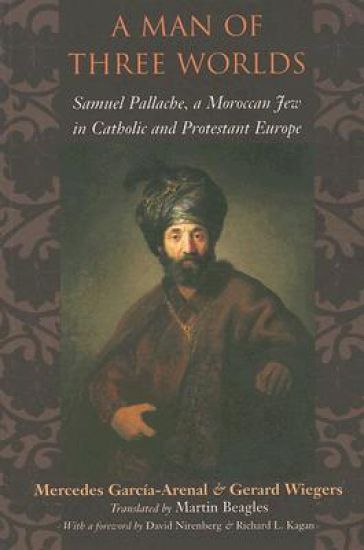
A Man of Three Worlds

A Man of Three Worlds

Mercedes García-Arenal; Gerard Wiegers; David Nirenberg; Richard L. Kagan

Johns Hopkins University Press
2007
pokkari
In the late fifteenth century, many of the Jews expelled from Spain made their way to Morocco and established a dynamic community in Fez. A number of Jewish families became prominent in commerce and public life there. Among the Jews of Fez of Hispanic origin was Samuel Pallache, who served the Moroccan sultan as a commercial and diplomatic agent in Holland until Pallache's death in 1616. Before that, he had tried to return with his family to Spain, and to this end he tried to convert to Catholicism and worked as an informer, intermediary, and spy in Moroccan affairs for the Spanish court. Later he became a privateer against Spanish ships and was tried in London for that reason. His religious identity proved to be as mutable as his political allegiances: when in Amsterdam, he was devoutly Jewish; when in Spain, a loyal converso (a baptized Jew). In A Man of Three Worlds, Mercedes Garcia-Arenal and Gerard Wiegers view Samuel Pallache's world as a microcosm of early modern society, one far more interconnected, cosmopolitan, and fluid than is often portrayed. Pallache's missions and misadventures took him from Islamic Fez and Catholic Spain to Protestant England and Holland. Through these travels, the authors explore the workings of the Moroccan sultanate and the Spanish court, the Jewish communities of Fez and Amsterdam, and details of the Atlantic-Mediterranean trade. At once a sweeping view of two continents, three faiths, and five nation-states and an intimate story of one man's remarkable life, A Man of Three Worlds is history at its most compelling.
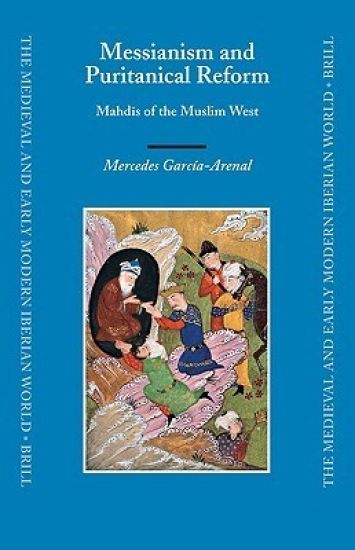
Messianism and Puritanical Reform

Messianism and Puritanical Reform

Mercedes Garcia-Arenal

Brill
2006
sidottu
This is a book about revolutionary movements of a messianic and millenarian character, led by a "mahdi", in Islamic terms, a charismatic messianic leader. It also addresses the question of mediation between God and men and the political repercussions of this question in the history of the pre-Modern Muslim West. Mahdism is considered in relation to sufi ideas, terminology and symbols which shape notions of authority and of legitimate power when claiming direct, intimate contact between the holy and the divine. The relationship between mahdism and the legitimacy of power, the process by which the messianic paradigm becomes inseparable from the claim to the caliphate are amply discussed. The contents of the book range from the times of the Muslim conquest of North Africa and Iberia, to the first part of the XVIIth century with the end of Muslim Iberia and the beginnings of European intervention in Morocco.