Kirjojen hintavertailu – 12 859 818 kirjaa ja 27 kauppaa

Kirjailija

Merima Bruncevic

Kirjat ja teokset yhdessä paikassa: 6 kirjaa, julkaisuja vuosilta 2016–2024, suosituimpiin kuuluu AI, digitalisering och rätten : en lärobok. Vertaile teosten hintoja ja tarkista saatavuus suomalaisista kirjakaupoista.

6 kirjaa

Kirjojen julkaisuvuodet: 2016–2024.

Regulating Transnational Heritage

Regulating Transnational Heritage

Merima Bruncevic

TAYLOR FRANCIS LTD
2024
nidottu
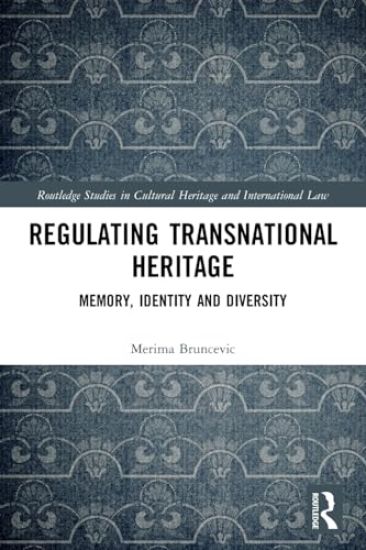
There is a vast body of international and national law that regulates cultural heritage. However, the current regulation remains quite blind to the so called "transnational heritage". This is heritage where there is no community recognized in law that it can be directly attributed to and that can be responsible for its safekeeping and preservation. It can also be items of heritage where the claim of ownership is disputed between two or more peoples or communities. Transnational heritage challenges the idea of monolithic, mono-cultural, ethno-national states. There are a number of examples of such cultural heritage, for instance the Buddhist Bamiyan statutes in Afghanistan, Palmyra in Syria, the Jewish heritage of Iraq, or various items that are currently housed in large, often Western, museums, as a result of colonial practices. This book explores the regulation of transnational heritage. By discussing many cases of transnational heritage and the problems that arise due to the lack of regulation the book analyses the manifestations of memories and constructions of communities through heritage. It focuses particularly on the concept of community. How are communities constructed in cultural heritage law and what falls outside of the definitions of community? The book underlines that the issues surrounding transnational heritage involve more than a communal right to culture. It is argued that transnational heritage also directly affects wider matters of law such as citizenship, human rights, sovereignty, as well as the movement of people and cultural goods.
Regulating Transnational Heritage

Regulating Transnational Heritage

Merima Bruncevic

Taylor Francis Ltd
2021
sidottu
There is a vast body of international and national law that regulates cultural heritage. However, the current regulation remains quite blind to the so called "transnational heritage". This is heritage where there is no community recognized in law that it can be directly attributed to and that can be responsible for its safekeeping and preservation. It can also be items of heritage where the claim of ownership is disputed between two or more peoples or communities. Transnational heritage challenges the idea of monolithic, mono-cultural, ethno-national states. There are a number of examples of such cultural heritage, for instance the Buddhist Bamiyan statutes in Afghanistan, Palmyra in Syria, the Jewish heritage of Iraq, or various items that are currently housed in large, often Western, museums, as a result of colonial practices. This book explores the regulation of transnational heritage. By discussing many cases of transnational heritage and the problems that arise due to the lack of regulation the book analyses the manifestations of memories and constructions of communities through heritage. It focuses particularly on the concept of community. How are communities constructed in cultural heritage law and what falls outside of the definitions of community? The book underlines that the issues surrounding transnational heritage involve more than a communal right to culture. It is argued that transnational heritage also directly affects wider matters of law such as citizenship, human rights, sovereignty, as well as the movement of people and cultural goods.
AI, digitalisering och rätten : en lärobok

AI, digitalisering och rätten : en lärobok

Gregor Noll; Matilda Arvidsson; Erik Björling; Merima Bruncevic; Leila Brännström; Moa Dahlbeck; Markus Gunneflo; Christoffer Hermansson; Tormod Johansen; Jannice Käll; Kajsa Lindberg; Ulf Petrusson; Elena Raviola; Kristoffer Schollin

Studentlitteratur AB
2021
nidottu
AI och digitalisering har en stor faktisk regleringsmakt. I förening med teknikens kommersiella potential har den blivit en allvarlig konkurrent till rättens formella regleringsmakt. I den här boken kopplas diskussionen om enstaka teknologiska lösningar till rättens centrala begrepp och institutioner. Hur kommer rätten som sådan att samverka med AI och digitalisering - eller kommer den rentav att motverka dem? Juridiken förändras just nu utifrån - poängen med denna bok är att vara ett steg på vägen att förändra den inifrån och att därmed äga själva processen. AI, digitalisering och rätten ger dig verktyg att tänka klarare om AI- teknikens potentiella återverkningar på rättens olika delar. Boken vänder sig i första hand till studenter på landets juristutbildningar, men är också skriven så att läsare med olika bakgrund och kunskapsnivåer kan tillgodogöra sig innehållet.
Law, Art and the Commons

Law, Art and the Commons

Merima Bruncevic

Routledge
2019
nidottu
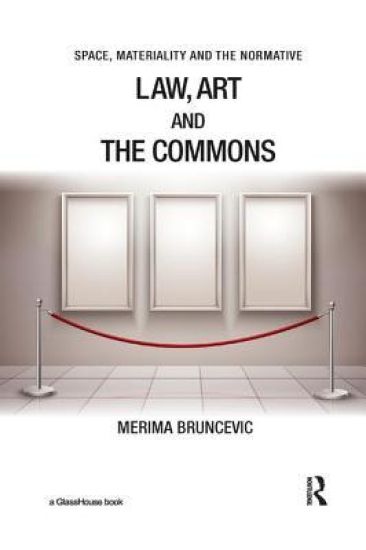
The concept of the cultural commons has become increasingly important for legal studies. Within this field, however, it is a contested concept: at once presented as a sphere for creativity, democratic access and freedom of speech, but one that denies property rights and misappropriates the public domain. In this book, Merima Bruncevic takes up the cultural commons not merely as an abstract notion, but in its connection to physical spaces such as museums and libraries. A legal cultural commons can, she argues, be envisioned as a lawscape that can quite literally be entered and engaged with. Focusing largely on art in the context of the copyright regime, but also addressing a number of cultural heritage issues, the book draws on the work of Deleuze and Guattari in order to examine the realm of the commons as a potential space for overcoming the dichotomy between the owner and the consumer of culture. Challenging this dichotomy, it is the productive and creative potential of law itself that is elicited through the book’s approach to the commons as the empirical basis for a new legal framework, which is able to accommodate a multitude of interests and values.
Law, Art and the Commons

Law, Art and the Commons

Merima Bruncevic

Routledge
2017
sidottu
The concept of the cultural commons has become increasingly important for legal studies. Within this field, however, it is a contested concept: at once presented as a sphere for creativity, democratic access and freedom of speech, but one that denies property rights and misappropriates the public domain. In this book, Merima Bruncevic takes up the cultural commons not merely as an abstract notion, but in its connection to physical spaces such as museums and libraries. A legal cultural commons can, she argues, be envisioned as a lawscape that can quite literally be entered and engaged with. Focusing largely on art in the context of the copyright regime, but also addressing a number of cultural heritage issues, the book draws on the work of Deleuze and Guattari in order to examine the realm of the commons as a potential space for overcoming the dichotomy between the owner and the consumer of culture. Challenging this dichotomy, it is the productive and creative potential of law itself that is elicited through the book’s approach to the commons as the empirical basis for a new legal framework, which is able to accommodate a multitude of interests and values.
Modern immaterialrätt

Modern immaterialrätt

Merima Bruncevic; Jannice Käll

Liber
2016
nidottu
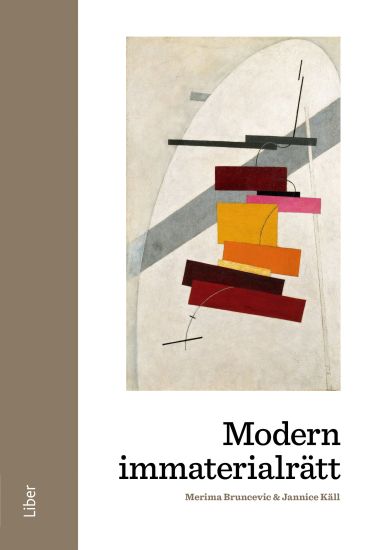
Detta är en klassisk lärobok i immaterialrätt med en modern twist. Boken tar upp de fyra regelverken upphovsrätt, patenträtt, varumärkesrätt och mönsterrätt. Här finns hänvisningar till lagrum, EU-direktiv, förordningar och rättsfall, och även diskussioner om hur regelverken kan tolkas och användas. Immaterialrätten är under ständig förändring och boken lyfter därför också fram sådana förändringsprocesser och aktuella exempel. Varje kapitel i boken är indelat i tre nivåer – allmänt, fördjupning och specialisering – vilket gör att läsaren lätt kan anpassa sina studier utifrån förkunskaper och studiemål. Kort sagt, en grundläggande bok för juristutbildningarna i immaterialrätt på universitet och högskola. Den kan också läsas på grund- och fortsättningsnivå inom andra universitetsutbildningar där immaterialrätt ingår, till exempel ingenjörs-, konstnärs-, farmaceut- och ekonomiutbildningar. Om författarnaMerima Bruncevic är jur.dr och verksam som forskare och lärare vid Juridiska institutionen, Göteborgs universitet. Hon har en bakgrund i bolagsjuridik inom musik- och filmbranschen. Jannice Käll är jur.lic. och verksam som forskare och lärare vid Juridiska institutionen, Göteborgs universitet. Hennes forskningsfokus är särskilt kopplat till informations- och kommunikationsteknologi.