Kirjojen hintavertailu – 12 903 725 kirjaa ja 27 kauppaa

Kirjailija

Merold Westphal

Kirjat ja teokset yhdessä paikassa: 18 kirjaa, julkaisuja vuosilta 1987–2024, suosituimpiin kuuluu Transcendence and Self-Transcendence. Vertaile teosten hintoja ja tarkista saatavuus suomalaisista kirjakaupoista.

18 kirjaa

Kirjojen julkaisuvuodet: 1987–2024.

Handbook on Postconservative Theological Interpretation
Postconservative theology may be said to parallel with "postliberal theology" at its best. Orthodox, biblical, but open to new insights about how to interpret Scripture. But the new insights must be faithful as well as fresh. Postconservative theology is not the same as "progressive theology," which tends to lean toward indeterminant faith expressions, whereas "postconservative" allows for particular faith commitments and expressions but understands that the constructive task of theology is never finished. Authors emphasize various interpretive theological lenses used for doing theology among various postconservative theologians, rather than emphasizing the philosophical background to hermeneutical theory present in other works, such as past influential thinkers (including Gadamer, Grondin, Ricoeur, Heidegger, etc.). This resource could also function as a companion to Evangelical Theological Method: Five Views (2018). This emphasis of the chapters will not be on the nuts and bolts of "how to" interpret, but rather on the theological impulses that govern various lenses (Bible, cultural context, etc.) for doing theology and the way Scripture functions with respect to the practice of interpretation.
Handbook on Postconservative Theological Interpretation
Postconservative theology may be said to parallel with ""postliberal theology"" at its best. Orthodox, biblical, but open to new insights about how to interpret Scripture. But the new insights must be faithful as well as fresh. Postconservative theology is not the same as ""progressive theology,"" which tends to lean toward indeterminant faith expressions, whereas ""postconservative"" allows for particular faith commitments and expressions but understands that the constructive task of theology is never finished. Authors emphasize various interpretive theological lenses used for doing theology among various postconservative theologians, rather than emphasizing the philosophical background to hermeneutical theory present in other works, such as past influential thinkers (including Gadamer, Grondin, Ricoeur, Heidegger, etc.). This resource could also function as a companion to Evangelical Theological Method: Five Views (2018). This emphasis of the chapters will not be on the nuts and bolts of ""how to"" interpret, but rather on the theological impulses that govern various lenses (Bible, cultural context, etc.) for doing theology and the way Scripture functions with respect to the practice of interpretation.
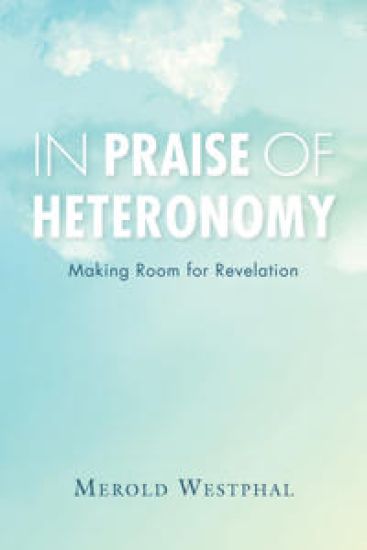
In Praise of Heteronomy

In Praise of Heteronomy

Merold Westphal

Indiana University Press
2017
pokkari
Recognizing the essential heteronomy of postmodern philosophy of religion, Merold Westphal argues against the assumption that human reason is universal, neutral, and devoid of presupposition. Instead, Westphal contends that any philosophy is a matter of faith and the philosophical encounter with theology arises from the very act of thinking. Relying on the work of Spinoza, Kant, and Hegel, Westphal discovers that their theologies render them mutually incompatible and their claims to be the voice of autonomous and universal reason look dubious. Westphal grapples with this plural nature of human thought in the philosophy of religion and he forwards the idea that any appeal to the divine must rest on a historical and phenomenological analysis.
In Praise of Heteronomy

In Praise of Heteronomy

Merold Westphal

Indiana University Press
2017
sidottu
Recognizing the essential heteronomy of postmodern philosophy of religion, Merold Westphal argues against the assumption that human reason is universal, neutral, and devoid of presupposition. Instead, Westphal contends that any philosophy is a matter of faith and the philosophical encounter with theology arises from the very act of thinking. Relying on the work of Spinoza, Kant, and Hegel, Westphal discovers that their theologies render them mutually incompatible and their claims to be the voice of autonomous and universal reason look dubious. Westphal grapples with this plural nature of human thought in the philosophy of religion and he forwards the idea that any appeal to the divine must rest on a historical and phenomenological analysis.
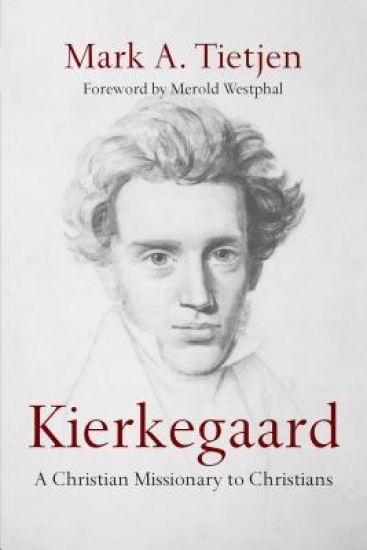
Kierkegaard – A Christian Missionary to Christians

Kierkegaard – A Christian Missionary to Christians

Mark A. Tietjen; Merold Westphal

Inter-Varsity Press,US
2016
nidottu
Søren Kierkegaard (1813-1855) had a mission. The church had become weak, flabby and inconsequential. Being a Christian was more a cultural heritage than a spiritual reality. His mission—reintroduce the Christian faith to Christians. How could he break through to people who were members of the church and thought they were Christians already? Like an Old Testament prophet, Kierkegaard used a variety of pointed and dramatic ways to shake people from their slumber. He incisively diagnosed the spiritual ailments of his age and offered a fresh take on classic Christian teaching. Mark Tietjen thinks that Kierkegaard's critique of his contemporaries strikes close to home today. We also need to listen to one of the most insightful yet complex Christian thinkers of any era. Through an examination of core Christian doctrines—the person of Jesus Christ, human nature, Christian witness and love—Tietjen helps us hear Kierkegaard's missionary message to a church that often fails to follow Christ with purity of heart.
Kierkegaard's Concept of Faith

Kierkegaard's Concept of Faith

Merold Westphal

William B Eerdmans Publishing Co
2014
nidottu
In this book renowned philosopher Merold Westphal unpacks the writings of nineteenth-century thinker Soren Kierkegaard on biblical, Christian faith and its relation to reason. Across five books -- Fear and Trembling, Philosophical Fragments, Concluding Unscientific Postscript, Sickness Unto Death, and Practice in Christianity -- and three pseudonyms, Kierkegaard sought to articulate a biblical concept of faith by approaching it from a variety of perspectives in relation to one another. Westphal offers a careful textual reading of these major discussions to present an overarching analysis of Kierkegaard's conception of the true meaning of biblical faith. Though Kierkegaard presents a complex picture of faith through his pseudonyms, Westphal argues that his perspective is a faithful and illuminating one, making claims that are important for philosophy of religion, for theology, and most of all for Christian life as it might be lived by faithful people.
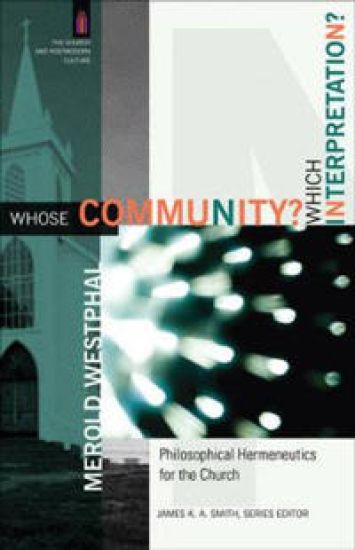
Whose Community? Which Interpretation? – Philosophical Hermeneutics for the Church

Whose Community? Which Interpretation? – Philosophical Hermeneutics for the Church

Merold Westphal; James Smith

Baker Academic, Div of Baker Publishing Group
2009
nidottu
In this volume, renowned philosopher Merold Westphal introduces current philosophical thinking related to interpreting the Bible. Recognizing that no theology is completely free of philosophical "contamination," he engages and mines contemporary hermeneutical theory in service of the church. After providing a historical overview of contemporary theories of interpretation, Westphal addresses postmodern hermeneutical theory, arguing that the relativity embraced there is not the same as the relativism in which "anything goes." Rather, Westphal encourages us to embrace the proliferation of interpretations based on different perspectives as a way to get at the richness of the biblical text.
Levinas and Kierkegaard in Dialogue

Levinas and Kierkegaard in Dialogue

Merold Westphal

Indiana University Press
2008
pokkari
Few philosophers have devoted more than passing attention to similarities between the thought of Søren Kierkegaard, a Danish Christian, and Emmanuel Levinas, a French Jew. Here, one of philosophy of religion's most distinctive voices offers a sustained comparison. Focusing on questions surrounding otherness, transcendence, postmodernity, and the nature of religious thought, Merold Westphal draws readers into a dialogue between the two thinkers. Westphal's masterful command of both philosophies shows that each can learn from the other. Levinas and Kierkegaard in Dialogue is an insightful and accessible contribution to philosophical considerations of ethics and religion.
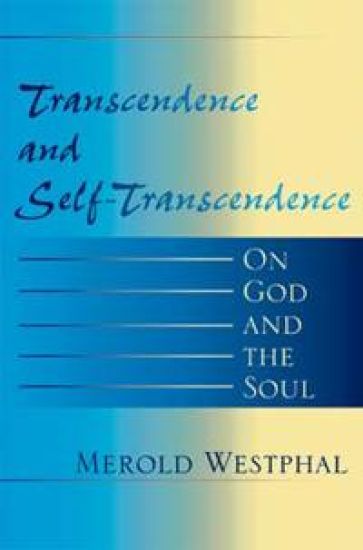
Transcendence and Self-Transcendence

Transcendence and Self-Transcendence

Merold Westphal

Indiana University Press
2004
pokkari
The question of the transcendence of God has traditionally been thought in terms of the difference between pantheism, which affirms that God is wholly "within" the world, and theism, which affirms that God is both "within" and "outside" the world, both immanent and transcendent. Against Heidegger's critique of onto-theology and the general postmodern concern for respecting and preserving the difference of the other, Merold Westphal seeks to rethink divine transcendence in relation to modes of human self-transcendence. Touching upon Spinoza, Hegel, Augustine, Pseudo-Dionysius, Aquinas, Barth, Kierkegaard, Levinas, Derrida, and Marion, Westphal's work centers around a critique of onto-theology, the importance of alterity, the decentered self, and the autonomous transcendental ego. Westphal's phenomenology of faith sets this book into the main currents of Continental philosophy of religion today.
Overcoming Onto-Theology

Overcoming Onto-Theology

Merold Westphal

Fordham University Press
2001
pokkari
Overcoming Onto-theology is a stunning collection of essays by Merold Westphal, one of America's leading continental philosophers of religion, in which Westphal carefully explores the nature and the structure of a postmodern Christian philosophy. Written with characteristic clarity and charm, Westphal offers masterful studies of Heidegger's early lectures on Paul and Augustine, the idea of hermeneutics, Schleiermacher, Hegel, Derrida, and Nietzsche, all in the service of building his argument that postmodern thinking offers an indispensable tool for rethinking Christian faith. A must read for every student and professor of continental philosophy and the philosophy of religion, Overcoming Onto-theology is an invaluable collection that brings together in one place fourteen provocative and lucid essays by one of the most important thinkers working in American philosophy today.
Overcoming Onto-Theology

Overcoming Onto-Theology

Merold Westphal

Fordham University Press
2001
sidottu
Overcoming Onto-theology is a stunning collection of essays by Merold Westphal, one of America's leading continental philosophers of religion, in which Westphal carefully explores the nature and the structure of a postmodern Christian philosophy. Written with characteristic clarity and charm, Westphal offers masterful studies of Heidegger's early lectures on Paul and Augustine, the idea of hermeneutics, Schleiermacher, Hegel, Derrida, and Nietzsche, all in the service of building his argument that postmodern thinking offers an indispensable tool for rethinking Christian faith. A must read for every student and professor of continental philosophy and the philosophy of religion, Overcoming Onto-theology is an invaluable collection that brings together in one place fourteen provocative and lucid essays by one of the most important thinkers working in American philosophy today.
History and Truth in Hegel's Phenomenology, Third Edition

History and Truth in Hegel's Phenomenology, Third Edition

Merold Westphal

Indiana University Press
1998
pokkari
"This fairly small book must take its place as the best introductory study of Hegel's Phenomenology available." —Philosophy and Phenomenological Research "Westphal's book is a comprehensive guide to the argument of the entire phenomenology. . . . will repay close study by serious undergraduate and graduate students of philosophy." —Choice This detailed interpretation of Hegel's Phenomenology of Spirit seeks to show that the unity of this classic work may be found in the integration of its transcendental and sociological-historical themes.
Suspicion and Faith

Suspicion and Faith

Merold Westphal

Fordham University Press
1998
pokkari

Halvin toimitettuna 41,80 €

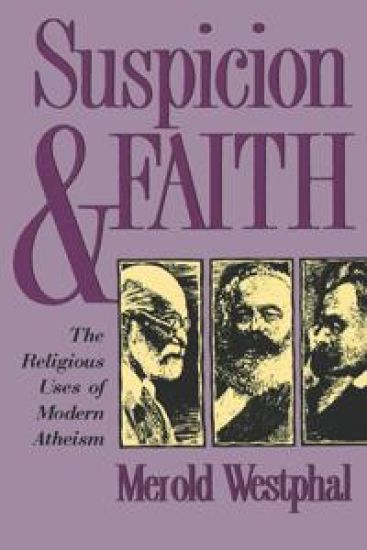
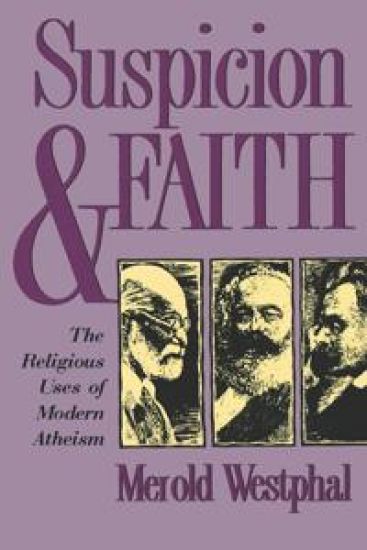
Available in a new digital edition with reflowable text suitable for e-readers Marx, Nietzche, and Freud are among the most influential of modern atheists. The distinctive feature of their challenge to theistic and specifically Christian belief is expressed by Paul Ricoeur when he calls them the "masters of suspicion." While skepticism directs its critique to the truth or evidential basis of belief, suspicion asks two different, intimately intertwined questions: what are the motives that lead to this belief? and what function does it play, what work does it do for the individuals and communities that adopt it. What suspicion suspects is that the survival value of religious beliefs depends on satisfying desires and interests that the believing soul and the believing community are not eager to acknowledge because they violate the values they profess, as when, for example, talk about justice is a mask for deep-seated resentment and the desire for revenge. For this reason, the hermeneutics of suspicion is a theory, or group of theories, of self-deception: ideology critique in Marx, genealogy in Nietzsche, and psychoanalysis in Freud. Suspicion and Faith argues that the appropriate religious response ("the religious uses of modern atheism") to these critiques is not to try to refute or deflect them, but rather to acknowledge their force in a process of self-examination.
Suspicion and Faith

Suspicion and Faith

Merold Westphal

Fordham University Press
1998
sidottu
Available in a new digital edition with reflowable text suitable for e-readers Marx, Nietzche, and Freud are among the most influential of modern atheists. The distinctive feature of their challenge to theistic and specifically Christian belief is expressed by Paul Ricoeur when he calls them the "masters of suspicion." While skepticism directs its critique to the truth or evidential basis of belief, suspicion asks two different, intimately intertwined questions: what are the motives that lead to this belief? and what function does it play, what work does it do for the individuals and communities that adopt it. What suspicion suspects is that the survival value of religious beliefs depends on satisfying desires and interests that the believing soul and the believing community are not eager to acknowledge because they violate the values they profess, as when, for example, talk about justice is a mask for deep-seated resentment and the desire for revenge. For this reason, the hermeneutics of suspicion is a theory, or group of theories, of self-deception: ideology critique in Marx, genealogy in Nietzsche, and psychoanalysis in Freud. Suspicion and Faith argues that the appropriate religious response ("the religious uses of modern atheism") to these critiques is not to try to refute or deflect them, but rather to acknowledge their force in a process of self-examination.
Becoming a Self

Becoming a Self

Merold Westphal

Purdue University Press
1996
nidottu

Halvin toimitettuna 32,50 €

Soren Kierkegaard (1818-55) is perhaps best known for his existentialism, and his critique of the Western metaphysical tradition makes him a religiously committed postmodernist. Becoming a Self provides a reader's guide to the book often taken to be Kierkegaard's most important contribution to philosophy and theology. Merold Westphal includes the portion of Kierkegaard's text that develops his infamous thesis that truth is subjectivity, and offers a dose reading of the entire text of Postscript. In addition, he locates the text in the larger authorship of Kierkegaard, with special attention to the theory of stages or existence spheres; in the debate with Hegel, which is one of its most distinctive features; and in the conversations that make up contemporary postmodern philosophy. While postmodernism is usually thought to be inherently secular, Kierkegaard's pseudonym, Johannes Climacus, shows us what a variety of postmodern insights might look like if appropriated by religious thought. He tries to show that the demise of classical paradigms of selfhood do not require the abandonment of subjectivity and inwardness altogether, and that a decentered self can still be a responsible self. This volume continues Westphal's attempt to show that the individualism and "irrationalism" that have for so long been associated with Kierkegaard's thought are not the abandonment of community and thoughtfulness but powerful protests against major pathologies of complacent modernity. In this light, Kierkegaard's thought can be seen as a non-Marxist form of ideology critique.
Kierkegaard's Critique of Reason and Society

Kierkegaard's Critique of Reason and Society

Merold Westphal

Pennsylvania State University Press
1991
pokkari
"Merold Westphal is a knowing interpreter who has penetrated Kierkegaard's mind and is faithful to Kierkegaard's own interest... In a helpful and stimulating way, he also brings to his interpretation of Kierkegaard an intimate knowledge of three other thinkers whose lives overlapped with Kierkegaard's: Hegel, Marx, and Nietzsche." - Pacific Theological Review. "Kierkegaard's Critique of Reason and Society is a pivotal event in the history of Kierkegaardian interpretation... Westphal's reading of Kierkegaard contains a polemic against two prevalent misreadings. Kierkegaard is often seen as an irrationalist, and he is often seen as an individualist. Westphal argues powerfully that both labels, as usually understood, are completely misleading." - Christian Scholar's Review.
God, Guilt, and Death

God, Guilt, and Death

Merold Westphal

Indiana University Press
1987
pokkari
" . . . a profoundly stimulating and satisfying piece of philosophy. . . . It is a book from which one really can learn something worthwhile." —Idealistic Studies " . . . exceptionally well-written philosophy of religion . . . " —Mentalities " . . . a most impressive phenomenology of religion . . . a splendid achievement . . . " —The Reformed Theological Review " . . . challenging to scholars . . . interesting to general audiences." —International Journal for Philosophy of Religion " . . . equal in clarity of thought and comprehensiveness of scope. . . . profoundly original." —The Reformed Journal "Challenging and thought-provoking, this makes a fine . . . textbook in the philosophy of religion." —Religious Studies Review " . . . its virtues as a textbook in phenomenology or philosophy of religion are extraordinary." —Faith and Philosophy Examples from the writings of Kierkegaard, Freud, Heidegger, Dostoyevsky, Nietzsche, and Tolstoi illuminate Westphal's thesis that guilt and death are the central problems of human existence.