Kirjojen hintavertailu – 12 859 819 kirjaa ja 27 kauppaa

Kirjailija

Merredith Portsmore

Kirjat ja teokset yhdessä paikassa: 5 kirjaa, julkaisuja vuosilta 2020–2025, suosituimpiin kuuluu Novel Engineering, K–8. Vertaile teosten hintoja ja tarkista saatavuus suomalaisista kirjakaupoista.

5 kirjaa

Kirjojen julkaisuvuodet: 2020–2025.

Novel Engineering, K–8

Novel Engineering, K–8

Elissa Milto; Merredith Portsmore; Mary McCormick; Jessica Watkins; Morgan Hynes

National Science Teachers Association
2020
nidottu
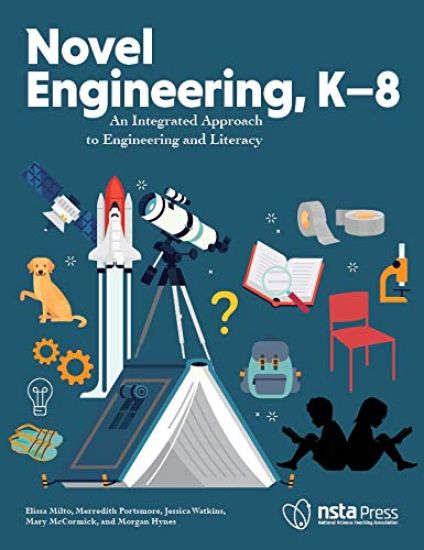
With the Novel Engineering approach, “students become excited about what they are reading, writing, designing, and building! This excitement in turn helps them make strides in engineering and literacy, as well as in their abilities to work together, think creatively and analytically, and communicate their ideas.” —from Chapter 1 of Novel EngineeringThis book will both introduce your students to an exciting integrated curriculum and support you as you use it in your own elementary or middle school classroom. Novel Engineering shows how your students can work through engineering design challenges inspired by a broad range of literature—novels and short stories, biographies and histories, or even picture books. By way of introduction, the book offers clear conceptual background and practical advice on how the approach works: Your students pull information from literature to identify a problem. Then, using details from the story or text, they go through an engineering design process to develop functional solutions for their “clients”—the book’s characters. To support your efforts and bring the concept to life, the book gives you five in-depth case studies featuring the use of novels, a biography, and a nonfiction historical text. In addition to demonstrating what a Novel Engineering project looks like in an actual classroom, the case studies give you practice in thinking about what your students’ work might look like and how you would respond. One case describes a class in which students help the shipwrecked Swiss Family Robinson build a shelter to keep them cool under the hot sun. Another tells of students who design a hearing aid for the main character in El Deafo—and then style it as a fashion accessory. You’ll see that the books used in the case studies are just suggestions. You don’t have to adopt texts outside your existing English language arts or social studies curriculum. You also don’t have to buy a specific building-materials kit. You just have to embrace the idea that literacy and engineering can support each other in your classroom—and then watch the excitement build.
Playful STEAM Learning in the Early Years

Playful STEAM Learning in the Early Years

Amanda Sullivan; Amanda Strawhacker; Merredith Portsmore

TEACHERS' COLLEGE PRESS
2025
sidottu
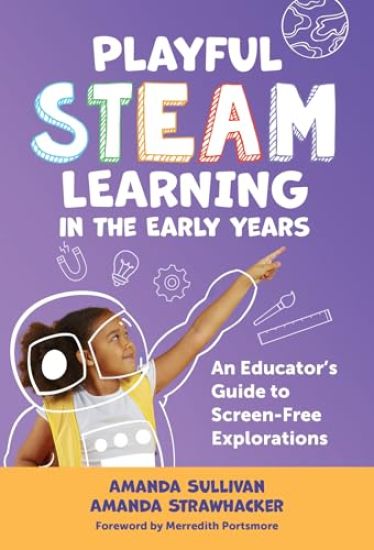
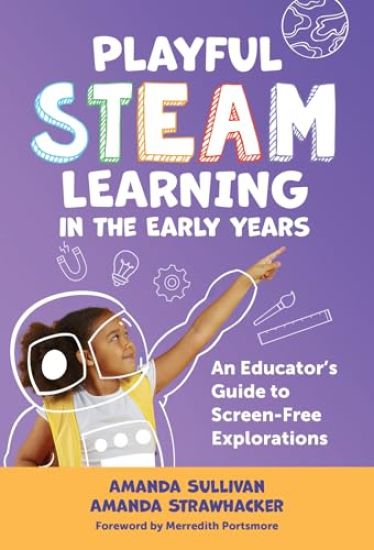
"This essential guide shows readers developmentally appropriate and equitable approaches to deliver important STEAM skills to young children in ways that are both impactful and fun." —Julie Dobrow, Tufts University Decades of research has shown that introducing STEM content like coding and engineering during the foundational early childhood years can lead to many benefits, such as improving children's number sense, problem-solving skills, and sequencing ability. Unfortunately, the costs of STEM technologies can be a barrier for many early childhood educators. Additionally, many digital tools and apps are not playful or developmentally appropriate for young learners and can be less inclusive of students who have been historically excluded from STEM. This book addresses these barriers by demonstrating how to leverage an interdisciplinary STEAM (Science, Technology, Engineering, Arts, and Mathematics) approach to pique the curiosity of young students through play-based learning. The authors provide evidence-based, hands-on approaches as well as a practical framework to effectively integrate STEAM learning in the early grades (pre-K to 3rd grade). Readers will explore new ways to play alongside their young learners to make powerful STEAM discoveries and foster a lifelong love of learning. Book Features: Provides tips and strategies rooted in existing frameworks and guidelines, as well as the authors' original research on the cognitive and socioemotional benefits of STEAM experiences. Empowers early childhood educators working in any setting (informal, formal, or home settings). Describes a new framework for the equitable design and implementation of play-based STEAM learning in early childhood settings.
Playful STEAM Learning in the Early Years

Playful STEAM Learning in the Early Years

Amanda Sullivan; Amanda Strawhacker; Merredith Portsmore

TEACHERS' COLLEGE PRESS
2025
nidottu

Halvin toimitettuna 46,10 €

"This essential guide shows readers developmentally appropriate and equitable approaches to deliver important STEAM skills to young children in ways that are both impactful and fun." —Julie Dobrow, Tufts University Decades of research has shown that introducing STEM content like coding and engineering during the foundational early childhood years can lead to many benefits, such as improving children's number sense, problem-solving skills, and sequencing ability. Unfortunately, the costs of STEM technologies can be a barrier for many early childhood educators. Additionally, many digital tools and apps are not playful or developmentally appropriate for young learners and can be less inclusive of students who have been historically excluded from STEM. This book addresses these barriers by demonstrating how to leverage an interdisciplinary STEAM (Science, Technology, Engineering, Arts, and Mathematics) approach to pique the curiosity of young students through play-based learning. The authors provide evidence-based, hands-on approaches as well as a practical framework to effectively integrate STEAM learning in the early grades (pre-K to 3rd grade). Readers will explore new ways to play alongside their young learners to make powerful STEAM discoveries and foster a lifelong love of learning. Book Features: Provides tips and strategies rooted in existing frameworks and guidelines, as well as the authors' original research on the cognitive and socioemotional benefits of STEAM experiences. Empowers early childhood educators working in any setting (informal, formal, or home settings). Describes a new framework for the equitable design and implementation of play-based STEAM learning in early childhood settings.
Introducing Engineering in K-8 Settings

Introducing Engineering in K-8 Settings

Elissa Milto; Chelsea Andrews; Merredith Portsmore; Christopher Wright

TAYLOR FRANCIS LTD
2025
sidottu
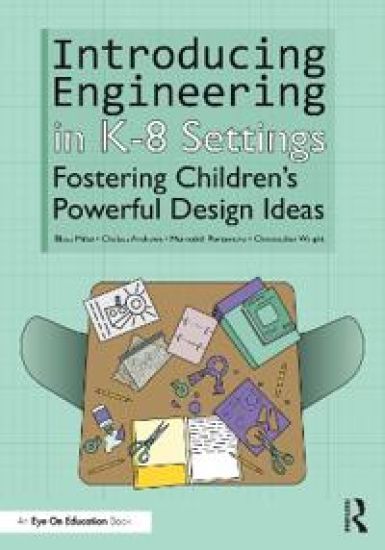
Introducing Engineering to K-8 Students will provide you with the tools you need to incorporate engineering design into your classroom. Rather than prescribing a specific curriculum to follow, this book will help you engage your students with hands-on, open-ended engineering design problems that can be easily integrated into your existing classroom setup. Beginning with the basics of K-8 engineering, and advancing to topics such as integrating engineering with other disciplines, documentation, and assessments, the chapters provide a how-to on creating open-ended engineering activities, design tasks, and projects that are reflective of the academic, social, emotional, developmental, and community goals of your students. An additional focus is on ways to adapt these pedagogical approaches to meet the needs of all students, representative of racially, ethnically, socioeconomically, and gender diverse populations and students who receive special education services. Case studies and practical implementation strategies are presented alongside more than fifteen lesson plans, with tips on how to modify the tasks presented in the book to work with your classroom and students. This user-centered approach will also help you create your own engineering lessons that meet your individual classroom objectives and interests, and be able to recognize and classify your students’ engineering behaviors to support them in enacting their ideas. No matter your experience or comfort level, this book will be an invaluable resource for elementary and middle school science and technology teachers at all career stages who are looking to introduce engineering design to their students. Additional classroom resources can be found online at introducingengineering.org.
Introducing Engineering in K-8 Settings

Introducing Engineering in K-8 Settings

Elissa Milto; Chelsea Andrews; Merredith Portsmore; Christopher Wright

TAYLOR FRANCIS LTD
2025
nidottu
Introducing Engineering to K-8 Students will provide you with the tools you need to incorporate engineering design into your classroom. Rather than prescribing a specific curriculum to follow, this book will help you engage your students with hands-on, open-ended engineering design problems that can be easily integrated into your existing classroom setup. Beginning with the basics of K-8 engineering, and advancing to topics such as integrating engineering with other disciplines, documentation, and assessments, the chapters provide a how-to on creating open-ended engineering activities, design tasks, and projects that are reflective of the academic, social, emotional, developmental, and community goals of your students. An additional focus is on ways to adapt these pedagogical approaches to meet the needs of all students, representative of racially, ethnically, socioeconomically, and gender diverse populations and students who receive special education services. Case studies and practical implementation strategies are presented alongside more than fifteen lesson plans, with tips on how to modify the tasks presented in the book to work with your classroom and students. This user-centered approach will also help you create your own engineering lessons that meet your individual classroom objectives and interests, and be able to recognize and classify your students’ engineering behaviors to support them in enacting their ideas. No matter your experience or comfort level, this book will be an invaluable resource for elementary and middle school science and technology teachers at all career stages who are looking to introduce engineering design to their students. Additional classroom resources can be found online at introducingengineering.org.