

Kirjojen hintavertailu – 12 903 725 kirjaa ja 27 kauppaa

Kirjailija

Merrill Goozner

Kirjat ja teokset yhdessä paikassa: 2 kirjaa, julkaisuja vuosilta 2005–2006, suosituimpiin kuuluu What Seems to be the Trouble?. Vertaile teosten hintoja ja tarkista saatavuus suomalaisista kirjakaupoista.

2 kirjaa

Kirjojen julkaisuvuodet: 2005–2006.

What Seems to be the Trouble?

What Seems to be the Trouble?

Trisha Greenhalgh; Merrill Goozner

Radcliffe Publishing Ltd
2006
nidottu
This is published in association with the Nuffield Trust. There is a foreword By Sir Kenneth Calman Vice Chancellor, Durham University and former Chief Medical Officer. 'Excellent. [The book's] analytical and methodological approach is invaluable. It is a real privilege to listen to the stories of patients and their families, to hear details of personal events, comedies and tragedies, and to use the skills of listening and interpreting to make sense of the story. I have written elsewhere that the history of medicine is simply the re-classification of disease. Here are some new ways of classifying the issues with which we are faced in an effort to assist in the process of healing.' - Sir Kenneth Calman, in the Foreword.
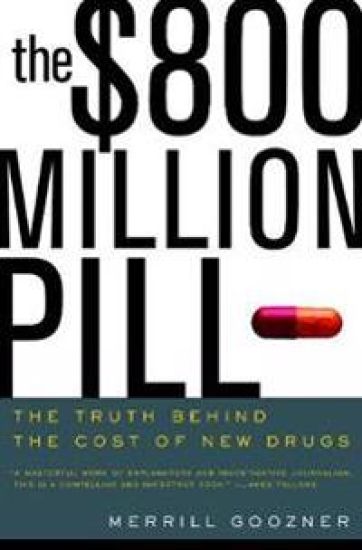
The $800 Million Pill

The $800 Million Pill

Merrill Goozner

University of California Press
2005
pokkari
Why do life-saving prescription drugs cost so much? Drug companies insist that prices reflect the millions they invest in research and development. In this gripping expose, Merrill Goozner contends that American taxpayers are in fact footing the bill twice: once by supporting government-funded research and again by paying astronomically high prices for prescription drugs. Goozner demonstrates that almost all the important new drugs of the past quarter-century actually originated from research at taxpayer-funded universities and at the National Institutes of Health. He reports that once the innovative work is over, the pharmaceutical industry often steps in to reap the profit. Goozner shows how drug innovation is driven by dedicated scientists intent on finding cures for diseases, not by pharmaceutical firms whose bottom line often takes precedence over the advance of medicine. A university biochemist who spent twenty years searching for a single blood protein that later became the best-selling biotech drug in the world, a government employee who discovered the causes for dozens of crippling genetic disorders, and the Department of Energy-funded research that made the Human Genome Project possible--these engrossing accounts illustrate how medical breakthroughs actually take place. The $800 Million Pill suggests ways that the government's role in testing new medicines could be expanded to eliminate the private sector waste driving up the cost of existing drugs. Pharmaceutical firms should be compelled to refocus their human and financial resources on true medical innovation, Goozner insists. This book is essential reading for everyone concerned about the politically charged topics of drug pricing, Medicare coverage, national health care, and the role of pharmaceutical companies in developing countries.