Kirjojen hintavertailu – 12 859 828 kirjaa ja 27 kauppaa

Kirjailija

Merrill Singer

Kirjat ja teokset yhdessä paikassa: 30 kirjaa, julkaisuja vuosilta 1995–2025, suosituimpiin kuuluu Global Warming and the Political Ecology of Health. Vertaile teosten hintoja ja tarkista saatavuus suomalaisista kirjakaupoista.

30 kirjaa

Kirjojen julkaisuvuodet: 1995–2025.

Introducing Health Anthropology

Introducing Health Anthropology

Merrill Singer; Hans A. Baer; Debbi Long; Alex Pavlotski

BLOOMSBURY PUBLISHING PLC
2025
sidottu
Introducing Medical Anthropology: A Discipline in Action, provides students with a first look at the growing field of medical and health anthropology. The narrative is guided by three unifying themes. First, health-oriented anthropologists are involved in the process of helping to change the world around them through their work in applied projects, policy initiatives, and advocacy. Second, the authors present the fundamental importance of culture and social relationships in health and illness by demonstrating that illness and disease involve complex biosocial processes and that resolving them requires attention to a range of factors beyond biology. Third, through an examination of the issue of health inequality, this book underlines the need for an analysis that moves beyond cultural or even ecological models of health toward a comprehensive biosocial approach. Such an approach integrates biological, cultural, and social factors in building unified theoretical understandings of the origin of ill health, while contributing to the building of effective and equitable national health-care systems.

Introducing Health Anthropology

Introducing Health Anthropology

Merrill Singer; Hans A. Baer; Debbi Long; Alex Pavlotski

BLOOMSBURY PUBLISHING PLC
2025
nidottu
Introducing Medical Anthropology: A Discipline in Action, provides students with a first look at the growing field of medical and health anthropology. The narrative is guided by three unifying themes. First, health-oriented anthropologists are involved in the process of helping to change the world around them through their work in applied projects, policy initiatives, and advocacy. Second, the authors present the fundamental importance of culture and social relationships in health and illness by demonstrating that illness and disease involve complex biosocial processes and that resolving them requires attention to a range of factors beyond biology. Third, through an examination of the issue of health inequality, this book underlines the need for an analysis that moves beyond cultural or even ecological models of health toward a comprehensive biosocial approach. Such an approach integrates biological, cultural, and social factors in building unified theoretical understandings of the origin of ill health, while contributing to the building of effective and equitable national health-care systems.

The Anthropology of Human and Planetary Health

The Anthropology of Human and Planetary Health

Merrill Singer

Springer International Publishing AG
2025
nidottu
This text introduces undergraduate and graduate students in health or environment-related classes to the mounting crisis of syndemics through the lens of planetary health. The concept of syndemics, developed by the author and now in wide use across multiple health-related disciplines, focuses attention on the adverse synergistic interaction of two or more diseases or other health conditions promoted or facilitated by social and/or environmental conditions. The planetary health framework is an emerging holistic medical rethinking of our understanding of health. It seeks to identify the safe environmental limits within which humanity and other species can flourish on our increasingly imperiled planet. This book offers useful conceptual tools and frameworks for developing a comprehensive understanding of approaches needed to address the health risks of our changing world. The unique coverage of this book is its careful examination of ecosyndemics around the world in light of the growing recognition that on a heavily disrupted planet, a narrow focus on human health is inadequate. Under these circumstances, a comprehensive planetary health framework is needed. This approach seriously considers the interconnected nature of human health, animal and plant health, and the health of the world’s ecosystems. Highly descriptive, with numerous cases of the planetary health crisis, the textbook is written in a student-friendly and accessible way and is an important resource for coursework across environment and health-related subjects.
Building the Critical Anthropology of Climate Change

Building the Critical Anthropology of Climate Change

Hans A. Baer; Merrill Singer

TAYLOR FRANCIS LTD
2024
sidottu
This book applies a critical perspective to anthropogenic climate change and the global socio-ecological crisis. The book focuses on the critical anthropology of climate change by opening up a dialogue with the two main contending perspectives in the field, namely the cultural ecological and the cultural interpretive perspectives. Guided by these, the authors take a firm stance on the types of changes that are needed to sustain life on Earth as we know it. Within this framework, they explore issues of climate and social equity, the nature of the current era in Earth’s geohistory, the perspectives of the elite polluters driving climate change, and the regrettable contributions of anthropologists and other scholars to climate change. Engaging with perspectives from sociology, political science, and the geography of climate change, the book explores various approaches to thinking about and responding to the existential threat of an ever-warming climate. In doing so, it lays the foundation for a brave new sustainable world that is socially just, highly democratic, and climatically safe for humans and other species. This book will be of interest to researchers and students studying environmental anthropology, climate change, human geography, sociology, and political science.
Building the Critical Anthropology of Climate Change

Building the Critical Anthropology of Climate Change

Hans A. Baer; Merrill Singer

TAYLOR FRANCIS LTD
2024
nidottu
This book applies a critical perspective to anthropogenic climate change and the global socio-ecological crisis. The book focuses on the critical anthropology of climate change by opening up a dialogue with the two main contending perspectives in the field, namely the cultural ecological and the cultural interpretive perspectives. Guided by these, the authors take a firm stance on the types of changes that are needed to sustain life on Earth as we know it. Within this framework, they explore issues of climate and social equity, the nature of the current era in Earth’s geohistory, the perspectives of the elite polluters driving climate change, and the regrettable contributions of anthropologists and other scholars to climate change. Engaging with perspectives from sociology, political science, and the geography of climate change, the book explores various approaches to thinking about and responding to the existential threat of an ever-warming climate. In doing so, it lays the foundation for a brave new sustainable world that is socially just, highly democratic, and climatically safe for humans and other species. This book will be of interest to researchers and students studying environmental anthropology, climate change, human geography, sociology, and political science.
Ecosystem Crises Interactions

Ecosystem Crises Interactions

Merrill Singer

Wiley-Blackwell
2021
nidottu
Explores the human impacts on environment that lead to serious ecological crises, an innovative resource for students, professionals, and researchers alike Ecosystem Crises Interaction: Human Health and the Changing Environment provides a timely and innovative framework for understanding how negative human activity impacts the environment, and how seemingly disparate factors connect to, and magnify, hazardous consequences under a changing climate. Presenting a coherent, holistic perspective to the subject, this compelling textbook and reference examines the diverse, often unexpected links that connect our complex world in context of global climate change. The text illustrates how eco-crisis interaction—the synergistic interface of two or more environmental events or pollutants—can multiply to produce harmful health effects that are greater than their additive impact. This concept is highlighted through numerous real and relatable examples, from the use of sediment rock in hydraulic and drinking water filtration systems, to the connections between human development and crises such as deforestation, emergent infectious diseases, and global food insecurity. Throughout the text, specific examples present opportunities to consider broader questions about the extinction of species, populations, and ways of life. Presenting a balanced investigation of the interaction of contemporary ecological dangers, human behavior, and health, this unique resource: Explores how complex interactions between global warming and anthropogenic impairments magnify the diverse ecological perils and threats facing humans and other speciesDiscusses roadblocks to addressing environmental risk, such as global elite polluters, the organized denial of climate change, and deliberate environmental disruption for financial gainDescribes how the production and use of fossil fuels are driving a significant rise in carbon dioxide and other pollutants in the atmosphere and in the oceansIllustrates how industrial production is contributing to an array of environmental crises, including fuel spills, waste leakages, and loss of biodiversityExamines the critical ecosystems that are at risk from interacting stressors of human origin Ecosystem Crises Interaction: Human Health and the Changing Environment is an ideal textbook for advanced undergraduate and graduate students in courses including public and allied health, environmental studies, medical ecology, medical anthropology, and geo-health, and a valuable reference for researchers, practitioners, and policy makers in fields such as environmental health, global and planetary health, public health, climate change, and medical social science.
Introducing Medical Anthropology

Introducing Medical Anthropology

Merrill Singer; Hans Baer; Alex Pavlotski; Debbi Long

Rowman Littlefield
2019
nidottu
The third edition of Introducing Medical Anthropology: A Discipline in Action, provides students with a first exposure to the growing field of medical and health anthropology. The narrative is guided by unifying themes. First, health-oriented anthropologists are very involved in the process of helping, to varying degrees, to change the world around them through their work in applied projects, policy initiatives, and advocacy. Second, the authors present the fundamental importance of culture and social relationships in health and illness by demonstrating that illness and disease involve complex biosocial processes and that resolving them requires attention to a range of factors beyond biology. Third, through an examination of the issue of health inequality, this book underlines the need for an analysis that moves beyond cultural or even ecological models of health toward a comprehensive biosocial approach. Such an approach integrates biological, cultural, and social factors in building unified theoretical understandings of the origin of ill health, while contributing to the building of effective and equitable national health-care systems. NEW TO THIS EDITION ? All chapter have been updated or expanded. ? New Organization oThe former chapter 6, Health Disparity, Health Inequality, is now chapter 4 oThe former chapter 7, Health and the Environment: Toward a Healthier World, is now chapter 5 oThe former chapter 4, Ethnomedicine: The Worlds of Treatment and Healing, is now chapter 6 oThe former chapter 5, Plural Medical Systems: Complexity, Complementarity, and Conflict, is now chapter 7 oNEW: Chapter 8, The Biopolitics of Life: Biotechnology, Biocapital, and Bioethics

Introducing Medical Anthropology

Introducing Medical Anthropology

Merrill Singer; Hans Baer; Debbi Long; Alex Pavlotski

Rowman Littlefield
2019
sidottu
The third edition of Introducing Medical Anthropology: A Discipline in Action, provides students with a first exposure to the growing field of medical and health anthropology. The narrative is guided by unifying themes. First, health-oriented anthropologists are very involved in the process of helping, to varying degrees, to change the world around them through their work in applied projects, policy initiatives, and advocacy. Second, the authors present the fundamental importance of culture and social relationships in health and illness by demonstrating that illness and disease involve complex biosocial processes and that resolving them requires attention to a range of factors beyond biology. Third, through an examination of the issue of health inequality, this book underlines the need for an analysis that moves beyond cultural or even ecological models of health toward a comprehensive biosocial approach. Such an approach integrates biological, cultural, and social factors in building unified theoretical understandings of the origin of ill health, while contributing to the building of effective and equitable national health-care systems. NEW TO THIS EDITION ? All chapter have been updated or expanded. ? New Organization oThe former chapter 6, Health Disparity, Health Inequality, is now chapter 4 oThe former chapter 7, Health and the Environment: Toward a Healthier World, is now chapter 5 oThe former chapter 4, Ethnomedicine: The Worlds of Treatment and Healing, is now chapter 6 oThe former chapter 5, Plural Medical Systems: Complexity, Complementarity, and Conflict, is now chapter 7 oNEW: Chapter 8, The Biopolitics of Life: Biotechnology, Biocapital, and Bioethics

The Political Economy of AIDS

The Political Economy of AIDS

Merrill Singer

Routledge
2019
nidottu
Features a collection of seven research-based articles on AIDS. This work seeks to cut through popular misunderstanding and conventional ideas about the spread and impact of AIDS by employing a political economic perspective in the analysis of the epidemic in diverse settings.
Anthropology of Infectious Disease

Anthropology of Infectious Disease

Merrill Singer

Left Coast Press Inc
2018
nidottu
This book synthesizes the flourishing field of anthropology of infectious disease in a critical, biocultural framework. Leading medical anthropologist Merrill Singer holistically unites the behaviors of microorganisms and the activities of complex social systems, showing how we exist with pathogenic agents of disease in a complex process of co-evolution. He also connects human diseases to larger ecosystems and various other species that are future sources of new human infections. Anthropology of Infectious Disease integrates and advances research in this growing, multifaceted area and offers an ideal supplement to courses in anthropology, public health, development studies, and related fields.
Climate Change and Social Inequality
The year 2016 was the hottest year on record and the third consecutive record-breaking year in planet temperatures. The following year was the hottest in a non-El Nino year. Of the seventeen hottest years ever recorded, sixteen have occurred since 2000, indicating the trend in climate change is toward an ever warmer Earth. However, climate change does not occur in a social vacuum; it reflects relations between social groups and forces us to contemplate the ways in which we think about and engage with the environment and each other. Employing the experience-near anthropological lens to consider human social life in an environmental context, this book examines the fateful global intersection of ongoing climate change and widening social inequality. Over the course of the volume, Singer argues that the social and economic precarity of poorer populations and communities—from villagers to the urban disadvantaged in both the global North and global South—is exacerbated by climate change, putting some people at considerably enhanced risk compared to their wealthier counterparts. Moreover, the book adopts and supports the argument that the key driver of global climatic and environmental change is the global economy controlled primarily by the world’s upper class, which profits from a ceaseless engine of increased production for national middle classes who have been converted into constant consumers. Drawing on case studies from Alaska, Ecuador, Bangladesh, Haiti and Mali, Climate Change and Social Inequality will be of great interest to students and scholars of climate change and climate science, environmental anthropology, medical ecology and the anthropology of global health.
Critical Medical Anthropology

Critical Medical Anthropology

Merrill Singer; Hans Baer

Routledge
2018
nidottu
The purpose of this book is to provide an introduction and overview to the critical perspective as it has evolved in medical anthropology over the last ten years. Standing as an opposition approach to conventional medical anthropology, critical medical anthropology has emphasized the importance of political and economy forces, including the exercise of power, in shaping health, disease, illness experience, and health care.
The Anthropology of Climate Change

The Anthropology of Climate Change

Hans A. Baer; Merrill Singer

Routledge
2018
nidottu
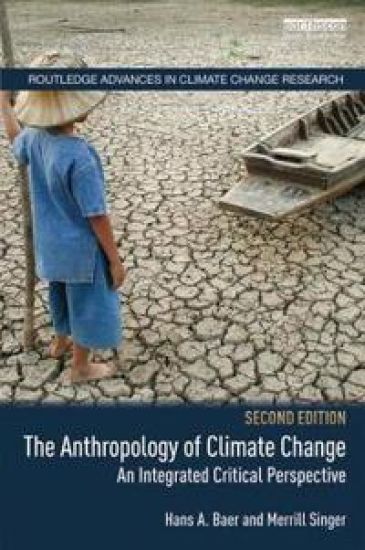
In addressing the urgent questions raised by climate change, this book provides a comprehensive overview of the anthropology of climate change, guided by a critical political ecological framework. It examines the emergence and slow maturation of the anthropology of climate change, reviews the historic foundations for this work in the archaeology of climate change, and presents three alternative contemporary theoretical perspectives in the anthropology of climate change. This second edition is fully updated to include the most recent literature published since the first edition in 2014. It also examines a number of new topics, including an analysis of the 2014 American Anthropological Association’s Global Climate Change Task Force report, a new case study on responses to climate change in developed societies, and reference to the stance of the Trump administration on climate change. Not only does this book provide a valuable overview of the field and the key literature, but it also gives researchers and students in Environmental Anthropology, Climate Change, Human Geography, Sociology, and Political Science a novel framework for understanding climate change that emphasizes human socioecological interactions.
The Anthropology of Climate Change

The Anthropology of Climate Change

Hans A. Baer; Merrill Singer

Routledge
2018
sidottu
In addressing the urgent questions raised by climate change, this book provides a comprehensive overview of the anthropology of climate change, guided by a critical political ecological framework. It examines the emergence and slow maturation of the anthropology of climate change, reviews the historic foundations for this work in the archaeology of climate change, and presents three alternative contemporary theoretical perspectives in the anthropology of climate change. This second edition is fully updated to include the most recent literature published since the first edition in 2014. It also examines a number of new topics, including an analysis of the 2014 American Anthropological Association’s Global Climate Change Task Force report, a new case study on responses to climate change in developed societies, and reference to the stance of the Trump administration on climate change. Not only does this book provide a valuable overview of the field and the key literature, but it also gives researchers and students in Environmental Anthropology, Climate Change, Human Geography, Sociology, and Political Science a novel framework for understanding climate change that emphasizes human socioecological interactions.
Social Justice and Medical Practice

Social Justice and Medical Practice

Merrill Singer; Rebecca Allen

Left Coast Press Inc
2017
nidottu
How do we understand and respond to the pressing health problems of modern society? Conventional practice focuses on the assessment and clinical treatment of immediate health issues presented by individual patients. In contrast, social medicine advocates an equal focus on the assessment and social treatment of underlying social conditions, such as environmental factors, structural violence, and social injustice. Social Justice and Medical Practice examines the practice of social medicine through extensive life history interviews with a physician practicing the approach in marginalized communities. It presents a case example of social medicine in action, demonstrating how such a practice can be successfully pursued within the context of the existing structure of twenty-first-century medicine. In examining the experience of a physician on the frontlines of reforming health care, the book critiques the restrictive nature of the dominant clinical model of medicine and argues for a radically expanded focus for modern-day medical practice. Social Justice and Medical Practice is a timely intervention at a time when even advanced health care systems are facing multiple crises. Lucidly written, it presents a striking alternative and is important reading for students and practitioners of medicine and anthropology, as well as policy makers.
Social Justice and Medical Practice

Social Justice and Medical Practice

Merrill Singer; Rebecca Allen

Left Coast Press Inc
2017
sidottu
How do we understand and respond to the pressing health problems of modern society? Conventional practice focuses on the assessment and clinical treatment of immediate health issues presented by individual patients. In contrast, social medicine advocates an equal focus on the assessment and social treatment of underlying social conditions, such as environmental factors, structural violence, and social injustice. Social Justice and Medical Practice examines the practice of social medicine through extensive life history interviews with a physician practicing the approach in marginalized communities. It presents a case example of social medicine in action, demonstrating how such a practice can be successfully pursued within the context of the existing structure of twenty-first-century medicine. In examining the experience of a physician on the frontlines of reforming health care, the book critiques the restrictive nature of the dominant clinical model of medicine and argues for a radically expanded focus for modern-day medical practice. Social Justice and Medical Practice is a timely intervention at a time when even advanced health care systems are facing multiple crises. Lucidly written, it presents a striking alternative and is important reading for students and practitioners of medicine and anthropology, as well as policy makers.
Anthropology of Infectious Disease

Anthropology of Infectious Disease

Merrill Singer

Left Coast Press Inc
2014
sidottu
This book synthesizes the flourishing field of anthropology of infectious disease in a critical, biocultural framework. Leading medical anthropologist Merrill Singer holistically unites the behaviors of microorganisms and the activities of complex social systems, showing how we exist with pathogenic agents of disease in a complex process of co-evolution. He also connects human diseases to larger ecosystems and various other species that are future sources of new human infections. Anthropology of Infectious Disease integrates and advances research in this growing, multifaceted area and offers an ideal supplement to courses in anthropology, public health, development studies, and related fields.
The Social Value of Drug Addicts

The Social Value of Drug Addicts

Merrill Singer; J Bryan Page

Left Coast Press Inc
2013
sidottu
Drug users are typically portrayed as worthless slackers, burdens on society, and just plain useless—culturally, morally, and economically. By contrast, this book argues that the social construction of some people as useless is in fact extremely useful to other people. Leading medical anthropologists Merrill Singer and J. Bryan Page analyze media representations, drug policy, and underlying social structures to show what industries and social sectors benefit from the criminalization, demonization, and even popular glamorization of addicts. Synthesizing a broad range of key literature and advancing innovative arguments about the social construction of drug users and their role in contemporary society, this book is an important contribution to public health, medical anthropology, popular culture, and related fields.
The Social Value of Drug Addicts

The Social Value of Drug Addicts

Merrill Singer; J Bryan Page

Left Coast Press Inc
2013
nidottu
Drug users are typically portrayed as worthless slackers, burdens on society, and just plain useless—culturally, morally, and economically. By contrast, this book argues that the social construction of some people as useless is in fact extremely useful to other people. Leading medical anthropologists Merrill Singer and J. Bryan Page analyze media representations, drug policy, and underlying social structures to show what industries and social sectors benefit from the criminalization, demonization, and even popular glamorization of addicts. Synthesizing a broad range of key literature and advancing innovative arguments about the social construction of drug users and their role in contemporary society, this book is an important contribution to public health, medical anthropology, popular culture, and related fields.