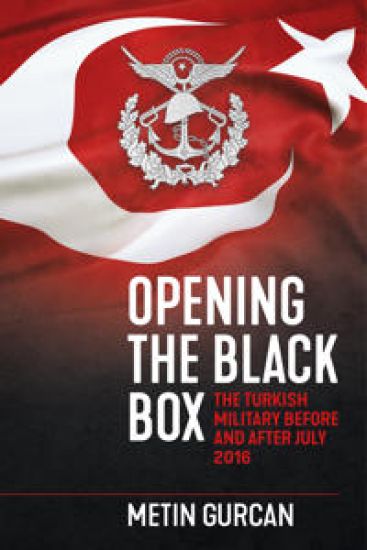
As any other modern militaries of the world, Turkish Armed Forces (TAF) is a complex organization relying on human force and other resources provided by society, being strictly founded on both an institutional setting and a framework of values, norms and rituals, and producing security with means and ways available to achieve the strategic objectives of Turkey. This inherent complexity reflecting the structure-culture-action nexus often means that scholars study modern militaries of the world with separated disciplines: Political Science, International Relations, Sociology, Anthropology, History, Administrative Sciences, Economics and Security Studies. With this book, the author’s hope is to make these connections explicit to better understand the military change both within the Turkish military and the Turkish Civil-Military Relations (CMR) before and after failed military uprising on July 15, 2016. To better understand TAF’s change before and after July 15, this book, which has benefited a lot from the author’s PhD research, seeks to follow a pragmatic multi-method approach at different levels of analysis (i.e. data and method triangulation) and eclectic theoretical design which borrows theoretical elements from both institutionalist literature and literature on military sociology. In the book, relying on both his 20 year-long insider experience within the Turkish military (both on the field and at the strategic corridors of the Turkish General Staff) and academic career, the author provides two snapshots, one about the pre-July 15 TAF and the Turkish CMR and other post-July 15 TAF and the Turkish CMR. It is worth noting that these snapshots have been enriched by empirical and qualitative scholarly insights seeking to examine the TAF as a security organization, TAF as a social institution and officership as a profession. In these snapshots, one would also find scholarly insights about the evolution of Turkish CMR over the last decade with a specific focus on the impact of the July 15 Military Uprising on the institutional identity of the Turkish military and the nature of the Turkish CMR. Regarding the pre-July 15 snapshot, this book aims at opening the black box of the Turkish military by presenting the findings of a survey conducted among 1,401 officers in May-August 2015. The findings show that, as the ranks decrease, there are some major trends influencing the officer corps. These include heterogenization and diversification of opinions from collectivist to individualist understanding of life, from an elitist to an egalitarian view of society, and change from value-centric service to a focus on financial goals and career opportunities. The findings also indicate that the Turkish Army, Air Force and Navy’s organizational cultures are dissimilar regarding their stance towards military transformation, organizational restructuring and some socio-political issues such as the extent of secularist sentiment, religiosity and political orientations. The author argues that these trends, which in fact led to the submission of the military to the democratic and civilian government, heterogenization and diversification among the officer corps, have played a major role in the failure of the July 15 Military Uprising. The author also suggests that they are still influencing the institutional setting of the post-July 15 military. Regarding the post-July 15 setting, the book first emphasizes Turkey’s overarching dilemma in the post-July 15 setting: whether to monopolize or democratize CMR for more effective control of the TAF. That is, on the one hand, the monopolization of CMR, implying transfer of power from the military elites to the elected executive presidency, enabling strict civilian control of the military by the elected civilian president; on the other hand, democratization of CMR enables diffusion of power among the elected president, elected government, and parliamentary and civil society actors such as academia, think tanks, and media so as to create a more effective oversight and monitoring system over the military. Indeed, the author argues that, the post-July 15 setting, shaped by concurrent military reforms and mass purges, led to two paradigm shifts. The first shift took place in the nature of Turkish CMR, implying a transition from the Huntingtonian paradigm focusing on the management of the gap between the military and civilian worlds to the Janowitzian paradigm aiming to diminish the gap between the military and society so as to anchor the military to society as a whole. According to the author, the second shift is in the Turkish military’s institutional identity, emphasizing a transition from a monolithic identity to a polylithic one composed of many but separated micro-identities. To elucidate the impact of these paradigm shifts, this book analyzes the possible implications of such a hasty and large-scale civilianization process on the nature of Turkish CMR. It then explores the extent to which the military’s institutional identity has evolved from a monolithic whole into a polylithic formation involving many but separated micro-identities in terms of the military elites’ stance towards change and their worldviews. This transition from monolithic to polylithic is driven by the weakening of the agency of the Chief of General Staff and seems to be the prime risk factor within the military in years to come and, thus, is in need of delicate management. Despite the fact that the literature on the TAF and Turkish CMR is rich in size, the literature includes only “outside-in” insights by the “civilian” researchers who have sought to explore the military with research of the “other.” This book emphasizes the need for more “social research from within to better dissolve the fog around the black box of the Turkish military. Indeed, the absence of “inside-out” insights from within the Turkish military would be listed as the first shortfall in the literature. Another handicap of the literature may be the dominance of dichotomous approaches, which stereotypically conceptualize Turkish CMR as a power relation between the “secular, patriotic, and modern soldier” versus “the elected, but inefficient and anti-secular politicians.” The third handicap visible in the literature is the conceptualization of the TAF as a monolithic and time-proof institution with unchanged norms, values, ways of thinking and doing things. Exaggerated secrecy restrictions that are common in defense matters in Turkey may have exacerbated the impact of these obstacles. Thus, scholars have had limited access to the military, which in return, has limited the number of studies conducted by civilian researchers on the military. The overall objective of this book is to tackle these three handicaps by opening the black box of the Turkish military. The author fully acknowledges that the book is surely not immune to substance-related and methodological weaknesses. One should, however, give credit that, despite all these weaknesses, with this contribution, the literature is having an empirical piece on the Turkish military relying on primary data sources that may have a potential to elevate the scholarly debates about the Turkish military and the Turkish CMR to a more quantitative level. Lastly, these two snapshots provided in this book could enable scholars to generate comparative scholarly insights after conducting a similar survey in the post-July 15 environment with a similar research design, survey questions and methodology.