

Kirjailija
Mia Couto
Kirjat ja teokset yhdessä paikassa: 30 kirjaa, julkaisuja vuosilta 2001–2025, suosituimpiin kuuluu Flamingon viimeinen lento. Vertaile teosten hintoja ja tarkista saatavuus suomalaisista kirjakaupoista.
30 kirjaa
Kirjojen julkaisuvuodet: 2001–2025.
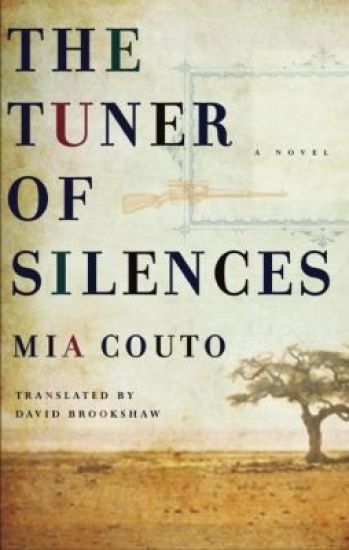
A RADIO FRANCE-CULTURE/TELERAMA BEST WORK OF FICTION BY THE FINALIST FOR THE 2015 MAN BOOKER INTERNATIONAL PRIZE THE WINNER OF THE 2014 NEUSTADT PRIZE AND THE WINNER OF THE 2013 CAMOES PRIZE "Quite unlike anything else I have read from Africa."--Doris Lessing "By meshing the richness of African beliefs ...into the Western framework of the novel, he creates a mysterious and surreal epic."--Henning Mankell Mwanito was eleven when he saw a woman for the first time, and the sight so surprised him he burst into tears. Mwanito has been living in a former big-game park for eight years. The only people he knows are his father, his brother, an uncle, and a servant. He's been told that the rest of the world is dead, that all roads are sad, that they wait for an apology from God. In the place his father calls Jezoosalem, Mwanito has been told that crying and praying are the same thing. Both, it seems, are forbidden. The eighth novel by the internationally bestselling Mia Couto, The Tuner of Silences is the story of Mwanito's struggle to reconstruct a family history that his father is unable to discuss. With the young woman's arrival in Jezoosalem, however, the silence of the past quickly breaks down, and both his father's story and the world are heard once more. The Tuner of Silences has been published to acclaim in more than half a dozen countries. Now in its first English translation, this story of an African boy's quest for the truth endures as a magical, humanizing confrontation between one child and the legacy of war. PRAISE FOR MIA COUTO "On almost every page ...we sense Couto's delight in those places where language slips officialdom's asphyxiating grasp."--The New York Times "Even in translation, his prose is suffused with striking images."--The Washington Post PRAISE FOR DAVID BROOKSHAW "David Brookshaw dexterously renders the novel's often colloquial, pithy Portuguese into lively English. Brookshaw's task is made more exacting by the particular quality of Couto's brilliance."--The New York Times
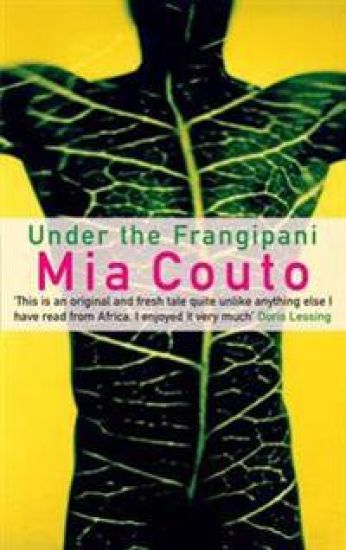
A police inspector is investigating a strange murder, a case in which all the suspects are eager to claim responsibility for the act. Set in a former Portuguese fort which stored slaves and ivory, Under the Frangipani combines fable and allegory, dreams and myths with an earthy humour. The dead meet the living, language is invented, reality is constantly changing. In a story which is partly a thriller, partly an exploration of language itself, Mia Couto surprises and delights, and shows just why he is one of the most important African writers of today.

Mariano, who has lived in the city from an early age, is summoned back to his village to attend his grandfather's funeral. But when he arrives, he discovers two things: firstly, that he has been nominated by his grandfather to take over the running of the family affairs, secondly that his grandfather has not died completely, but is in that frontier space between life and death. In traditional belief, he has died 'badly', and something must happen in order for him to be laid to rest. Mariano starts to receive letters supposedly written by his grandfather, telling him about the family. It is through this strange relationship that he discovers the secret of his own birth, while also cleansing his grandfather's conscience. The novel contains a blend of picturesque and sometimes comic characters and situations.

Sebastião Salgado is one the most respected photojournalists working today, his reputation forged by decades of dedication and powerful black-and-white images of dispossessed and distressed people, taken in places where most wouldn’t dare to go. Although he has photographed throughout South America and around the globe, his work most heavily concentrates on Africa, where he has shot more than 40 reportage works over a period of 30 years. From the Dinka tribes in Sudan and the Himba in Namibia to gorillas and volcanoes in the lakes region to displaced peoples throughout the continent, Salgado shows us all facets of African life today. Whether he’s documenting refugees or vast landscapes, Salgado knows exactly how to grab the essence of a moment so that when one sees his images one is involuntarily drawn into them. His images artfully teach us the disastrous effects of war, poverty, disease, and hostile climatic conditions. This book brings together Salgado’s photos of Africa in three parts. The first concentrates on the southern part of the continent (Mozambique, Malawi, Angola, Zimbabwe, South Africa, Namibia), the second on the Great Lakes region (Congo, Rwanda, Burundi, Uganda, Tanzania, Kenya), and the third on the Sub-Saharan region (Burkina Faso, Mali, Sudan, Somalia, Chad, Mauritania, Senegal, Ethiopia). Texts are provided by renowned Mozambique novelist Mia Couto, who describes how today’s Africa reflects the effects of colonization as well as the consequences of economic, social, and environmental crises. This stunning book is not only a sweeping document of Africa but an homage to the continent’s history, people, and natural phenomena.

In Mo?ambique stoßen verschiedene Welten aufeinander: die politische Vergangenheit des ehemaligen Koloniallandes und postkommunistischen Staates, die Konflikte der Gegenwart und zeitlose, mythische und magische Geschichten. In einem Altersheim in der Provinz, wo ein Todesfall aufgeklärt werden soll, versucht Inspektor Izidine Na?ta Klarheit in dem Gespinst der geheimnisvollen Aussagen der Bewohner zu gewinnen. Im Schatten des Frangipanibaums auf der Terrasse über dem Meer lauscht er allabendlich ihren merkwürdigen Geschichten. Dabei taucht er immer tiefer in ihre fantastische Welt ein und sieht sich zugleich auch mit der politischen Vergangenheit des Landes konfrontiert. Mia Coutos sprachgewaltiger und poetischer Roman über Afrika, seine Mythen und deren Bedrohung in einer modernen Welt nimmt den Leser in faszinierende Bilderwelten mit, in flirrende Hitze und ans Meer.
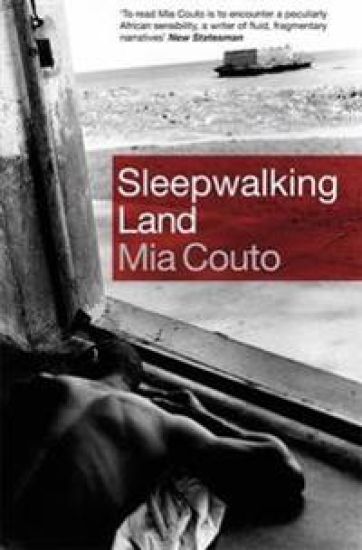
An old man and a young boy, refugees from a civil war, seek shelter in a burnt out bus. Among the effects of a dead passenger, they discover a set of notebooks that tell of his life. As the boy reads the story to his elderly companion, the tale gradually becomes part of their own lives. Sleepwalking Land, Mia Couto?s first novel, was an immediate success, and judged at the Zimbabwe Bookfair 2001 to be one of the 12 best African books of the 20th century. Set in the author?s native Mozambique, the novel examines the effects of war and devastation on a newly independent African nation. A sombre book, it reflects a moment in the history of Mozambique when the country could only go forward after settling its account with the bloody past. Deftly exploring the relationship between oral tradition and the written word, truth and fiction, memory and invention, this is a memorable book that captures a critical moment in Africa?s history.

Kiehtova tarina Mosambikista maagisen realismin hengessä. Tarinan kertoja on kuollut Ermelindo Mucanga, joka on haudattu ”väärään paikkaan” plumeriapuun juurelle, siirtomaavallanaikaisen linnoituksen verannan viereen. Linna toimii nyt vanhainkotina, joka on unohtunut viidakon keskelle ja jonka harvat asukkaat elävät oman onnensa nojassa, kaikkien unohtamana – ja miinakenttien ympäröimänä. Muurahaiskäpy ilmoittaa Ermelindolle, että tämän on palattava jonkun elävän, mutta pian kuolevan ihmisen ruumiiseen voidakseen kuolla uudestaan ja tullakseen kunnolla haudatuksi. Niinpä Ermelindo asettuu poliisikomisario Izidine Naítaan, joka tulee tutkimaan tyrannimaisen vanhainkodin johtajan murhaa ja jonka on määrä kuolla kuusi päivää myöhemmin. Vanhainkodin asukkaiden elämäntarinoiden kautta käydään läpi Mosambikin siirtomaavallan ja itsenäisyyden jälkeistä aikaa ja käsitellään rotukysymyksiä sekä afrikkalaisia uskomuksia, luonnon, kasvien ja eläinten merkitystä uskomuksissa ja tarinoissa. Mia Couton (s. 1955 Beirassa, Mosambikissa) kirjoja on käännetty 15 kielelle. Romaani Flamingon viimeinen lento (Like) ilmestyi vuonna 2000. "Plumeriaveranta vaeltaa toden ja taianomaisen välillä. Henget elävät, kuolleet puhuvat ja tuntevat siinä missä elävätkin. Lähes runollinen ilmaisutapa on yhtä paljon arvossaan kuin yksinkertainen dialogikin." - Arto Tuominen, Tiedonantaja
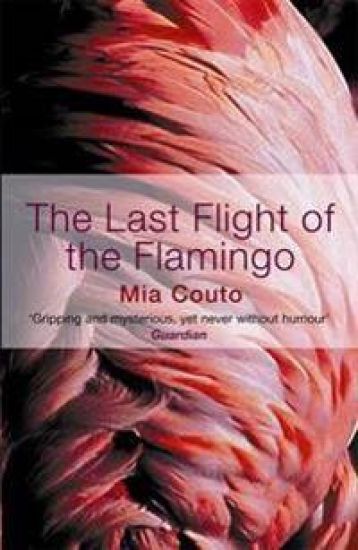
The civil war in Mozambique has ended but still the local soldiers are being hit by the landmines that litter the ground. When United Nations peacekeepers begin to suffer too, a high-level delegation visits the village of Tizangara, to initiate an investigation. Alongside representatives of central government and UN officials is an Italian, Massimo Risi, who has been charged with the business of finding out what happened. Risi?s interpreter has collated information for posterity based on taped interviews, letters and witness accounts, documents which form the backbone of this book, as he narrates it. Global issues are seen from a local African perspective in this subtle and playful novel, in which Mia Couto blends oral storytelling techniques with his customary originality and flair.

Mosambikilaisen kylän elämänmeno mullistuu, kun rauhanprosessia valvomaan ja maamiinoja raivaamaan saapuneet YK-sotilaat alkavat salaperäisesti räjähdellä kappaleiksi. Mysteeriä selvittämään lähetetään tutkija, joka kohtaa kylän värikkään henkilögallerian ja erikoislaatuisen todellisuuden, jossa tosiasiat ovat yliluonnollisia ja yliluonnollinen arkipäivää. Kyläläisten ihmissuhteet, esi-isien henkimaailma, reaalipolitiikka ja mystiset juonittelut punoutuvat kiehtovaksi kudelmaksi, josta ei puutu hulvattoman hauskoja ja surrealistisen äkkivääriä yksityiskohtia.