Kirjojen hintavertailu – 12 859 828 kirjaa ja 27 kauppaa

Kirjailija

Michael A. Peters

Kirjat ja teokset yhdessä paikassa: 38 kirjaa, julkaisuja vuosilta 2001–2023, suosituimpiin kuuluu Neoliberalism, Higher Education and Research. Vertaile teosten hintoja ja tarkista saatavuus suomalaisista kirjakaupoista.

38 kirjaa

Kirjojen julkaisuvuodet: 2001–2023.

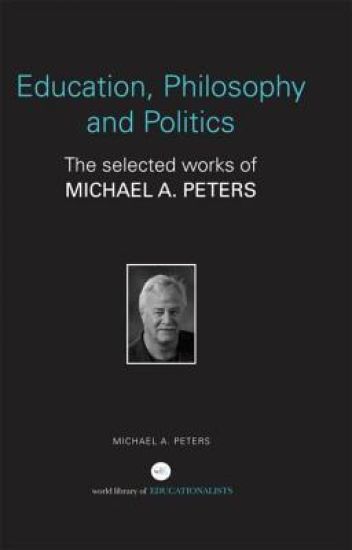
Education, Philosophy and Politics

Education, Philosophy and Politics

Michael A. Peters

Routledge
2012
sidottu
In the World Library of Educationalists series, international experts themselves compile career-long collections of what they judge to be their finest pieces - extracts from books, key articles, salient research findings, major theoretical and/practical contributions - so the world can read them in a single manageable volume. Michael A. Peters has spent the last 30 years researching, thinking and writing about some of the key and enduring issues in education. He has contributed over 60 books (authored, co-authored and edited) and 500 articles to the field. In Education, Philosophy and Politics, Michael A. Peters brings together 15 of his key writings in one place, including chapters from his best-selling books and articles from leading journals. Starting with a specially written Introduction, which gives an overview of Michael's career and contextualises his selection, the essays are then arranged thematically to create a pathway of a way of thinking in philosophy of education which is forward looking but takes account of tradition and the past. The subjects of the chapters include; Wittgenstein Studies Philosophical Critique of Modernity French Poststructuralism Jean-Francois Lyotard Foucault & Deleuze Derrida American Pragmatism Rorty Cavell Philosophy and racismThrough this book, readers can follow the themes and strands that Michael A. Peters has written about for over three decades and clearly see his important contribution to the field of education.
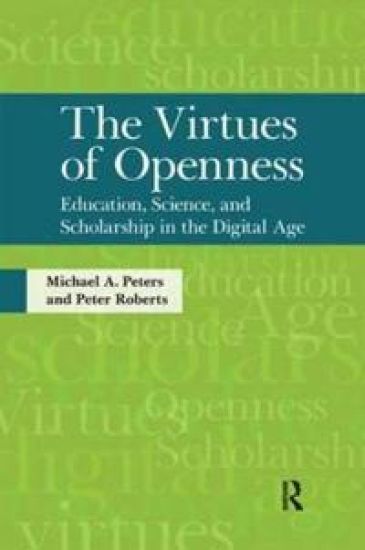
Virtues of Openness

Virtues of Openness

Michael A. Peters; Peter Roberts

Paradigm
2011
sidottu
Should all academic writings be free for us by anyone on the Web? The Virtues of Openness examines the complex history of the concept of the open society before beginning a systematic investigation of openness in relation to the book, the "open text" and the written word. These changes are discussed in relation to the development of new open spaces of scholarship with their impact upon open journal systems, open peer review, open science, and the open global digital economy. The Virtues of Openness argues that openness suggests political transparency and the norms of open inquiry, indeed, even democracy itself as both the basis of the logic of inquiry and the dissemination of its results.
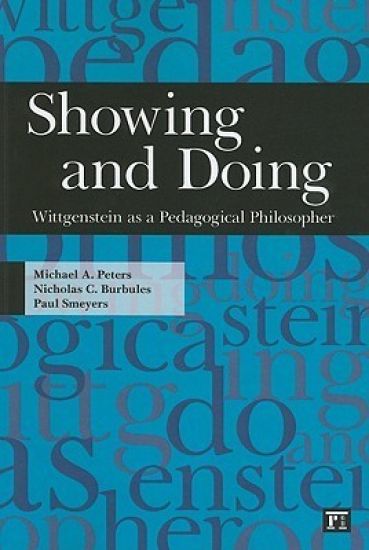
Showing and Doing

Showing and Doing

Michael A. Peters; Nicholas C. Burbules; Paul Smeyers

Paradigm
2010
nidottu
Three prominent Wittgenstein scholars introduce the broad educational significance of Ludwig Wittgenstein's work to a wider audience of educational researchers and practitioners through provocative, innovative, and playful readings of his work. They vividly demonstrate the influence of his thinking and its centrality to understanding our contemporary condition. Wittgenstein fundamentally shaped contemporary theories of language, representation, cognition, and learning. The book also traces the "pedagogical turn" of his thinking during the period from 1920 to 1926. What is most radical about Wittgenstein's later work is that it suggests learning and initiation into practices are fundamental to understanding his philosophy. The book not only provides a new and fresh interpretation of Wittgenstein's thought but also explores a new way of thinking about education as a way of revealing the educational dimension of philosophical problems.
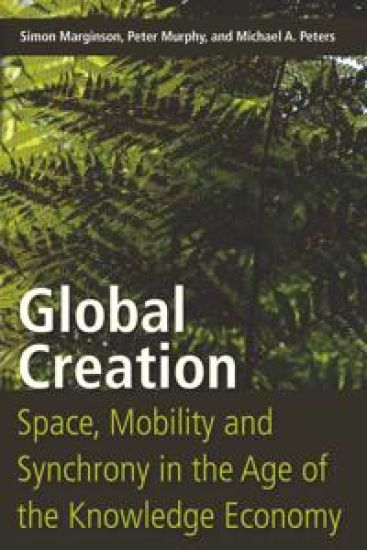
Global Creation

Global Creation

Simon Marginson; Peter Murphy; Michael A. Peters

Peter Lang Publishing Inc
2009
nidottu
This lively and original book changes the way we see globalization and the knowledge economy. Creativity, exchange and the open flow of ideas have long shaped states, economies and everyday life. But knowledge now has an extraordinary dynamism. The world is crisscrossed by traffic in people, data and images. A world society is emerging, though governance is yet to reflect this. Global Creation shows that global creativity is transforming in two ways. First, global synchrony and convergence are changing the conception, production and sharing of creative work and this is feeding back into the core structures of the social world. Second, the global dimension is itself a human product and one that is continually being created. This book explores acts of imagining, producing and regulating the global dimension of action in the past, present and future. It will interest all intelligent readers, particularly those engaged with the history of ideas, political economy, sociology, innovation, or business organization. It follows Creativity and the Global Knowledge Economy (Peters, Marginson, Murphy 2009), also published by Peter Lang.
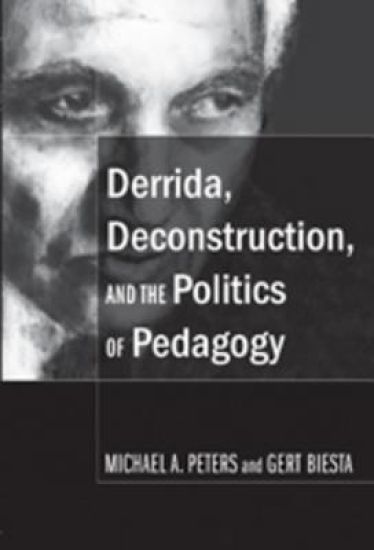
Derrida, Deconstruction, and the Politics of Pedagogy

Derrida, Deconstruction, and the Politics of Pedagogy

Michael A. Peters; Gert Biesta

Peter Lang Publishing Inc
2008
nidottu
Jacques Derrida is, arguably, the foremost philosopher of the humanities and their place in the university. Over his long career he was concerned with the humanities’ fate, status, place, and contribution. Through his deconstructive readings and writings, Derrida reinvented the Western tradition by attending closely to those texts which constitute it. He redefined its procedures and protocols, questioning and commenting upon the relationship between commentary and interpretation, the practice of quotation, the delimitation of a work and its singularity, its signature, and its context: the whole form of life of literary culture, together with the textual practices and conventions that shape it. From early in his career, Derrida occupied a marginal in-between space – simultaneously textual, literary, philosophical, and political – a space that permitted him a freedom to question, to speculate, and to draw new limits to humanitas. With an up-to-date synopsis, review, and critique of his writings, this book demonstrates Derrida’s almost singular power to reconceptualize and reimagine the humanities, and examines his humanism in relation to politics and pedagogy.
Showing and Doing

Showing and Doing

Michael A. Peters; Nicholas C. Burbules; Paul Smeyers

Paradigm
2008
sidottu
Three prominent Wittgenstein scholars introduce the broad educational significance of Ludwig Wittgenstein's work to a wider audience of educational researchers and practitioners through provocative, innovative, and playful readings of his work. They vividly demonstrate the influence of his thinking and its centrality to understanding our contemporary condition. Wittgenstein fundamentally shaped contemporary theories of language, representation, cognition, and learning. The book also traces the "pedagogical turn" of his thinking during the period from 1920 to 1926. What is most radical about Wittgenstein's later work is that it suggests learning and initiation into practices are fundamental to understanding his philosophy. The book not only provides a new and fresh interpretation of Wittgenstein's thought but also explores a new way of thinking about education as a way of revealing the educational dimension of philosophical problems.
Subjectivity and Truth

Subjectivity and Truth

Tina Besley; Michael A. Peters

Peter Lang Publishing Inc
2007
nidottu
This book focuses on Foucault's later work and his (re)turn to 'the hermeneutics of the subject', exploring the implications of his thinking for education, pedagogy, and related disciplines. What and who is the subject of education and what are the forms of self-constitution? Chapters investigate Foucault's notion of 'the culture of self' in relation to questions concerning truth (parrhesia or free speech) and subjectivity, especially with reference to the literary genres of confession and biography, and the contemporary political forms of individualization (governmentality).
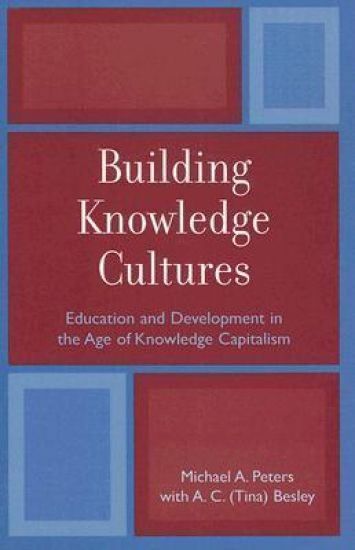
Building Knowledge Cultures

Building Knowledge Cultures

Michael A. Peters; Tina Besley

Rowman Littlefield Publishers
2006
sidottu
This book develops the notion of 'knowledge cultures' as a basis for understanding the possibilities of education and development in the age of knowledge capitalism. 'Knowledge cultures' refers to the cultural preconditions in the new production of knowledge and their basis in shared practices, embodying preferred ways of doing things often developed over many generations. These practices also point to the way in which cultures have different repertoires of representational and non-representational forms of knowing. The book discusses knowledge cultures in relation to claims for the new economy, as well as cultural economy and the politics of postmodernity. It focuses on national policy constructions of the knowledge economy, 'fast knowledge' and the role of the so-called 'new pedagogy' and social learning under these conditions.
Building Knowledge Cultures

Building Knowledge Cultures

Michael A. Peters; Tina Besley

Rowman Littlefield Publishers
2006
nidottu
This book develops the notion of 'knowledge cultures' as a basis for understanding the possibilities of education and development in the age of knowledge capitalism. 'Knowledge cultures' refers to the cultural preconditions in the new production of knowledge and their basis in shared practices, embodying preferred ways of doing things often developed over many generations. These practices also point to the way in which cultures have different repertoires of representational and non-representational forms of knowing. The book discusses knowledge cultures in relation to claims for the new economy, as well as cultural economy and the politics of postmodernity. It focuses on national policy constructions of the knowledge economy, 'fast knowledge' and the role of the so-called 'new pedagogy' and social learning under these conditions.
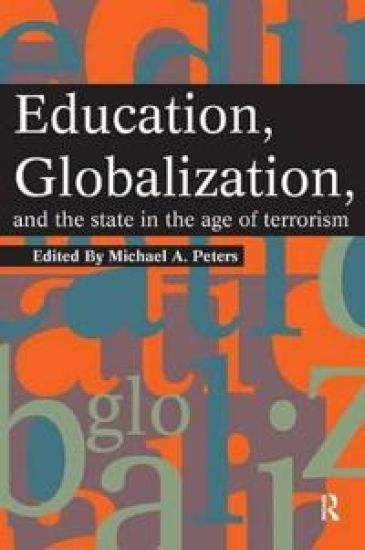
Education, Globalization and the State in the Age of Terrorism
Education plays an important role in challenging, combating and in understanding terrorism in its different forms, whether as counter-terrorism or as a form of human rights education. Just as education has played a significant role in the process of nation-building, so education also plays a strong role in the process of empire, globalization and resistance to global forces-and in terrorism, especially where it is linked to emergent statehood. This book focuses on the theme of education in an age of terrorism, exploring the conflicts of globalization and global citizenship, feminism post-9/11, youth identities, citizenship and democracy in a culture of permanent war, and the relation between education and war, with a focus on the war against Iraq.
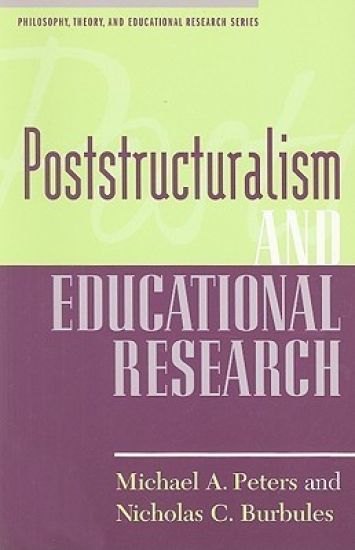
Poststructuralism and Educational Research

Poststructuralism and Educational Research

Michael A. Peters; Nicholas C. Burbules

Rowman Littlefield
2004
sidottu
Poststructuralism, and its implications for something called "postmodernism," is a major topic of discussion in social theory and research generally, including educational research. The works of the major authors in this tradition (Foucault, Lyotard, Cixous, Derrida, Haraway, to name a few) are challenging and difficult. Yet more and more theorists and researchers in educational scholarship use this term to describe their work. What does poststructuralism mean for these authors, and what significance does it have for educational inquiry? This book takes on these central questions and explores the impact of poststructuralism in language that makes the basic issues at stake accessible for a broad readership. Michael Peters and Nicholas C. Burbules highlight the implications of a poststructuralist stance for the conception of the research subject and examine its standards of validity and methods of investigation. They also lay out the distinguishing characteristics of this approach to educational inquiry, using as examples the particular ways in which writers (including Giroux, McLaren, Lather, and Ball) have tried to incorporate the poststructuralist perspective into their investigations of educational issues. The emphasis throughout this book will be on making these complex theoretical issues tangible and salient for the educational researcher.
Poststructuralism and Educational Research

Poststructuralism and Educational Research

Michael A. Peters; Nicholas C. Burbules

Rowman Littlefield
2004
nidottu
Poststructuralism, and its implications for something called 'postmodernism,' is a major topic of discussion in social theory and research generally, including educational research. The works of the major authors in this tradition (Foucault, Lyotard, Cixous, Derrida, Haraway, to name a few) are challenging and difficult. Yet more and more theorists and researchers in educational scholarship use this term to describe their work. What does poststructuralism mean for these authors, and what significance does it have for educational inquiry? This book takes on these central questions and explores the impact of poststructuralism in language that makes the basic issues at stake accessible for a broad readership. Michael Peters and Nicholas C. Burbules highlight the implications of a poststructuralist stance for the conception of the research subject and examine its standards of validity and methods of investigation. They also lay out the distinguishing characteristics of this approach to educational inquiry, using as examples the particular ways in which writers (including Giroux, McLaren, Lather, and Ball) have tried to incorporate the poststructuralist perspective into their investigations of educational issues. The emphasis throughout this book will be on making these complex theoretical issues tangible and salient for the educational researcher.
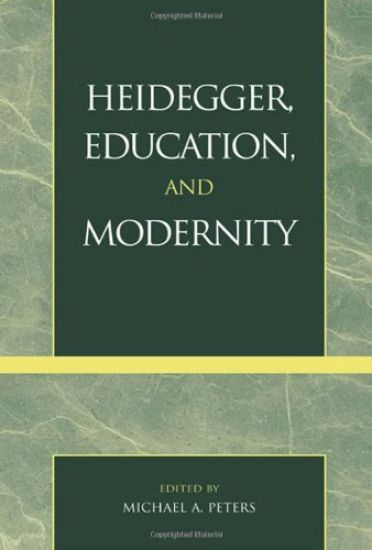
Heidegger, Education, and Modernity

Heidegger, Education, and Modernity

Michael A. Peters

Rowman Littlefield Publishers
2002
sidottu
Martin Heidegger is, perhaps, the most controversial philosopher of the twentieth-century. Little has been written on him or about his work and its significance for educational thought. This unique collection by a group of international scholars reexamines Heidegger's work and its legacy for educational thought. Thematically, the collection focuses on Heidegger's critique of modernity and contributors investigate the central significance for education of Heidegger's ontology and his investigation of the question of the meaning of Being by examining his 'art of teaching' (a translation of his submission to the denazification hearing), his view of science and reason, his philosophy of technology, his poetics, and the implications of his thought for learning. These essays point to the crucial importance of Heidegger's work for understanding modern, highly-technologized forms of education and for the possibilities of redemption from its worst excesses.
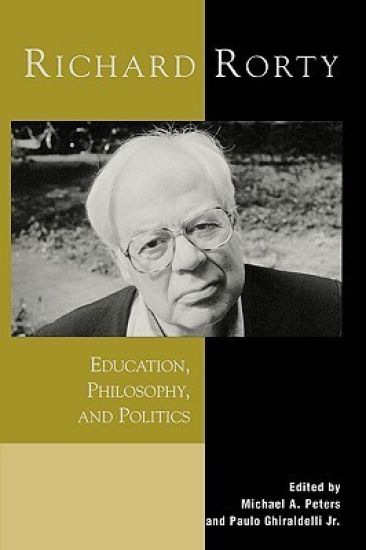
Richard Rorty

Richard Rorty

Michael A. Peters; Paulo Ghiraldelli

Rowman Littlefield Publishers
2001
nidottu
Richard Rorty's neopragmatist philosophy marks him as one of the most gifted and controversial thinkers of his time. Antifoundationalism and antirepresentationalism are the guiding motifs in his thought. He wants to jettison a set of philosophical distinctions—appearance/reality, mind/body, morality/prudence—that have dominated and shaped the history of Western philosophy since the time of Plato. It is a position that has propelled him into a series of heated debates with philosophers who are the most influential of their generation—analytic philosophers such as Quine, Davidson, Rawls, and Putnam; as well as Continental philosophers, including Habermas, Derrida, Foucault, and Lyotard. At the same time, Rorty's work has helped to break down the artificial separation between these two wings of Western philosophy by acting as an intellectual bridge between them. This distinctive collection by scholars from around the world focuses upon the cultural, educational, and political significance of his thought. The nine essays which comprise the collection examine a variety of related themes: Rorty's neopragmatism, his view of philosophy, his philosophy of education and culture, Rorty's comparison between Dewey and Foucault, his relation to postmodern theory, and, also his form of political liberalism.
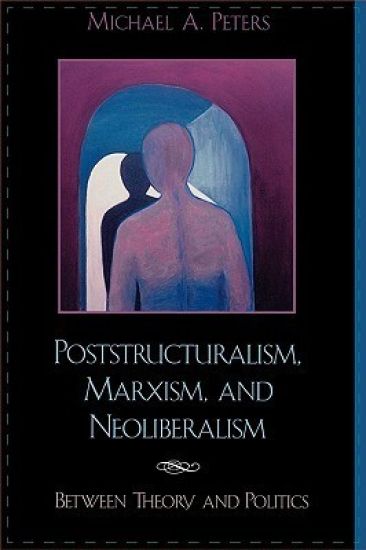
Poststructuralism, Marxism, and Neoliberalism

Poststructuralism, Marxism, and Neoliberalism

Michael A. Peters

Rowman Littlefield Publishers
2001
nidottu
This introduction to the politics of poststructuralism focuses on two interrelated themes: the culture of Western Marxism and contemporary neoliberal capitalism. Poststructuralism is not a form of anti-Marxism, Peters argues; indeed, poststructural philosophers view themselves in some kind of relationship to the legacy of Marx. Either they have been Marxist or still view themselves as Marxist. In a post-Marxist era they have invented new ways of reading and writing Marx. Peters critically engages neoliberalism, an ideology that is committed to the revitalization of homo economicus and neoclassical economics. This book is a deconstruction of neoliberalism, considered as a world-historical political project aimed at a form of globalisation.