Kirjojen hintavertailu – 12 903 725 kirjaa ja 27 kauppaa

Kirjailija

Michael Albertus

Kirjat ja teokset yhdessä paikassa: 10 kirjaa, julkaisuja vuosilta 2015–2026, suosituimpiin kuuluu Land Power. Vertaile teosten hintoja ja tarkista saatavuus suomalaisista kirjakaupoista.

10 kirjaa

Kirjojen julkaisuvuodet: 2015–2026.

Land Power

Land Power

Michael Albertus

John Murray Press
2026
pokkari

Halvin toimitettuna 18,50 €

'A must-read' THOMAS PIKETTY'Captivating' DARON ACEMOGLU'Fascinating' FRANCIS FUKUYAMAAn award-winning political scientist shows that a society's path to prosperity, sustainability, and equality depends on who owns the land. For millennia, land has been a symbol of wealth and privilege. But the true power of land ownership is even greater than we might think. In Land Power, political scientist Michael Albertus shows that who owns the land determines whether a society will be equal or unequal, whether it will develop or decline, and whether it will safeguard or sacrifice its environment. Modern history has been defined by land reallocation on a massive scale. From the 1500s on, European colonial powers and new nation-states shifted indigenous lands into the hands of settlers. The 1900s brought new waves of land appropriation, from Soviet and Maoist collectivization to initiatives turning large estates over to family farmers. With the establishment of cooperatives in North Africa, the displacement of Native Americans and divisive inheritance laws of post-partition India, land decisions reverberate to this day as governments vie for power and prosperity by choosing who should get land. Drawing on a career's worth of original research and on-the-ground fieldwork, Albertus shows that choices about who owns the land have locked in poverty, sexism, racism, and climate crisis-and that what we do with the land today can change our collective fate. Global in scope, Land Power argues that saving civilization must begin with the earth under our feet.
Land Power

Land Power

Michael Albertus

John Murray Press
2025
sidottu
'A must-read' THOMAS PIKETTY'Captivating' DARON ACEMOGLU'Fascinating' FRANCIS FUKUYAMAAn award-winning political scientist shows that a society's path to prosperity, sustainability, and equality depends on who owns the land. For millennia, land has been a symbol of wealth and privilege. But the true power of land ownership is even greater than we might think. In Land Power, political scientist Michael Albertus shows that who owns the land determines whether a society will be equal or unequal, whether it will develop or decline, and whether it will safeguard or sacrifice its environment. Modern history has been defined by land reallocation on a massive scale. From the 1500s on, European colonial powers and new nation-states shifted indigenous lands into the hands of settlers. The 1900s brought new waves of land appropriation, from Soviet and Maoist collectivization to initiatives turning large estates over to family farmers. With the establishment of cooperatives in North Africa, the displacement of Native Americans and divisive inheritance laws of post-partition India, land decisions reverberate to this day as governments vie for power and prosperity by choosing who should get land. Drawing on a career's worth of original research and on-the-ground fieldwork, Albertus shows that choices about who owns the land have locked in poverty, sexism, racism, and climate crisis-and that what we do with the land today can change our collective fate. Global in scope, Land Power argues that saving civilization must begin with the earth under our feet.
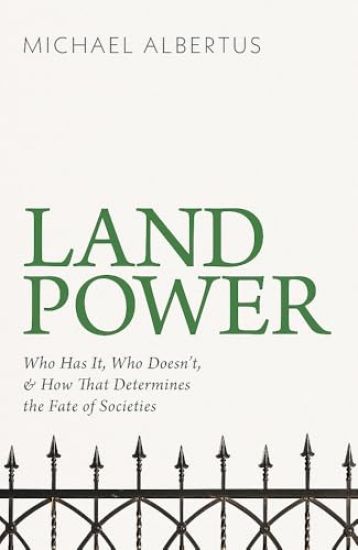
Land Power: Who Has It, Who Doesn't, and How That Determines the Fate of Societies

Land Power: Who Has It, Who Doesn't, and How That Determines the Fate of Societies

Michael Albertus

BASIC BOOKS
2025
sidottu

Halvin toimitettuna 28,20 €

In this "fascinating" (Thomas Piketty, New York Times-bestselling author of Capital in the Twenty-First Century) book. an award-winning political scientist shows that a society's path to prosperity, sustainability, and equality depends on who owns the land For millennia, land has been a symbol of wealth and privilege. But the true power of land ownership is even greater than we might think. In Land Power, political scientist Michael Albertus shows that who owns the land determines whether a society will be equal or unequal, whether it will develop or decline, and whether it will safeguard or sacrifice its environment. Modern history has been defined by land reallocation on a massive scale. From the 1500s on, European colonial powers and new nation-states shifted indigenous lands into the hands of settlers. The 1900s brought new waves of land appropriation, from Soviet and Maoist collectivization to initiatives turning large estates over to family farmers. The shuffle continues today as governments vie for power and prosperity by choosing who should get land. Drawing on a career's worth of original research and on-the-ground fieldwork, Albertus shows that choices about who owns the land have locked in poverty, sexism, racism, and climate crisis--and that what we do with the land today can change our collective fate. Global in scope, Land Power argues that saving civilization must begin with the earth under our feet.
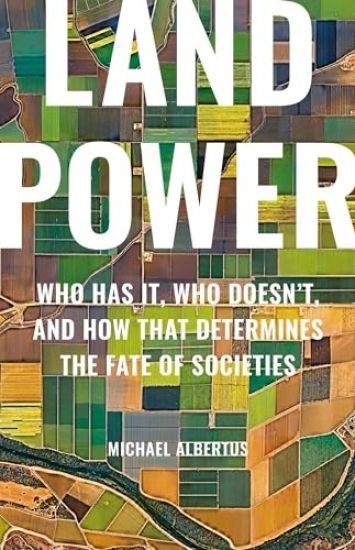
Property without Rights

Property without Rights

Michael Albertus

Cambridge University Press
2021
pokkari
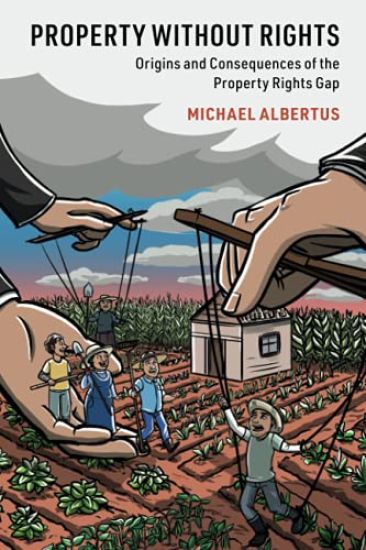
Major land reform programs have reallocated property in more than one-third of the world's countries in the last century and impacted over one billion people. But only rarely have these programs granted beneficiaries complete property rights. Why is this the case, and what are the consequences? This book draws on wide-ranging original data and charts new conceptual terrain to reveal the political origins of the property rights gap. It shows that land reform programs are most often implemented by authoritarian governments who deliberately withhold property rights from beneficiaries. In so doing, governments generate coercive leverage over rural populations and exert social control. This is politically advantageous to ruling governments but it has negative development consequences: it slows economic growth, productivity, and urbanization and it exacerbates inequality. The book also examines the conditions under which subsequent governments close property rights gaps, usually as a result of democratization or foreign pressure.
Property without Rights

Property without Rights

Michael Albertus

Cambridge University Press
2021
sidottu
Major land reform programs have reallocated property in more than one-third of the world's countries in the last century and impacted over one billion people. But only rarely have these programs granted beneficiaries complete property rights. Why is this the case, and what are the consequences? This book draws on wide-ranging original data and charts new conceptual terrain to reveal the political origins of the property rights gap. It shows that land reform programs are most often implemented by authoritarian governments who deliberately withhold property rights from beneficiaries. In so doing, governments generate coercive leverage over rural populations and exert social control. This is politically advantageous to ruling governments but it has negative development consequences: it slows economic growth, productivity, and urbanization and it exacerbates inequality. The book also examines the conditions under which subsequent governments close property rights gaps, usually as a result of democratization or foreign pressure.
Coercive Distribution

Coercive Distribution

Michael Albertus; Sofia Fenner; Dan Slater

Cambridge University Press
2018
pokkari
Canonical theories of political economy struggle to explain patterns of distribution in authoritarian regimes. In this Element, Albertus, Fenner, and Slater challenge existing models and introduce an alternative, supply-side, and state-centered theory of 'coercive distribution'. Authoritarian regimes proactively deploy distributive policies as advantageous strategies to consolidate their monopoly on power. These policies contribute to authoritarian durability by undercutting rival elites and enmeshing the masses in lasting relations of coercive dependence. The authors illustrate the patterns, timing, and breadth of coercive distribution with global and Latin American quantitative evidence and with a series of historical case studies from regimes in Latin America, Asia, and the Middle East. By recognizing distribution's coercive dimensions, they account for empirical patterns of distribution that do not fit with quasi-democratic understandings of distribution as quid pro quo exchange. Under authoritarian conditions, distribution is less an alternative to coercion than one of its most effective expressions.
Authoritarianism and the Elite Origins of Democracy

Authoritarianism and the Elite Origins of Democracy

Michael Albertus; Victor Menaldo

Cambridge University Press
2018
sidottu
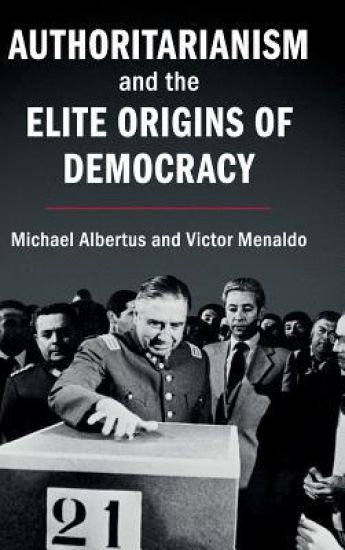
This book argues that - in terms of institutional design, the allocation of power and privilege, and the lived experiences of citizens - democracy often does not restart the political game after displacing authoritarianism. Democratic institutions are frequently designed by the outgoing authoritarian regime to shield incumbent elites from the rule of law and give them an unfair advantage over politics and the economy after democratization. Authoritarianism and the Elite Origins of Democracy systematically documents and analyzes the constitutional tools that outgoing authoritarian elites use to accomplish these ends, such as electoral system design, legislative appointments, federalism, legal immunities, constitutional tribunal design, and supermajority thresholds for change. The study provides wide-ranging evidence for these claims using data that spans the globe and dates from 1800 to the present. Albertus and Menaldo also conduct detailed case studies of Chile and Sweden. In doing so, they explain why some democracies successfully overhaul their elite-biased constitutions for more egalitarian social contracts.
Autocracy and Redistribution

Autocracy and Redistribution

Michael Albertus

Cambridge University Press
2015
sidottu
When and why do countries redistribute land to the landless? What political purposes does land reform serve, and what place does it have in today's world? A long-standing literature dating back to Aristotle and echoed in important recent works holds that redistribution should be both higher and more targeted at the poor under democracy. Yet comprehensive historical data to test this claim has been lacking. This book shows that land redistribution - the most consequential form of redistribution in the developing world - occurs more often under dictatorship than democracy. It offers a novel theory of land reform and develops a typology of land reform policies. Albertus leverages original data spanning the world and dating back to 1900 to extensively test the theory using statistical analysis and case studies of key countries such as Egypt, Peru, Venezuela, and Zimbabwe. These findings call for rethinking much of the common wisdom about redistribution and regimes.
Autocracy and Redistribution

Autocracy and Redistribution

Michael Albertus

Cambridge University Press
2015
pokkari
When and why do countries redistribute land to the landless? What political purposes does land reform serve, and what place does it have in today's world? A long-standing literature dating back to Aristotle and echoed in important recent works holds that redistribution should be both higher and more targeted at the poor under democracy. Yet comprehensive historical data to test this claim has been lacking. This book shows that land redistribution - the most consequential form of redistribution in the developing world - occurs more often under dictatorship than democracy. It offers a novel theory of land reform and develops a typology of land reform policies. Albertus leverages original data spanning the world and dating back to 1900 to extensively test the theory using statistical analysis and case studies of key countries such as Egypt, Peru, Venezuela, and Zimbabwe. These findings call for rethinking much of the common wisdom about redistribution and regimes.