Kirjojen hintavertailu – 12 903 725 kirjaa ja 27 kauppaa

Kirjailija

Michael Barnett

Kirjat ja teokset yhdessä paikassa: 20 kirjaa, julkaisuja vuosilta 1998–2024, suosituimpiin kuuluu Customer Relationship Imprinting: The 6 Elements That Ensure Exceptional Service Without Exception. Vertaile teosten hintoja ja tarkista saatavuus suomalaisista kirjakaupoista.

20 kirjaa

Kirjojen julkaisuvuodet: 1998–2024.

The Emotionally Focused Therapy Workbook for Addiction

The Emotionally Focused Therapy Workbook for Addiction

Michael Barnett

NEW HARBINGER PUBLICATIONS
2024
pokkari
Addiction is often triggered by loneliness, trauma, or loss, yet many traditional treatments fail to uncover the root cause, and focus instead on managing addictive behaviors-with varying degrees of success. Emotionally focused therapy (EFT) provides readers with the tools they need to heal the emotional pain and isolation that addiction desperately attempts to soothe. Readers will also learn essential skills for building a sense of belonging and safety with the ones they love-so they can lean into community and connection instead of drugs and alcohol. Heal the pain at the root of your addiction with this comprehensive, evidence-based workbook. If you struggle with substance abuse, you may have intense feelings of loneliness, isolation, and disconnection. You may feel uncomfortable asking others for help. And when faced with difficult emotions, it's easy to fall into the habit of numbing and avoiding emotional pain with drugs and alcohol, which can leave you feeling even more shame and despair. So, how do you break this cycle and create real connections that will reward you with relief, belonging, and a sense of safety? The skills and exercises in this user-friendly workbook are based in proven-effective emotionally focused therapy (EFT)-an innovative approach for transforming the pain of addiction into a sense of love, community, and connection. Step by step, you'll build a solid foundation of self-compassion to help you heal from the underlying causes that drove you to self-medicate in the first place. Instead of turning to drugs and alcohol to dull the pain at the core of your addiction, you'll discover how to develop a safety net of life-affirming relationships to protect and support you. As you work through the exercises, you'll gain essential skills to manage your emotions and form meaningful connections with others. The more emotionally fluent you become, the more you'll learn to rely on your support network in times of distress-and the less likely you'll be to reach for substances. As you remove the obstacles that block healthy connection to others, you'll begin to resolve the pain buried deep within, and replace your addiction with a reliable, caring connection with others-and with yourself! If you're done searching for emotional relief in drugs and alcohol, let this friendly guide point you on the path to true recovery and belonging. Go ahead, take the first step.
Customer Relationship Imprinting: The 6 Elements That Ensure Exceptional Service Without Exception
Significantly improve customer attraction, acquisition, and retention with this groundbreaking six-step program for creating exceptional customer relationships. Follow this formula and your customers will follow you While many customer service books discuss customer loyalty, the concept of customer imprinting has never been introduced into the customer service conversation--until now. Customer Relationship Imprinting reveals why some businesses have fiercely loyal customers who will pay much more for the same goods and services instead of doing business with their competitors. Barnett demystifies the success secrets of these top customer-centric businesses so that you can infuse the main ingredients of customer imprinting into your organization. The result? You'll not only strengthen customer bonds--you'll create an amazing internal employee culture. With so much confusion on how to provide great customer service, Customer Relationship Imprinting provides a clear path to delivering extraordinary service consistently. You'll discover: The three sectors of impact that can elevate or devastate your businessHow to trade transactional flings for loyal customer relationshipsWhat Relational Velcro is and how to use it to maximize meaningful customer interactionsWho Service Architects are and how to empower them to build a strong brand frameworkAnd much more Practical tools, insightful stories, and a team-reading option make Customer Relationship Imprinting a must-have book for service professionals, CEOs, and managers from all segments of business.
People, Not Psychiatry

People, Not Psychiatry

Michael Barnett

Routledge
2020
nidottu
Originally published in 1973, this book is about people and psychiatry. About people who rejected psychiatry as it was generally practised at the time, people who sought for and found alternative ways of caring for and healing one another. The author, who had been active in radical alternatives to psychiatry for some time, offers us a programme based not on drugs, repression and a ‘questionable’ expertise, but on human caring, greater awareness of the body, deeper communication between persons and a willingness to let the emotions flow. It is a challenging alternative which came at a time when the viability of scientific, theoretical and chemical approaches to distress were being questioned at all levels of society. This alternative includes the new direct methods of healing (making whole) such as Encounter, Gestalt, Bioenergetics, Psychofantasy – methods that do not do things to people but allow them to feel their way into change through experiment, flow and choice. The main focus of the book is People, not Psychiatry (PNP), the network set up by the author in 1969. PNP is open to all, and people in it help one another in times of stress and crisis, if they are asked to and when they are needed. One of the main assets of these networks is that they are an alternative and they are there. The book tells the story of PNP’s birth and growth. It is a personal story, a moving story, a story about people. In addition, the book contains some lively theoretical discussion, both simple and clear, in the course of which the author tentatively offers his own theory of neurosis – that many people become victims of the primitive logic patterns laid down in infancy, patterns that become reinforced through fear and habit and have to be dissolved or replaced if we are to enjoy a full, healthy, free-flowing life. The book is directed at doctors, patients, consultants, nurses, psychologists, social workers, therapists, in fact anyone involved in any way in the field of psychiatry. It is also offered to all those whom psychiatry touches, that it to say – everyone.

People, Not Psychiatry

People, Not Psychiatry

Michael Barnett

Routledge
2018
sidottu
Originally published in 1973, this book is about people and psychiatry. About people who rejected psychiatry as it was generally practised at the time, people who sought for and found alternative ways of caring for and healing one another. The author, who had been active in radical alternatives to psychiatry for some time, offers us a programme based not on drugs, repression and a ‘questionable’ expertise, but on human caring, greater awareness of the body, deeper communication between persons and a willingness to let the emotions flow. It is a challenging alternative which came at a time when the viability of scientific, theoretical and chemical approaches to distress were being questioned at all levels of society. This alternative includes the new direct methods of healing (making whole) such as Encounter, Gestalt, Bioenergetics, Psychofantasy – methods that do not do things to people but allow them to feel their way into change through experiment, flow and choice. The main focus of the book is People, not Psychiatry (PNP), the network set up by the author in 1969. PNP is open to all, and people in it help one another in times of stress and crisis, if they are asked to and when they are needed. One of the main assets of these networks is that they are an alternative and they are there. The book tells the story of PNP’s birth and growth. It is a personal story, a moving story, a story about people. In addition, the book contains some lively theoretical discussion, both simple and clear, in the course of which the author tentatively offers his own theory of neurosis – that many people become victims of the primitive logic patterns laid down in infancy, patterns that become reinforced through fear and habit and have to be dissolved or replaced if we are to enjoy a full, healthy, free-flowing life. The book is directed at doctors, patients, consultants, nurses, psychologists, social workers, therapists, in fact anyone involved in any way in the field of psychiatry. It is also offered to all those whom psychiatry touches, that it to say – everyone.

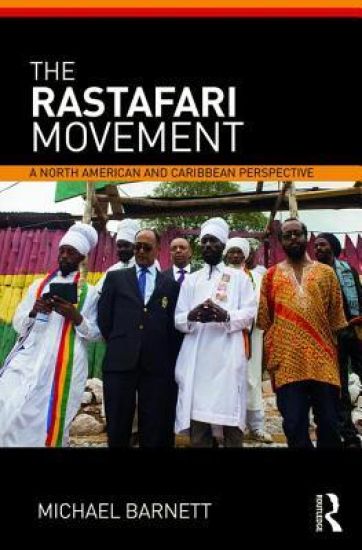
The Rastafari Movement

The Rastafari Movement

Michael Barnett

Routledge
2017
sidottu
The Rastafari Movement: A North American and Caribbean Perspective provides a historical and ideological overview of the Rastafari movement in the context of its early beginnings in the island of Jamaica and its eventual establishment in other geographic locations. Building on previous scholarship and the author's own fieldwork, the text goes on to provide a rich comparative analysis of the Rastafari movement with other Black theological movements, specifically the Nation of Islam and the Black Hebrew Israelites in the context of the United States. The text explores the following topics:• Pan-Africanism, Black nationalism and Rastafari;• gender dynamics;• globalization;• concepts and symbols;• other Black theological movements. This text is ideal for students of religious studies, sociology, anthropology, African Diaspora studies, African American studies, and Black studies who wish to gain an understanding of the history and beliefs of the Rastafari Movement.
The Rastafari Movement

The Rastafari Movement

Michael Barnett

Routledge
2017
nidottu
The Rastafari Movement: A North American and Caribbean Perspective provides a historical and ideological overview of the Rastafari movement in the context of its early beginnings in the island of Jamaica and its eventual establishment in other geographic locations. Building on previous scholarship and the author's own fieldwork, the text goes on to provide a rich comparative analysis of the Rastafari movement with other Black theological movements, specifically the Nation of Islam and the Black Hebrew Israelites in the context of the United States. The text explores the following topics:• Pan-Africanism, Black nationalism and Rastafari;• gender dynamics;• globalization;• concepts and symbols;• other Black theological movements. This text is ideal for students of religious studies, sociology, anthropology, African Diaspora studies, African American studies, and Black studies who wish to gain an understanding of the history and beliefs of the Rastafari Movement.
Eyewitness to a Genocide

Eyewitness to a Genocide

Michael Barnett

Cornell University Press
2016
pokkari
Michael Barnett, who worked at the U. S. Mission to the United Nations from 1993 to 1994, covered Rwanda for much of the genocide. Based on his first-hand expeiences, archival work, and interviews with many key participants, he reconstructs the history of the UN's involvement in Rwanda. Barnett's new Afterword to this edition includes his reaction to documents released on the twentieth anniversary of the genocide. He reflects on what the passage of time has told us about what provoked the genocide, its course, and the implications of the ghastly events of 1994 and the grossly inadequate international reactions to them.
Eyewitness to a Genocide

Eyewitness to a Genocide

Michael Barnett

Cornell University Press
2016
sidottu
Michael Barnett, who worked at the U. S. Mission to the United Nations from 1993 to 1994, covered Rwanda for much of the genocide. Based on his first-hand expeiences, archival work, and interviews with many key participants, he reconstructs the history of the UN's involvement in Rwanda. Barnett's new Afterword to this edition includes his reaction to documents released on the twentieth anniversary of the genocide. He reflects on what the passage of time has told us about what provoked the genocide, its course, and the implications of the ghastly events of 1994 and the grossly inadequate international reactions to them.
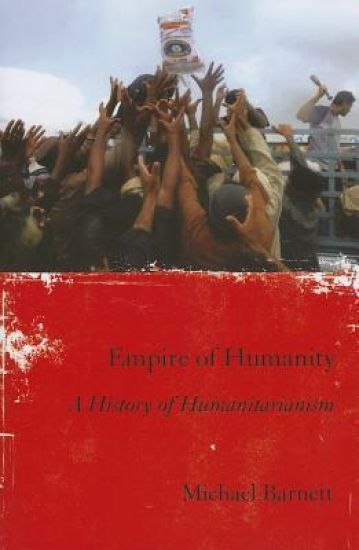
Empire of Humanity

Empire of Humanity

Michael Barnett

Cornell University Press
2013
pokkari
Empire of Humanity explores humanitarianism's remarkable growth from its humble origins in the early nineteenth century to its current prominence in global life. In contrast to most contemporary accounts of humanitarianism that concentrate on the last two decades, Michael Barnett ties the past to the present, connecting the antislavery and missionary movements of the nineteenth century to today's peacebuilding missions, the Cold War interventions in places like Biafra and Cambodia to post–Cold War humanitarian operations in regions such as the Great Lakes of Africa and the Balkans; and the creation of the International Committee of the Red Cross in 1863 to the emergence of the major international humanitarian organizations of the twentieth century. Based on extensive archival work, close encounters with many of today's leading international agencies, and interviews with dozens of aid workers in the field and at headquarters, Empire of Humanity provides a history that is both global and intimate. Avoiding both romanticism and cynicism, Empire of Humanity explores humanitarianism's enduring themes, trends, and, most strikingly, ethical ambiguities. Humanitarianism hopes to change the world, but the world has left its mark on humanitarianism. Humanitarianism has undergone three distinct global ages—imperial, postcolonial, and liberal—each of which has shaped what humanitarianism can do and what it is. The world has produced not one humanitarianism, but instead varieties of humanitarianism. Furthermore, Barnett observes that the world of humanitarianism is divided between an emergency camp that wants to save lives and nothing else and an alchemist camp that wants to remove the causes of suffering. These camps offer different visions of what are the purpose and principles of humanitarianism, and, accordingly respond differently to the same global challenges and humanitarianism emergencies. Humanitarianism has developed a metropolis of global institutions of care, amounting to a global governance of humanity. This humanitarian governance, Barnett observes, is an empire of humanity: it exercises power over the very individuals it hopes to emancipate. Although many use humanitarianism as a symbol of moral progress, Barnett provocatively argues that humanitarianism has undergone its most impressive gains after moments of radical inhumanity, when the "international community" believes that it must atone for its sins and reduce the breach between what we do and who we think we are. Humanitarianism is not only about the needs of its beneficiaries; it also is about the needs of the compassionate.
Sacred Aid

Sacred Aid

Michael Barnett; Janice Stein

Oxford University Press Inc
2012
nidottu
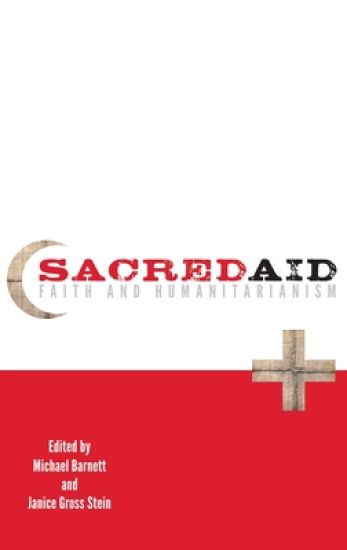
The global humanitarian movement, which originated within Western religious organizations in the early nineteenth century, has been of most important forces in world politics in advancing both human rights and human welfare. While the religious groups that founded the movement originally focused on conversion, in time more secular concerns came to dominate. By the end of the nineteenth century, increasingly professionalized yet nominally religious organization shifted from reliance on the good book to the public health manual. Over the course of the twentieth century, the secularization of humanitarianism only increased, and by the 1970s the movement's religious inspiration, generally speaking, was marginal to its agenda. However, beginning in the 1980s, religiously inspired humanitarian movements experienced a major revival, and today they are virtual equals of their secular brethren. From church-sponsored AIDS prevention campaigns in Africa to Muslim charity efforts in flood-stricken Pakistan to Hindu charities in India, religious groups have altered the character of the global humanitarian movement. Moreover, even secular groups now gesture toward religious inspiration in their work. Clearly, the broad, inexorable march toward secularism predicted by so many Westerners has halted, which is especially intriguing with regard to humanitarianism. Not only was it a highly secularized movement just forty years ago, but its principles were based on those we associate with "rational " modernity: cosmopolitan one-worldism and material (as opposed to spiritual) progress. How and why did this happen, and what does it mean for humanitarianism writ large? That is the question that the eminent scholars Michael Barnett and Janice Stein pose in Sacred Aid, and for answers they have gathered chapters from leading scholars that focus on the relationship between secularism and religion in contemporary humanitarianism throughout the developing world. Collectively, the chapters in this volume comprise an original and authoritative account of religion has reshaped the global humanitarian movement in recent times.
Sacred Aid

Sacred Aid

Michael Barnett; Janice Stein

Oxford University Press Inc
2012
sidottu
The global humanitarian movement, which originated within Western religious organizations in the early nineteenth century, has been of most important forces in world politics in advancing both human rights and human welfare. While the religious groups that founded the movement originally focused on conversion, in time more secular concerns came to dominate. By the end of the nineteenth century, increasingly professionalized yet nominally religious organization shifted from reliance on the good book to the public health manual. Over the course of the twentieth century, the secularization of humanitarianism only increased, and by the 1970s the movement's religious inspiration, generally speaking, was marginal to its agenda. However, beginning in the 1980s, religiously inspired humanitarian movements experienced a major revival, and today they are virtual equals of their secular brethren. From church-sponsored AIDS prevention campaigns in Africa to Muslim charity efforts in flood-stricken Pakistan to Hindu charities in India, religious groups have altered the character of the global humanitarian movement. Moreover, even secular groups now gesture toward religious inspiration in their work. Clearly, the broad, inexorable march toward secularism predicted by so many Westerners has halted, which is especially intriguing with regard to humanitarianism. Not only was it a highly secularized movement just forty years ago, but its principles were based on those we associate with "rational " modernity: cosmopolitan one-worldism and material (as opposed to spiritual) progress. How and why did this happen, and what does it mean for humanitarianism writ large? That is the question that the eminent scholars Michael Barnett and Janice Stein pose in Sacred Aid, and for answers they have gathered chapters from leading scholars that focus on the relationship between secularism and religion in contemporary humanitarianism throughout the developing world. Collectively, the chapters in this volume comprise an original and authoritative account of religion has reshaped the global humanitarian movement in recent times.
Rastafari in the New Millennium

Rastafari in the New Millennium

Michael Barnett

Syracuse University Press
2012
sidottu
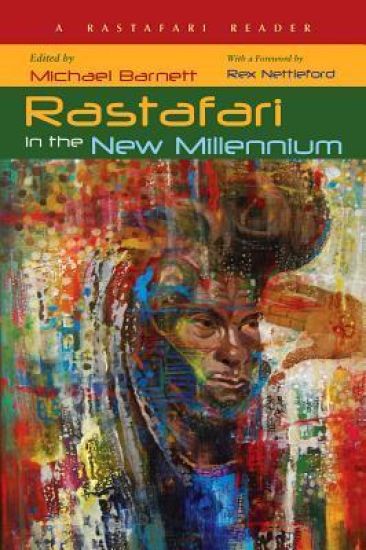
In the dawn of the new African Millennium, the Rastafari movement has achieved unheralded growth and visibility since its inception more than eighty years ago. Moving beyond a pure spiritual movement, its aesthetic component has influenced cultures of the Caribbean, the United States, and others across the globe. Locating the Rastafari movement at a literal and figurative crossroad, Barnett sets out to consider the possible paths the movement will chart. Rastafari in the New Millennium covers a wide range of perspectives, focusing not only on the movement’s nuanced and complex religious ideology but also on its political philosophy, cosmology, and unique epistemology. Barry Chevannes’s essay addresses the concerns of death and repatriation, highlighting the transformative challenges these issues pose to Rastafari. Essays by Ian Boxill, Edward Te Kohu Douglas, Erin MacLeod, and Janet L. DeCosmo, among others, offer rich accounts of the globalisation of Rastafari from New Zealand to Ethiopia, from Brazil to Zimbabwe. Drawing on new research and global developments, the contributors, many of whom are leading scholars in the field, reinvigorate the critical dialogue on the current state and future direction of the Rastafari movement.
Humanitarianism Contested

Humanitarianism Contested

Michael Barnett; Thomas G. Weiss

Routledge
2011
sidottu
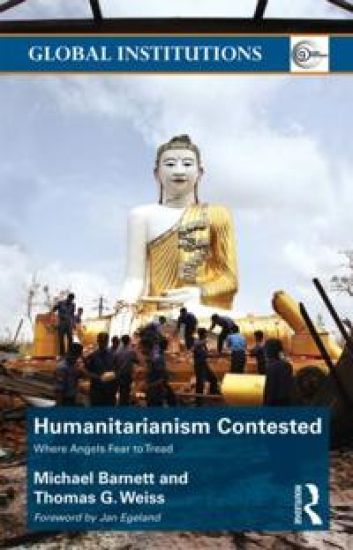
This book provides a succinct but sophisticated understanding of humanitarianism and insight into the on-going dilemmas and tensions that have accompanied it since its origins in the early nineteenth century. Combining theoretical and historical exposition with a broad range of contemporary case studies, the book: provides a brief survey of the history of humanitarianism, beginning with the anti-slavery movement in the early nineteenth century and continuing to today’s challenge of post-conflict reconstruction and saving failed states explains the evolution of humanitarianism. Not only has it evolved over the decades, but since the end of the Cold War, humanitarianism has exploded in scope, scale, and significance presents an overview of the contemporary humanitarian sector, including briefly who the key actors are, how they are funded and what they do with their money analyses the ethical dilemmas confronted by humanitarian organization, not only in the abstract but also, and most importantly, in real situations and when lives are at stake examines how humanitarianism poses fundamental ethical questions regarding the kind of world we want to live in, what kind of world is possible, and how we might get there. An accessible and engaging work by two of the leading scholars in the field, Humanitarianism Contested is essential reading for all those concerned with the future of human rights and international relations.
Humanitarianism Contested

Humanitarianism Contested

Michael Barnett; Thomas G. Weiss

Routledge
2011
nidottu
This book provides a succinct but sophisticated understanding of humanitarianism and insight into the on-going dilemmas and tensions that have accompanied it since its origins in the early nineteenth century. Combining theoretical and historical exposition with a broad range of contemporary case studies, the book: provides a brief survey of the history of humanitarianism, beginning with the anti-slavery movement in the early nineteenth century and continuing to today’s challenge of post-conflict reconstruction and saving failed states explains the evolution of humanitarianism. Not only has it evolved over the decades, but since the end of the Cold War, humanitarianism has exploded in scope, scale, and significance presents an overview of the contemporary humanitarian sector, including briefly who the key actors are, how they are funded and what they do with their money analyses the ethical dilemmas confronted by humanitarian organization, not only in the abstract but also, and most importantly, in real situations and when lives are at stake examines how humanitarianism poses fundamental ethical questions regarding the kind of world we want to live in, what kind of world is possible, and how we might get there. An accessible and engaging work by two of the leading scholars in the field, Humanitarianism Contested is essential reading for all those concerned with the future of human rights and international relations.
The International Humanitarian Order

The International Humanitarian Order

Michael Barnett

Routledge
2009
sidottu
One of the genuinely remarkable but relatively unnoticed developments of the last half-century is the blossoming of an international humanitarian order – a complex of norms, informal institutions, laws, and discourses that legitimate and compel various kinds of interventions by state and nonstate actors with the explicit goal of preserving and protecting human life. For those who have sacrificed to build this order, and for those who have come to rely on it, the international humanitarian represents a towering achievement cause for sobriety. What kind of international humanitarian order is being imagined, created and practiced? To what extent are the international agents of this order deliverers of progress or disappointment? Featuring previously published and original essays, this collection offers a critical assessment of the practices and politics of global ethical interventions in the context of the post-cold war transformation of the international humanitarian order. After an introduction that introduces the reader to the concept and the significance of the international humanitarian order, Section I explores the braided relationship between international order and the UN, whiles Section II critically examines international ethics in practice. The Conclusion reflects on these and other themes, asking why the international humanitarian order retains such a loyal following despite its flaws, what is the relationship of this order to power and politics, how such relationships implicate our understanding of moral progress, and how the international humanitarian order challenges both practitioners and scholars to rethink the meaning of their vocations.
The International Humanitarian Order

The International Humanitarian Order

Michael Barnett

Routledge
2009
nidottu
One of the genuinely remarkable but relatively unnoticed developments of the last half-century is the blossoming of an international humanitarian order – a complex of norms, informal institutions, laws, and discourses that legitimate and compel various kinds of interventions by state and nonstate actors with the explicit goal of preserving and protecting human life. For those who have sacrificed to build this order, and for those who have come to rely on it, the international humanitarian represents a towering achievement cause for sobriety. What kind of international humanitarian order is being imagined, created and practiced? To what extent are the international agents of this order deliverers of progress or disappointment? Featuring previously published and original essays, this collection offers a critical assessment of the practices and politics of global ethical interventions in the context of the post-cold war transformation of the international humanitarian order. After an introduction that introduces the reader to the concept and the significance of the international humanitarian order, Section I explores the braided relationship between international order and the UN, whiles Section II critically examines international ethics in practice. The Conclusion reflects on these and other themes, asking why the international humanitarian order retains such a loyal following despite its flaws, what is the relationship of this order to power and politics, how such relationships implicate our understanding of moral progress, and how the international humanitarian order challenges both practitioners and scholars to rethink the meaning of their vocations.
Rules for the World

Rules for the World

Michael Barnett; Martha Finnemore

Cornell University Press
2004
pokkari
Rules for the World provides an innovative perspective on the behavior of international organizations and their effects on global politics. Arguing against the conventional wisdom that these bodies are little more than instruments of states, Michael Barnett and Martha Finnemore begin with the fundamental insight that international organizations are bureaucracies that have authority to make rules and so exercise power. At the same time, Barnett and Finnemore maintain, such bureaucracies can become obsessed with their own rules, producing unresponsive, inefficient, and self-defeating outcomes. Authority thus gives international organizations autonomy and allows them to evolve and expand in ways unintended by their creators. Barnett and Finnemore reinterpret three areas of activity that have prompted extensive policy debate: the use of expertise by the IMF to expand its intrusion into national economies; the redefinition of the category "refugees" and decision to repatriate by the United Nations High Commissioner for Refugees; and the UN Secretariat's failure to recommend an intervention during the first weeks of the Rwandan genocide. By providing theoretical foundations for treating these organizations as autonomous actors in their own right, Rules for the World contributes greatly to our understanding of global politics and global governance.
Dialogues in Arab Politics

Dialogues in Arab Politics

Michael Barnett

Columbia University Press
1998
sidottu
For decades, Arab states and societies have been involved in an ongoing conflict over the goals and norms of Arabism. In this comprehensive study, Michael Barnett explores the relationships between Arab identity, the meaning of Arabism, and desired regional order in the Middle East from 1920 to the present, focusing on Egypt, Lebanon, Syria, Jordan, Iraq, Yemen, and Saudi Arabia. Barnett examines the state system in four distinct time frames: the mandate period to the establishment of the League of Arab States in 1945; 1945 through the Baghdad Pact of 1955; the Suez War through the 1967 war; and 1967 through the Gulf War. Within each of these time frames, the Arab states' relationship to unification, the West, and confrontation with Zionism are addressed. Does Arab unity depend on excluding Western influences? Can an Arab state be at once Islamic and democratic? Why can't the Arab states agree on a common government? Barnett argues that the Arab states' symbolic and strategic interactions were responsible for the alterations in the norms of Arabism, and ultimately, the fragamentation that currently defines the region.
Dialogues in Arab Politics

Dialogues in Arab Politics

Michael Barnett

Columbia University Press
1998
pokkari
For decades, Arab states and societies have been involved in an ongoing conflict over the goals and norms of Arabism. In this comprehensive study, Michael Barnett explores the relationships between Arab identity, the meaning of Arabism, and desired regional order in the Middle East from 1920 to the present, focusing on Egypt, Lebanon, Syria, Jordan, Iraq, Yemen, and Saudi Arabia. Barnett examines the state system in four distinct time frames: the mandate period to the establishment of the League of Arab States in 1945; 1945 through the Baghdad Pact of 1955; the Suez War through the 1967 war; and 1967 through the Gulf War. Within each of these time frames, the Arab states' relationship to unification, the West, and confrontation with Zionism are addressed. Does Arab unity depend on excluding Western influences? Can an Arab state be at once Islamic and democratic? Why can't the Arab states agree on a common government? Barnett argues that the Arab states' symbolic and strategic interactions were responsible for the alterations in the norms of Arabism, and ultimately, the fragamentation that currently defines the region.