Kirjojen hintavertailu – 12 876 352 kirjaa ja 26 kauppaa

Kirjailija

Michael Berry

Kirjat ja teokset yhdessä paikassa: 20 kirjaa, julkaisuja vuosilta 2005–2027, suosituimpiin kuuluu Wuhan Diary: Dispatches from a Quarantined City. Vertaile teosten hintoja ja tarkista saatavuus suomalaisista kirjakaupoista.

20 kirjaa

Kirjojen julkaisuvuodet: 2005–2027.

Wuhan Diary: Dispatches from a Quarantined City

Wuhan Diary: Dispatches from a Quarantined City

Fang Fang; Michael Berry

Harpervia
2022
nidottu
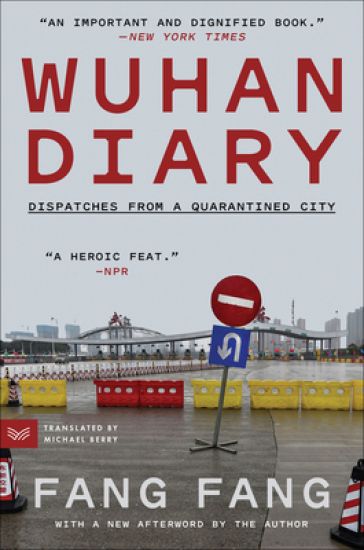
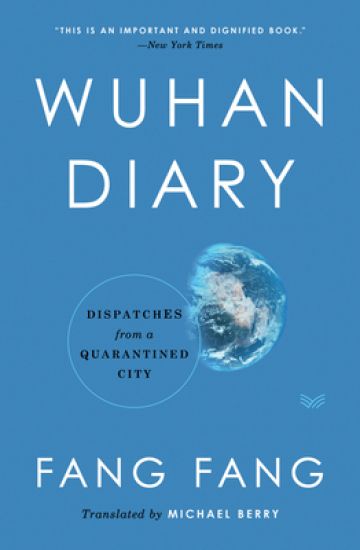
From one of China's most acclaimed and decorated writers comes a powerful first-person account of life in Wuhan during the COVID-19 outbreak. On January 25, 2020, after the central government imposed a lockdown in Wuhan, acclaimed Chinese writer Fang Fang began publishing an online diary. In the days and weeks that followed, Fang Fang's nightly postings gave voice to the fears, frustrations, anger, and hope of millions of her fellow citizens, reflecting on the psychological impact of forced isolation, the role of the internet as both community lifeline and source of misinformation, and most tragically, the lives of neighbors and friends taken by the deadly virus. A fascinating eyewitness account of events as they unfold, Wuhan Diary captures the challenges of daily life and the changing moods and emotions of being quarantined without reliable information. Fang Fang finds solace in small domestic comforts and is inspired by the courage of friends, health professionals and volunteers, as well as the resilience and perseverance of Wuhan's nine million residents. But, by claiming the writer s duty to record she also speaks out against social injustice, abuse of power, and other problems which impeded the response to the epidemic and gets herself embroiled in online controversies because of it. As Fang Fang documents the beginning of the global health crisis in real time, we are able to identify patterns and mistakes that many of the countries dealing with the novel coronavirus have later repeated. She reminds us that, in the face of the new virus, the plight of the citizens of Wuhan is also that of citizens everywhere. As Fang Fang writes: "The virus is the common enemy of humankind; that is a lesson for all humanity. The only way we can conquer this virus and free ourselves from its grip is for all members of humankind to work together." Blending the intimate and the epic, the profound and the quotidian, Wuhan Diary is a remarkable record of an extraordinary time. Translated from the Chinese by Michael Berry
Wuhan Diary: Dispatches from a Quarantined City

Wuhan Diary: Dispatches from a Quarantined City

Fang Fang; Michael Berry

Harpervia
2020
sidottu
From one of China's most acclaimed and decorated writers comes a powerful first-person account of life in Wuhan during the COVID-19 outbreak. On January 25, 2020, after the central government imposed a lockdown in Wuhan, acclaimed Chinese writer Fang Fang began publishing an online diary. In the days and weeks that followed, Fang Fang's nightly postings gave voice to the fears, frustrations, anger, and hope of millions of her fellow citizens, reflecting on the psychological impact of forced isolation, the role of the internet as both community lifeline and source of misinformation, and most tragically, the lives of neighbors and friends taken by the deadly virus. A fascinating eyewitness account of events as they unfold, Wuhan Diary captures the challenges of daily life and the changing moods and emotions of being quarantined without reliable information. Fang Fang finds solace in small domestic comforts and is inspired by the courage of friends, health professionals and volunteers, as well as the resilience and perseverance of Wuhan's nine million residents. But, by claiming the writer s duty to record she also speaks out against social injustice, abuse of power, and other problems which impeded the response to the epidemic and gets herself embroiled in online controversies because of it. As Fang Fang documents the beginning of the global health crisis in real time, we are able to identify patterns and mistakes that many of the countries dealing with the novel coronavirus have later repeated. She reminds us that, in the face of the new virus, the plight of the citizens of Wuhan is also that of citizens everywhere. As Fang Fang writes: "The virus is the common enemy of humankind; that is a lesson for all humanity. The only way we can conquer this virus and free ourselves from its grip is for all members of humankind to work together." Blending the intimate and the epic, the profound and the quotidian, Wuhan Diary is a remarkable record of an extraordinary time. Translated from the Chinese by Michael Berry
Rap as Antiracist Pedagogy

Rap as Antiracist Pedagogy

Michael Berry

Taylor & Francis
2027
Nidottu
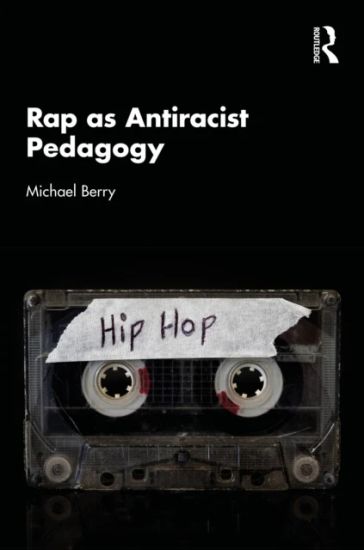
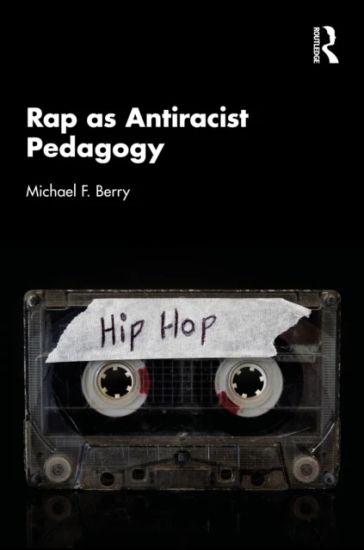
Rap as Antiracist Pedagogy represents an intervention into the field of music studies, examining how the research and teaching of rap music that appears on the surface to be equity-driven often ends up reinforcing the white power structures that the music historically has sought to dismantle. Analyzing how “rap” has been treated as a racial code word and commodity both inside and outside the academy, this book argues that there is an ethical imperative for scholars of rap music to adopt an explicitly antiracist approach to teaching and research, and offers potential pathways toward achieving that end. Since rap music emerged as a field of study in university music departments in the 1990s, an increasing number of scholars have devoted their careers to researching and teaching this uniquely American art form. But in the context of music departments that are historically white, the ways that we study rap music often reinscribe whiteness. Offering practical connections to pedagogy alongside critical analysis of the racial dynamics surrounding rap music and its assimilation in the white mainstream, this book reflects on how and why we study hip hop, and how scholars can engage with the music while working to disrupt systems of oppression. It would be ideal for scholars in music studies who teach or research rap and hip hop, graduate and advanced undergraduate students in classes on rap/hip hop or music pedagogy, and administrators in music departments and schools of music.
Rap as Antiracist Pedagogy

Rap as Antiracist Pedagogy

Michael Berry

Taylor & Francis
2026
Sidottu
Rap as Antiracist Pedagogy represents an intervention into the field of music studies, examining how the research and teaching of rap music that appears on the surface to be equity-driven often ends up reinforcing the white power structures that the music historically has sought to dismantle. Analyzing how “rap” has been treated as a racial code word and commodity both inside and outside the academy, this book argues that there is an ethical imperative for scholars of rap music to adopt an explicitly antiracist approach to teaching and research, and offers potential pathways toward achieving that end. Since rap music emerged as a field of study in university music departments in the 1990s, an increasing number of scholars have devoted their careers to researching and teaching this uniquely American art form. But in the context of music departments that are historically white, the ways that we study rap music often reinscribe whiteness. Offering practical connections to pedagogy alongside critical analysis of the racial dynamics surrounding rap music and its assimilation in the white mainstream, this book reflects on how and why we study hip hop, and how scholars can engage with the music while working to disrupt systems of oppression. It would be ideal for scholars in music studies who teach or research rap and hip hop, graduate and advanced undergraduate students in classes on rap/hip hop or music pedagogy, and administrators in music departments and schools of music.
Translation, Disinformation, and Wuhan Diary

Translation, Disinformation, and Wuhan Diary

Michael Berry

Springer International Publishing AG
2022
nidottu
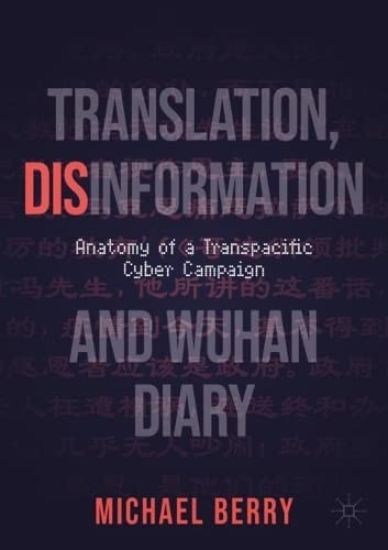
During the early days of the COVID-19 health crisis, Fang Fang’s Wuhan Diary provided an important portal for people around the world to understand the outbreak, local response, and how the novel coronavirus was impacting everyday people. But when news of the international publication of Wuhan Diary appeared online in early April of 2020, Fang Fang’s writings became the target of a series of online attacks by “Chinese ultra-nationalists.” Over time, these attacks morphed into one of the most sophisticated and protracted hate Campaigns against a Chinese writer in decades. Meanwhile, as controversy around Wuhan Diary swelled in China, the author was transformed into a global icon, honored by the BBC as one of the most influential women of 2020 and featured in stories by dozens of international news outlets. This book, by the translator of Wuhan Diary into English, alternates between a first-hand account of the translation process and more critical observations on how a diary became a lightning rod for fierce political debate and the target of a sweeping online campaign that many described as a “cyber Cultural Revolution.” Eventually, even Berry would be pulled into the attacks and targeted by thousands of online trolls. This book answers the questions: why would an online lockdown diary elicit such a strong reaction among Chinese netizens? How did the controversy unfold and evolve? Who was behind it? And what can we learn from the “Fang Fang Incident” about contemporary Chinese politics and society? The book will be of interest to students and scholars of translation, as well as anyone with special interest in translation, US-Chinese relations, or internet culture more broadly.
Jia Zhangke on Jia Zhangke

Jia Zhangke on Jia Zhangke

Michael Berry

Duke University Press
2022
pokkari
Jia Zhangke on Jia Zhangke is an extended dialogue between film scholar Michael Berry and the internationally acclaimed Chinese filmmaker. Drawing from extensive interviews and public talks, this volume offers a portrait of Jia’s life, art, and approach to filmmaking. Jia and Berry’s conversations range from Jia’s childhood and formative years to extensive discussions of his major narrative films, including the classics Xiao Wu, Platform, The World, Still Life, and A Touch of Sin. Jia gives a firsthand account of his influences, analyzes the Chinese film industry, and offers his thoughts on subjects such as film music, working with actors, cinematography, and screenwriting. From industry and economics to art and politics, Jia Zhangke on Jia Zhangke represents the single most comprehensive document of the director’s candid thoughts on the art and challenges of filmmaking.
Jia Zhangke on Jia Zhangke

Jia Zhangke on Jia Zhangke

Michael Berry

Duke University Press
2022
sidottu
Jia Zhangke on Jia Zhangke is an extended dialogue between film scholar Michael Berry and the internationally acclaimed Chinese filmmaker. Drawing from extensive interviews and public talks, this volume offers a portrait of Jia’s life, art, and approach to filmmaking. Jia and Berry’s conversations range from Jia’s childhood and formative years to extensive discussions of his major narrative films, including the classics Xiao Wu, Platform, The World, Still Life, and A Touch of Sin. Jia gives a firsthand account of his influences, analyzes the Chinese film industry, and offers his thoughts on subjects such as film music, working with actors, cinematography, and screenwriting. From industry and economics to art and politics, Jia Zhangke on Jia Zhangke represents the single most comprehensive document of the director’s candid thoughts on the art and challenges of filmmaking.
Agile Solutions: For the Project Minded

Agile Solutions: For the Project Minded

Michael Berry

Dr. Michael Berry
2020
nidottu
Agile is steadily expanding and penetrating different areas of organizations, not just IT-related projects. Utilizing Agile solutions to manage projects are becoming more and more popular. This book provides great details on Agile Solutions and allows the Stakeholders to choose which will work best for their organization or project.
Huddersfield Trolleys and Buses

Huddersfield Trolleys and Buses

Michael Berry

AMBERLEY PUBLISHING
2018
nidottu
In the early days of tram operations, the local borough or corporation would lay tracks that would carry the trams, while the cars would be operated by private enterprise. All this changed on 11 January 1883 when Huddersfield Corporation was given government dispensation to operate its own system. The last Huddersfield tramcar operated to Brighouse on Saturday 29 June 1940 and no vehicle survived into preservation. In 1933 a complete regeneration of the transport system was undertaken when the Corporation opted to replace its ageing trams with trolleybuses. Such importance was placed on the trams (and then trolleybuses) that it was a rare sight to see a motorbus in the centre of Huddersfield before the early 1960s. After 1960, however, the Corporation converted to diesel motorbuses. In a nostalgic look back on the trolley and bus services of the town, Michael Berry looks at the history and demise of the Huddersfield system.
Listening to Rap

Listening to Rap

Michael Berry

Routledge
2018
nidottu
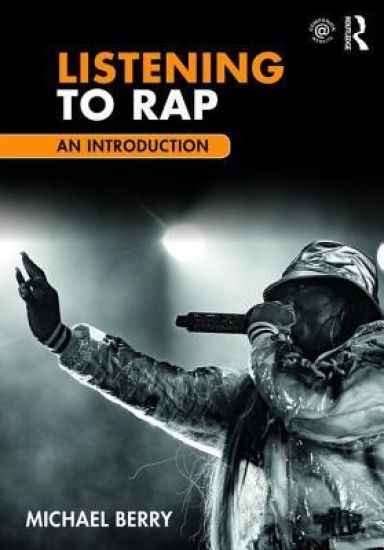
Over the past four decades, rap and hip hop culture have taken a central place in popular music both in the United States and around the world. Listening to Rap: An Introduction enables students to understand the historical context, cultural impact, and unique musical characteristics of this essential genre. Each chapter explores a key topic in the study of rap music from the 1970s to today, covering themes such as race, gender, commercialization, politics, and authenticity. Synthesizing the approaches of scholars from a variety of disciplines—including music, cultural studies, African-American studies, gender studies, literary criticism, and philosophy—Listening to Rap tracks the evolution of rap and hip hop while illustrating its vast cultural significance. The text features more than 60 detailed listening guides that analyze the musical elements of songs by a wide array of artists, from Afrika Bambaataa and Grandmaster Flash to Nicki Minaj, Jay-Z, Kanye West, and more. A companion website showcases playlists of the music discussed in each chapter. Rooted in the understanding that cultural context, music, and lyrics combine to shape rap’s meaning, the text assumes no prior knowledge. For students of all backgrounds, Listening to Rap offers a clear and accessible introduction to this vital and influential music.
Listening to Rap

Listening to Rap

Michael Berry

Routledge
2018
sidottu
Over the past four decades, rap and hip hop culture have taken a central place in popular music both in the United States and around the world. Listening to Rap: An Introduction enables students to understand the historical context, cultural impact, and unique musical characteristics of this essential genre. Each chapter explores a key topic in the study of rap music from the 1970s to today, covering themes such as race, gender, commercialization, politics, and authenticity. Synthesizing the approaches of scholars from a variety of disciplines—including music, cultural studies, African-American studies, gender studies, literary criticism, and philosophy—Listening to Rap tracks the evolution of rap and hip hop while illustrating its vast cultural significance. The text features more than 60 detailed listening guides that analyze the musical elements of songs by a wide array of artists, from Afrika Bambaataa and Grandmaster Flash to Nicki Minaj, Jay-Z, Kanye West, and more. A companion website showcases playlists of the music discussed in each chapter. Rooted in the understanding that cultural context, music, and lyrics combine to shape rap’s meaning, the text assumes no prior knowledge. For students of all backgrounds, Listening to Rap offers a clear and accessible introduction to this vital and influential music.
Malcolm X: A Biography

Malcolm X: A Biography

Michael Berry

Createspace Independent Publishing Platform
2018
nidottu
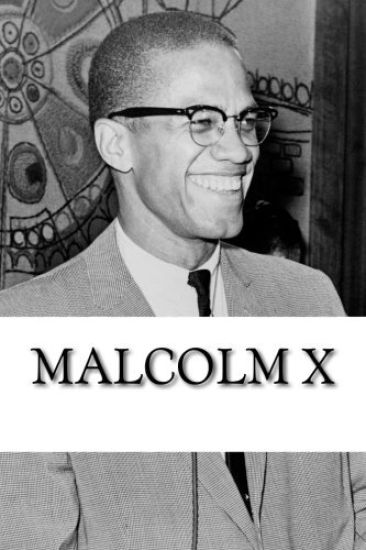
Malcolm X was an African-American Muslim minister and human rights activist. To his admirers he was a courageous advocate for the rights of blacks, a man who indicted white America in the harshest terms for its crimes against black Americans; detractors accused him of preaching racism and violence. He has been called one of the greatest and most influential African Americans in history. His father was killed when he was six and his mother was placed in a mental hospital when he was thirteen, after which he lived in a series of foster homes. In 1946, at age twenty, he went to prison for larceny and breaking and entering. While in prison, he became a member of the Nation of Islam (NOI), changing his birth name Malcolm Little to Malcolm X because, he later wrote, Little was the name that "the white slavemaster ... had imposed upon his] paternal forebears". After his parole in 1952 he quickly rose to become one of the organization's most influential leaders, serving as the public face of the controversial group for a dozen years. In his autobiography, Malcolm X wrote proudly of some of the social achievements the Nation made while he was a member, particularly its free drug rehabilitation program. The Nation promoted black supremacy, advocated the separation of black and white Americans, and rejected the civil rights movement for its emphasis on integration. By March 1964, Malcolm X had grown disillusioned with the Nation of Islam and its leader Elijah Muhammad. Expressing many regrets about his time with them, which he had come to regard as largely wasted, he embraced Sunni Islam. After a period of travel in Africa and the Middle East, which included completing the Hajj, he also became known as el-Hajj Malik el-Shabazz. He repudiated the Nation of Islam, disavowed racism and founded Muslim Mosque, Inc. and the Organization of Afro-American Unity. He continued to emphasize Pan-Africanism, black self-determination, and black self-defense.
Reporting Cultures on 60 Minutes

Reporting Cultures on 60 Minutes

Donal Carbaugh; Michael Berry

Routledge
2016
sidottu
This work delves into the act of reporting on different cultures as a means of exploring our own. The way culture is presented to the media highlights various international and intercultural dynamics, as well as the complexity involved in reporting from a cultural standpoint. Reporting Cultures in 60 Minutes is a study covering the journalistic practice of reporting culture by examining "Tango Finlandia," a broadcast report on Finnish culture produced by the American television news magazine 60 Minutes. It covers the journalistic practice of reporting culture broadly by looking specifically at Finns and Americans reporting about their respective homelands and about the other’s culture and social interactions. Unique in its content and approach, this volume: Demonstrates how reports are constructed as deeply cultural forms, couched in points of view derived from one’s discursive habits and their meanings. Analyzes reporting done in professional practice/journalism as well as in common social routine. Offers a way through the process that can move reporting on culture from a self-reflective mirror to opening a window onto another cultural world. Scholars and students in communication, intercultural/international studies, and related areas will find much to consider in this work
Reporting Cultures on 60 Minutes

Reporting Cultures on 60 Minutes

Donal Carbaugh; Michael Berry

Routledge
2016
nidottu
This work delves into the act of reporting on different cultures as a means of exploring our own. The way culture is presented to the media highlights various international and intercultural dynamics, as well as the complexity involved in reporting from a cultural standpoint. Reporting Cultures in 60 Minutes is a study covering the journalistic practice of reporting culture by examining "Tango Finlandia," a broadcast report on Finnish culture produced by the American television news magazine 60 Minutes. It covers the journalistic practice of reporting culture broadly by looking specifically at Finns and Americans reporting about their respective homelands and about the other’s culture and social interactions. Unique in its content and approach, this volume: Demonstrates how reports are constructed as deeply cultural forms, couched in points of view derived from one’s discursive habits and their meanings. Analyzes reporting done in professional practice/journalism as well as in common social routine. Offers a way through the process that can move reporting on culture from a self-reflective mirror to opening a window onto another cultural world. Scholars and students in communication, intercultural/international studies, and related areas will find much to consider in this work
Leeds Trams and Buses

Leeds Trams and Buses

Michael Berry

Amberley Publishing
2013
nidottu
The Leeds Tramways Company was authorised to construct tramway lines in Leeds in 1871 under the Leeds Tramways Order, with the first route opening on 16 September of that year and running from Boar Lane to the Oak Inn at Headingley. The Tramways Company operated horse-drawn and steam-powered vehicles, full electrification coming in after the Company was bought out by Leeds Corporation in 1893. These trams then continued to operate until 7 November 1959, when the system was closed down, leaving only one tramway in England. Meanwhile, motor buses began to operate in Leeds in 1906, the result of a meeting over golf. The bus service expanded over the years and went from strength to strength, taking over from the trams. In this book, Michael Berry charts the development of Leeds trams and buses from the start of the twentieth century until the 1970s.
A History of Pain

A History of Pain

Michael Berry

Columbia University Press
2011
pokkari
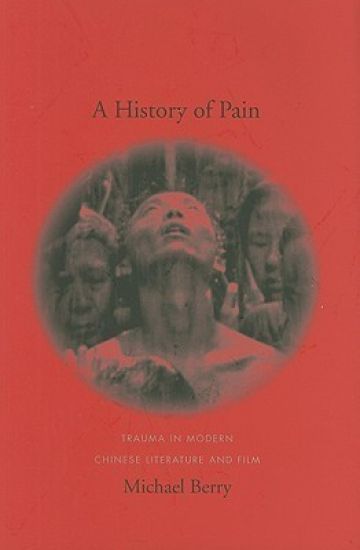
The portrayal of historical atrocity in fiction, film, and popular culture can reveal much about the function of individual memory and the shifting status of national identity. In the context of Chinese culture, films such as Hou Hsiao-hsien's City of Sadness and Lou Ye's Summer Palace and novels such as Ye Zhaoyan's Nanjing 1937: A Love Story and Wang Xiaobo's The Golden Age collectively reimagine past horrors and give rise to new historical narratives. Michael Berry takes an innovative look at the representation of six specific historical traumas in modern Chinese history: the Musha Incident (1930); the Rape of Nanjing (1937-38); the February 28 Incident (1947); the Cultural Revolution (1966-76); Tiananmen Square (1989); and the Handover of Hong Kong (1997). He identifies two primary modes of restaging historical violence: centripetal trauma, or violence inflicted from the outside that inspires a reexamination of the Chinese nation, and centrifugal trauma, which, originating from within, inspires traumatic narratives that are projected out onto a transnational vision of global dreams and, sometimes, nightmares. These modes allow Berry to connect portrayals of mass violence to ideas of modernity and the nation. He also illuminates the relationship between historical atrocity on a national scale and the pain experienced by the individual; the function of film and literature as historical testimony; the intersection between politics and art, history and memory; and the particular advantages of modern media, which have found new means of narrating the burden of historical violence. As Chinese artists began to probe previously taboo aspects of their nation's history in the final decades of the twentieth century, they created texts that prefigured, echoed, or subverted social, political, and cultural trends. A History of Pain acknowledges the far-reaching influence of this art and addresses its profound role in shaping the public imagination and conception-as well as misconception-of modern Chinese history.
A History of Pain

A History of Pain

Michael Berry

Columbia University Press
2008
sidottu
The portrayal of historical atrocity in fiction, film, and popular culture can reveal much about the function of individual memory and the shifting status of national identity. In the context of Chinese culture, films such as Hou Hsiao-hsien's City of Sadness and Lou Ye's Summer Palace and novels such as Ye Zhaoyan's Nanjing 1937: A Love Story and Wang Xiaobo's The Golden Age collectively reimagine past horrors and give rise to new historical narratives. Michael Berry takes an innovative look at the representation of six specific historical traumas in modern Chinese history: the Musha Incident (1930); the Rape of Nanjing (1937-38); the February 28 Incident (1947); the Cultural Revolution (1966-76); Tiananmen Square (1989); and the Handover of Hong Kong (1997). He identifies two primary modes of restaging historical violence: centripetal trauma, or violence inflicted from the outside that inspires a reexamination of the Chinese nation, and centrifugal trauma, which, originating from within, inspires traumatic narratives that are projected out onto a transnational vision of global dreams and, sometimes, nightmares. These modes allow Berry to connect portrayals of mass violence to ideas of modernity and the nation. He also illuminates the relationship between historical atrocity on a national scale and the pain experienced by the individual; the function of film and literature as historical testimony; the intersection between politics and art, history and memory; and the particular advantages of modern media, which have found new means of narrating the burden of historical violence. As Chinese artists began to probe previously taboo aspects of their nation's history in the final decades of the twentieth century, they created texts that prefigured, echoed, or subverted social, political, and cultural trends. A History of Pain acknowledges the far-reaching influence of this art and addresses its profound role in shaping the public imagination and conception-as well as misconception-of modern Chinese history.
Speaking in Images

Speaking in Images

Michael Berry

Columbia University Press
2005
pokkari
"I always compare filmmaking to cooking. Shooting is like buying the groceries. You buy all kinds of ingredients and the better ingredients you get, the better chance you have of making the movie you want."-Ang Lee, from Speaking in Images Speaking in Images offers an engaging and rare collection of interviews with the directors who have changed the face of Chinese and international cinema. Michael Berry's discussions with such directors as Ang Lee (Crouching Tiger, Hidden Dragon), Zhang Yimou (Hero), Chen Kaige (Farewell My Concubine), Stanley Kwan (Lan Yu), Tsai Ming-Liang (Vive l'Amour), Edward Yang (Yi Yi), and Hou Hsiao-hsien (Flowers of Shanghai) offer an eclectic and comprehensive portrait of contemporary Chinese cinema. In interviews that capture each filmmaker's unique vision, the subjects discuss their formative years, the ideas and influences that shaped their work, film aesthetics, battles with censors and studios, the mingling of commercial and art film, and the future of Chinese cinema in a transnational context. Berry's introduction to the collection provides an overview of Chinese cinema in the second half of the twentieth century, placing the directors and their work in a wider historical and cultural context.
Speaking in Images

Speaking in Images

Michael Berry

Columbia University Press
2005
sidottu
"I always compare filmmaking to cooking. Shooting is like buying the groceries. You buy all kinds of ingredients and the better ingredients you get, the better chance you have of making the movie you want."-Ang Lee, from Speaking in Images Speaking in Images offers an engaging and rare collection of interviews with the directors who have changed the face of Chinese and international cinema. Michael Berry's discussions with such directors as Ang Lee (Crouching Tiger, Hidden Dragon), Zhang Yimou (Hero), Chen Kaige (Farewell My Concubine), Stanley Kwan (Lan Yu), Tsai Ming-Liang (Vive l'Amour), Edward Yang (Yi Yi), and Hou Hsiao-hsien (Flowers of Shanghai) offer an eclectic and comprehensive portrait of contemporary Chinese cinema. In interviews that capture each filmmaker's unique vision, the subjects discuss their formative years, the ideas and influences that shaped their work, film aesthetics, battles with censors and studios, the mingling of commercial and art film, and the future of Chinese cinema in a transnational context. Berry's introduction to the collection provides an overview of Chinese cinema in the second half of the twentieth century, placing the directors and their work in a wider historical and cultural context.