Kirjojen hintavertailu – 12 859 829 kirjaa ja 27 kauppaa

Kirjailija

Michael C. Brannigan

Kirjat ja teokset yhdessä paikassa: 10 kirjaa, julkaisuja vuosilta 2009–2024, suosituimpiin kuuluu Caregiving, Carebots, and Contagion. Vertaile teosten hintoja ja tarkista saatavuus suomalaisista kirjakaupoista.

Nimi esiintyy myös muodoissa: Michael C Brannigan

10 kirjaa

Kirjojen julkaisuvuodet: 2009–2024.

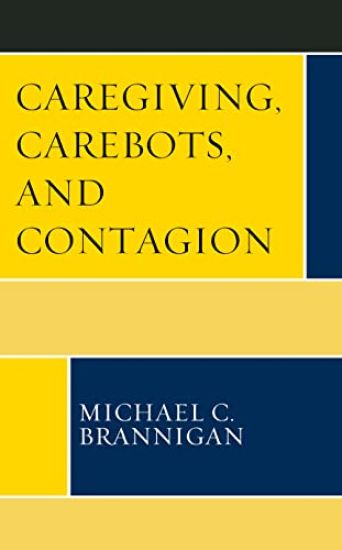
Caregiving, Carebots, and Contagion

Caregiving, Carebots, and Contagion

Michael C. Brannigan

BLOOMSBURY PUBLISHING PLC
2024
nidottu
Would you want to be cared for by a robot? Michael C. Brannigan’s Caregiving, Carebots, and Contagion explores caring robots’ lifesaving benefits, particularly during contagion, while probing the threat they pose to interpersonal engagement and genuine human caregiving. As our COVID-19 purgatory lingers on, caring robots will join our nursing and healthcare frontlines. Carebots can perform lifesaving tasks to minimize infection, safeguard vulnerable persons, and relieve caregivers of certain burdens. They also spark profound moral and existential questions: What is caring? How will we relate with each other? What does it mean to be human? Underscoring carebots' hands-on benefits, Brannigan also warns us of perils. They can be a dangerous lure in a culture that settles for substitutes and venerates the screen. Alerting us to the threatening prospect of carebots becoming our surrogate for interpersonal connection, he maintains they are not the culprits. The challenge lies in how we relate to them. While they beneficially complement our caregiving, carebots cannot replace human caring. Caring is a fundamentally human act and lies at the heart of ethics. As humans, we have a binding moral responsibility to care for the Other, and genuine caring demands our embodied, human-to-human presence.
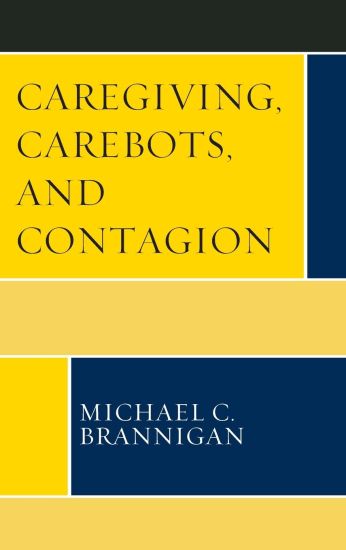
Caregiving, Carebots, and Contagion

Caregiving, Carebots, and Contagion

Michael C. Brannigan

BLOOMSBURY PUBLISHING PLC
2022
sidottu
Would you want to be cared for by a robot? Michael C. Brannigan’s Caregiving, Carebots, and Contagion explores caring robots’ lifesaving benefits, particularly during contagion, while probing the threat they pose to interpersonal engagement and genuine human caregiving. As our COVID-19 purgatory lingers on, caring robots will join our nursing and healthcare frontlines. Carebots can perform lifesaving tasks to minimize infection, safeguard vulnerable persons, and relieve caregivers of certain burdens. They also spark profound moral and existential questions: What is caring? How will we relate with each other? What does it mean to be human? Underscoring carebots' hands-on benefits, Brannigan also warns us of perils. They can be a dangerous lure in a culture that settles for substitutes and venerates the screen. Alerting us to the threatening prospect of carebots becoming our surrogate for interpersonal connection, he maintains they are not the culprits. The challenge lies in how we relate to them. While they beneficially complement our caregiving, carebots cannot replace human caring. Caring is a fundamentally human act and lies at the heart of ethics. As humans, we have a binding moral responsibility to care for the Other, and genuine caring demands our embodied, human-to-human presence.
The Essential Guide to Religious Traditions and Spirituality for Health Care Providers

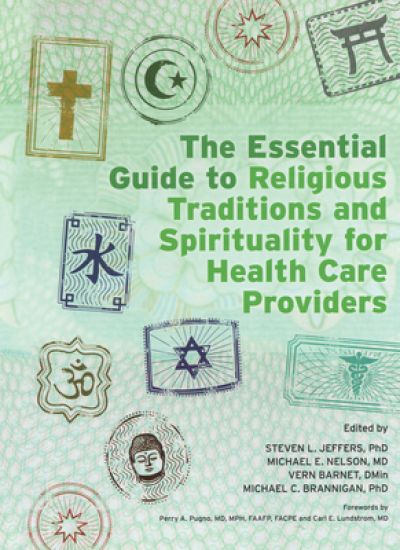
The Essential Guide to Religious Traditions and Spirituality for Health Care Providers

Steven Jeffers; Michael E Nelson; Vern Barnet; Michael C Brannigan

CRC Press
2020
nidottu
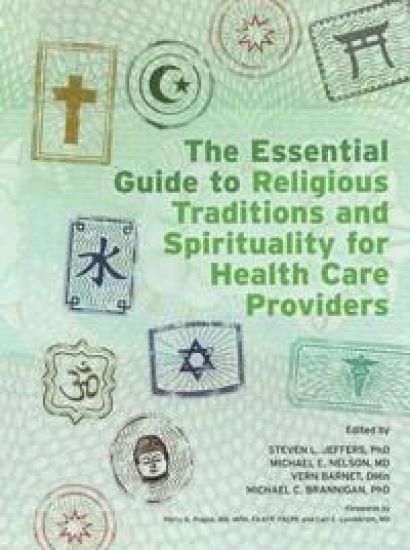
This extraordinary compendium of religious traditions is invaluable to all healthcare providers. The user-friendly resource contains specific and detailed information on faith traditions vital for providing optimal spiritual care in a clinical setting. A series of inspirational introductory chapters promote the importance of spiritual well-being as a vital component in whole person care, but the majority of the book forms a compilation of articles from a wide-ranging expert panel of contributors. Ideal for quick reference, the A-Z organisation from American Indian Spirituality to Zoroastrianism is presented in a clear and logical format, covering: History and Facts Basic Teachings Basic Practices Principles for Clinical Care . Dietary Issues . General Medical Beliefs . Specific Medical Issues . Gender and Personal Issues Principles for Spiritual Care Through the Cycles of Life Concepts of Living and Dying for Spiritual Support . During Birth . During Illness . During End of Life Care of the Body Organ and Tissue Donation Scriptures, Inspirational Readings and Prayers
Japan's March 2011 Disaster and Moral Grit

Japan's March 2011 Disaster and Moral Grit

Michael C. Brannigan

Lexington Books
2017
nidottu
Japan’s March 11, 2011 triple horror of earthquake, tsunami, and nuclear meltdown is its worst catastrophe since Hiroshima and Nagasaki. Recovery remains an ongoing ordeal. Japan's Responses to the March 2011 Disaster: Our Inescapable In-between uncovers the pivotal role of longstanding cultural worldviews and their impact on responses to this gut-wrenching disaster. Through unpacking the pivotal notion in Japanese ethics of aidagara, or “in-betweenness,” it offers testament to a deep-rooted sense of community. Accounts from survivors, victims’ families, key city officials, and volunteers reveal a remarkable fiber of moral grit and resilience that sustains Japan’s common struggle to rally and carve a future with promise and hope. Calamities snatch us out of the mundane and throw us into the intensity of the moment. They challenge our moral fiber. Trauma, individual and collective, is the uninvited litmus test of character, personal and social. Ultimately, whether a society rightfully recovers from disaster has to do with its degree of connectedness, the embodied physical, interpersonal, face-to-face engagement we have with each other. As these stories bring to light, along with Michael Brannigan’s extensive research, personal encounters with survivors, and experience as a volunteer in Japan’s stricken areas, our degree of connectedness determines how we in the long run weather the storm, whether the storm is natural, technological, or human. Ultimately, it illustrates that how we respond to and recover after the storm hinges upon how we are with each other before the storm.
Japan's March 2011 Disaster and Moral Grit

Japan's March 2011 Disaster and Moral Grit

Michael C. Brannigan

Lexington Books
2015
sidottu
Japan’s March 11, 2011 triple horror of earthquake, tsunami, and nuclear meltdown is its worst catastrophe since Hiroshima and Nagasaki. Recovery remains an ongoing ordeal. Japan's Responses to the March 2011 Disaster: Our Inescapable In-between uncovers the pivotal role of longstanding cultural worldviews and their impact on responses to this gut-wrenching disaster. Through unpacking the pivotal notion in Japanese ethics of aidagara, or “in-betweenness,” it offers testament to a deep-rooted sense of community. Accounts from survivors, victims’ families, key city officials, and volunteers reveal a remarkable fiber of moral grit and resilience that sustains Japan’s common struggle to rally and carve a future with promise and hope. Calamities snatch us out of the mundane and throw us into the intensity of the moment. They challenge our moral fiber. Trauma, individual and collective, is the uninvited litmus test of character, personal and social. Ultimately, whether a society rightfully recovers from disaster has to do with its degree of connectedness, the embodied physical, interpersonal, face-to-face engagement we have with each other. As these stories bring to light, along with Michael Brannigan’s extensive research, personal encounters with survivors, and experience as a volunteer in Japan’s stricken areas, our degree of connectedness determines how we in the long run weather the storm, whether the storm is natural, technological, or human. Ultimately, it illustrates that how we respond to and recover after the storm hinges upon how we are with each other before the storm.
The Essential Guide to Religious Traditions and Spirituality for Health Care Providers

The Essential Guide to Religious Traditions and Spirituality for Health Care Providers

Steven Jeffers; Michael E Nelson; Vern Barnet; Michael C Brannigan

Radcliffe Publishing Ltd
2012
sidottu
This extraordinary compendium of religious traditions is invaluable to all healthcare providers. The user-friendly resource contains specific and detailed information on faith traditions vital for providing optimal spiritual care in a clinical setting. A series of inspirational introductory chapters promote the importance of spiritual well-being as a vital component in whole person care, but the majority of the book forms a compilation of articles from a wide-ranging expert panel of contributors. Ideal for quick reference, the A-Z organisation from American Indian Spirituality to Zoroastrianism is presented in a clear and logical format, covering: History and Facts Basic Teachings Basic Practices Principles for Clinical Care . Dietary Issues . General Medical Beliefs . Specific Medical Issues . Gender and Personal Issues Principles for Spiritual Care Through the Cycles of Life Concepts of Living and Dying for Spiritual Support . During Birth . During Illness . During End of Life Care of the Body Organ and Tissue Donation Scriptures, Inspirational Readings and Prayers
Cultural Fault Lines in Healthcare

Cultural Fault Lines in Healthcare

Michael C. Brannigan

Lexington Books
2011
sidottu
Healthcare in the U. S. faces two interpenetrating certainties. First, with over 66 racial and ethnic groupings, our “American Mosaic” of worldviews and values unavoidably generates clashes in hospitals and clinics. Second, our public increasingly mistrusts our healthcare system and delivery. One certainty fuels the other. Conflicts in the clinical encounter, particularly with patients from other cultures, often challenge dominant assumptions of morally appropriate principles and behavior. In turn, lack of understanding, misinterpretation, stereotyping, and outright discrimination result in poor health outcomes, compounding further mistrust. To address these cultural fault lines, healthcare institutions have initiated efforts to ensure “cultural competence.” Yet, these efforts become institutional window-dressing without tackling deeper issues, issues having to do with attitudes, understanding, and, most importantly, ways we communicate with patients. These deeper issues reflect a fundamental, original fault line: the ever-widening gap between serving our own interests while disregarding the concerns of more vulnerable patients, those on the margins, those Others who remain disenfranchised because they are Other. This book examines this and how we must become the voice for these Others whose vulnerability and suffering are palpable. The author argues that, as a vital and necessary condition for cultural competency, we must learn to cultivate the virtue of Presence - of genuinely being there with our patients. Cultural competency is less a matter of acquiring knowledge of other cultures. Cultural competency demands as a prerequisite for all patients, not just for those who seem different, genuine embodied Presence. Genuine, interpersonal, embodied presence is especially crucial in our screen-centric and Facebook world where interaction is mediated through technologies rather than through authentic face-to-face engagement. This is sadly apparent in healthcare, where we have replaced interpersonal care with technological intervention. Indeed, we are all potential patients. When we become ill, we too will most likely assume roles of vulnerability. We too may feel as invisible as those on the margins. These are not armchair reflections. Brannigan’s incisive analysis comes from his scholarship in healthcare and intercultural ethics, along with his longstanding clinical experience in numerous healthcare settings with patients, their families, and healthcare professionals.
Cultural Fault Lines in Healthcare

Cultural Fault Lines in Healthcare

Michael C. Brannigan

Lexington Books
2011
nidottu
Healthcare in the U. S. faces two interpenetrating certainties. First, with over 66 racial and ethnic groupings, our “American Mosaic” of worldviews and values unavoidably generates clashes in hospitals and clinics. Second, our public increasingly mistrusts our healthcare system and delivery. One certainty fuels the other. Conflicts in the clinical encounter, particularly with patients from other cultures, often challenge dominant assumptions of morally appropriate principles and behavior. In turn, lack of understanding, misinterpretation, stereotyping, and outright discrimination result in poor health outcomes, compounding further mistrust. To address these cultural fault lines, healthcare institutions have initiated efforts to ensure “cultural competence.” Yet, these efforts become institutional window-dressing without tackling deeper issues, issues having to do with attitudes, understanding, and, most importantly, ways we communicate with patients. These deeper issues reflect a fundamental, original fault line: the ever-widening gap between serving our own interests while disregarding the concerns of more vulnerable patients, those on the margins, those Others who remain disenfranchised because they are Other. This book examines this and how we must become the voice for these Others whose vulnerability and suffering are palpable. The author argues that, as a vital and necessary condition for cultural competency, we must learn to cultivate the virtue of Presence - of genuinely being there with our patients. Cultural competency is less a matter of acquiring knowledge of other cultures. Cultural competency demands as a prerequisite for all patients, not just for those who seem different, genuine embodied Presence. Genuine, interpersonal, embodied presence is especially crucial in our screen-centric and Facebook world where interaction is mediated through technologies rather than through authentic face-to-face engagement. This is sadly apparent in healthcare, where we have replaced interpersonal care with technological intervention. Indeed, we are all potential patients. When we become ill, we too will most likely assume roles of vulnerability. We too may feel as invisible as those on the margins. These are not armchair reflections. Brannigan’s incisive analysis comes from his scholarship in healthcare and intercultural ethics, along with his longstanding clinical experience in numerous healthcare settings with patients, their families, and healthcare professionals.
Striking a Balance

Striking a Balance

Michael C. Brannigan

Lexington Books
2009
nidottu
Striking a Balance: A Primer in Traditional Asian Values offers a lucid, thoughtful, and thoroughly engaging review of the major ethical teachings in the dominant Asian traditions. Michael C. Brannigan applies his extensive background and scholarship to craft a concise yet comprehensive introduction to Asian ethics covering the long-standing traditions of Hinduism, Buddhism, Zen Buddhism, Taoism, and Confucianism. He does this through the skillful use of narratives from classical and contemporary Asian literature. Moreover, he demonstrates that, despite differences, these traditions share a unifying theme in their principal ethical teachings - cultivating balance is the fundamental building block for inner harmony, moral activity, and a just society. Through historical overview and discussion of essential ethical themes, Striking Balance presents the rich texture of traditional Asian moral teachings in ways that are appealing, instructive, and enlightening. The work presupposes no prior knowledge of ethics or of Asian traditions and is ideal for all who are interested in learning more about Asian cultures and moral teachings. It is also an invaluable text for students at the introductory as well as upper levels in ethics, Asian studies, philosophy, religion, and humanities.
Striking a Balance

Striking a Balance

Michael C. Brannigan

Lexington Books
2009
sidottu
Striking a Balance: A Primer in Traditional Asian Values offers a lucid, thoughtful, and thoroughly engaging review of the major ethical teachings in the dominant Asian traditions. Michael C. Brannigan applies his extensive background and scholarship to craft a concise yet comprehensive introduction to Asian ethics covering the long-standing traditions of Hinduism, Buddhism, Zen Buddhism, Taoism, and Confucianism. He does this through the skillful use of narratives from classical and contemporary Asian literature. Moreover, he demonstrates that, despite differences, these traditions share a unifying theme in their principal ethical teachings - cultivating balance is the fundamental building block for inner harmony, moral activity, and a just society. Through historical overview and discussion of essential ethical themes, Striking Balance presents the rich texture of traditional Asian moral teachings in ways that are appealing, instructive, and enlightening. The work presupposes no prior knowledge of ethics or of Asian traditions and is ideal for all who are interested in learning more about Asian cultures and moral teachings. It is also an invaluable text for students at the introductory as well as upper levels in ethics, Asian studies, philosophy, religion, and humanities.