Kirjojen hintavertailu – 12 903 724 kirjaa ja 27 kauppaa
Kirjailija
Michael Chapman
Kirjat ja teokset yhdessä paikassa: 16 kirjaa, julkaisuja vuosilta 1988–2025, suosituimpiin kuuluu hawkshaw investigator. Vertaile teosten hintoja ja tarkista saatavuus suomalaisista kirjakaupoista.
A representative overview of some of the most pressing concerns in contemporary literary criticism in South Africa, demonstrating literary form's shaping power in the interpretation of politically contentious content. Rather than pressing literature into the service of a political cause or programme, this study's purpose – its politics of interpretation – is to open literature to the potential of human experience in both the personal and the public life. The society of focus – South Africa – is a society of political contestation. Instead of prioritizing the what of contestation, however, Michael Chapman explores contestation through the how of the literary work. In sharp transactions between an intransitivity of form and a compulsion to communicate, the book elucidates an ethics of aesthetics in J. M. Coetzee and Nadine Gordimer, and the best of modernism and the worst of modernism in Roy Campbell’s poetry. It also asks: Can Themba’s ‘style’ of the shebeens in the 1950s be re-visited in a contemporary context of gender-based abuse? Why or how are Ellen Kuzwayo and Mtutuzeli Matshoba, writing in the ‘struggle’ years of the 1970s, simultaneously less than artists and more than artists? Has the interpretative frame of the ‘postcolonial’ best served fiction after apartheid? What language of interpretation best releases the voices of contemporary women’s poetry: a poetry which in its play on identities and identifications looks both inwards to its locality and outwards to the globe? Alert to both South Africa’s colonial past and its assertions of today, Literary Transactions in South Africa pursues the challenge of interpreting a literature of disjuncture between Africa and the West, or the South and the North.
Rethinking Dementia author, Michael Chapman, is a dual specialist in geriatric and palliative medicine. In this book he acknowledges that dementia is a tragic, feared and all too common condition that challenges how we wish to live and age; and that, currently, there are few effective medical treatments available and there is no cure. Chapman, however, invites us to see the challenges that dementia poses in a new way. Based on research with people with dementia, his clinical experience as a doctor working with people with dementia, their stories, the stories of those closest to them, and the evidence and ideas available in health literature, he undertakes a major rethinking. Chapman proposes a "systems approach" to understanding and dealing with the rippling effects of dementia because the effects of a person's brain damage are not limited to that particular person, for that person's family and friends are also affected greatly. As well, the person's primary care physician (GP) and consultants/specialists (neurologists, psychiatrists) and other healthcare professionals (e.g., neuropsychologists, nurses, clinical social workers), and communities (e.g., respite centers, dementia cafes, houses of worship) are also affected as they are involved in the assessment, care, and support of people diagnosed and their families. These are only parts of what Dr. Chapman refers to as the many "rippling effects" of dementia that extend well beyond the person diagnosed. Through focusing on the networks of people involved in the dementia experience through a systems approach he argues that dementia offers us as individuals and as a community an opportunity for deep learning and hope.
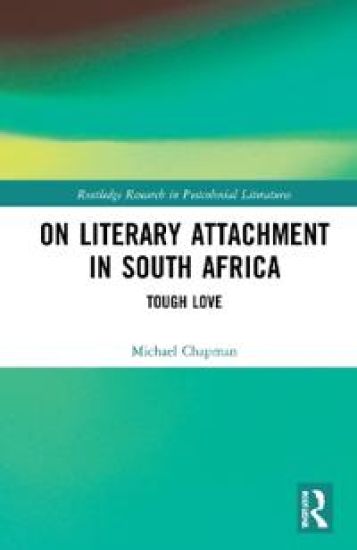
This book reflects on the "literary" in literature. Less ideologically construed, more affirmative of literary attachment, the study adopts a style of intimacy – its "tough love" – in a correlation between the creative work and the critical act. Instead of configuring literary works to "state-of-the-nation" issues – the usual approach to literature from South Africa – the chapters keep alive a space for conversation, whether accented inwards to locality or outwards to the Anglophone world: the world to which literature in South Africa continues to belong, albeit as a "problem child". A postcolony that is not quite a postcolony, South Africa is richly but frustratingly textured between Africa and the West, or the South and the North. Its literature – hovering on the cusp of its locality and its global reach – raises peculiar questions of reader reception, epistemological and aesthetic frame, and archival use. Are the Nobel laureates Nadine Gordimer and J. M. Coetzee local writers or global writers? Is the novel or the short story the more appropriate form at the edges of metropolitan cultures? Given language, race, and culture contestation, how do we recover Bushman expression for contemporary use? How to consider the aesthetic appeal of two contemporaneous works, one in English the other in isiXhosa, the one indebted to Bloomsbury modernism the other to African custom? How does Douglas Livingstone attach the Third World to the First World in both science and poetry? What has a "born free" novelist, Kopano Matlwa, got to do with the Bard of Avon? In a time of theorisation, is it permissible for Lewis Nkosi to embody literary criticism in an autobiographical journey? How to read the rupturing event – the statue of Rhodes must fall – through a literary sensibility? Alert to the influence of critique, the study is equally alert to the "limits of critique". Reflecting on several writers, works, and events that do not feature in current publications, On Literary Attachment in South Africa releases literature to speak to us today, within the contours of its originating energy.
This new addition to Luster's successful, practical and attractive Hidden series, covering countries and regions, is the perfect book for those who wish to discover the most beautiful sides of Iceland. Hidden Iceland is an ode to the hidden attractions that are still to be found in Iceland, not just in nature, but in the towns and villages too, presenting them in inspiring lists such as: glittering glacierscosy cottages and guesthousesglorious geothermal poolswild animal encountersgreat rooftop bars in Reykjavíkand many more. 302 addresses and facts in total, presented in original lists. Maps and index included.
This book reflects on the "literary" in literature. Less ideologically construed, more affirmative of literary attachment, the study adopts a style of intimacy – its "tough love" – in a correlation between the creative work and the critical act. Instead of configuring literary works to "state-of-the-nation" issues – the usual approach to literature from South Africa – the chapters keep alive a space for conversation, whether accented inwards to locality or outwards to the Anglophone world: the world to which literature in South Africa continues to belong, albeit as a "problem child". A postcolony that is not quite a postcolony, South Africa is richly but frustratingly textured between Africa and the West, or the South and the North. Its literature – hovering on the cusp of its locality and its global reach – raises peculiar questions of reader reception, epistemological and aesthetic frame, and archival use. Are the Nobel laureates Nadine Gordimer and J. M. Coetzee local writers or global writers? Is the novel or the short story the more appropriate form at the edges of metropolitan cultures? Given language, race, and culture contestation, how do we recover Bushman expression for contemporary use? How to consider the aesthetic appeal of two contemporaneous works, one in English the other in isiXhosa, the one indebted to Bloomsbury modernism the other to African custom? How does Douglas Livingstone attach the Third World to the First World in both science and poetry? What has a "born free" novelist, Kopano Matlwa, got to do with the Bard of Avon? In a time of theorisation, is it permissible for Lewis Nkosi to embody literary criticism in an autobiographical journey? How to read the rupturing event – the statue of Rhodes must fall – through a literary sensibility? Alert to the influence of critique, the study is equally alert to the "limits of critique". Reflecting on several writers, works, and events that do not feature in current publications, On Literary Attachment in South Africa releases literature to speak to us today, within the contours of its originating energy.
I know that, given you are reading this book, you are strapped for time or you are not great at managing your own time. If this is the case, then don't worry; you are about to find the easiest, most effective solutions to dealing with this problem once and for all. How? Because I will show you the most effective time management techniques out there. My name is NAME, and I can give you all the help that you need with time management. I've learned these skills through my own experience. As someone who manages my own lifestyle and business, I perhaps more than most get to appreciate and see first-hand the massive challenges in time management. It is by no means an easy feat, or a feat that you can simply click your fingers and become good at. No, becoming more time efficient means taking many years to hone the skills, change your habits and reset your mentality. This, naturally, takes a lot of time and patience to correctly achieve. If you would like to sort this dilemma out, there comes a time when you have to investigate what's needed. So, together, we'll be looking at; -The best tools that you can use to help make your life easier when it comes to time management. -The most effective way to manage your working environment - for most of us, the place we struggle to be at our best is the workplace. -How to get more done, and ensure that success can be consistent. -Forming strong plans of action that are bound to make a marginal yet significant difference to your efficiency. -Various techniques that can come in handy when you wish to operate to the level that you intended. All of these skills and tricks can easily be used by anyone who wishes to reach that specific level. It means putting in the commitment and the time needed to become more comfortable with who you really are. It also means taking the time to inspect the way that you live, and why you may be the master of your own downfall thus far. Does this sound like the kind of help that you need? Then let's get started with goal setting Time Management, Increase your Productivity, Time Management Skills, Time Management Hacks, Time Management Tips, Time Management, reduce stress, Time Management, Increase your Productivity, Time Management Skills, Time Management Hacks, Time Management Tips, Time Management, reduce stress, Time Management, Increase your Productivity, Time Management Skills, Time Management Hacks, Time Management Tips, Time Management, reduce stress, Time Management, Increase your Productivity, Time Management Skills, Time Management Hacks, Time Management Tips, Time Management, reduce stress Time Management, Increase your Productivity, Time Management Skills, Time Management Hacks, Time Management Tips, Time Management, reduce stress Time Management, Increase your Productivity, Time Management Skills, Time Management Hacks, Time Management Tips, Time Management, reduce stress, Time Management, Increase your Productivity, Time Management Skills, Time Management Hacks, Time Management Tips, Time Management, reduce stress, Time Management, Increase your Productivity, Time Management Skills, Time Management Hacks, Time Management Tips, Time Management, reduce stress, Time Management, Increase your Productivity, Time Management Skills, Time Management Hacks, Time Management Tips, Time Management, reduce stress, Time Management, Increase your Productivity, Time Management Skills, Time Management Hacks, Time Management Tips, Time Management, reduce stress, Time Management, Increase your Productivity, Time Management Skills, Time Management Hacks, Time Management Tips, Time Management, reduce stress, Time Management, Increase your Productivity, Time Management Skills, Time Management Hacks, Time Management Tips, Time Management, reduce stress, Time Management, Increase your Productivity, Time Management Skills, Time Management Hacks, Time Mana
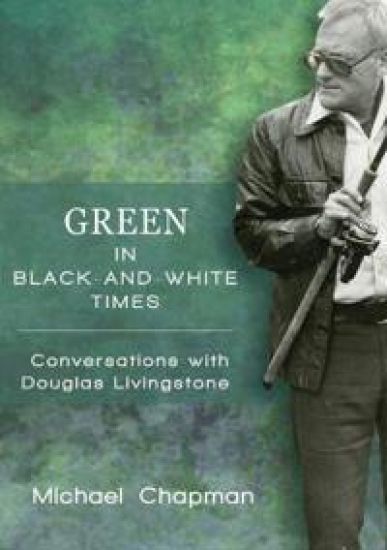
In conversations – serious, humorous, ironic, ribald – internationally acclaimed poet-scientist Douglas Livingstone and leading literary critic Michael Chapman struck up a warm, at times iconoclastic friendship. Over lunch they exchanged opinions, insights and anecdotes, not only on poetry, science and society, but also on personal aspects of modern life: love and loss, sexual and spiritual intimations, and city living; generally, on the value of our ‘uncommon humanity’. Their conversations – recollected in this book – take readers through the black-and-white times of political turbulence in South Africa of the 1970s and 1980s to a climate, after apartheid, more attuned to Livingstone’s abiding concern: how, as both scientist and poet, to heal the Earth, our only home. Along the way, we meet a cast from Jan Smuts, Mohandas Gandhi and Albert Luthuli to Alan Paton, Mazisi Kunene, Breyten Breytenbach and the ‘Soweto’ poets. We shift abruptly from Nobel laureate Wole Soyinka to the TV soap, Dallas. With clarity and wit, Michael Chapman intersperses the conversations with a fresh consideration of a unique achievement: Douglas Livingstone’s journey into the ‘two cultures’ of art and science.
From the introductory question - how to talk about art in a politically demanding milieu - to meditations on writers ranging from J. M. Coetzee to Nelson Mandela, Salman Rushdie to Nadine Gordimer, Michael Chapman offers a continually surprising, consistently intellectual, and boldly original consideration of literary-cultural tradition and innovation that in many ways is a model for the world. The essays - self-contained yet cumulative in their argument and insight - locate ethical and aesthetic challenges in the postcolonial condition of our times, both in South Africa (post-apartheid) and globally (post-Berlin Wall). What is Africa, what is the West? May the South and the North engage in new and challenging conversation? Teasing out the intricate value of literary culture in contemporary society, Chapman in lucid prose brings to this volume a new confidence and critical vocabulary that both energises older controversies and marks out fresh ground for debate.
Southern African Literatures is a major study of the work of writers from South Africa, Zimbabwe, Zambia, Malawi, Angola, Mozambique, and Namibia, written at a time of crucial change in the subcontinent. It covers a wide range of work, from the storytelling of stone-age Bushmen to modern writing by figures. The author argues that literary history in the southern African region is best based on a comparative method which, while respecting differences of language, race and social circumstance, seeks cultural interchange including 'translations' of experience across linguistic and ethnic borders. Instead of perpetuating division, the study examines points of common reference, as it asks what makes a literary culture. Who are to be regarded as major and minor authors? What are the strengths and limitations of local and international perspectives? Should literature in today's southern Africa be confined to the art forms of poems, plays, and fiction?
This handbook will help veterinary clinicians and their staff to manage cases of poisoning in dogs and cats. It will also help answer enquiries about potential poisonings received from concerned pet owners. The content has been compiled from over 15 000 past cases referred to the Veterinary Poisons Information Service - a 24-hour information service for veterinary surgeons. The VPIS experience is compared and contrasted with case data and reports from the literature to provide a comprehensive overview of both toxicity and management for the agents included. Each agent, or group of agents, has a separate chapter covering its effects in either the cat or the dog. In some cases the species information is combined where the clinical effects and management are identical. The chapters provide all the information necessary for the immediate management of a particular poisoning case. This includes doses at which clinical intervention is advisable and dosing regimens and indications for any drug therapy required. Thus the user will be able to access quickly all the information needed for an emergency situation without having to refer to other sources.
This book represents an attempt to understand the evolution of Jean Piaget’s basic ideas in the context of his own intellectual development. Piaget sought to elucidate human knowledge by studying its origins and development. In this book, Michael Chapman applies the same method to Piaget’s own thinking. Dr Chapman shows that some of the Swiss psychologist’s essential ideas originated in adolescent philosophical speculations about the relation between science and value. These same ideas were then developed step by step in Piaget’s investigations of children’s cognitive development. Dr Chapman claims that Piaget’s use of developmental psychology as a means for addressing questions about the evolution of knowledge has been misunderstood by psychologists approaching his work exclusively from the perspectives of their own discipline. Reconstructing Piaget’s intellectual biography makes possible a better understanding of the questions he originally posed and the answers he subsequently provided. Dr Chapman concludes with an assessment of Piaget’s relevance for contemporary psychology and philosophy and suggests ways in which Piagetian theory might be further developed.