Kirjojen hintavertailu – 12 903 725 kirjaa ja 27 kauppaa

Kirjailija

Michael Charlton

Kirjat ja teokset yhdessä paikassa: 5 kirjaa, julkaisuja vuosilta 1995–2020, suosituimpiin kuuluu Fernsehwerbung und Kinder. Vertaile teosten hintoja ja tarkista saatavuus suomalaisista kirjakaupoista.

5 kirjaa

Kirjojen julkaisuvuodet: 1995–2020.

Antihydrogen and Fundamental Physics

Antihydrogen and Fundamental Physics

Michael Charlton; Stefan Eriksson; Graham M. Shore

Springer Nature Switzerland AG
2020
nidottu
The advent of high-precision antihydrogen spectroscopy has opened up the possibility of direct tests with unprecedented accuracy of some of the most fundamental principles of physics, notably Lorentz and CPT symmetry and the Einstein equivalence principle. This book reviews these principles, emphasising their interconnections in quantum field theory and general relativity and the special role of antimatter, and explores how they may be tested in current and forthcoming experiments on antihydrogen. Original research results relevant to the experimental programme of the ALPHA collaboration at CERN are presented, together with the implications for antihydrogen of proposed theories featuring novel `fifth-force' interactions.
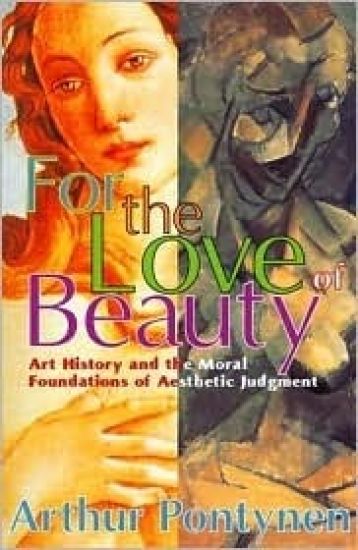
For the Love of Beauty

For the Love of Beauty

Michael Charlton; Arthur Pontynen

Routledge
2017
nidottu
For most of the last century the methodology of art history has followed a positivist approach, emphasizing form and style, fact and history as the means of studying works of art. By contrast the philosophical pursuit of truth, once central to the fine arts and humanities has largely been abandoned. In For The Love of Beauty, Arthur Pontynen offers a searching and ambitious critique of modern aesthetic practice that aims to restore the pursuit of the knowledge of reality--Being--to its rightful place. Pontynen begins by addressing the question of why the pursuit of truth (be it called Dao, Dharma, God, Logos, Ideal, etc.) is no longer acceptable in academic circles even though it has been intrinsic to the purpose of art at most times and in most cultures. Lacking the pursuit of truth, of some degree of knowledge of what is true and good, the humanities necessarily lack intellectual and cultural grounding and purpose. Fields of study such as philosophy, music, art, and history are therefore trivialized and brutalized. Pontynen's focus on the study of the visual arts details the how the denial of purpose and quality in modernist and postmodernist aesthetics has denied art any possibility of transcending entertainment, therapy, or propaganda. In place of the established narratives, Pontynen offers a counter-narrative based on a cross-cultural pursuit of the good, the true, and the beautiful. He recognizes that substantively different cultural traditions exist and that the truth claims of each may be valid in whole or in part. He shows how the history of art parallels the intellectual history of Western culture and how these parallels affect both aesthetics and ethics. Pontynen engages with those elements of modernist and postmodernist thought that might be true. His purpose is not simply to deny their validity but to engage a viewpoint that does not privilege the notion of a purposeless cosmos. For the Love of Beauty will be of interest to art historians, students of aesthetics, ethics, and intellectual historians.
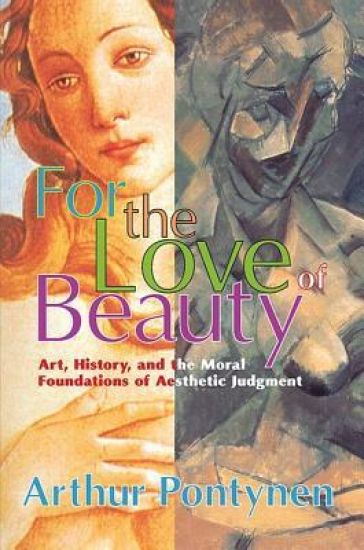
For the Love of Beauty

For the Love of Beauty

Michael Charlton; Arthur Pontynen

Transaction Publishers
2005
sidottu
For most of the last century the methodology of art history has followed a positivist approach, emphasizing form and style, fact and history as the means of studying works of art. By contrast the philosophical pursuit of truth, once central to the fine arts and humanities has largely been abandoned. In For The Love of Beauty, Arthur Pontynen offers a searching and ambitious critique of modern aesthetic practice that aims to restore the pursuit of the knowledge of reality--Being--to its rightful place. Pontynen begins by addressing the question of why the pursuit of truth (be it called Dao, Dharma, God, Logos, Ideal, etc.) is no longer acceptable in academic circles even though it has been intrinsic to the purpose of art at most times and in most cultures. Lacking the pursuit of truth, of some degree of knowledge of what is true and good, the humanities necessarily lack intellectual and cultural grounding and purpose. Fields of study such as philosophy, music, art, and history are therefore trivialized and brutalized. Pontynen's focus on the study of the visual arts details the how the denial of purpose and quality in modernist and postmodernist aesthetics has denied art any possibility of transcending entertainment, therapy, or propaganda. In place of the established narratives, Pontynen offers a counter-narrative based on a cross-cultural pursuit of the good, the true, and the beautiful. He recognizes that substantively different cultural traditions exist and that the truth claims of each may be valid in whole or in part. He shows how the history of art parallels the intellectual history of Western culture and how these parallels affect both aesthetics and ethics. Pontynen engages with those elements of modernist and postmodernist thought that might be true. His purpose is not simply to deny their validity but to engage a viewpoint that does not privilege the notion of a purposeless cosmos. For the Love of Beauty will be of interest to art historians, students of aesthetics, ethics, and intellectual historians.
Fernsehwerbung und Kinder

Fernsehwerbung und Kinder

Michael Charlton; Klaus Neumann-Braun; Stefan Aufenanger; Wolfgang Hoffmann-Riem

VS Verlag fur Sozialwissenschaften
1995
nidottu
Klaus Neumann-Braun, Stefan Aufenanger, Wolfgang Hoffmann-Riem und Michael Charlton Audio-visuelle Werbung fUr Kinder: gute Grtinde zur Besorgnis? Das vorliegende Projekt, Femsehwerbung und Kinder" steht gegenw1irtig sicherlich nicht allein in der entsprechenden nationalen und intemationalen Forschungslandschaft. Es ist jedoch fiberraschend, feststellen zu mfissen, daB die Projekte zum Thema "audio-visuelle Werbung und Kinder" recht spiirlich gesat sind. Dies muB irritieren, da die WerbeaktiviHiten der Wirtschaft auf dem Medien- und Konsummarkt fUr Kinder fiber die Jahre hinweg sHindig zugenommen haben, die kommerzielle "Begleitforschung" ebenfalls expan- dierte, wamend die sozialwissenschaftliche Grundlagenforschung mit dieser Entwicklung nicht Schritt gehalten hat. Dies ist zu konstatieren mit Blick auf die intemationale Diskussion, folgt man beispielsweise den AusfUhrungen von Kline (1991), aber auch mit Blick auf die nationale Diskussion: Nach langen Jahren der "Latenz" erschien erst wieder 1993 ein groBeres wissenschaftliches Gutachten unter dem Titel "Kin- der und Werbung" (Baacke, Sander & Vollbrecht, 1993). Dieses Gutachten ist als ein umfassendes einzuschatzen, in dem es den Autoren darum geht, den aktuellen Forschungsstand zu dokumentieren. Sie tun dies mit dem er- kl1irten Ziel, Forschungsdesiderate aufzuzeigen. Es wird in den AusfUhrungen daffir votiert, die traditionelle Stimulus- Response-Wirkungsforschung aufzugeben: Die Konzentration auf den Ein- zelspot und des sen kausale Wirkungen auf Kinder sei angesichts einer veriin- derten Lebenswelt der Kinder, aber auch angesichts neuerer Entwicklungen in der wissenschaftlichen Forschung obsolet geworden. Erstens habe sic- so die These - eine Entwicklung eingestellt, die auf eine AlIgegenw1irtigkeit und vor allem auch Unabgrenzbarkeit von Werbung fUr Kinder hinauslaufe.