Kirjailija
Michael Clarke
Kirjat ja teokset yhdessä paikassa: 75 kirjaa, julkaisuja vuosilta 2000–2026, suosituimpiin kuuluu Inside Computer Music. Vertaile teosten hintoja ja tarkista saatavuus suomalaisista kirjakaupoista.
75 kirjaa
Kirjojen julkaisuvuodet: 2000–2026.
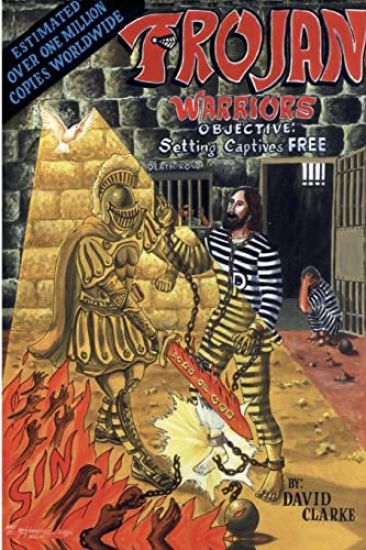
I am honored to write the foreword to this book that alludes to the Greek mythology about the rescue of Helen of Troy by using a wooden horse that hid the warriors. I can understand the literary license that the author employed to catch the attention of the reader because a book, to be of any use, must be read. However, this book is not about deceptive tricks to mislead the enemy. The underpinning premise of this book is that all men have sinned and fall short of the glory of God (Romans 3:23). This being so, we are captives of sin, imprisoned in our own futility, and therefore, in need of a redeemer. Some are literally imprisoned behind bars and barbed wires, like the inmates in the New Bilibid Prison in Muntinlupa for sins they have committed to society. Many, however, are incarcerated in spiritual dungeons, without bars, without guards. One is no better than the other. Both prisons eventually lead to destruction and death unless God intervenes. God's loving intervention in man's history is the core message of the gospel and of this book. The good news is that we are not shipwrecks, floating aimlessly in the sea of hopelessness. There is a God who loves us tremendously, who desires to salvage us and make us useful once again according to His original plan. This is what salvation is all about. When Jesus read the scroll of the prophet Isaiah in the synagogue that he was sent "to proclaim freedom for the prisoners" (Luke 4:18), he was, in fact, stating one of the profound truths of his ministry. And that is, there is hope of forgiveness and healing because of the cross he had to endure for our sake. The choice whether we should remain prisoners or not ultimately rests on us. I encourage the reader to read the lives of the prisoners depicted in this book in the hope that they will see that only Jesus can truly set us free. Jose C. Calida: Undersecretary of Justice, Philippines

‘Soft power’ is an oft-used term and commands an instinctive understanding among journalists and casual observers, who mostly interpret it as ‘diplomatic’ or somehow ‘persuasive’. ‘Hard power’ is seen, by contrast, as something more tangible and usually military. But this is a superficial appreciation of a more subtle concept - and one key to Britain's future on the international stage. Britain’s Persuaders is a deep exploration of this phenomenon, using new research into the instruments of soft power evident in British society and most relevant to the 2020s. Some, like the British Council or the BBC World Service, are explicitly intended to generate soft power in accordance with governmental intentions; but rather more, like the entertainment industries, sport, professional regulatory bodies, hospitality industries or education sectors have more penetrating soft power effects even as they pursue their own independent or commercial rationales. This book conducts an up-to-date ‘audit’ of all Britain’s principal sources of soft power. Situating its analysis within the current understanding of the ‘smart power’ of nation states – that desire to employ the full spectrum of policy instruments and national characteristics to achieve policy outcomes, specifically in the context of ‘Brexit Britain’ where soft power status is certain to loom larger during the 2020s.
American Grand Strategy and National Security
Michael Clarke
Springer Nature Switzerland AG
2021
sidottu
Halvin toimitettuna 187,60 €
This book is focused on explaining the grand strategic behavior of the United States from the Founding of the Republic to the Trump administration. To do so it employs a neoclassical realist framework to argue that while systemic change explains the broad evolution of US grand strategy, the precise shape and content of the grand strategies pursued has been conditioned by domestic political culture and interests. The book argues that distinct political cultures of statecraft (Hamiltonian, Jeffersonian, Jacksonian and Wilsonian) have acted as permissive filters through which policy-makers have interpreted and responded to systemic stimuli making some grand strategy choices more likely than others in the pursuit of national security. The book demonstrates that while primacist grand strategies were facilitated by the predominance from the mid-19th century to the early 21st century of the vindicationist Hamiltonian and Wilsonian forms of statecraft, the costs of primacy have now stimulated the resurgence of the long dormant, exemplarist Jeffersonian and Jacksonian forms of statecraft under the Obama and Trump administrations, resulting in grand strategies that seek to either manage or stave off decline in America’s relative power position.
Published in 1999, this is a review of recent changes in the regulation of retail financial investment services and products, notably the creation of the Personal Investment Authority and the continuing roles of the Office of Fair Trading and the Securities and Investments Board. The attempt to establish new regulatory standards in the wake of the personal pensions mis-selling and other scandals is critically appraised in the light of evidence of the needs and capacities of citizens. The book concludes, firstly that the regulators have not succeeded in making more than a limited progress in preventing the tendencies of the industry to abuse the public, and secondly, that the model of regulatory effectiveness which they espouse, based on creating a competitive market of informed decision-makers, is inappropriate given the complexity of the products in question. No systematic appraisal of the development of retail financial services regulation exists, other than those conducted by the regulators themselves.
Britain is facing big security challenges in the 2020s. The decade to come will not be as favourable as the two past decades. For a country as ‘globalised’ as Britain, security challenges cover a wide spectrum - from terrorism, international crime and cyber attack through to the prospects of war in its own continent or even, again, for its own survival. Brexit has entered these equations and turned them into a political tipping point, from which there is no hiding and no turning back. Tipping Point looks at the immediate and long-term security challenges Britain faces - from security and foreign policy to the crisis of liberal democracy - as well as Britain's security capabilities.
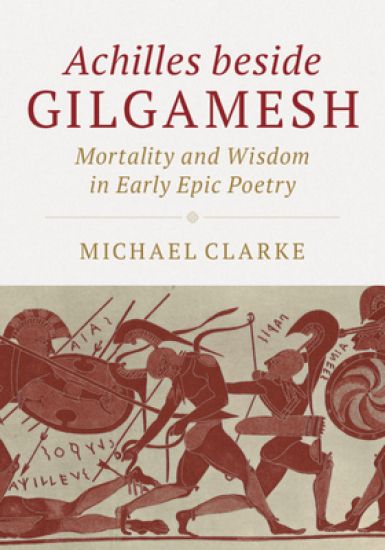
It is widely recognised that the epics of Homer are closely related to the earlier mythology and literature of the Ancient Near East, above all the Babylonian Epic of Gilgamesh. But how should this influence our response to the meaning and message of either poem? This book responds to this question through an experiment in intertextual reading. It begins by exploring Gilgamesh as a work of literature in its own right, and uses this interpretation as the springboard for a new reading of the Homeric epic, emphasising the movement within the poem - beginning from a world of heroic action and external violence, but shifting inwards to the thoughts and feelings of Achilles as he responds to the certainty that his own death will follow that of his best friend. The book will be of interest both to specialists and to those coming to ancient literature for the first time.
Britain is facing big security challenges in the 2020s. The decade to come will not be as favourable as the two past decades. For a country as ‘globalised’ as Britain, security challenges cover a wide spectrum - from terrorism, international crime and cyber attack through to the prospects of war in its own continent or even, again, for its own survival. Brexit has entered these equations and turned them into a political tipping point, from which there is no hiding and no turning back. Tipping Point looks at the immediate and long-term security challenges Britain faces - from security and foreign policy to the crisis of liberal democracy - as well as Britain's security capabilities.
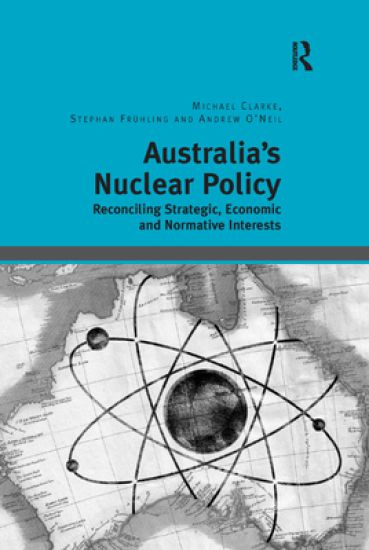
Australia’s Nuclear Policy: Reconciling Strategic, Economic and Normative Interests critically re-evaluates Australia’s engagement with nuclear weapons, nuclear power and the nuclear fuel cycle since the dawn of the nuclear age. The authors develop a holistic conception of ’nuclear policy’ that extends across the three distinct but related spheres - strategic, economic and normative - that have arisen from the basic ’dual-use’ dilemma of nuclear technology. Existing scholarship on Australia’s nuclear policy has generally grappled with each of these spheres in isolation. In a fresh evaluation of the field, the authors investigate the broader aims of Australian nuclear policy and detail how successive Australian governments have engaged with nuclear issues since 1945. Through its holistic approach, the book demonstrates the logic of seemingly conflicting policy positions at the heart of Australian nuclear policy, including simultaneous reliance on US extended deterrence and the pursuit of nuclear disarmament. Such apparent contradictions highlight the complex relationships between different ends and means of nuclear policy. How successive Australian governments of different political shades have attempted to reconcile these in their nuclear policy over time is a central part of the history and future of Australia’s engagement with the nuclear fuel cycle.
An analysis that takes the complexity of British defence policy apart to view its anatomy and show how policy is made in this area. British defence policy is in a phase of great transition as the country confronts its Brexit future and also as world politics becomes more threatening and potentially unstable. This book uses the most up to date information to examine in a concise and readable way all the elements that go to make up Britain’s defence policy as it goes through the most significant transition since the end of the Cold War in 1991. By analysing the costs of defence, the equipment issues, the personnel, the technical and intelligence back-up for it, and the strategies to employ military forces, this book offers a brief but rich guide to understanding an area of policy that many people find baffling.
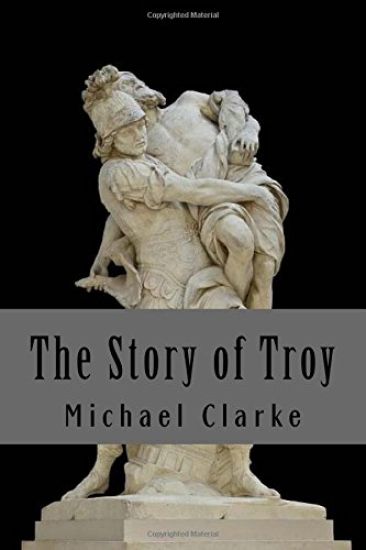
Reproduction of the original: The Story of Troy by Michael Clarke
Reproduction of the original: Story of Aeneas by Michael Clarke
Reproduction of the original: The Story of Troy by Michael Clarke
Reproduction of the original: Story of Aeneas by Michael Clarke
Published in 1999, this is a review of recent changes in the regulation of retail financial investment services and products, notably the creation of the Personal Investment Authority and the continuing roles of the Office of Fair Trading and the Securities and Investments Board. The attempt to establish new regulatory standards in the wake of the personal pensions mis-selling and other scandals is critically appraised in the light of evidence of the needs and capacities of citizens. The book concludes, firstly that the regulators have not succeeded in making more than a limited progress in preventing the tendencies of the industry to abuse the public, and secondly, that the model of regulatory effectiveness which they espouse, based on creating a competitive market of informed decision-makers, is inappropriate given the complexity of the products in question. No systematic appraisal of the development of retail financial services regulation exists, other than those conducted by the regulators themselves.
This work has been selected by scholars as being culturally important and is part of the knowledge base of civilization as we know it. This work is in the public domain in the United States of America, and possibly other nations. Within the United States, you may freely copy and distribute this work, as no entity (individual or corporate) has a copyright on the body of the work. Scholars believe, and we concur, that this work is important enough to be preserved, reproduced, and made generally available to the public. To ensure a quality reading experience, this work has been proofread and republished using a format that seamlessly blends the original graphical elements with text in an easy-to-read typeface. We appreciate your support of the preservation process, and thank you for being an important part of keeping this knowledge alive and relevant.
Essay Collections in International Relations
Moorhead Wright; Jane Davis; Michael Clarke
Routledge
2017
nidottu
This bibliography, originally published in 1977, details original material on international relations since 1870 written in English and appearing in non-recurrent multi-author works published between 1945 and 1975. The authors have distinguished between core topics such as foreign policy, defence, and international organisation, and peripheral areas such as interntional economics, international law and diplomatic history. Essays have been selected which make an enduring and substantial contribution to the study of IR..
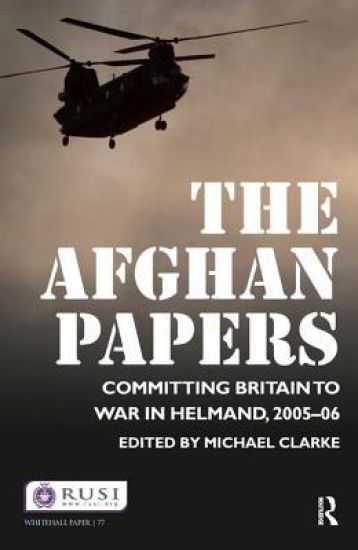
In 2006, British forces entered the Helmand Province of Afghanistan in what would become one of the defining military campaigns of the decade. At great cost in blood and treasure, the UK waged a protracted counter-insurgency against a resurgent Taliban. But how was the decision taken to commit Britain to such a difficult and drawn out campaign? The Afghan Papers is the result of private interviews with and frank contributions by some of the most important actors in the fateful decision. Former generals, politicians and civil servants contribute to an original RUSI analysis that provides a startling insight into the decision to commit the UK to a war – a decision wracked by conflict, incoherence and confusion.