Kirjojen hintavertailu – 12 903 725 kirjaa ja 27 kauppaa
Kirjailija
Michael Collier
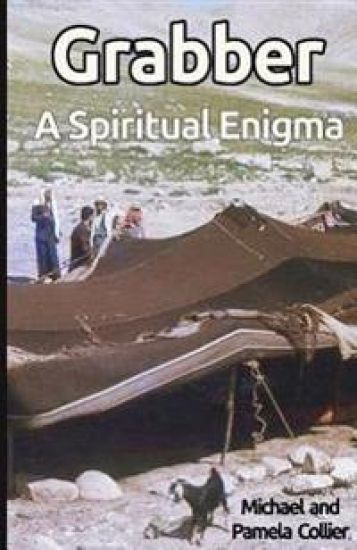
Kirjat ja teokset yhdessä paikassa: 17 kirjaa, julkaisuja vuosilta 1986–2021, suosituimpiin kuuluu Grabber - A Spiritual Enigma: Guidelines for discussions on the life of Jacob (black & white version). Vertaile teosten hintoja ja tarkista saatavuus suomalaisista kirjakaupoista.
Whether Michael Collier is writing about an airline disaster, a friendship with a disgraced Catholic bishop, his father’s encounter with Charles Lindbergh, Lebanese beekeepers, a mother’s sewing machine, or a piano in the woods, he does so with the syntactic verve, scrupulously observed detail, and flawless ear that has made him one of America’s most distinguished poets. These poems cross expanses, connecting the fear of missing love and the bliss of holding it, the ways we speak to ourselves and language we use with others, and deep personal grief and shadows of world history. The Missing Mountain brings together a lifetime of work, chronicling Collier’s long and distinguished career as a poet and teacher. These selections, both of previously published and new poems, chart the development of Collier’s art and the cultivations of is passions and concerns.
Think of a time when you've feigned courage to make a friend, feigned forgiveness to keep one, or feigned indifference to simply stay out of it. What does it mean for our intimacies to fail us when we need them most? The poems of this collection explore such everyday dualities-how the human need for attachment is as much a source of pain as of vitality and how our longing for transcendence often leads to sinister complicities. The title poem tells the conflicted and devastating story of the poet's friendship with the now-disgraced Bishop of Phoenix, Arizona, interweaving fragments of his parents' funerals, which the Bishop concelebrated, with memories of his childhood spiritual leanings and how they were disrupted by a pedophilic priest the Bishop failed to protect him from. This meditation on spiritual life, physical death, and betrayal is joined by an array of poised, short lyrics and expansive prose poems exploring how the terror and unpredictability of our era intrudes on our most intimate moments. Whether Collier is writing about an airline disaster, Huey Newton's trial, Thomas Jefferson's bees, a piano in the woods, or his own fraught friendship with the disgraced Catholic Bishop, his syntactic verve, scrupulously observed detail, and flawless ear bring the felt-and sometimes frightening-dimensions of the mundane to life. Throughout, this collection pursues a quiet but ferocious need to get to the bottom of things.
An Individual History describes the fears, anger and guilt—personal, familial, societal, political and historical—that comprise a life. The figure of the speaker’s maternal grandmother who was institutionalised for five decades serves as an overriding metaphor for this haunting, bold new work by an essential American poet.
An Individual History describes the fears, anger, and guilt—personal, familial, societal, political, and historical—that comprise a life. The figure of the speaker’s maternal grandmother who was institutionalized for five decades serves as an overriding metaphor for this haunting, bold new work by an essential American poet. from “An Individual History” This was before the time of lithium and Zoloft before mood stabilizers and anxiolytics and almost all the psychotropic drugs, but not before thorazine, which the suicide O’Laughlin called “handcuffs for the mind.” It was before, during, and after the time of atomic fallout, Auschwitz, the Nakba, DDT, and you could take water cures, find solace in quarantines, participate in shunnings, or stand at Lourdes among the canes and crutches.
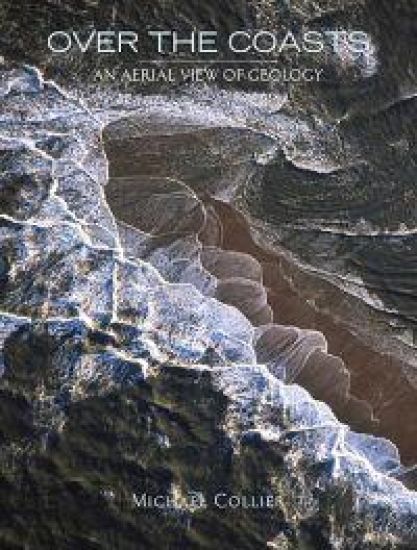
Geology comes alive as Michael Collier flies over North America's coasts. Geology usually takes its time -- about a few million years, generally. Yet there is one place where the geological processes often occur right before our eyes: along the coastline of a great body of water. The latest book in this acclaimed series takes the reader on aerial tours over the coastlines of the Atlantic, Pacific, Gulf, Great Lakes and Alaska. Along these coasts the earth is in perpetual motion, for example: Barrier islands are constantly torn apart and reshaped by violent storms Powerful waves jackhammer rocks into smithereens, carving coastal cliffs Deltas, marshes, beaches, dunes, bays, lagoons, estuaries and fjords are created and recreated by the action of water against land. Over the Coasts combines beautiful images with natural history and makes geological science readily accessible to the general reader. Science that is most apparent in these spectacular aerial portraits of our restless coasts.
The award-winning poet Michael Collier's elegiac fifth collection is haunted by spectral figures and a strange, vivid chorus of birds: From a cardinal that crashes into a window to a gathering of turkey vultures, Collier engages birds as myth-makers and lively messengers, carrying memories from lost friends. The mystery of death and the vital absence it creates are the real subjects of the book. Collier juxtaposes moments of quotidian revelation, like waking to the laughing sounds of bird song, with the drama of Greek tragedy, taking on voices from Medea. As Vanity Fair praised, his poems "tread nimbly between moments of everyday transcendence and spiritual pining."
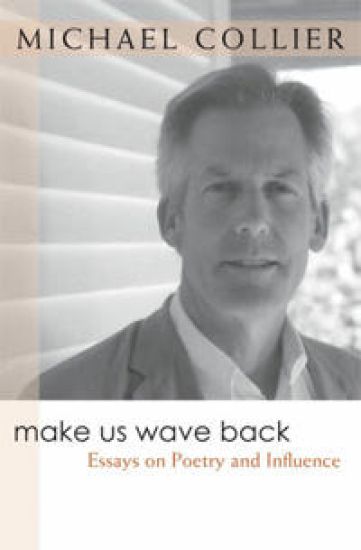
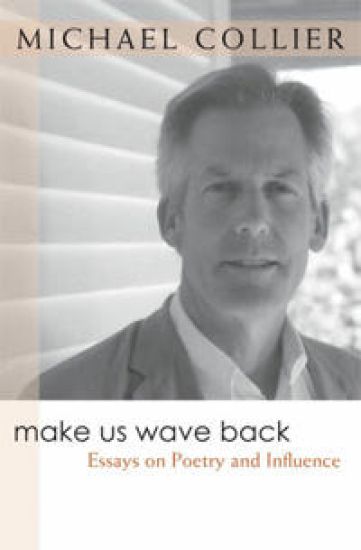
“Michael Collier’s book is refreshing in its refusal to push for one particular aesthetic. He regards his own preference for realism over abstraction as more a matter of temperament than of considered judgment, and respects poets more skeptical than he is about the ability of poetry to connect with the world. The result is an engaging record of his influences and enthusiasms, which are wide enough to include both Whitman and Larkin, both Jorge Borges and William Maxwell.”—Carl Dennis, Pulitzer Prize–winning author of Unknown Friends and Practical Gods“Michael Collier combines pietas and wildness in these essays on poetry as inheritance, and poetry as struggle. One feels the young man in his ‘rampage of literature,’ and the older writer reflecting on an art that is at once personal and impersonal, deeply matured in the imagination. This is a wise and well-lived book.”—Rosanna Warren, author of Departure and Stained Glass“The essays and remembrances in Make Us Wave Back radiate Michael Collier’s characteristic insight and sagacity on every page. Clear-minded, ardent, brightly illuminating the art of poetry, this is as lucid as writing about writing gets.”—Campbell McGrath, author of Pax Atomica and Florida PoemsNational Book Critics Circle Award finalist Michael Collier explores the influences that have made him one of the most distinguished poets of his generation. Make Us Wave Back includes essays on an expansive list of subjects, among them the literary correspondence of William Maxwell; the meaning of the author’s own role as poet laureate of the state of Maryland; the journals of Louise Bogan and how they reveal Bogan’s struggle with her own personal fears as well as the reconstruction of herself as a writer; and many more. Michael Collier is Professor of English and Codirector of the creative writing program at the University of Maryland. He is also director of the Bread Loaf Writers’ Conference. He is the author of several books of poems, including The Clasp and Other Poems, The Folded Heart, and The Ledge.
“Michael Collier’s book is refreshing in its refusal to push for one particular aesthetic. He regards his own preference for realism over abstraction as more a matter of temperament than of considered judgment, and respects poets more skeptical than he is about the ability of poetry to connect with the world. The result is an engaging record of his influences and enthusiasms, which are wide enough to include both Whitman and Larkin, both Jorge Borges and William Maxwell.”—Carl Dennis, Pulitzer Prize–winning author of Unknown Friends and Practical Gods“Michael Collier combines pietas and wildness in these essays on poetry as inheritance, and poetry as struggle. One feels the young man in his ‘rampage of literature,’ and the older writer reflecting on an art that is at once personal and impersonal, deeply matured in the imagination. This is a wise and well-lived book.”—Rosanna Warren, author of Departure and Stained Glass“The essays and remembrances in Make Us Wave Back radiate Michael Collier’s characteristic insight and sagacity on every page. Clear-minded, ardent, brightly illuminating the art of poetry, this is as lucid as writing about writing gets.”—Campbell McGrath, author of Pax Atomica and Florida PoemsNational Book Critics Circle Award finalist Michael Collier explores the influences that have made him one of the most distinguished poets of his generation. Make Us Wave Back includes essays on an expansive list of subjects, among them the literary correspondence of William Maxwell; the meaning of the author’s own role as poet laureate of the state of Maryland; the journals of Louise Bogan and how they reveal Bogan’s struggle with her own personal fears as well as the reconstruction of herself as a writer; and many more. Michael Collier is Professor of English and Codirector of the creative writing program at the University of Maryland. He is also director of the Bread Loaf Writers’ Conference. He is the author of several books of poems, including The Clasp and Other Poems, The Folded Heart, and The Ledge.
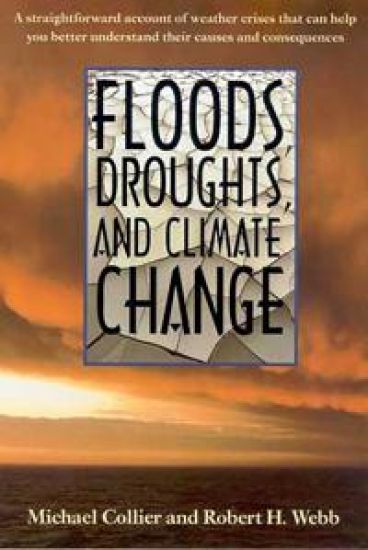
No one in America would deny that the weather has changed drastically in our lifetime. We read about El Nino and La Nina, but how many of us really understand the big picture beyond our own front windows or even the headlines on the Weather Channel? Hydrologists and climatologists have long been aware of the role of regional climate in predicting floods and understanding droughts. But with our growing sense of a variable climate, it is important to reassess these natural disasters not as isolated events but as related phenomena. This book shows that floods and droughts don't happen by accident but are the products of patterns of wind, temperature, and precipitation that produce meteorologic extremes. It introduces the mechanics of global weather, puts these processes into the longer-term framework of climate, and then explores the evolution of climatic patterns through time to show that floods and droughts, once considered isolated "acts of God," are often related events driven by the same forces that shape the entire atmosphere. Michael Collier and Robert Webb offer a fresh, insightful look at what we know about floods, droughts, and climate variability and their impact on people in an easy-to-read text, with dramatic photos, that assumes no previous understanding of climate processes. They emphasize natural, long-term mechanisms of climate change, explaining how floods and droughts relate to climate variability over years and decades. They also show the human side of some of the most destructive weather disasters in history. As Collier and Webb ably demonstrate, "climate" may not be the smooth continuum of meteorologic possibilities we supposed but rather the sum of multiple processes operating both regionally and globally on different time scales. Amid the highly politicized discussion of our changing environment, Floods, Droughts, and Climate Change offers a straightforward scientific account of weather crises that can help students and general readers better understand the causes of climate variability and the consequences for their lives.
A new collection of poetry by the director of the Bread Loaf Writers' Conference, which celebrates its seventy-fifth anniversary in 2000. "Dark splendor" are the words Edward Hirsch uses to describe the poems of the award-winning author Michael Collier. Collier's new work balances on the ledge between the everyday and the unknown, revealing the hidden depths of relationships. The poems in THE LEDGE are narrative and colloquial, musical and crystalline, at once intimate and sharp-edged. They render the world beautifully mysterious as they slide into unexpected emotional territory. A son loses his father's favorite hammer, and with it his trust. In "The Wave," the enthusiastic crowd at a baseball game rises and sits in frightening unison, belying their hopeful cheering. In "Fathom and League," a dive two miles deep in the Pacific reveals the submerged volcanoes of the ocean and the soul. In many of the poems, the familiar animal world - of dogs and sparrows and possums in the yard - transfigures the view through a window. As director of the Bread Loaf Writers' Conference, Collier has reinvigorated one of America's most important literary institutions. The artistry and directness of THE LEDGE confirm his place among the most significant poets of his generation.
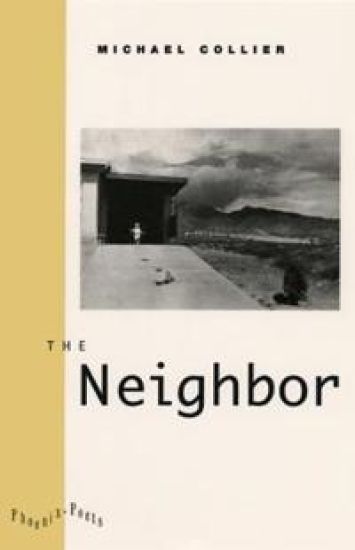
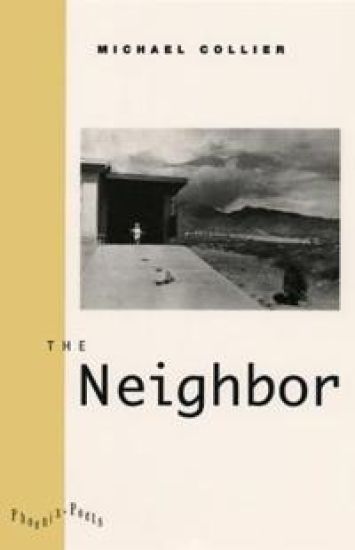
The Neighbor is a book of portraits and portraiture. Like the eccentric and mysteriously heroic citizens of E. A. Robinson's Tilbury Town, Collier's figures haunt a startlingly familiar neighborhood. In clear, rich language, Collier reveals the complexities that emerge from his characters' seemingly uneventful lives.
The Neighbor is a book of portraits and portraiture. Like the eccentric and mysteriously heroic citizens of E. A. Robinson's Tilbury Town, Collier's figures haunt a startlingly familiar neighborhood. In clear, rich language, Collier reveals the complexities that emerge from his characters' seemingly uneventful lives.