
Kirjailija
Michael Cook
Kirjat ja teokset yhdessä paikassa: 33 kirjaa, julkaisuja vuosilta 1975–2026, suosituimpiin kuuluu He Who Speaks Out Of Turn. Vertaile teosten hintoja ja tarkista saatavuus suomalaisista kirjakaupoista.
33 kirjaa
Kirjojen julkaisuvuodet: 1975–2026.
In contrast to the gradual formation of the high cultures of most of the world, the process by which Islamic civilisation emerged and took on its classical form between the 7th and 9th centuries was unusually sudden. The studies collected here are concerned with aspects of this remarkable development. Their topics are varied, including the emergence of dialectical theology, the origins of accounts of Pharaonic history current in medieval Egypt, the sources of Muslim dietary law, the Islamic background of Karaism, and Max Weber's views on Islamic sects. Other articles look at early Syrian eschatology and its connections with late antiquity and Byzantium, at the relevance of eschatology to debates about the dating of traditions, and at the attitudes of the early traditionists to the writing down of tradition. The final items examine reports about the textual affiliations of a long-lost Koranic codex and discussions of adultery among the baboons of Yemen. A recurring theme is the relationship between Early Muslim ideas and those of non-Muslim cultures, sometimes very ancient ones.
The key sources for the reconstruction of the early history of Muslim dogma are a group of texts ascribed to authors of the late first century of the Hijra. These texts bear on two major doctrinal controversies, the Murji'ite and the Qadarite, raising issues related on the one hand to the judgement of the events of the First Civil War, and on the other to the dilemma of predestination and free will. Part I and II of this study present a new source for the early history of the Murji'a, and argue new positions regarding the early doctrine and politics of the movement. Parts III and IV are an investigation of the authenticity and dating of this and half a dozen similar sources; the issues thereby raised are fundamental for the history of Muslim dogma, and have ramifications for the study of early Muslim history at large. The book also discusses the origin of particular Muslim doctrines in the religious and intellectual trends of late antiquity.
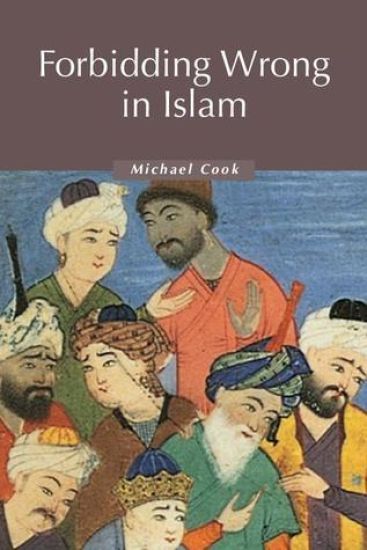
Michael Cook’s magisterial study in Islamic ethics, Commanding Right and Forbidding Wrong in Islamic Thought, was published to much acclaim in 2001. It was described by one reviewer as a masterpiece. In that book, the author reflected on the Islamic injunction, incumbent on every Muslim, to forbid wrongdoing. The present book is a short, accessible survey of the same material. Using anecdotes and stories from Islamic sources to illustrate the argument, Cook unravels the complexities of the subject. Moving backwards and forwards through time, he demonstrates how the past informs the present. By the end, the reader will be familiar with a colourful array of characters from Islamic history ranging from the celebrated thinker Ghazzali, to the caliph Harun al-Rashid, to the Ayatollah Khumayni. The book educates and entertains - at its heart, however, is an important message about the Islamic tradition, its values, and the relevance of those values today.
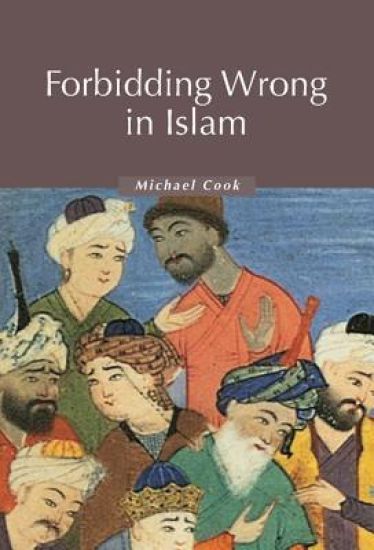
Michael Cook's magisterial study in Islamic ethics, Commanding Right and Forbidding Wrong in Islamic Thought, was published to much acclaim in 2001. It was described by one reviewer as a masterpiece. In that book, the author reflected on the Islamic injunction, incumbent on every Muslim, to forbid wrongdoing. The present book is a short, accessible survey of the same material. Using anecdotes and stories from Islamic sources to illustrate the argument, Cook unravels the complexities of the subject. Moving backwards and forwards through time, he demonstrates how the past informs the present. By the end, the reader will be familiar with a colourful array of characters from Islamic history ranging from the celebrated thinker Ghazzali, to the caliph Harun al-Rashid, to the Ayatollah Khumayni. The book educates and entertains - at its heart, however, is an important message about the Islamic tradition, its values, and the relevance of those values today.
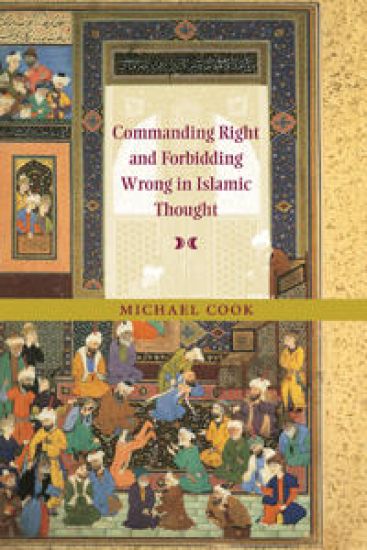
Commanding Right and Forbidding Wrong in Islamic Thought
Michael Cook
Cambridge University Press
2001
sidottu
What kind of duty do we have to try to stop other people doing wrong? The question is intelligible in just about any culture, but few of them seek to answer it in a rigorous fashion. The most striking exception is found in the Islamic tradition, where ‘commanding right’ and ‘forbidding wrong’ is a central moral tenet already mentioned in the Koran. As an historian of Islam whose research has ranged widely over space and time, Michael Cook is well placed to interpret this complex subject. His book represents the first sustained attempt to map the history of Islamic reflection on this obligation. It covers the origins of Muslim thinking about ‘forbidding wrong’, the relevant doctrinal developments over the centuries, and its significance in Sunni and Shi’ite thought today. In this way the book contributes to the understanding of Islamic thought, its relevance to contemporary Islamic politics and ideology, and raises fundamental questions for the comparative study of ethics.
’MAD3’ is the third and latest edition of the influential Manual of Archival Description, revised to take account of a decade of developments in national and international descriptive practice. Many improvements have been made as a result of wide consultation with archive professionals. The Manual remains the only comprehensive British guide to the theory and practice of listing archives held in any format, from letters, photographs and maps to electronic multimedia. New features of this edition include: ¢ additional information on national and international standards which have appeared since the last edition, including data elements mapped to the General International Standard Archival Description - ISAD(G) - which appears as an appendix ¢ coverage of developments in archives administration theory and new access delivery initiatives ¢ extensive updating of sections covering audiovisual material ¢ rewritten chapter on electronic archives ¢ updated dictionary in line with the 1999 ICA definitions ¢ additional examples of listing practice. This standard, authoritative guide to listing and cataloguing is for both generalist repositories and other organizations with archives to manage. As online cross-repository searching becomes a reality, the new edition will enable both professional archivists, records managers and other information professionals to standardize archive listing.
The Koran has constituted a remarkably strong core of identity and continuity for a religious tradition that is now in its fifteenth century. This Very Short Introduction explores the significance of the Koran both in the modern world and in traditional Muslim culture. Michael Cook provides a lucid and direct account of the Koran as codex, as scripture, as liturgy, and as the embodiment of truth, and examines its means of formation and dissemination. He also discusses issues of interpretation for certain key verses, demonstrating that fecundity of the text for readers throughout the world. ABOUT THE SERIES: The Very Short Introductions series from Oxford University Press contains hundreds of titles in almost every subject area. These pocket-sized books are the perfect way to get ahead in a new subject quickly. Our expert authors combine facts, analysis, perspective, new ideas, and enthusiasm to make interesting and challenging topics highly readable.
This authoritative guide to the principles and practice of archives management in private and public sector organizations has been substantially revised. It now provides detailed advice on changes in national and international standards and approaches, in particular ISAD(G) (International Standard Archival Description) and ISASAR(CPF) (International Standard Archive Authority Record). The new edition also includes guidance on the interpretation of the Manual of Archival Description, also published by Gower. Michael Cook takes the reader through the history, definition and function of archives and archival services, international service models, staffing and resource issues. He explains how to set up and run a records management programme, manage the interface with archival management, conduct a records survey, set up retention schedules and organize appraisal, acquisition and disposal in a way which ensures the service meets organizational and individual needs. Chapters covering the arrangement, coding and description of archival material, and the administration of its physical storage, demonstrate how efficient management facilitates the accessibility of archival information. The book concludes with chapters on computing and user issues, such as rights of access, Freedom of Information, security and data protection standards. This key reference on best practice is intended for students and lecturers in archives administration and records management, and for archives and records managers, particularly those newly qualified or seeking professional registration. Managers without formal qualifications but responsible for records or archives management, and information managers working with archivists and records managers, will find it helps to improve working methods and to run a more effective archives service within the modern information management environment.

"Ei ole muuta jumalaa kuin Jumala, ja Muhammed on hänen lähettiläänsä." Kuka oli tämä 600 -luvun alkupuolella Arabian niemimaalla vaikuttanut Muhammed, jonka viitoittamaa tietä seuraa viidennes nykyisen maailman väestöstä? Mitä me tiedämme hänen elämästään? Mihin hän uskoi? Kuinka hän koki roolinsa Jumalan ja ihmiskunnan välisessä kanssakäymisessä? Mikä oli hänen monoteistisen julistuksensa kasvupohja? Näihin kysymyksiin vastaa tässä kirjassa Princetonin yliopiston professori Michael Cook, eräs nykyajan johtavista islam-tutkijoista. Muhammedin perinteisen elämänkerran lisäksi hän esittää islamin alkuvaiheen laajemmat monoteistiset - kristilliset ja juutalaiset - puitteet ja uskaltautuu tarkastelemaan kriittisesti niin islamilaisen kuin länsimaalaisenkin historiallisen tietämyksen oikeellisuutta. Tinkimättömällä lähdekriittisellä otteella hän pureutuu siihen, mitä me todellisuudessa voimme tietää islamin profeetasta ja mitä me uskomme hänestä tietävämme.
Just over a sixth of the world's population subscribes to the Muslim belief that `there is no god but God, and Muhammad is his Messenger'. Michael Cook gives an incisive account of the man who inspired this faith, drawing on the traditional Muslim sources to describe Muhammad's life and teaching. He also attempts to stand back from this traditional picture to question how far it is historically justified.
Three short plays by Michael Cook: Tiln, Quiller and Therese's Creed. In Tiln, two old men are caught in a personal power struggle. Using a lighthouse setting, Cook explores the modern man's dilemma in an uncaring world. Cast of 2 men. In contrast, Quiller is a one-person play set in a Newfoundland outport. In this play, Cook creates a portrait of an old man assessing his empty life. Cast of 1 man. Therese's Creed is similar to Quiller in that Cook again returns to the one-person format in an outport setting, but here he explores the female role. Cast of 1 woman.
A Maritime family's tragedy, set in a raging storm. Cast of two women and five men.