Kirjailija
Michael D. Reiter
Kirjat ja teokset yhdessä paikassa: 19 kirjaa, julkaisuja vuosilta 2013–2025, suosituimpiin kuuluu Substance Abuse and the Family. Vertaile teosten hintoja ja tarkista saatavuus suomalaisista kirjakaupoista.
19 kirjaa
Kirjojen julkaisuvuodet: 2013–2025.
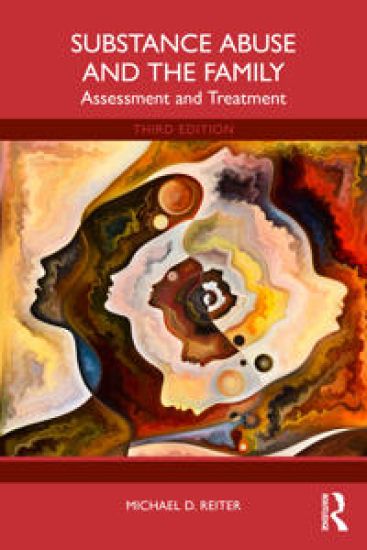
This fully updated third edition of Substance Abuse and the Family demonstrates what it means to view addiction through a systems lens by considering biology and genetics, family relationships, and larger systems. Michael D. Reiter illustrates how to examine a person’s predilection to become addicted, their social environment around substance use, the functionality of their family, and various treatment options. Chapters are organized around two sections: assessment and treatment. The first section pays attention to how the family system organizes around substance use and abuse. Here family roles, culture, and other issues such as family violence and resilience are covered. Two chapters are also included on the neuroscience and genetics of addiction. There are also chapters on roles of family members in addicted families, using genograms, and working in a culturally sensitive way, with culture-specific consideration paid to Black, Hispanic and Latin American, Asian American, and Indigenous families. A separate chapter examines issues faced by both youth and adult children of alcoholics. The second half of the book explores what a systems orientation means in practice and goes over self-help groups for individuals and families. An overview of the major family therapy theories is included, which examines intergenerational, experiential, communication approaches, strategic, systemic, and post-modern models. New to this edition is a chapter on trauma and stigma and its relationship to addictions and substance use and abuse. Each chapter has been updated with cutting-edge research, additional figures to enhance concepts, as well a case application to demonstrate and apply each chapter’s ideas. Intended for undergraduate and graduate students, as well as beginning practitioners, this text provides one of the most in-depth examinations on the topic available.


Family Therapy, second edition, is a fully updated and essential textbook that provides students and practitioners with foundational concepts, theory, vocabulary, and skills to excel as a family therapist. This book is a primer of how family therapists conceptualize the problems that people bring to therapy, utilize basic therapeutic skills to engage clients in the therapeutic process, and navigate the predominant models of family therapy. The text walks readers through the process of thinking like a family therapist, and each chapter utilizes various learning tools to help the reader further understand and apply the concepts. Chapters explore the history, context, and dominant theories of family therapy, as well as diversity, ethics, empathy, structuring sessions, and assessment. Written in a comprehensive and approachable style, this text provides readers with the foundational skills and tools essential for being a family therapist, and allows students and practitioners to work relationally and systemically with clients. The second edition widens its scope of the family therapy field with updated research and four brand-new chapters. This is an essential text for introductory family therapy courses and a comprehensive resource for postgraduate students and the next generation of family therapists.
Succeeding in Your Psychotherapy Practicum and Internship
Michael D. Reiter; Kayleigh Sabo
TAYLOR FRANCIS LTD
2024
sidottu
Succeeding in Your Psychotherapy Practicum and Internship is a book about what students can often expect from their psychotherapy internship and how they can make the most of their experience. The book is written from two perspectives—one, that of a seasoned therapist, professor, and supervisor of therapy, and two, the perspective of a registered intern therapist who just went through the internship process. Succeeding in Your Psychotherapy Practicum and Internship covers the basics of psychotherapy internships, from the beginning stages of finding and starting at an internship site, to navigating the common experiences at an internship, to reflecting on therapeutic growth and the ending of an internship, and much more. Students will come away from this book with a deep understanding of each perspective, one that will enhance their appreciation of the practicalities and possibilities of their practicum and internship experiences.
Succeeding in Your Psychotherapy Practicum and Internship
Michael D. Reiter; Kayleigh Sabo
TAYLOR FRANCIS LTD
2024
nidottu
Succeeding in Your Psychotherapy Practicum and Internship is a book about what students can often expect from their psychotherapy internship and how they can make the most of their experience. The book is written from two perspectives—one, that of a seasoned therapist, professor, and supervisor of therapy, and two, the perspective of a registered intern therapist who just went through the internship process. Succeeding in Your Psychotherapy Practicum and Internship covers the basics of psychotherapy internships, from the beginning stages of finding and starting at an internship site, to navigating the common experiences at an internship, to reflecting on therapeutic growth and the ending of an internship, and much more. Students will come away from this book with a deep understanding of each perspective, one that will enhance their appreciation of the practicalities and possibilities of their practicum and internship experiences.
This guide practically aids mental health professionals in understanding and improving their therapeutic and academic writing, demonstrating how the written word is an invaluable tool to document, assess, and promote change with those in and outside the therapy room. Exploring the various ways writing occurs in psychotherapy professions, Michael D. Reiter comprehensively covers the range of the written word, from progress notes and assessment documentation, to journaling and therapeutic letters, as well as contacting larger systems such as report writing and grant applications. Chapters are formatted to include the purpose and function of a particular type of writing before providing multiple examples so therapists can apply this in their own practice. This book aims to help all therapists, regardless of academic training or therapeutic modality, to incorporate these ideas into their work. This book is designed for mental health professionals in a variety of settings, including counselors, therapists, social workers, family therapists, and clinical psychologists. This book is useful for graduate students as well as those already in practice.
Family Therapy: The Basics provides a clear and concise overview of the field of family therapy and its foundational models. This text explores the history, skills, and theories upon which family therapy rests, highlighting the main figures, concepts, ethical principles, and methods. Focusing on the breadth of the field, readers are provided answers to some of the most important questions for potential therapists: What are the primary skills family therapists use to help families change? How do family therapists incorporate aspects of diversity into their practice? What are the major models of family therapy practice? Where is the field of family therapy headed in the future? Family Therapy: The Basics is an ideal introduction for students exploring the field of psychotherapy and how a focus on the family and the use of various family therapy theories can help shift family organizations and relationships.
This newly updated introductory textbook is designed to help students of psychotherapy and counseling at all levels build the foundational strategies, skills, and tools essential for engaging clients in a therapeutic interview, developing a specialist understanding of the varying formats and diverse settings in which these interviews occur. In this second edition, Michael D. Reiter interweaves a new framework, the Issue Cycle, to help students build, from start to finish, a foundational template for engaging clients regardless of therapeutic model. With every chapter being revised, as well as including a new chapter on the ethical relationship that occurs in psychotherapy, the book begins with laying down the context of therapy, such as its definitions, motivations, and ethics, before moving on to developing students skills of therapy, including conversing, reflecting, goal-setting, terminating sessions, and how to avoid being an ineffective therapist. In Parts 3 and 4, chapters cover the contexts of clients and therapy, such as working with children, families, and groups, and includes a special revised focus on multicultural interviewing and effective online counseling. Including several interactive elements, such as case scenarios and application exercises, an instructor’s manual with a sample syllabus, essay questions and more, students can uniquely see theory in action. Practical and accessible, this textbook shall be essential reading for students of psychotherapy and counseling, as well as training family therapists, social workers, and other mental health professionals who work directly with those dealing with psychological, behavioral, and emotional difficulties.
The Craft of Family Therapy
Salvador Minuchin; Michael D. Reiter; Charmaine Borda
Routledge
2021
sidottu
This cutting-edge second edition of The Craft of Family Therapy revisits some of Salvador Minuchin’s most famous cases, guiding trainee therapists through basic techniques and ideas while illuminating the unique voice of Minuchin as the founder of Structural Family Therapy. The book begins by teaching readers the fundamentals of family therapy through the lens of rich commentary from Salvador Minuchin on some of his most interesting cases. It then moves on to three detailed supervision transcripts from Minuchin’s former students, illustrating the struggles, fears, and insecurities that new family therapists face and how they can overcome them. In a new, ground-breaking third section, Reiter and Borda share their own lessons from Minuchin as well as expand his influential ideas, emphasizing a strength-based family therapy approach. Written in an accessible, practical style, The Craft of Family Therapy, 2nd edition draws on a wealth of fascinating case examples to bring Minuchin’s theory and experience to today’s family therapists and psychotherapists in practice and training.
The Craft of Family Therapy
Salvador Minuchin; Michael D. Reiter; Charmaine Borda
Routledge
2021
nidottu
This cutting-edge second edition of The Craft of Family Therapy revisits some of Salvador Minuchin’s most famous cases, guiding trainee therapists through basic techniques and ideas while illuminating the unique voice of Minuchin as the founder of Structural Family Therapy. The book begins by teaching readers the fundamentals of family therapy through the lens of rich commentary from Salvador Minuchin on some of his most interesting cases. It then moves on to three detailed supervision transcripts from Minuchin’s former students, illustrating the struggles, fears, and insecurities that new family therapists face and how they can overcome them. In a new, ground-breaking third section, Reiter and Borda share their own lessons from Minuchin as well as expand his influential ideas, emphasizing a strength-based family therapy approach. Written in an accessible, practical style, The Craft of Family Therapy, 2nd edition draws on a wealth of fascinating case examples to bring Minuchin’s theory and experience to today’s family therapists and psychotherapists in practice and training.
In this updated edition of Substance Abuse and the Family, Michael D. Reiter examines addiction through a family systems lens which considers a range of interconnected contexts, such as biology and genetics, family relationships, and larger systems. Chapters are organized around two sections: Assessment and Treatment. Examining how the family system organizes around substance use and abuse, the first section includes contributions on the neurobiology and genetics of addiction, as well as chapters on family diversity, issues in substance-using families, and working in a culturally sensitive way. The second half of the book explores various treatment options for individuals and families presenting with substance abuse issues, providing an overview of the major family therapy theories, and chapters on self-help groups and the process of family recovery. The second edition has many useful additions including a revision of the family diversity chapter to consider sexual and gender minorities, brand new chapters on behavioral addictions such as sex and gambling, and a chapter on ethical implications in substance abuse work with families. Additional sections include information on Multisystemic Therapy, Behavioral Couples Therapy, Motivational Interviewing, and Twelve-Step Facilitation. Each chapter now contains a case application to help demonstrate treatment strategies in practice. Intended for undergraduate and graduate students, as well as beginning practitioners, Substance Abuse and the Family, 2nd Ed. remains one of the most penetrating and in-depth examinations on the topic available.


Systems Theories for Psychotherapists explores three key theories that underpin many of the models of psychotherapy: general systems theory, natural systems theory, and language systems theory. The book presents the aesthetics (how to see and understand what is happening) and the pragmatics (what to do in the therapy room) behind each theory. It also explores how therapists can successfully conceptualize the problems that clients bring to therapy, offering a range of contemporary examples to show how each theory can be applied to practice. Starting with an introduction to systems theories, the book then delves into cybernetics, interactional systems, natural systems, constructivist theory, and social construction theory. Each chapter uses a distinctive case example to help clinicians to better understand and apply the theories to their own therapeutic setting. Woven throughout the book are three helpful learning tools: "Applying Your Knowledge," "Key Figure," and "Questions for Reflection," providing the reader with the opportunity to critically engage with each concept, consider how their own world view and preconceptions can inform their work with clients, and challenging them to apply prominent systems theories to their own practice. Systems Theories for Psychotherapists is a clear and valuable text for undergraduate and graduate students in mental health programs, including counseling, marriage and family therapy, social work and clinical psychology, as well as for all practicing clinicians.
The Craft of Family Therapy
Salvador Minuchin; Michael D. Reiter; Charmaine Borda
Routledge
2013
nidottu
Family therapy trainees are inundated with a multitude of family therapy theories. They also have difficulty shifting from an individualistic view to one of seeing interactions and systems. How do therapists hone their own methods with all of these choices? And how do they learn how to best treat families with all of the focus being taken away from their clients and redirected instead on processes? Perhaps most importantly, how can they learn through an inductive process of exploring what has occurred during the therapeutic session? Veteran therapist and founder of Structural Family Therapy, Salvador Minuchin, goes back to basics with his two co-authors Michael D. Reiter and Charmaine Borda in The Craft of Family Therapy. In this book they teach readers basic communication and family therapy skills using some of Dr. Minuchin’s most interesting and illuminating cases. Not only do readers re-learn basic techniques, such as reframing and joining, but they are treated to an in-depth commentary on each case, with Dr. Minuchin emphasizing the techniques he uses that allow him to refocus attention from the Identified Patient to the family as a whole. The book ends with three supervision transcripts from Dr. Minuchin’s students, whose commentary illuminates the struggles, fears, and insecurities that new family therapists face and how they can overcome them. Each of these chapters ends with a consultation interview that Dr. Minuchin conducted with each supervisee’s case family.