Kirjailija
Michael Davis
Kirjat ja teokset yhdessä paikassa: 48 kirjaa, julkaisuja vuosilta 1996–2027, suosituimpiin kuuluu Story Power Trio. Vertaile teosten hintoja ja tarkista saatavuus suomalaisista kirjakaupoista.
48 kirjaa
Kirjojen julkaisuvuodet: 1996–2027.
This is the story of Mike Davis raised in Lincolnshire just after World War 2 with rationing still in place to 2019. Journey through his life as a youngster living in the countryside just after the war, going into his turbulent teens in the sixties seeing bands such as the Rolling Stones, Kinks, Dave Clark Five, Status Quo, Gene Pitney, The Hollies, The Tremolo's, and many more in the exciting music revolution. Leaving school with no qualifications whatsoever, working in the meat industry, to becoming a top successful salesman for an international company that manufactured commercial catering equipment. Raised in a house full of superstition led Mike into the occult but at just the age of nineteen about to go onto drugs Mike had an encounter with the Lord Jesus that changed his life forever. Mike tells of his experiences walking with God, hearing His voice and the move of the Holy Spirit in the seventies and eighties. He shares some of the teaching that helped him along his journey and how an angel saved him from certain death before he ever knew God.
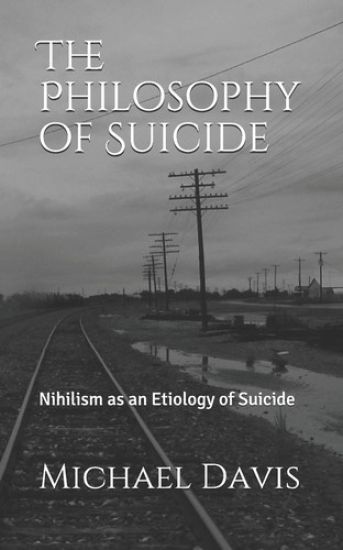
The Philosophy of Suicide: Nihilism as an Etiology of Suicide
Michael Davis
Independently Published
2019
nidottu
What if there was a philosophy so dangerous that it could kill you? That is the subject of my new eBook, The Philosophy of Suicide: Nihilism as an Etiology of Suicide. Although this is a scholarly work, you don't have to know philosophy or psychology to understand it. In fact, it is a good introduction to the topics of how suicide works psychologically, as well as what nihilism is. You'll learn about the history of nihilism and Friedrich Nietzsche. I also provide an summary of suicide pathology. Finally, I present the compelling but tragic story of a man whose philosophy of nihilism led him directly to suicide. This is unlike any book you have ever read.
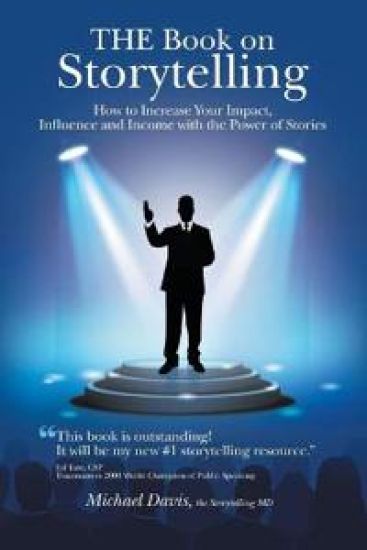
THE Book on Storytelling offers a step-by-step process that teaches you how to build one skill upon another. When you reach the last page of this book, you will have a formula that enables you to discover, develop and deliver your most powerful stories that help you: *Become better know in your industry*Advance your carerr or business faster*Increase your income*Save years of learning time*Have fun when you share your story with othersInvest in this book and become a presenter who Stands OUT every time you tell your story
These stories concern human cruelty as an overt decision, something that can be chosen or rejected in definitive moments when the stars are right.
Hacking Exposed Malware & Rootkits: Security Secrets and Solutions, Second Edition
Christopher Elisan; Michael Davis; Sean Bodmer; Aaron LeMasters
McGraw-Hill Professional
2017
nidottu
Publisher's Note: Products purchased from Third Party sellers are not guaranteed by the publisher for quality, authenticity, or access to any online entitlements included with the product. Arm yourself for the escalating war against malware and rootkitsThwart debilitating cyber-attacks and dramatically improve your organization’s security posture using the proven defense strategies in this thoroughly updated guide. Hacking Exposed™ Malware and Rootkits: Security Secrets & Solutions, Second Edition fully explains the hacker’s latest methods alongside ready-to-deploy countermeasures. Discover how to block pop-up and phishing exploits, terminate embedded code, and identify and eliminate rootkits. You will get up-to-date coverage of intrusion detection, firewall, honeynet, antivirus, and anti-rootkit technology.• Learn how malware infects, survives, and propagates across an enterprise• See how hackers develop malicious code and target vulnerable systems• Detect, neutralize, and remove user-mode and kernel-mode rootkits • Use hypervisors and honeypots to uncover and kill virtual rootkits• Defend against keylogging, redirect, click fraud, and identity theft• Block spear phishing, client-side, and embedded-code exploits• Effectively deploy the latest antivirus, pop-up blocker, and firewall software• Identify and stop malicious processes using IPS solutions
Parking Lot Art: The Coloring Book
Michael Davis
Createspace Independent Publishing Platform
2016
nidottu
New and old are combined in Fool Me Once which is about campus life, drugs and rapes. Mysterious Inlet combines a 500 year old legend with a modern day celebration.
The presidential election of 1944, which unfolded against the backdrop of the World War II, was the first since 1864-and one of only a few in all of US history-to take place while the nation was at war. After a brief primary season, the Republican Party settled upon New York governor Thomas E. Dewey, the former district attorney and popular special prosecutor of Legs Diamond and Lucky Luciano, as its nominee for president of the United States. The Democratic nominee for president, meanwhile, was the three-term incumbent, sixty-two year-old Franklin Delano Roosevelt. Sensitive to the wartime setting of the election, both Roosevelt and Dewey briefly adopted dignified and low-key electoral strategies early in their campaigns. Within a few months however, "politics as usual" returned as the campaign degenerated into a vigorously fought, chaotic, unpredictable, and highly competitive contest. While Politics as Usual is a comprehensive study of the campaign, Davis focuses attention on the loser, Dewey, and shows how he emerged as a central figure for the Republican Party. Davis examines the political landscape in the United States in the early 1940s, including the state of the two parties, and the rhetoric and strategies employed by both the Dewey and Roosevelt campaigns. He details the survival of partisanship in World War II America and the often overlooked role of Dewey-who sought to rebuild the Republican Party "to be worthy of national trust"-as party leader at such a critical time. Although Dewey fell short of victory, Dewey kept his party unified, helped steer it away from isolationist influences, and rebuilt it to fit into (and to be a relevant alternative within) the post-World War II, New Deal order.
Life isn’t easy, especially for young men growing up without a role model that offers encouragement and direction. Most of these young men never find a safe place to go for straight answers that will help them find the direction and courage to be the man they want to become. Straight Up! is filled with sound fatherly advice for a fatherless generation. It’s the kind of candid, sometimes in-your-face, straight talk that will help readers not just to get by in life but get ahead! This book contains short, simple truths that if embraced and applied can change lives! Written by a man who understands the pressures young men face today, Michael Davis challenges young men everywhere to step up and live a life that matters and make a difference in the world.
Local Control of Microvascular Perfusion
Michael Hill; Michael Davis
Morgan Claypool Publishers
2012
nidottu
Local control of microvascular perfusion refers to the ability of individual tissues to maintain a relative constancy of hemodynamics in the face of changing perfusion pressure while meeting metabolic demands appropriately. The regulation of local blood flow, or autoregulation, and its underlying mechanisms have been a subject of considerable interest for over 100 years. Particular focus has been placed on the acute interaction of myogenic (pressure-induced) and metabolic (local production of vasodilator metabolites) parameters and how they interact with flow (shear stress)-dependent and conduction-based mechanisms to produce integrated local vascular network responses (for example, as seen during reactive and functional hyperemia). This monograph discusses each of these vasoregulatory phenomena while also considering evidence for their underlying cellular mechanisms. Further, an attempt is made to integrate the information into complex in vivo situations and consider their relevance to pathophysiological situations.
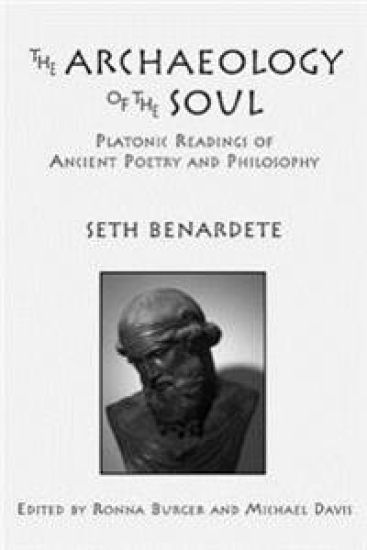
The Archaeology of the Soul – Platonic Readings in Ancient Poetry and Philosophy
Seth Benardete; Ronna Burger; Michael Davis
ST AUGUSTINE'S PRESS
2012
sidottu
The understanding of the soul in the West has been profoundly shaped by Christianity, and its influence can be seen in certain assumptions often made about the soul: that, for example, if it does exist, it is separable from the body, free, immortal, and potentially pure. The ancient Greeks, however, conceived of the soul quite differently. In this ambitious new work, Michael Davis analyzes works by Homer, Herodotus, Euripides, Plato, and Aristotle to reveal how the ancient Greeks portrayed and understood what he calls "the fully human soul." Beginning with the "Iliad", Davis lays out the tension within the soul of Achilles between immortality and life. He then turns to Aristotle's work to explore the consequences of the problem of Achilles across the whole range of the soul's activity. Moving to Herodotus and Euripides, Davis considers their shared understanding of the consequences for soul of the two extremes of culture - one rooted in stability and tradition, the other in freedom and motion - and explores how these extremes mark the limits of character. The book then turns, in the final part, to several Platonic dialogues to understand the soul's imperfection in relation to law, justice, tyranny, eros, the gods, and philosophy itself. Davis concludes with Plato's presentation of the soul of Socrates as self-aware and nontragic, even if it is necessarily alienated and divided against itself.
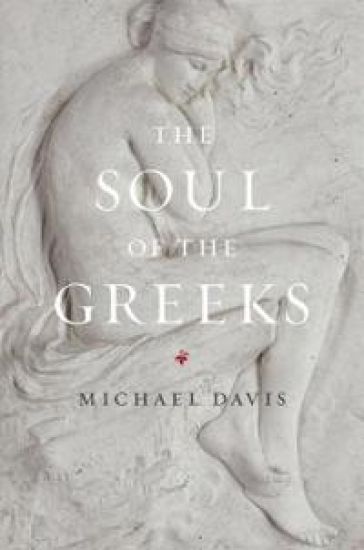
The understanding of the soul in the West has been profoundly shaped by Christianity, and its influence can be seen in certain assumptions often made about the soul: that, for example, if it does exist, it is separable from the body, free, immortal, and potentially pure. The ancient Greeks, however, conceived of the soul quite differently. In this ambitious new work, Michael Davis analyzes works by Homer, Herodotus, Euripides, Plato, and Aristotle to reveal how the ancient Greeks portrayed and understood what he calls 'the fully human soul'. Beginning with Homer's "Iliad", Davis lays out the tension within the soul of Achilles between immortality and life. He then turns to Aristotle's "De Anima" and "Nicomachean Ethics" to explore the consequences of the problem of Achilles across the whole range of the soul's activity. Moving to Herodotus and Euripides, Davis considers the former's portrayal of the two extremes of culture - one rooted in stability and tradition, the other in freedom and motion - and explores how they mark the limits of character formation. Davis then shows how Helen and Iphigeneia among the Taurians serve to provide dramatic examples of Herodotus' extreme cultures and their consequences for the soul. The book concludes with Plato's presentation of the soul of Socrates as self-aware and nontragic, even if it is necessarily alienated and divided against itself.
Up to 20 generations of several families in the Davis line. Also DNA evidence to show the variety of ancestors.
"Sesame Street" is the longest-running-and arguably most beloved- children's television program ever created. Today, it reaches some six million preschoolers weekly in the United States and countless others in 140 countries around the world. "Street Gang" is the compelling, comical, and inspiring story of a media masterpiece and pop- culture landmark. Television reporter and columnist Michael Davis - with the complete participation of Joan Ganz Cooney, one of the show's founders-unveils the idealistic personalities, decades of social and cultural change, stories of compassion and personal sacrifice, and miraculous efforts of writers, producers, directors, and puppeteers that together transformed an empty soundstage into the most recognisable block of real estate in television history.
Although the stories in Gravity operate from the perspective of male speakers, the experiences they describe are as much about women as men. Bound up in them is the assumption that everything in life depends on being solvent, employed, and generally needed. These things constitute the gravity, or the seriousness, of one's situation--that which holds a person's life together and makes it mean something.
George Eliot and Nineteenth-Century Psychology
Michael Davis
Ashgate Publishing Limited
2006
sidottu
In his study of Eliot as a psychological novelist, Michael Davis examines Eliot's writings in the context of a large volume of nineteenth-century scientific writing about the mind. Eliot, Davis argues, manipulated scientific language in often subversive ways to propose a vision of mind as both fundamentally connected to the external world and radically isolated from and independent of that world. In showing the alignments between Eliot's work and the formulations of such key thinkers as Herbert Spencer, Charles Darwin, T. H. Huxley, and G. H. Lewes, Davis reveals how Eliot responds both creatively and critically to contemporary theories of mind, as she explores such fundamental issues as the mind/body relationship, the mind in evolutionary theory, the significance of reason and emotion, and consciousness. Davis also points to important parallels between Eliot's work and new and future developments in psychology, particularly in the work of William James. In Middlemarch, for example, Eliot demonstrates more clearly than either Lewes or James the way the conscious self is shaped by language. Davis concludes by showing that the complexity of mind, which Eliot expresses through her imaginative use of scientific language, takes on a potentially theological significance. His book suggests a new trajectory for scholars exploring George Eliot's representations of the self in the context of science, society, and religious faith.
Aristotle's much-translated On Poetics is the earliest and arguably the best treatment that we possess of tragedy as a literary form. Seth Benardete and Michael Davis have translated it anew with a view to rendering Aristotle’s text into English as precisely as possible. A literal translation has long been needed, for in order to excavate the argument of On Poetics one has to attend not simply to what is said on the surface but also to the various puzzles, questions, and peculiarities that emerge only on the level of how Aristotle says what he says and thereby leads one to revise and deepen one’s initial understanding of the intent of the argument. As On Poetics is about how tragedy ought to be composed, it should not be surprising that it turns out to be a rather artful piece of literature in its own right. Benardete and Davis supplement their edition of On Poetics with extensive notes and appendices. They explain nuances of the original that elude translation, and they provide translations of passages found elsewhere in Aristotle’s works as well as in those of other ancient authors that prove useful in thinking through the argument of On Poetics both in terms of its treatment of tragedy and in terms of its broader concerns. By following the connections Aristotle plots between On Poetics and his other works, readers will be in a position to appreciate the centrality of this little book for his thought on the whole. In an introduction that sketches the overall interpretation of On Poetics presented in his The Poetry of Philosophy (St. Augustine’s Press, 1999), Davis argues that, while On Poetics is certainly about tragedy, it has a further concern extending beyond poetry to the very structure of the human soul in its relation to what is, and that Aristotle reveals in the form of his argument the true character of human action.