Kirjojen hintavertailu – 12 903 742 kirjaa ja 27 kauppaa

Kirjailija

Michael Dear

Kirjat ja teokset yhdessä paikassa: 6 kirjaa, julkaisuja vuosilta 2013–2023, suosituimpiin kuuluu State Apparatus. Vertaile teosten hintoja ja tarkista saatavuus suomalaisista kirjakaupoista.

6 kirjaa

Kirjojen julkaisuvuodet: 2013–2023.

State Apparatus

State Apparatus

Gordon L. Clark; Michael Dear

TAYLOR FRANCIS LTD
2023
nidottu
Originally published in 1984, State Apparatus contributes to the debate on the theory of the state through posing questions regarding the state’s form, function, and apparatus. The book begins by setting out the theoretical and methodological problems and reviewing the various Conservative, Liberal and Marxist theories in light of these. It discusses state activity, using specific case studies to clearly illustrate key points, such as the development of welfare systems in North America and Western Europe. It also explores the use of language under the state, the role of the legal apparatus within a capitalist system, and the "local state". The book concludes with a discussion of democracy and the crisis of legitimacy, and the issue of justice and the state. State Apparatus is a detailed and comprehensive text, ideal for those with an interest in the history, theory, form, and function of the state.

Border Witness

Border Witness

Michael Dear

University of California Press
2023
pokkari
What a century of border films teaches about the real and imagined worlds of the US-Mexico borderlands—and how this understanding helps build better relations across boundaries. Border Witness is an account of cultural collision and fusion between Mexico and the United States, as seen on the ground and in films from the past hundred years. Blending film studies with political and cultural geography, Michael Dear investigates the making of cross-border identity and community in the territories between two nations. Border Witness introduces a new "border film" genre just now entering its golden age. A geographer and activist, Dear adopts an accessible and engaged perspective, combining the stories told by these films with insights drawn from his own decades-long research and travel. From early silent films to virtual reality, and from revolution to the present global crisis, border films provide fresh evidence for real and imagined politics and for envisioning future transborder architectures carved from in-between spaces. In an era of global geopolitics that favors walls and war over diplomacy, Dear's insights have relevance for borders around the world.
Border Witness

Border Witness

Michael Dear

University of California Press
2023
sidottu
What a century of border films teaches about the real and imagined worlds of the US-Mexico borderlands—and how this understanding helps build better relations across boundaries. Border Witness is an account of cultural collision and fusion between Mexico and the United States, as seen on the ground and in films from the past hundred years. Blending film studies with political and cultural geography, Michael Dear investigates the making of cross-border identity and community in the territories between two nations. Border Witness introduces a new "border film" genre just now entering its golden age. A geographer and activist, Dear adopts an accessible and engaged perspective, combining the stories told by these films with insights drawn from his own decades-long research and travel. From early silent films to virtual reality, and from revolution to the present global crisis, border films provide fresh evidence for real and imagined politics and for envisioning future transborder architectures carved from in-between spaces. In an era of global geopolitics that favors walls and war over diplomacy, Dear's insights have relevance for borders around the world.
State Apparatus

State Apparatus

Gordon L. Clark; Michael Dear

Routledge
2020
sidottu
Originally published in 1984, State Apparatus contributes to the debate on the theory of the state through posing questions regarding the state’s form, function, and apparatus. The book begins by setting out the theoretical and methodological problems and reviewing the various Conservative, Liberal and Marxist theories in light of these. It discusses state activity, using specific case studies to clearly illustrate key points, such as the development of welfare systems in North America and Western Europe. It also explores the use of language under the state, the role of the legal apparatus within a capitalist system, and the "local state". The book concludes with a discussion of democracy and the crisis of legitimacy, and the issue of justice and the state. State Apparatus is a detailed and comprehensive text, ideal for those with an interest in the history, theory, form, and function of the state.

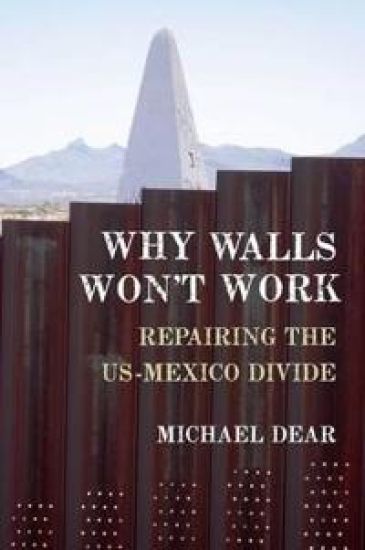
Why Walls Won't Work

Why Walls Won't Work

Michael Dear

Oxford University Press Inc
2015
nidottu
When thinking about the border separating the United States from Mexico, what typically comes to mind is an unwelcoming zone with violent, poverty-ridden towns, cities, and maquiladoras on one side and an increasingly militarized network of barriers and surveillance systems on the other. It was not always this way. In fact, from the end of Mexican-American War until the late twentieth century, the border was a very porous and loosely regulated region. In this sweeping account of life within the United States-Mexican border zone, acclaimed urbanist and geographer Michael Dear traces the border's long history of cultural interaction, from exchanges between the region's numerous Mesoamerican tribes onwards. Once Mexican and American settlers met at the Rio Grande and the southwest in the nineteenth century, new forms of interaction evolved. But as Dear warns in his bracing study, this vibrant zone of cultural and social amalgamation is in danger of fading away because of highly restrictive American policies and the violence along Mexico's side of the border. As he explains through analyses of the U. S. border security complex and the emerging Mexican narco-state, the very existence of the "third nation" occupied by both Americans and Mexicans is under serious threat. But through a series of evocative portraits of contemporary border communities, he shows that the potential for revitalizing this in-between nation still remains. Combining a broad historical perspective and a commanding overview of present-day problems, Why Walls Won't Work represents a major intellectual foray into one of the most hotly contested political issues of our era.
Why Walls Won't Work

Why Walls Won't Work

Michael Dear

Oxford University Press Inc
2013
sidottu
Today, when one thinks of the border separating the United States from Mexico, what typically comes to mind is a mutually unwelcoming zone, with violent, poverty-ridden towns, cities, and maquiladoras on one side and an increasingly militarized network of barriers and surveillance systems on the other. It was not always this way. In fact, from the end of Mexican-American War until the late twentieth century, the border was a very porous and loosely regulated region. In this sweeping account of life within the United States-Mexican border zone, Michael Dear, eminent scholar and co-founder of the "L. A. School" of urban theory, traces the border's long history of cultural interaction, beginning with the numerous Mesoamerican tribes of the region. Once Mexican and American settlers reached the Rio Grande and the desert southwest in the nineteenth century, new forms of interaction evolved. But as Dear warns in his bracing study, this vibrant zone of cultural and social amalgamation is in danger of fading away because of highly restrictive American policies and the relentless violence along Mexico's side of the border. Through a series of evocative portraits of contemporary border communities, he shows that the 'third space' occupied by both Americans and Mexicans still exists, and the potential for reviving it remains. Yet, Dear also explains through analyses of the U. S. "border security complex" and the emerging Mexican "Narco-state" why it is in danger of extinction. Combining a broad historical perspective and a commanding overview of present-day problems, Why Walls Won't Work represents a major intellectual intervention into one of the most hotly contested political issues of our era.