
Kirjojen hintavertailu – 12 859 819 kirjaa ja 27 kauppaa

Kirjailija

Michael Di Francesco

Kirjat ja teokset yhdessä paikassa: 2 kirjaa, julkaisuja vuosilta 2016–2018, suosituimpiin kuuluu Balancing Control and Flexibility in Public Budgeting. Vertaile teosten hintoja ja tarkista saatavuus suomalaisista kirjakaupoista.

2 kirjaa

Kirjojen julkaisuvuodet: 2016–2018.

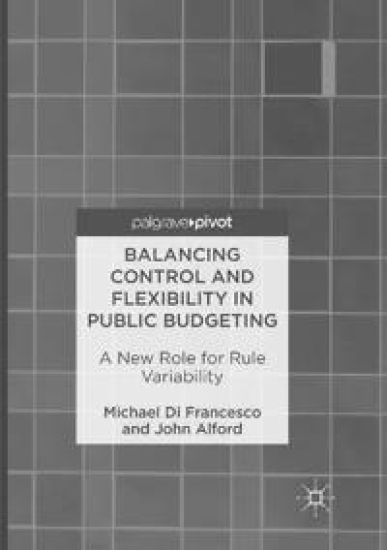
Balancing Control and Flexibility in Public Budgeting

Balancing Control and Flexibility in Public Budgeting

Michael Di Francesco; John Alford

Springer Verlag, Singapore
2018
nidottu
This work explores how reshaping budget rules and how they are applied presents a preferred means of public sector budgeting, rather than simply implementing fewer rules. Through enhanced approaches to resource flexibility, government entities can ensure that public money is used appropriately while achieving the desired results. The authors identify public budgeting practices that inhibit responses to complex problems and examine how rule modification can lead to expanded budget flexibility. Through a nuanced understanding of the factors underlying conventional budget control, the authors use budget reforms in Australia to show the limits of rule modification and propose "rule variability" as a better means of recalibrating central control and situational flexibility. Here, policy makers and public management academics will find a source that surveys emerging ways of reconciling control and flexibility in the public sector.iv>
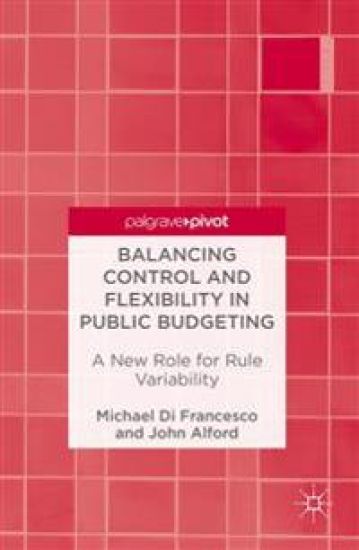
Balancing Control and Flexibility in Public Budgeting

Balancing Control and Flexibility in Public Budgeting

Michael Di Francesco; John Alford

Springer Verlag, Singapore
2016
sidottu
This work explores how reshaping budget rules and how they are applied presents a preferred means of public sector budgeting, rather than simply implementing fewer rules. Through enhanced approaches to resource flexibility, government entities can ensure that public money is used appropriately while achieving the desired results. The authors identify public budgeting practices that inhibit responses to complex problems and examine how rule modification can lead to expanded budget flexibility. Through a nuanced understanding of the factors underlying conventional budget control, the authors use budget reforms in Australia to show the limits of rule modification and propose "rule variability" as a better means of recalibrating central control and situational flexibility. Here, policy makers and public management academics will find a source that surveys emerging ways of reconciling control and flexibility in the public sector.iv>