Kirjojen hintavertailu – 12 859 828 kirjaa ja 27 kauppaa
Kirjailija
Michael Donnelly
Kirjat ja teokset yhdessä paikassa: 9 kirjaa, julkaisuja vuosilta 1998–2026, suosituimpiin kuuluu The Borders Within. Vertaile teosten hintoja ja tarkista saatavuus suomalaisista kirjakaupoista.
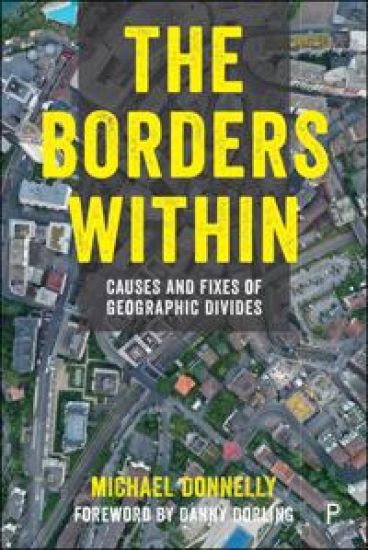
Geographic divisions that exist internally within countries – ‘the borders within’ – can be seen in how much people earn and levels of economic growth, as well as in health and educational outcomes. With fresh thinking, this book explores what lies beneath these geographic divisions and what maintains them. Its novel framework shows how different social class groups derive radically different meanings from place that heighten geographic divisions. Drawing on research with over 200 young people across 17 different UK localities, this book challenges orthodox policy understandings of regional development, putting forward an alternative starting point for how we address borders within countries.
Geographic divisions that exist internally within countries – ‘the borders within’ – can be seen in how much people earn and levels of economic growth, as well as in health and educational outcomes. With fresh thinking, this book explores what lies beneath these geographic divisions and what maintains them. Its novel framework shows how different social class groups derive radically different meanings from place that heighten geographic divisions. Drawing on research with over 200 young people across 17 different UK localities, this book challenges orthodox policy understandings of regional development, putting forward an alternative starting point for how we address borders within countries.
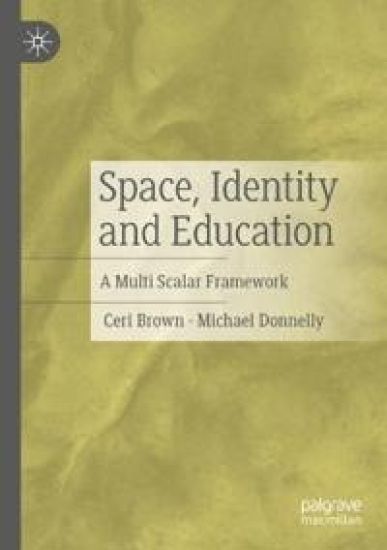
This book details an innovative multi-scalar framework to examine the intersection of spatial levels in shaping social justice issues in education. Including an examination of key dimensions such as geographic divisions (between and within countries), school design, online learning, home-schooling, and student mobility, the framework is applied to analyse the interrelation between space, identity, and education. The authors reveal how this novel integration of scales is essential for a more comprehensive and probing understanding of educational inequalities. As an example of theoretical interdisciplinarity mobilised to tackle the urgent issues of our time, the twin dimensions of space and identity, discussed at multi-scalar levels, provides an invaluable theoretical resource for scholars and students of education, sociology and geography.
This book is about Freedom of Speech and public discourse in the United States. Freedom of Speech is a major component of the cultural context in which we live, think, work, and write, generally revered as the foundation of true democracy. But the issue has a great deal more to do with social norms rooted in a web of cultural assumptions about the function of rhetoric in social organization generally, and in a democratic society specifically. The dominant, liberal notion of free speech in the United States, assumed to be self-evidently true, is, in fact, a particular historical and cultural formation, rooted in Enlightenment philosophies and dependent on a collection of false narratives about the founding of the country, the role of speech and media in its development, and the relationship between capitalism and democracy. Most importantly, this notion of freedom of speech relies on a warped sense of the function of rhetoric in democratic social organization. By privileging individual expression, at the expense of democratic deliberation, the liberal notion of free speech functions largely to suppress rather than promote meaningful public discussion and debate, and works to sustain unequal relations of power. The presumed democratization of the public sphere, via the Internet, raises more questions than it answers—who has access and who doesn’t, who commands attention and why, and what sorts of effects such expression actually has. We need to think a great deal more carefully about the values subsumed and ignored in an uncritical attachment to a particular version of the public sphere. This book seeks to illuminate the ways in which cultural framing diminishes the complexity of free speech and sublimates a range of value-choices. A more fully democratic society requires a more critical view of freedom of speech.
This book is about Freedom of Speech and public discourse in the United States. Freedom of Speech is a major component of the cultural context in which we live, think, work, and write, generally revered as the foundation of true democracy. But the issue has a great deal more to do with social norms rooted in a web of cultural assumptions about the function of rhetoric in social organization generally, and in a democratic society specifically. The dominant, liberal notion of free speech in the United States, assumed to be self-evidently true, is, in fact, a particular historical and cultural formation, rooted in Enlightenment philosophies and dependent on a collection of false narratives about the founding of the country, the role of speech and media in its development, and the relationship between capitalism and democracy. Most importantly, this notion of freedom of speech relies on a warped sense of the function of rhetoric in democratic social organization. By privileging individual expression, at the expense of democratic deliberation, the liberal notion of free speech functions largely to suppress rather than promote meaningful public discussion and debate, and works to sustain unequal relations of power. The presumed democratization of the public sphere, via the Internet, raises more questions than it answers—who has access and who doesn’t, who commands attention and why, and what sorts of effects such expression actually has. We need to think a great deal more carefully about the values subsumed and ignored in an uncritical attachment to a particular version of the public sphere. This book seeks to illuminate the ways in which cultural framing diminishes the complexity of free speech and sublimates a range of value-choices. A more fully democratic society requires a more critical view of freedom of speech.
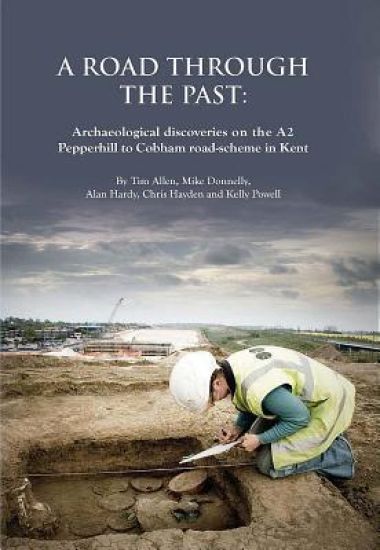
Excavations along the new road line have revealed nearly 6000 years of human activity, from a massive marker post erected by early Neolithic farmers at the head of a dry valley to a bizarre burial of several different animals dating to the sixteenth century AD. Prehistoric discoveries include two enclosures of the middle Bronze Age, both associated with some of the earliest cobbled roads in Kent, a collection of Iron Age storage pits rich in diverse deliberate offerings, and the emergence of a nucleated hamlet in the middle Iron Age. Most exciting were rich cremation burials of the late Iron Age and early Roman periods, probably successive generations of a local family, whose rise to prominence coincides with the growth of the cult centre at Springhead nearby. The metal vessels include types new to Britain, the pottery stamps suggest the movement of continental potters to Kent, and one grave has the clearest evidence of furniture yet found from early Roman Britain. Medieval settlements of the late 11th-14th centuries mirror the renewed importance of Watling Street after the Norman conquest, and its eventual return to obscurity due to competition from the ferry from London to Gravesend.
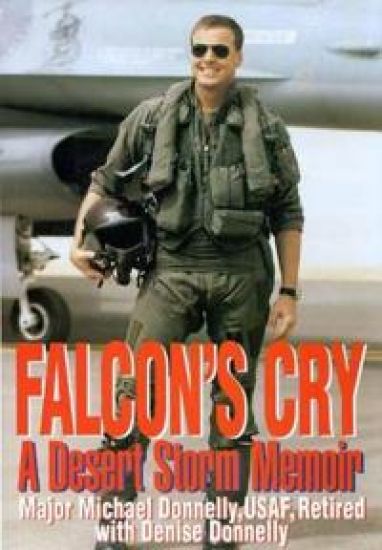
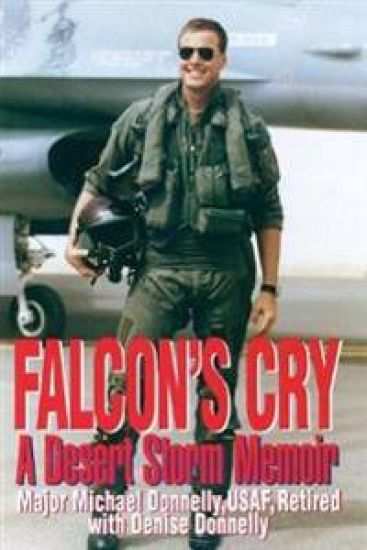
When Major Michael Donnelly was instructing his U. S. Air Force student pilots, he used to tell them three things: Timing is everything; it's nice to be lucky; and there is no justice. Highly decorated fighter pilot, proud young patriot, loyal friend with a mischievous sense of humor, loving husband and father of two, he could not have imagined the tragic meaning those words would assume just a few years after his tour of duty in Desert Storm. In 1996 Major Donnelly was diagnosed with ALS, Lou Gehrig's Disease, at the unusually young age of 35; the onset of this illness marked the beginning of a kind of torture beyond the scope of even the most rigorous military survival training. Betrayed by his body, eventually paralyzed and confined to a wheelchair, he experienced another betrayal perhaps even more difficult to comprehend—betrayal by his country. For despite the fact that over 110,000 Desert Storm veterans are sick, many dying of mysterious cancers and neurological diseases, including more than ten times the normal incidence of ALS—and despite all evidence pointing to U. S. troops having been dosed by low levels of Iraqi nerve agents and exposed to chemical weapons' fallout—the Pentagon adamantly denies any connection between their illnesses and their service in the Gulf War. Falcon's Cry: A Desert Storm Memoir, Michael Donnelly's unforgettable story, is his courageous attempt to unearth the truth and force an acknowledgment of that truth by the government he and his fellow veterans defended with their lives. Flying 44 fighter jet combat missions in a war fought on an all-or-nothing scale was thrilling for Michael Donnelly. When the war was won, he and his country rejoiced in the knowledge that, unlike in Vietnam, America had gotten it right in the Persian Gulf. Less than a decade later, the world is learning what veterans and their families have known since Desert Storm—we did not get it right at all. Saddam Hussein is still terrorizing a large portion of the globe. Moreover, we did not learn the lesson of Agent Orange which the Department of Defense denied for decades was the cause of early deaths and birth defects among Vietnam veterans and their families. Yet, thanks largely to the testimony of the author before the House of Representatives in 1997, a first step has been taken toward justice for the tens of thousands of Desert Storm veterans who are suffering virtually in isolation, many without any medical or disability benefits. Major Donnelly believes the truth about Gulf War Illnesses will be uncovered by studies funded in the recently passed Omnibus Appropriations bill, as well as through stories like his own, and he fervently hopes that America can, at last, get it right.
When Major Michael Donnelly was instructing his U. S. Air Force student pilots, he used to tell them three things: Timing is everything; it's nice to be lucky; and there is no justice. Highly decorated fighter pilot, proud young patriot, loyal friend with a mischievous sense of humor, loving husband and father of two, he could not have imagined the tragic meaning those words would assume just a few years after his tour of duty in Desert Storm. In 1996 Major Donnelly was diagnosed with ALS, Lou Gehrig's Disease, at the unusually young age of 35; the onset of this illness marked the beginning of a kind of torture beyond the scope of even the most rigorous military survival training. Betrayed by his body, eventually paralyzed and confined to a wheelchair, he experienced another betrayal perhaps even more difficult to comprehend—betrayal by his country. For despite the fact that over 110,000 Desert Storm veterans are sick, many dying of mysterious cancers and neurological diseases, including more than ten times the normal incidence of ALS—and despite all evidence pointing to U. S. troops having been dosed by low levels of Iraqi nerve agents and exposed to chemical weapons' fallout—the Pentagon adamantly denies any connection between their illnesses and their service in the Gulf War. Falcon's Cry: A Desert Storm Memoir, Michael Donnelly's unforgettable story, is his courageous attempt to unearth the truth and force an acknowledgment of that truth by the government he and his fellow veterans defended with their lives. Flying 44 fighter jet combat missions in a war fought on an all-or-nothing scale was thrilling for Michael Donnelly. When the war was won, he and his country rejoiced in the knowledge that, unlike in Vietnam, America had gotten it right in the Persian Gulf. Less than a decade later, the world is learning what veterans and their families have known since Desert Storm—we did not get it right at all. Saddam Hussein is still terrorizing a large portion of the globe. Moreover, we did not learn the lesson of Agent Orange which the Department of Defense denied for decades was the cause of early deaths and birth defects among Vietnam veterans and their families. Yet, thanks largely to the testimony of the author before the House of Representatives in 1997, a first step has been taken toward justice for the tens of thousands of Desert Storm veterans who are suffering virtually in isolation, many without any medical or disability benefits. Major Donnelly believes the truth about Gulf War Illnesses will be uncovered by studies funded in the recently passed Omnibus Appropriations bill, as well as through stories like his own, and he fervently hopes that America can, at last, get it right.