Kirjojen hintavertailu – 12 859 829 kirjaa ja 27 kauppaa

Kirjailija

Michael Dummett

Kirjat ja teokset yhdessä paikassa: 25 kirjaa, julkaisuja vuosilta 1981–2025, suosituimpiin kuuluu Elements of Intuitionism. Vertaile teosten hintoja ja tarkista saatavuus suomalaisista kirjakaupoista.

25 kirjaa

Kirjojen julkaisuvuodet: 1981–2025.

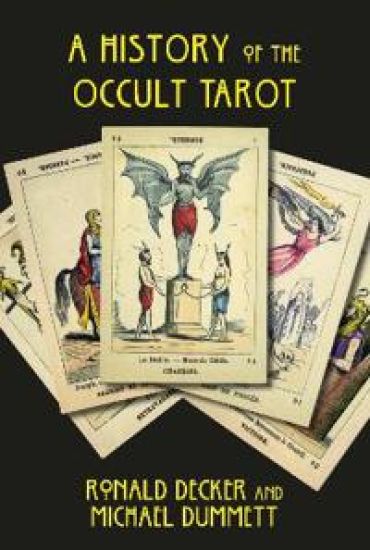
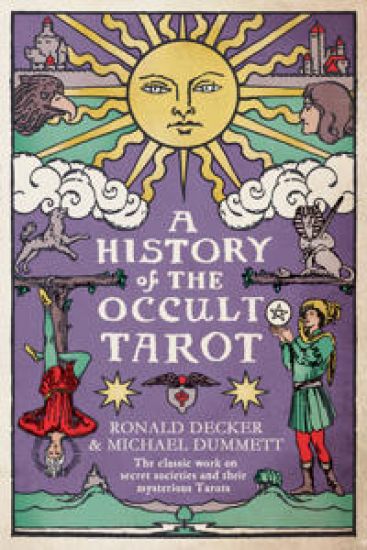
A History of the Occult Tarot

A History of the Occult Tarot

Ronald Decker; Michael Dummett

Duckworth Books
2025
nidottu

Halvin toimitettuna 23,60 €

When the Tarot was invented in Italy during the early fifteenth century, it was simply a pack of cards used for playing games, but today the cards are used throughout the world and not only for fortune telling – for true believers they are the key to secret knowledge and the meaning of life. A History of the Occult Tarot is the classic work on the history of the Tarot deck and its use in occult circles. Decker and Dummett examine how the Tarot became the favoured divination tool of occultists from the late nineteenth century – a bridge to the spirit world, a map of the unconscious. From Theosophical to Aleister Crowley to the Order of the Golden Dawn and P. D. Ouspensky, this compelling survey of the Tarot's history describes the many fascinating decks imagined over time as well as the secret histories of the mystics who devised them.

On Immigration and Refugees

On Immigration and Refugees

Michael Dummett

TAYLOR FRANCIS LTD
2024
nidottu
The philosopher Michael Dummett was one of the sharpest and most prominent commentators and campaigners for the fair treatment of immigrants and refugees in Britain and Europe. On Immigration and Refugees was the only book he wrote on the topic and among one of the most eloquent and important reflections on the subject to have been published in many years. Exploring the confused and often highly unjust and racist thinking about immigration, Dummett questions the principles and justifications governing state policies, pointing out that they often conflict with the rights of refugees as laid down by the Geneva Convention. With compelling and often moving examples, he points a new way forward for humane thinking and practice about a problem we cannot afford to ignore. This Routledge Classics edition includes a new Foreword by Sarah Fine.
On Immigration and Refugees

On Immigration and Refugees

Michael Dummett

TAYLOR FRANCIS LTD
2024
sidottu
The philosopher Michael Dummett was one of the sharpest and most prominent commentators and campaigners for the fair treatment of immigrants and refugees in Britain and Europe. On Immigration and Refugees was the only book he wrote on the topic and among one of the most eloquent and important reflections on the subject to have been published in many years. Exploring the confused and often highly unjust and racist thinking about immigration, Dummett questions the principles and justifications governing state policies, pointing out that they often conflict with the rights of refugees as laid down by the Geneva Convention. With compelling and often moving examples, he points a new way forward for humane thinking and practice about a problem we cannot afford to ignore. This Routledge Classics edition includes a new Foreword by Sarah Fine.
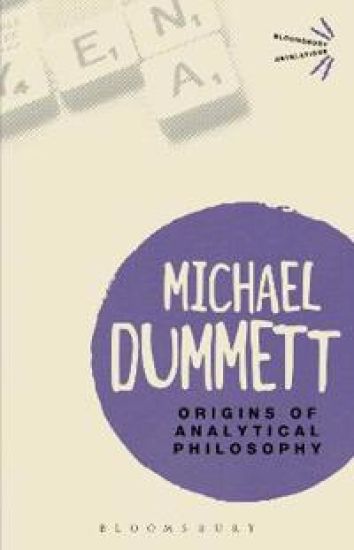
Origins of Analytical Philosophy

Origins of Analytical Philosophy

Michael Dummett

Bloomsbury Academic
2014
nidottu
The twentieth century was marked by the triumph of the 'analytic' tradition of philosophy, which remains to this day the dominant mainstream of philosophical thought and teaching. In his landmark reflection and exploration of the origins of analytic philosophy, Michael Dummett vividly explores the roots of that tradition in the writings of such German and Austrian thinkers as Frege, Husserl and Wittgenstein. Disputing the notion of analytic philosophy as an 'Anglo-American' tradition, Dummett finds a shared well-spring in the works of the analytic and phenomenological traditions. Now available in the Bloomsbury Revelations series, Origins of Analytical Philosophy remains a vital read for anyone interested in the development of twentieth century thought and the history of philosophy.
A History of the Occult Tarot

A History of the Occult Tarot

Ronald Decker; Michael Dummett

Duckworth
2013
nidottu
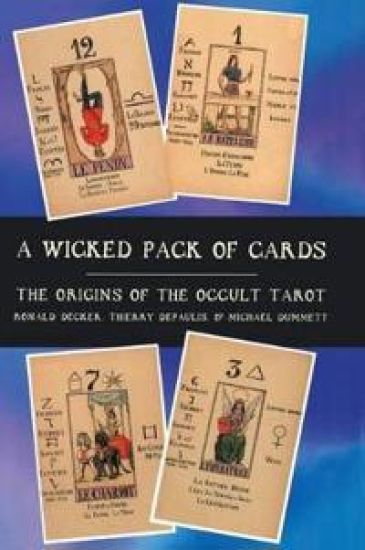
When the Tarot was invented in Italy during the early fifteenth century, it was simply a pack of cards used for playing games, but today the cards are used throughout the world and not only for fortune telling – for true believers they are the key to secret knowledge and the meaning of life. A History of the Occult Tarot is the classic work on the history of the Tarot deck and its use in occult circles. Decker and Dummett examine how the Tarot became the favoured divination tool of occultists from the late nineteenth century – a bridge to the spirit world, a map of the unconscious. From Theosophical to Aleister Crowley to the Order of the Golden Dawn and P. D. Ouspensky, this compelling survey of the Tarot's history describes the many fascinating decks imagined over time as well as the secret histories of the mystics who devised them.

The Nature and Future of Philosophy

The Nature and Future of Philosophy

Michael Dummett

Columbia University Press
2010
pokkari
Philosophy is a discipline that makes no observations, conducts no experiments, and needs no input from experience. It is an armchair subject, requiring only thought. Yet that thought can advance knowledge in unexpected directions, not only through the discovery of new facts but also through the enhancement of what we already know. Philosophy can clarify our vision of the world and provide exciting ways to interpret it. Of course, philosophy's unified purpose hasn't kept the discipline from splintering into warring camps. Departments all over the world are divided among analytical and continental schools, Heidegger, Hegel, and other major thinkers, challenging the growth of the discipline and obscuring its relevance and intent. Having spent decades teaching in American, Asian, African, and European universities, Michael Dummett has felt firsthand the fractured state of contemporary practice and the urgent need for reconciliation. Setting forth a proposal for renewal and reengagement, Dummett begins with the nature of philosophical inquiry as it has developed for centuries, especially its exceptional openness and perspective-which has, ironically, led to our present crisis. He discusses philosophy in relation to science, religion, morality, language, and meaning and recommends avenues for healing around a renewed investigation of mind, language, and thought. Employing his trademark frankness and accessibility, Dummett asks philosophers to resolve theoretical difference and reclaim the vital work of their practice.
The Nature and Future of Philosophy

The Nature and Future of Philosophy

Michael Dummett

Columbia University Press
2010
sidottu
Philosophy is a discipline that makes no observations, conducts no experiments, and needs no input from experience. It is an armchair subject, requiring only thought. Yet that thought can advance knowledge in unexpected directions, not only through the discovery of new facts but also through the enhancement of what we already know. Philosophy can clarify our vision of the world and provide exciting ways to interpret it. Of course, philosophy's unified purpose hasn't kept the discipline from splintering into warring camps. Departments all over the world are divided among analytical and continental schools, Heidegger, Hegel, and other major thinkers, challenging the growth of the discipline and obscuring its relevance and intent. Having spent decades teaching in American, Asian, African, and European universities, Michael Dummett has felt firsthand the fractured state of contemporary practice and the urgent need for reconciliation. Setting forth a proposal for renewal and reengagement, Dummett begins with the nature of philosophical inquiry as it has developed for centuries, especially its exceptional openness and perspective-which has, ironically, led to our present crisis. He discusses philosophy in relation to science, religion, morality, language, and meaning and recommends avenues for healing around a renewed investigation of mind, language, and thought. Employing his trademark frankness and accessibility, Dummett asks philosophers to resolve theoretical difference and reclaim the vital work of their practice.
Thought and Reality

Thought and Reality

Michael Dummett

Oxford University Press
2008
nidottu
In this short, lucid, rich book Michael Dummett sets out his views about some of the deepest questions in philosophy. The fundamental question of metaphysics is: what does reality consist of? To answer this, Dummett holds, it is necessary to say what kinds of fact obtain, and what constitutes their holding good. Facts correspond with true propositions, or true thoughts: when we know which propositions, or thoughts, in general, are true, we shall know what facts there are in general. Dummett considers the relation between metaphysics, our conception of the constitution of reality, and semantics, the theory that explains how statements are determined as true or as false in terms of their composition out of their constituent expressions. He investigates the two concepts on which the bridge that connects semantics to metaphysics rests, meaning and truth, and the role of justification in a theory of meaning. He then examines the special semantic and metaphysical issues that arise with relation to time and tense. On this basis Dummett puts forward his controversial view of reality as indeterminate: there may be no fact of the matter about whether an object does or does not have a given property. We have to relinquish our deep-held realist understanding of language, the illusion that we know what it is for any proposition that we can frame to be true independently of our having any means of recognizing its truth, and accept that truth depends on our capacity to apprehend it. Dummett concludes with a chapter about God.
Thought and Reality

Thought and Reality

Michael Dummett

Clarendon Press
2006
sidottu
In this short, lucid, rich book Michael Dummett sets out his views about some of the deepest questions in philosophy. The fundamental question of metaphysics is: what does reality consist of? To answer this, Dummett holds, it is necessary to say what kinds of fact obtain, and what constitutes their holding good. Facts correspond with true propositions, or true thoughts: when we know which propositions, or thoughts, in general, are true, we shall know what facts there are in general. Dummett considers the relation between metaphysics, our conception of the constitution of reality, and semantics, the theory that explains how statements are determined as true or as false in terms of their composition out of their constituent expressions. He investigates the two concepts on which the bridge that connects semantics to metaphysics rests, meaning and truth, and the role of justification in a theory of meaning. He then examines the special semantic and metaphysical issues that arise with relation to time and tense. On this basis Dummett puts forward his controversial view of reality as indeterminate: there may be no fact of the matter about whether an object does or does not have a given property. We have to relinquish our deep-held realist understanding of language, the illusion that we know what it is for any proposition that we can frame to be true independently of our having any means of recognizing its truth, and accept that truth depends on our capacity to apprehend it. Dummett concludes with a chapter about God.
Truth and the Past

Truth and the Past

Michael Dummett; Akeel Bilgrami

Columbia University Press
2005
pokkari
Michael Dummett's three John Dewey Lectures-"The Concept of Truth," "Statements About the Past," and "The Metaphysics of Time"-were delivered at Columbia University in the spring of 2002. Revised and expanded, the lectures are presented here along with two new essays by Dummett, "Truth: Deniers and Defenders" and "The Indispensability of the Concept of Truth." In Truth and the Past, Dummett clarifies his current positions on the metaphysical issue of realism and the philosophy of language. He is best known as a proponent of antirealism, which loosely characterizes truth as what we are capable of knowing. The events of the past and statements about them are critical tests of an antirealist position. These essays continue and significantly contribute to Dummett's work.
Elements of Intuitionism

Elements of Intuitionism

Michael Dummett

Clarendon Press
2000
sidottu
This is a long-awaited new edition of one of the best known Oxford Logic Guides. The book gives an informal but thorough introduction to intuitionistic mathematics, leading the reader gently through the fundamental mathematical and philosophical concepts. The treatment of various topics has been completely revised for this second edition. Brouwer's proof of the Bar Theorem has been reworked, the account of valuation systems simplified, and the treatment of generalized Beth Trees and the completeness of intuitionistic first-order logic rewritten. Readers are assumed to have some knowledge of classical formal logic and a general awareness of the history of intuitionism. From reviews of the first edition: This excellent book can be recommended to the student of mathematics or philosophy wishing to get a comprehensive and reliable introduction to modern intuitionism. Zentralblatt für Mathematik The relevance of this book extends well beyond the confines of the philosophy of mathematics, right to the centre of debates in the philosophy of language. Philosophical Books . . . a valuable and original contribution to the philosophy of mathematics. Journal of Symbolic Logic
Grammar and Style

Grammar and Style

Michael Dummett

Bristol Classical Press
1997
pokkari
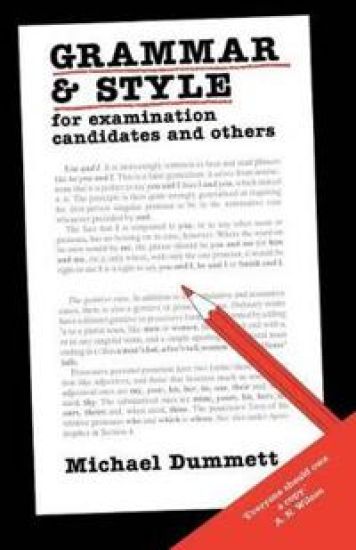
A practical handbook encouraging writers to become more consciously aware of the way in which they employ words, drawing attention to points of grammar and offering hints on various styles of writing.
The Seas of Language

The Seas of Language

Michael Dummett

Clarendon Press
1996
nidottu
Michael Dummett is one of the most important and influential of contemporary philosophers; this book covers his work in the closely related fields of metaphysics and the philosophy of language.
Frege and Other Philosophers

Frege and Other Philosophers

Michael Dummett

Clarendon Press
1996
nidottu
The ideas of the German philosopher and mathematician Gottlob Frege lie at the root of the analytic movement in philosophy; Michael Dummett is his leading modern critical interpreter and one of today's most eminent philosophers. This volume collects together fifteen of Dummett's classic essays on Frege and related subjects.
Metafysik & mening

Metafysik & mening

Michael Dummett

Bokförlaget Thales
1996
sidottu
Michael Dummett (född 1925) är även av sina motståndare vanligen erkänd som den mest betydelsefulla av Englands nu verksamma filosofer. Han var professor i Oxford 1979-92, men bröt tidigt med den s.k. Oxfordfilosofin. Hos Dummett är det själva begreppet mening som står i centrum (inte meningen hos vardagsspråkliga uttryck som hos Oxfordfilosofin). En grundtanke hos Dummett är att ett språks funktion bestäms av dess meningsteori; en teori som språkanvändarna normalt inte själva har formulerat explicit, men som filosofin har som uppgift att komma underfund med för att på så sätt förstå vad mening är för något. En annan grundtanke hos Dummett är att metafysiska tvister kan avgöras utifrån en sådan förståelse. Han har därvid starkt ifrågasatt den realistiska position som annars varit förhärskande inom den analytiska filosofin. I volymen Metafysik och mening har sex kända texter av Dummett samlats.
Frege

Frege

Michael Dummett

Gerald Duckworth Co Ltd
1995
pokkari
The philosophy of Gottlob Frege (1848-1925) is seen by many as the starting point for the modern analytical movement: Russell, Wittgenstein and Quine were all influenced by Frege, and much of analytical philosophy can be viewed as building on, or attempting to correct his work. In 1973 Michael Dummett published "Frege: Philosophy of Language", the first of two volumes devoted to a survey and discussion of Frege's philosophy, considered as roughly divisible between the philosophy of language and philosophy of mathematics. This is the second volume in a corrected paperback edition.
Frege: Philosophy of Mathematics

Frege: Philosophy of Mathematics

Michael Dummett

HARVARD UNIVERSITY PRESS
1995
nidottu
No one has figured more prominently in the study of the German philosopher Gottlob Frege than Michael Dummett. His magisterial Frege: Philosophy of Language is a sustained, systematic analysis of Frege's thought, omitting only the issues in philosophy of mathematics. In this work Dummett discusses, section by section, Frege's masterpiece The Foundations of Arithmetic and Frege's treatment of real numbers in the second volume of Basic Laws of Arithmetic, establishing what parts of the philosopher's views can be salvaged and employed in new theorizing, and what must be abandoned, either as incorrectly argued or as untenable in the light of technical developments. Gottlob Frege (1848-1925) was a logician, mathematician, and philosopher whose work had enormous impact on Bertrand Russell and later on the young Ludwig Wittgenstein, making Frege one of the central influences on twentieth-century Anglo-American philosophy; he is considered the founder of analytic philosophy. His philosophy of mathematics contains deep insights and remains a useful and necessary point of departure for anyone seriously studying or working in the field.
Frege: Philosophy of Language, Second Edition

Frege: Philosophy of Language, Second Edition

Michael Dummett

HARVARD UNIVERSITY PRESS
1993
nidottu
No one has figured more prominently in the study of German philosopher Gottlob Frege than Michael Dummett. This highly acclaimed book is a major contribution to the philosophy of language as well as a systematic interpretation of Frege, indisputably the father of analytic philosophy. Frege: Philosophy of Language remains indispensable for an understanding of contemporary philosophy. Harvard University Press is pleased to reissue this classic book in paperback.