Kirjojen hintavertailu – 12 903 725 kirjaa ja 27 kauppaa

Kirjailija

Michael E. Tigar

Kirjat ja teokset yhdessä paikassa: 8 kirjaa, julkaisuja vuosilta 2007–2021, suosituimpiin kuuluu Sensing Injustice. Vertaile teosten hintoja ja tarkista saatavuus suomalaisista kirjakaupoista.

Nimi esiintyy myös muodoissa: Michael E Tigar

8 kirjaa

Kirjojen julkaisuvuodet: 2007–2021.

Sensing Injustice

Sensing Injustice

Michael E. Tigar

Monthly Review Press,U.S.
2021
nidottu

Halvin toimitettuna 31,00 €

By the time he was 26, Michael Tigar was a legend in legal circles well before he would take on some of the highest profile cases of his generation. In his first U. S. Supreme Court case — at the age of 28 — Tigar won a unanimous victory that freed thousands of Vietnam War resisters from prison. Tigar also led the legal team that secured a judgment against the Pinochet regime for the 1976 murders of Pinochet opponent Orlando Letelier and his colleague Ronni Moffitt in a Washington, DC car bombing. He then worked with the lawyers who prosecuted Pinochet for torture and genocide. A relentless fighter of injustice – not only as a human rights lawyer, but also as a teacher, scholar, journalist, playwright, and comrade – Tigar has been counsel to Angela Davis, Jamil Abdullah AlAmin (H. Rap Brown), the Chicago Eight, and leaders of the Black Panther Party, to name only a few. It is past time that Michael Tigar wrote his memoir. Sensing Injustice: A Lawyer's Life in the Battle for Change is a vibrant literary and legal feat. In it, Tigar weaves powerful legal analysis and wry observation through the story of his remarkable life. The result is a compelling narrative that blends law, history, and progressive politics. This is essential reading for lawyers, for law students, for anyone who aspires to bend the law toward change.
Sensing Injustice

Sensing Injustice

Michael E. Tigar

Monthly Review Press,U.S.
2021
sidottu
By the time he was 26, Michael Tigar was a legend in legal circles well before he would take on some of the highestprofile cases of his generation. In his first U. S. Supreme Court case — at the age of 28 — Tigar won a unanimous victory that freed thousands of Vietnam War resisters from prison. Tigar also led the legal team that secured a judgment against the Pinochet regime for the 1976 murders of Pinochet opponent Orlando Letelier and his colleague Ronni Moffitt in a Washington, DC car bombing. He then worked with the lawyers who prosecuted Pinochet for torture and genocide. A relentless fighter of injustice – not only as a human rights lawyer, but also as a teacher, scholar, journalist, playwright, and comrade – Tigar has been counsel to Angela Davis, Jamil Abdullah AlAmin (H. Rap Brown), the Chicago Eight, and leaders of the Black Panther Party, to name only a few. It is past time that Michael Tigar wrote his memoir. Sensing Injustice: A Lawyer's Life in the Battle for Change is a vibrant literary and legal feat. In it, Tigar weaves powerful legal analysis and wry observation through the story of his remarkable life. The result is a compelling narrative that blends law, history, and progressive politics. This is essential reading for lawyers, for law students, for anyone who aspires to bend the law toward change.
McCarthyism vs. Clinton Jencks

McCarthyism vs. Clinton Jencks

Raymond Caballero; Michael E. Tigar

University of Oklahoma Press
2019
nidottu
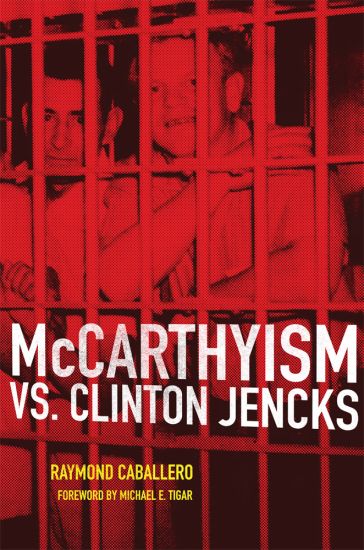
For twenty years after World War II, the United States was in the grips of its second and most oppressive red scare. The hysteria was driven by conflating American Communists with the real Soviet threat. The anticommunist movement was named after Senator Joseph R. McCarthy, but its true dominant personality was FBI director J. Edgar Hoover, who promoted and implemented its repressive policies and laws. The national fear over communism generated such anxiety that Communist Party members and many left-wing Americans lost the laws' protections. Thousands lost their jobs, careers, and reputations in the hysteria, though they had committed no crime and were not disloyal to the United States. Among those individuals who experienced more of anticommunism's varied repressive measures than anyone else was Clinton Jencks. Jencks, a decorated war hero, adopted as his own the Mexican American fight for equal rights in New Mexico's mining industry. In 1950 he led a local of the International Union of Mine, Mill, and Smelter Workers in the famed Empire Zinc strike - memorialized in the blacklisted 1954 film Salt of the Earth - in which wives and mothers replaced strikers on the picket line after an injunction barred the miners themselves. But three years after the strike, Jencks was arrested and charged with falsely denying that he was a Communist and was sentenced to five years in prison. In Jencks v. United States (1957), the Supreme Court overturned his conviction in a landmark decision that mandated providing to an accused person previously hidden witness statements, thereby making cross-examination truly effective. In McCarthyism vs. Clinton Jencks, Caballero reveals for the first time that the FBI and the prosecution knew all along that Clinton Jencks was innocent. Jencks's case typified the era, exposing the injustice that many suffered at the hands of McCarthyism. The tale of Jencks's quest for justice provides a fresh glimpse into the McCarthy era's oppression, which irrevocably damaged the lives, careers, and reputations of thousands of Americans.
Mythologies of State and Monopoly Power

Mythologies of State and Monopoly Power

Michael E. Tigar

Monthly Review Press,U.S.
2018
pokkari
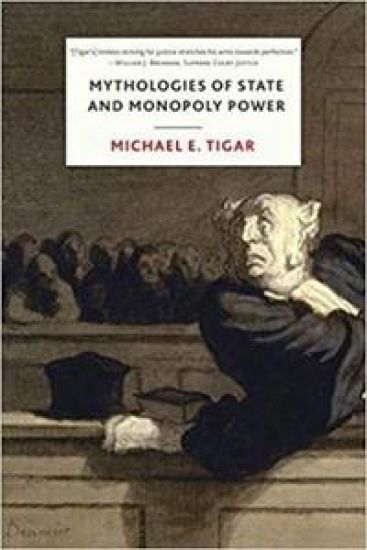
“Mythologies,” writes veteran human rights lawyer Michael Tigar, “are structures of words and images that portray people, institutions, and events in ways that mask an underlying reality.” For instance, the “Justice Department” appears, by its very nature and practice, to appropriate “justice” as the exclusive property of the federal government. In his brilliantly acerbic collection of essays, Tigar reveals, deconstructs, and eviscerates mythologies surrounding the U. S. criminal justice system, racism, free expression, workers’ rights, and international human rights. Lawyers confront mythologies in the context of their profession. But the struggle for human liberation makes mythology-busting the business of all of us. The rights we have learned to demand are not only trivialized in our current system of social relations; they are, in fact, antithetical to that system. With wit and eloquence, Michael Tigar draws on legal cases, philosophy, literature, and fifty-years’ experience as an attorney, activist, and teacher to bust the mythologies and to argue for real change. Praise for Michael Tigar’s legal career: “Tireless striving for justice stretches his arms towards perfection.” —William J. Brennan, Supreme Court Justice
Mythologies of State and Monopoly Power

Mythologies of State and Monopoly Power

Michael E. Tigar

Monthly Review Press,U.S.
2018
sidottu
“Mythologies,” writes veteran human rights lawyer Michael Tigar, “are structures of words and images that portray people, institutions, and events in ways that mask an underlying reality.” For instance, the “Justice Department” appears, by its very nature and practice, to appropriate “justice” as the exclusive property of the federal government. In his brilliantly acerbic collection of essays, Tigar reveals, deconstructs, and eviscerates mythologies surrounding the U. S. criminal justice system, racism, free expression, workers’ rights, and international human rights. Lawyers confront mythologies in the context of their profession. But the struggle for human liberation makes mythology-busting the business of all of us. The rights we have learned to demand are not only trivialized in our current system of social relations; they are, in fact, antithetical to that system. With wit and eloquence, Michael Tigar draws on legal cases, philosophy, literature, and fifty-years’ experience as an attorney, activist, and teacher to bust the mythologies and to argue for real change. Praise for Michael Tigar’s legal career: “Tireless striving for justice stretches his arms towards perfection.” —William J. Brennan, Supreme Court Justice
Thinking About Terrorism

Thinking About Terrorism

Michael E. Tigar

American Bar Association
2007
pokkari
Looks at how government through history has responded to terrorism, with an analysis of our own government's response to the attacks of 9/11, particularly in regard to our own civil liberties. This book is suitable for those concerned with the state of our civil liberties.