Kirjojen hintavertailu – 12 903 725 kirjaa ja 27 kauppaa

Kirjailija

Michael F. Brown

Kirjat ja teokset yhdessä paikassa: 6 kirjaa, julkaisuja vuosilta 1993–2014, suosituimpiin kuuluu Criminal Investigation. Vertaile teosten hintoja ja tarkista saatavuus suomalaisista kirjakaupoista.

Nimi esiintyy myös muodoissa: Michael F Brown

6 kirjaa

Kirjojen julkaisuvuodet: 1993–2014.

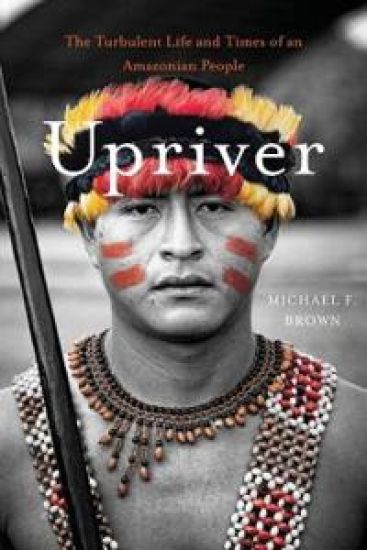
Upriver

Upriver

Michael F. Brown

Harvard University Press
2014
sidottu
In this remarkable story of one man’s encounter with an indigenous people of Peru, Michael Brown guides his readers upriver into a contested zone of the Amazonian frontier, where more than 50,000 Awajún—renowned for their pugnacity and fierce independence—remain determined, against long odds, to live life on their own terms. When Brown took up residence with the Awajún in 1976, he knew little about them other than their ancestors’ reputation as fearsome headhunters. The fledgling anthropologist was immediately impressed by his hosts’ vivacity and resourcefulness. But eventually his investigations led him into darker corners of a world where murderous vendettas, fear of sorcery, and a shocking incidence of suicide were still common. Peru’s Shining Path insurgency in the 1980s forced Brown to refocus his work elsewhere. Revisiting his field notes decades later, now with an older man’s understanding of life’s fragility, Brown saw a different story: a tribal society trying, and sometimes failing, to maintain order in the face of an expanding capitalist frontier. Curious about how the Awajún were faring, Brown returned to the site in 2012, where he found a people whose combative self-confidence had led them to the forefront of South America’s struggle for indigenous rights. Written with insight, sensitivity, and humor, Upriver paints a vivid picture of a rapidly growing population that is refashioning its warrior tradition for the twenty-first century. Embracing literacy and digital technology, the Awajún are using hard-won political savvy to defend their rainforest home and right of self-determination.
Tsewa's Gift

Tsewa's Gift

Michael F. Brown

The University of Alabama Press
2006
nidottu
"An outstanding and innovative study on hunting, gardening, and love magic among the Aguaruna. . . . [It is] both highly useful ethnographically and an important contribution to the understanding of how a primitive culture conceptualizes its transactions with nature. The book touches on cosmology and religion as well as the ethnoecology of hunting and agriculture--with an interlude on sex."--American Ethnologist
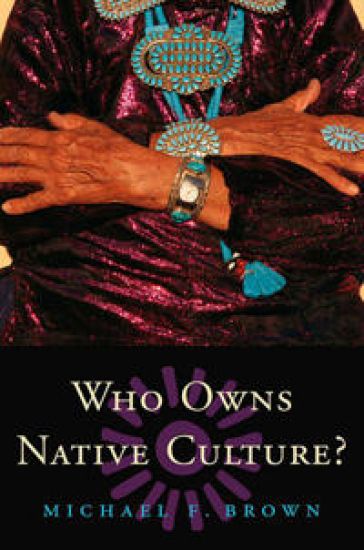
Who Owns Native Culture?

Who Owns Native Culture?

Michael F. Brown

Harvard University Press
2004
nidottu
The practical and artistic creations of native peoples permeate everyday life in settler nations, from the design elements on our clothing to the plot-lines of books we read to our children. Rarely, however, do native communities benefit materially from this use of their heritage, a situation that drives growing resistance to what some denounce as "cultural theft." Who Owns Native Culture? documents the efforts of indigenous peoples to redefine heritage as a proprietary resource. Michael Brown takes readers into settings where native peoples defend what they consider their cultural property: a courtroom in Darwin, Australia, where an Aboriginal artist and a clan leader bring suit against a textile firm that infringes sacred art; archives and museums in the United States, where Indian tribes seek control over early photographs and sound recordings collected in their communities; and the Mexican state of Chiapas, site of a bioprospecting venture whose legitimacy is questioned by native-rights activists. By focusing on the complexity of actual cases, Brown casts light on indigenous claims in diverse fields--religion, art, sacred places, and botanical knowledge. He finds both genuine injustice and, among advocates for native peoples, a troubling tendency to mimic the privatizing logic of major corporations. The author proposes alternative strategies for defending the heritage of vulnerable native communities without blocking the open communication essential to the life of pluralist democracies. Who Owns Native Culture? is a lively, accessible introduction to questions of cultural ownership, group privacy, intellectual property, and the recovery of indigenous identities.
Criminal Investigation

Criminal Investigation

Michael F. Brown

Butterworth-Heinemann Ltd
2001
nidottu
This textbook provides students and law enforcement officers with the fundamentals of the criminal investigation process, from arrival on the scene to trial procedures. Written in a clear and simple style, Criminal Investigation: Law and Practice surpasses traditional texts by presenting a unique combination of legal, technical, and procedural aspects of the criminal investigation. The hands-on approach taken by the author helps to increase the learning experience. Criminal Investigation: Law and Practice, Second Edition, has been written to provide future law enforcement officers with a basic understanding of the investigative process. It merges two areas that are crucial to the successful completion of an investigation: the law, both criminal and procedural, and criminal investigative techniques. It is writen to provide the student investigator with the information needed to complete and investigation that can result in a successful prosecution.
The Channeling Zone

The Channeling Zone

Michael F. Brown

Harvard University Press
1999
nidottu
Few expressions of New Age spirituality evoke greater skepticism and derision than does channeling, the practice of serving as a vessel for the voices of ancient or otherworldly beings. Channelers claim to be possessed by angels, aliens, and "ascended masters" who speak through them, offering advice and solace. Intellectuals dismiss them as cranks and charlatans; evangelical Christians accuse them of trafficking with Satanic forces. Meanwhile, the steady spread of channeling from the West Coast to the American heartland fuels the fear that the United States now confronts an epidemic of public irrationality. The Channeling Zone reveals that this controversial practice has deep roots in earlier forms of American spiritualism while manifesting the most current concerns and anxieties of American life at the end of the twentieth century. Basing his analysis on dozens of interviews with practicing channels and extensive participant-observation research in New Age workshops, Michael Brown takes readers into the world of those who find meaning and inspiration--and occasionally a lucrative career--in regular conversations with spectral beings. Drawing on his previous research among Amazonian Indians, he brings a historical and comparative perspective to the study of this flamboyant expression of contemporary spirituality. Neither a debunker nor an advocate, Brown weaves together the opinions and life stories of practicing channels and their clients to bring their world and its assumptions into higher relief. He describes the experiences that lead often highly educated, middle-class Americans to conclude that useful information is filtered through the spirit world. He pursues the nature of the quest--the fears, hopes, and expectations of the seekers--and finds its roots in traditional American notions of individualism and self-perfection. The Channeling Zone is a lively journey into the complex social world of the thousands of Americans who have abandoned mainstream religions in search of direct and improvisational contact with spiritual beings.
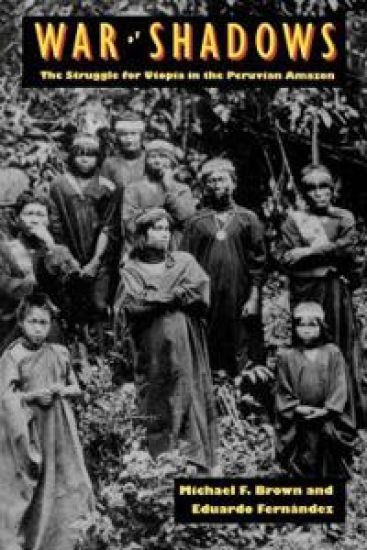
War of Shadows

War of Shadows

Michael F Brown; Eduardo Fernández

University of California Press
1993
pokkari
"War of Shadows" is the haunting story of a failed uprising in the Peruvian Amazon - told largely by people who were there. Late in 1965, Ashaninka Indians, members of one of the Amazon's largest native tribes, joined forces with Marxist revolutionaries who had opened a guerrilla front in Ashaninka territory. They fought, and were crushed by, the overwhelming military force of the Peruvian government. Why did the Indians believe this alliance would deliver them from poverty and the depredations of colonization on their rainforest home? With rare insight and eloquence, anthropologists Brown and Fernandez write about an Amazonian people whose contacts with outsiders have repeatedly begun in hope and ended in tragedy. The players in this dramatic confrontation included militants of the Movement of the Revolutionary Left (MIR), the U. S. Embassy, the Peruvian military, a 'renegade' American settler, and the Ashaninka Indians themselves. Using press reports and archival sources as well as oral histories, the authors weave a vivid tapestry of narratives and counter-narratives that challenges the official history of the guerrilla struggle. Central to the story is the Ashaninkas' persistent hope that a messiah would lead them to freedom, a belief with roots in eighteenth- and nineteenth-century jungle rebellions and religious movements.