Kirjojen hintavertailu – 12 859 818 kirjaa ja 27 kauppaa

Kirjailija

Michael Gardiner

Kirjat ja teokset yhdessä paikassa: 21 kirjaa, julkaisuja vuosilta 1992–2026, suosituimpiin kuuluu Nuclear Fictions. Vertaile teosten hintoja ja tarkista saatavuus suomalaisista kirjakaupoista.

21 kirjaa

Kirjojen julkaisuvuodet: 1992–2026.

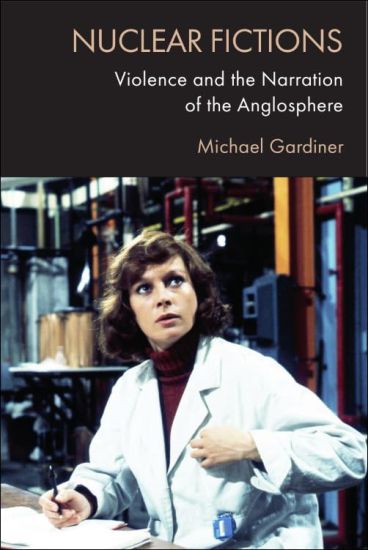
Nuclear Fictions

Nuclear Fictions

Michael Gardiner

EDINBURGH UNIVERSITY PRESS
2026
nidottu
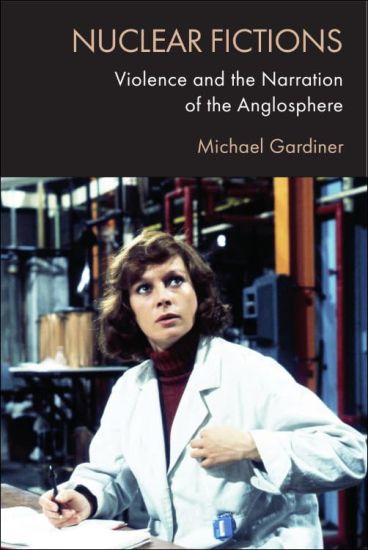
In this book, Michael Gardiner suggests that the conception of the ‘war-ending’ weapon was tied up with a longer commitment to unified space and singular progress. The mission for total weapons can be seen rising with the highly-technical defensive war of the later nineteenth century, and passing through twentieth century atomic research, then the targeting of the outsides of commercial empire, and the post-war consensus with deterrence as its foundation. The end of the Cold War brought an opportunity to fully naturalise deterrence, but also brought a tacit acceptance of nuclear violence while forms of violence against the individual were rigorously sought out. If the world-unifying role of deterrence has always been undermined by the rise of rival empires, it has also been questioned by critical communities including the consensus-sceptics of the 1950s–60s, 1980s–90s Nuclear Criticism and readers of ‘nuclearism’, millennial campaigns for Scottish independence, and twenty-first century descriptions of nuclear colonialism. Recently it has become more obvious that an Anglosphere concept of ‘worldly’ deterrence was bound to a singular and ultimately nihilistic idea of progress.[bio]Michael Gardiner is Professor in the Department of English and Comparative Literature at the University of Warwick.
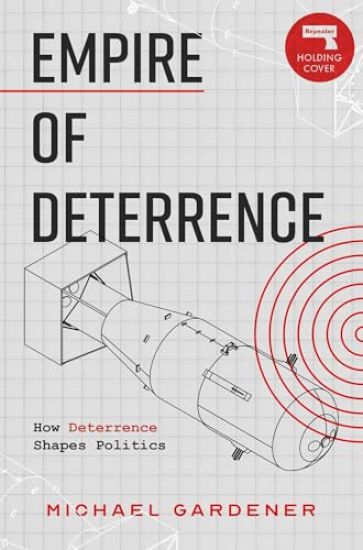
Empire of Deterrence: Nuclear Weapons and the Containment of Politics

Empire of Deterrence: Nuclear Weapons and the Containment of Politics

Michael Gardiner

Repeater
2025
nidottu

Halvin toimitettuna 20,50 €

A nuclear-extinction unconscious has worked over the last 30 years to 'automate' much political thinking and recuperate it into individualist culture wars that reaffirming the extinction regimes This book considers nuclear deterrence as a form of authority. It describes the rise of deterrence in the Anglosphere particularly as the rule of economic law hardened to protect a civilization in its deterministic, automated phase. Nuclear deterrence has increasingly been leveraged against populations to smother politics and protect an absolute stasis with its heart in a cybernetics of human eclipse - helping to explain why, when nuclear war became immanent and taken for granted in the 1990s, much political campaigning began to collapse into culture wars turning politics into currency for an anxious managerial class. Pre-set political values now flow from the world's foremost nuclear power, the US, and its British satellite, relying on a growing sense that conflict is pointless and there is no escape from the feedback loop of performative affirmation. This book resurrects some half-buried Cold War cultural and theoretical resources, from Paul Virilio to Stephen Poliakoff to Folk Horror, and brings up questions of local action and the undoing of the old Anglosphere commercial empire, to ask if there are ways of unthinking deterrence blackmail.
Nuclear Fictions

Nuclear Fictions

Michael Gardiner

EDINBURGH UNIVERSITY PRESS
2024
sidottu
In this book, Michael Gardiner suggests that the conception of the 'war-ending' weapon was tied up with a longer commitment to unified space and singular progress. The mission for total weapons can be seen rising with the highly-technical defensive war of the later nineteenth century, and passing through twentieth century atomic research, then the targeting of the outsides of commercial empire, and the post-war consensus with deterrence as its foundation. The end of the Cold War brought an opportunity to fully naturalise deterrence, but also brought a tacit acceptance of nuclear violence while forms of violence against the individual were rigorously sought out. If the world-unifying role of deterrence has always been undermined by the rise of rival empires, it has also been questioned by critical communities including the consensus-sceptics of the 1950s60s, 1980s90s Nuclear Criticism and readers of 'nuclearism', millennial campaigns for Scottish independence, and twenty-first century descriptions of nuclear colonialism. Recently it has become more obvious that an Anglosphere concept of 'worldly' deterrence was bound to a singular and ultimately nihilistic idea of progress.[bio]Michael Gardiner is Professor in the Department of English and Comparative Literature at the University of Warwick.
Global Flavors, New Traditions

Global Flavors, New Traditions

Michael Gardiner

RIZZOLI INTERNATIONAL PUBLICATIONS
2022
sidottu
Taking a food-forward, modern approach to the laws of kashrut, 100 original recipes showcase the breadth of flavors, textures, ingredients, and techniques available while keeping kosher. Modern Kosher presents culturally Jewish recipes from Ashkenazi, Sephardic, and contemporary Israeli traditions; dishes from Latin, Asian, and other international cuisines for the kosher table; and highly practical pantry recipes, including stocks, sauces, oils, and pickles, plus the ultimate recipes for schmaltz and gribenes to enhance the reader s everyday cooking. Vegans, vegetarians, and gluten-free cooks will all find recipes to share. Whether planning a family holiday or a weeknight dinner with friends, Modern Kosher is elevated comfort food of the most delicious sort.
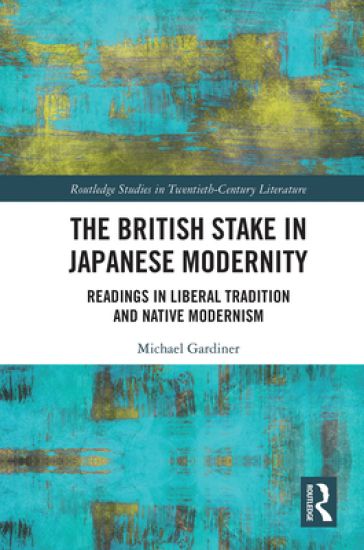
The British Stake In Japanese Modernity

The British Stake In Japanese Modernity

Michael Gardiner

Taylor Francis Ltd
2021
nidottu
This book describes firstly a Japanese modernity which is readable not only as a modernising, but also as a Britishing, and secondly modernist attempts to overhaul this British universalism in some well-known and some less-known Japanese texts. From the mid-nineteenth century, and particularly as hastened by the spectre of China in the First Opium War, Japan’s modernity was bound up with a convergence with British Newtonian cosmology, something underscored by the British presence in Meiji Japan and the British education of key Meiji state-makers. Moreover the thinking behind Britain’s own unification in the long eighteenth century, particularly the Scottish Enlightenment, is echoed strikingly faithfully in the 1860s-70s work of Fukuzawa Yukichi, Nakamura Masanao, and other writers in the ‘Japanese Enlightenment’. However, from around the end of the Meiji era, we can see a concerted and pointed response to this British universalism, its historiography, its basis in the sovereign individual subject, and its spatial mapping of the world. Elements of this response can be read in texts including Natsume Soseki’s Kokoro, Watsuji Tetsuro’s Fudo (Climate and Culture), Tanizaki Jun’ichiro’s In’ei Raisan (In Praise of Shadows), Kawabata Yasunari’s Yukiguni (Snow Country), and various work of the mid-period Kyoto School. Rarely understood in terms of its British specificity, this response should have something to say to modernist studies more generally, since it aimed at a pluralism and de-universalisation that was difficult for mainstream British modernism itself. Indeed the strength of this de-universalisation may be precisely why these ‘native’ Japanese modernist tendencies have not much been accepted as modernism within the Anglophone academy, despite this field’s apparent widening of its ground in the twenty-first century.
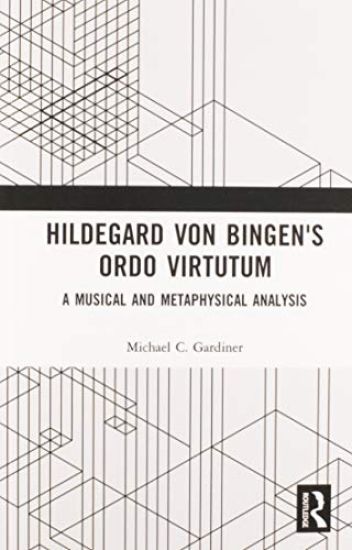
Hildegard von Bingen's Ordo Virtutum

Hildegard von Bingen's Ordo Virtutum

Michael Gardiner

Routledge
2020
nidottu
The Ordo Virtutum, Hildegard von Bingen’s twelfth-century music-drama, is one of the first known examples of a large-scale composition by a named composer in the Western canon. Not only does the Ordo’s expansive duration set it apart from its precursors, but also its complex imagery and non-biblical narrative have raised various questions concerning its context and genre. As a poetic meditation on the fall of a soul, the Ordo deploys an array of personified virtues and musical forces over the course of its eighty-seven chants. In this ambitious analysis of the work, Michael C. Gardiner examines how classical Neoplatonic hierarchies are established in the music-drama and considers how they are mediated and subverted through a series of concentric absorptions (absorptions related to medieval Platonism and its various theological developments) which lie at the core of the work’s musical design and text. This is achieved primarily through Gardiner’s musical network model, which implicates mode into a networked system of nodes, and draws upon parallels with the medieval interpretation of Platonic ontology and Hildegard’s correlative realization through sound, song, and voice.
The British Stake In Japanese Modernity
This book describes firstly a Japanese modernity which is readable not only as a modernising, but also as a Britishing, and secondly modernist attempts to overhaul this British universalism in some well-known and some less-known Japanese texts. From the mid-nineteenth century, and particularly as hastened by the spectre of China in the First Opium War, Japan’s modernity was bound up with a convergence with British Newtonian cosmology, something underscored by the British presence in Meiji Japan and the British education of key Meiji state-makers. Moreover the thinking behind Britain’s own unification in the long eighteenth century, particularly the Scottish Enlightenment, is echoed strikingly faithfully in the 1860s-70s work of Fukuzawa Yukichi, Nakamura Masanao, and other writers in the ‘Japanese Enlightenment’. However, from around the end of the Meiji era, we can see a concerted and pointed response to this British universalism, its historiography, its basis in the sovereign individual subject, and its spatial mapping of the world. Elements of this response can be read in texts including Natsume Soseki’s Kokoro, Watsuji Tetsuro’s Fudo (Climate and Culture), Tanizaki Jun’ichiro’s In’ei Raisan (In Praise of Shadows), Kawabata Yasunari’s Yukiguni (Snow Country), and various work of the mid-period Kyoto School. Rarely understood in terms of its British specificity, this response should have something to say to modernist studies more generally, since it aimed at a pluralism and de-universalisation that was difficult for mainstream British modernism itself. Indeed the strength of this de-universalisation may be precisely why these ‘native’ Japanese modernist tendencies have not much been accepted as modernism within the Anglophone academy, despite this field’s apparent widening of its ground in the twenty-first century.
Hildegard von Bingen's Ordo Virtutum

Hildegard von Bingen's Ordo Virtutum

Michael Gardiner

Routledge
2018
sidottu
The Ordo Virtutum, Hildegard von Bingen’s twelfth-century music-drama, is one of the first known examples of a large-scale composition by a named composer in the Western canon. Not only does the Ordo’s expansive duration set it apart from its precursors, but also its complex imagery and non-biblical narrative have raised various questions concerning its context and genre. As a poetic meditation on the fall of a soul, the Ordo deploys an array of personified virtues and musical forces over the course of its eighty-seven chants. In this ambitious analysis of the work, Michael C. Gardiner examines how classical Neoplatonic hierarchies are established in the music-drama and considers how they are mediated and subverted through a series of concentric absorptions (absorptions related to medieval Platonism and its various theological developments) which lie at the core of the work’s musical design and text. This is achieved primarily through Gardiner’s musical network model, which implicates mode into a networked system of nodes, and draws upon parallels with the medieval interpretation of Platonic ontology and Hildegard’s correlative realization through sound, song, and voice.
The Constitution of English Literature

The Constitution of English Literature

Michael Gardiner

Bloomsbury Academic
2015
nidottu
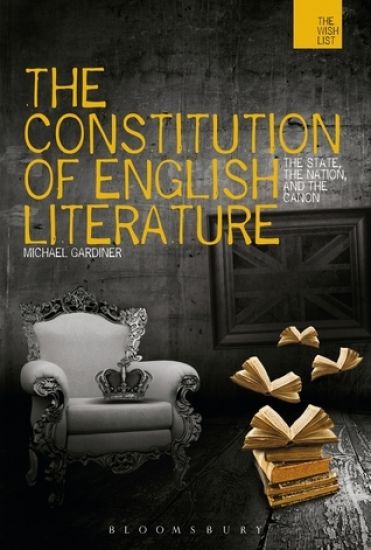
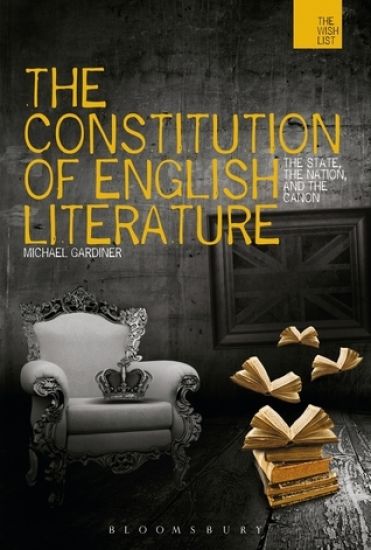
This book is available as open access through the Bloomsbury Open Access programme and is available on www.bloomsburycollections.com. In this extended essay, Michael Gardiner examines the ideology of the discipline of English Literature in the light of the serious redefining work on England and Englishness that has been conducted in Political Studies in the last decade. He argues that English Literature emerges from the development of the state and that consequently it has suppressed the idea of the nation. His claim is that English Literature has lost its form since its methodology and canonicity depended so heavily on a constitutional form which can no longer be defended. He calls upon those working in English Literature to recognise that they are not really participating in the same discipline, defined by the Burkean constitutional settlement, even if they think of themselves as writing 'within the canon'. His view is that a lack of appreciation of 'hard-edged' political factors have led to a 'continuant' and regressive form of English Literature which tends to hang on to stifling methodologies. In its place, he appeals for the creation of a more open-ended, inclusive, internationalist, and comparative 'literature of England'.
The Dialogics of Critique

The Dialogics of Critique

Michael Gardiner

Routledge
2014
nidottu
As interest in the work of Bakhtin grows there is an increasing demand for a well organized, readable text which explains his main ideas and relates them to current social and cultural theory. This book is designed to supply this demand. Elegantly written with the needs of the student coming to Bakhtin for the first time in mind, it provides the essential guide to this important and neglected thinker.
Hverdagslivet

Hverdagslivet

Michael Hviid Jacobsen; Søren Kristiansen; Emma Engdahl; Antje Gimmler; Anja Jørgensen; Joseph A. Kotarba; Irene Levin; Søren Peter Olesen; Søren Overgaard; Jan Trost; Dan Zahavi; Michael Gardiner

Gyldendal
2014
nidottu
Hverdagen spiller en afgørende rolle, hvis man vil forstå samfundet i sin helhed og kompleksitet, og de seneste årtier har studier af hverdagen spillet en stadig større rolle inden for sociologien. Hverdagslivet – sociologier om det upåagtede giver en bred introduktion til hverdagslivssociologien som et samlet felt. Bogen beskriver hverdagslivssociologiens ophav i Chicago-skolen og den amerikanske pragmatisme samt udviklingen mod nyere teoridannelser. Der stilles skarpt på marxisme, fænomenologi, eksistentialisme, emotionssociologi og nyere fransk hverdagslivssociologi, der ikke er eksplicit sociologiske skoler, men som på hver deres måde kaster et perspektivrigt blik på hverdagslivet. Endvidere præsenteres centrale hverdagslivstænkere som Goffman, Garfinkel, Sacks og Schegloff. Bogen er rettet mod studerende og undervisere på universiteter og højere læreanstalter. Bogen foreligger her i en gennemrevideret og ajourført udgave med til føjelse af to kapitler: fransk hverdagssociologi og emotionssociologi. Indhold: 1. Chicago-sociologi: Anja Jørgensen 2. Amerikansk pragmatisme: Antje Gimler 3. Symbolsk interaktionisme: Jan Trost, Irene Levin 4. Marxisme, modernitet og utopi: Michael Gardiner 5. Fænomenologisk sociologi: Dan Zahavi og Søren Overgaard 6. Erving Goffmann: Søren Kristiansen 7. Fransk hverdagssociologi: Michael Hviid Jacobsen 8. Eksistentiaistisk sociologi: Joseph A. Kotarba 9. Etnometodologi og det absurdes sociologi: Michael Hviid Jacobsen 10. Samtaleanalyse: Søren Peter Olesen 11. Emotionssociologi: Emma Engdahl og Michael Hviid Jacobsen Redaktion: Michael Hviid Jacobsen, professor ved Institut for Sociologi og Socialt Arbejde, AAU. Søren Kristiansen, lektor i sociologi ved Institut for Sociologi og Socialt Arbejde, AAU, samt prorektor sammesteds.
The Constitution of English Literature

The Constitution of English Literature

Michael Gardiner

Bloomsbury Academic
2013
sidottu
This book is available as open access through the Bloomsbury Open Access programme and is available on www.bloomsburycollections.com. In this extended essay, Michael Gardiner examines the ideology of the discipline of English Literature in the light of the serious redefining work on England and Englishness that has been conducted in Political Studies in the last decade. He argues that English Literature emerges from the development of the state and that consequently it has suppressed the idea of the nation. His claim is that English Literature has lost its form since its methodology and canonicity depended so heavily on a constitutional form which can no longer be defended. He calls upon those working in English Literature to recognise that they are not really participating in the same discipline, defined by the Burkean constitutional settlement, even if they think of themselves as writing 'within the canon'. His view is that a lack of appreciation of 'hard-edged' political factors have led to a 'continuant' and regressive form of English Literature which tends to hang on to stifling methodologies. In its place, he appeals for the creation of a more open-ended, inclusive, internationalist, and comparative 'literature of England'.
Weak Messianism

Weak Messianism

Michael Gardiner

Peter Lang AG, Internationaler Verlag der Wissenschaften
2013
nidottu
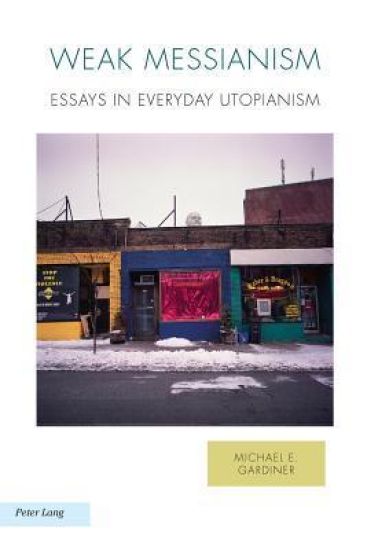
This volume explores the connection between two phenomena usually thought to be utterly incongruous, even antithetical: ‘utopia’ and ‘everyday life’. It presents a series of essays, written over the last twenty years, which rethink the nature and prospects of utopianism in a world that has grown increasingly sceptical as to the possibility of systemic socio-political transformation in a positive direction. Through critical interdisciplinary engagements with a wide variety of thinkers ranging from Mikhail Bakhtin to Henri Lefebvre and beyond, many of whom are often read as anti-utopian figures, the essays argue that it is possible to locate utopian promises buried deep within the embodied rituals, practices and symbolic forms associated with everyday existence, in a manner that reveals the essential openness of the present day to momentous future change.
From Trocchi to Trainspotting  Scottish Critical Theory Since 1960
This book charts the course of Scottish Critical Theory since the 1960s. It provocatively argues that 'French' critical-theoretical ideas have developed in tandem with Scottish writing during this period. Its themes can be read as a breakdown in Scottish Enlightenment thinking after empire - precisely the process which permitted the rise of 'theory'. The book places within a wider theoretical context writers such as Muriel Spark, Edwin Morgan, Ian Hamilton Finlay, James Kelman, Alexander Trocchi, Janice Galloway, Alan Warner and Irvine Welsh, as well as more recent work by Alan Riach and Pat Kane, who can be seen to take the 'post-Enlightenment' narrative forward. In doing so, it draws on the work of the Scottish thinkers John Macmurray and R. D. Laing as well as the continental philosophers Gilles Deleuze and Paul Virilio. Key Features * Engaging polemic which connects Scottish literature with critical theory and continental thinking with Scottish philosophy. * Provides a needed corrective to the 'theory-fear' which has often stopped Scotland looking at its own Enlightenment. * Offers the first book-length commentary on contemporary Scottish writers, as well as re-positioning more familiar writers such as Muriel Spark and James Kelman.
Modern Scottish Culture

Modern Scottish Culture

Michael Gardiner

Edinburgh University Press
2005
nidottu
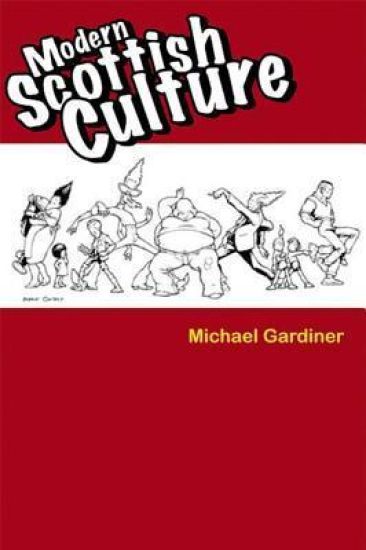
An overview of Scottish culture from the time of union with England and Wales up to and through the moment of devolution to the present. A wide-ranging introduction to Scottish culture, this book examines the central place of Scottish cultural studies within British cultural studies, describing the changing relationship of Scotland and the union as a whole. Scotland has a disproportionately high production of British output in many fields - technological, colonial, political, artistic and literary - and this book shows how Scotland, long used to the differences between nation and government, is leading the constitutional changes which are accompanying the break-up of the British union today. It condenses much of the pioneering research done on Scottish Studies over the last couple of decades, as well as introducing new research which helps link the field and make sense of this rapidly changing nation. Each chapter introduces an aspect of modern Scottish culture, including film, religion, sport, cultural history, mass media and literature. The first introduction to Scottish cultural studies, this book is aimed at undergraduates, 'A' Level students and the general reader interested in the culture of Scotland, and cultural studies as a whole. Key Features * The first introduction to Scottish cultural studies, aimed at a wide audience of undergraduates, 'A' Level students and the general reader interested in the culture of Scotland, and cultural studies as a whole * Accessibly written, covering each period since the start of the eighteenth century * Each chapter includes a summary, suggestions for further reading and questions for personal research.
The Cultural Roots of British Devolution

The Cultural Roots of British Devolution

Michael Gardiner

Edinburgh University Press
2004
nidottu
This book presents a provocative argument which suggests that cultural devolution preceded and indeed forced political change. A 'post-British' form of culture - as found across literature, education and philosophy - has long been in the making, arising especially in local communities who no longer see themselves as British. The author places this change in the context of post-imperial Britain in the second half of the20th century and looks at how underground cultures such as rave and reggae may have laid the foundations for a post-British culture. The various attempts to re-constitutionalise Britain are explored and the book ends with two key questions: how has the progress of a post-British culture been viewed in Scotland, and how do we pull a post-British England out of a devolutionary process which is liable to outstrip all British control? Key Features: *The first serious account of the history of the growing cultural division within Britain in the second half of the 20th century. *Accentuates the cultural roots of devolution, bringing them out from the shadow of party-political explanations. *Looks at the effects of devolution upon both Scottish and English culture.
Critiques of Everyday Life

Critiques of Everyday Life

Michael Gardiner

Routledge
2000
nidottu
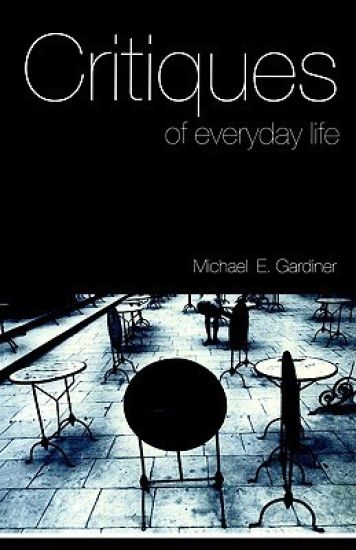
Recent years have witnessed a burgeoning interest in the study of everyday life within the social sciences and humanities. In Critiques of Everyday Life Michael Gardiner proposes that there exists a counter-tradition within everyday life theorising. This counter-tradition has sought not merely to describe lived experience, but to transform it by elevating our understanding of the everyday to the status of a critical knowledge. In his analysis Gardiner engages with the work of a number of significant theorists and approaches that have been marginalized by mainstream academe, including:*The French tradition of everyday life theorising, from the surrealists to Henri Lefebvre, and from the Situationist International to Michel de Certeau*Agnes Heller and the relationship between the everyday, rationality and ethics*Carnival, prosaics and intersubjectivity in the work of Mikhail Bakhtin*Dorothy E. Smith's feminist perspective on everyday life. Critiques of Everyday Life demonstrates the importance of an alternative, multidisciplinary everyday life paradigm and offers a myriad of new possibilities for critical social and cultural theorising and empirical research.
Critiques of Everyday Life

Critiques of Everyday Life

Michael Gardiner

Routledge
2000
sidottu
Recent years have witnessed a burgeoning interest in the study of everyday life within the social sciences and humanities. In Critiques of Everyday Life Michael Gardiner proposes that there exists a counter-tradition within everyday life theorising. This counter-tradition has sought not merely to describe lived experience, but to transform it by elevating our understanding of the everyday to the status of a critical knowledge. In his analysis Gardiner engages with the work of a number of significant theorists and approaches that have been marginalized by mainstream academe, including:*The French tradition of everyday life theorising, from the surrealists to Henri Lefebvre, and from the Situationist International to Michel de Certeau*Agnes Heller and the relationship between the everyday, rationality and ethics*Carnival, prosaics and intersubjectivity in the work of Mikhail Bakhtin*Dorothy E. Smith's feminist perspective on everyday life. Critiques of Everyday Life demonstrates the importance of an alternative, multidisciplinary everyday life paradigm and offers a myriad of new possibilities for critical social and cultural theorising and empirical research.