

Kirjailija
Michael Goldstein
Kirjat ja teokset yhdessä paikassa: 5 kirjaa, julkaisuja vuosilta 1999–2021, suosituimpiin kuuluu Shalom Jack. Vertaile teosten hintoja ja tarkista saatavuus suomalaisista kirjakaupoista.
5 kirjaa
Kirjojen julkaisuvuodet: 1999–2021.

Jack Goldstein was mid-upper gunner in a Lancaster bomber when it was shot down by a German night-fighter during Bomber Command's final WW2 mission to Nuremberg. He was the only member of the seven-man crew to be killed. It was just a few weeks before the war ended. This book traces Jack's Polish origins and his coming to England as a very young child when his parents fled the increasing discrimination and persecution facing Jewish people just before the start of WW1. It goes on to describe the struggles of his upbringing in London's impoverished and deprived East End; the love and happiness of his family, growing up as one of eleven siblings; his marriage to Sadie and the Goldberg family; through to his service in the RAF Volunteer Reserve. Based on painstaking and well-documented research, eye-witness accounts, and personal recollections, this book includes numerous photographs, documents and illustrations. It will be of particular appeal to those with interests in the history of the RAF and Bomber Command, London between the wars, social history of the 20th century, immigration, and Anglo-Jewish family life. Insightful, analytical, emotional and at times humorous, the book finally lays to rest the mystery of exactly what happened the night Jack was killed. It also describes with great sensitivity the traumas of war-time England, the profound importance of family, and the devastating impact of Jack's death.

Bayesian methods combine information available from data with any prior information available from expert knowledge. The Bayes linear approach follows this path, offering a quantitative structure for expressing beliefs, and systematic methods for adjusting these beliefs, given observational data. The methodology differs from the full Bayesian methodology in that it establishes simpler approaches to belief specification and analysis based around expectation judgements. Bayes Linear Statistics presents an authoritative account of this approach, explaining the foundations, theory, methodology, and practicalities of this important field. The text provides a thorough coverage of Bayes linear analysis, from the development of the basic language to the collection of algebraic results needed for efficient implementation, with detailed practical examples. The book covers: The importance of partial prior specifications for complex problems where it is difficult to supply a meaningful full prior probability specification. Simple ways to use partial prior specifications to adjust beliefs, given observations. Interpretative and diagnostic tools to display the implications of collections of belief statements, and to make stringent comparisons between expected and actual observations. General approaches to statistical modelling based upon partial exchangeability judgements. Bayes linear graphical models to represent and display partial belief specifications, organize computations, and display the results of analyses. Bayes Linear Statistics is essential reading for all statisticians concerned with the theory and practice of Bayesian methods. There is an accompanying website hosting free software and guides to the calculations within the book.
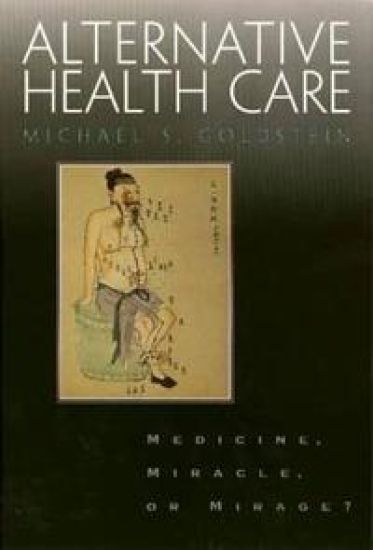
In November of 1998 The Journal of the American Medical Association devoted an entire issue to alternative medicine for the first time in its publishing history. According to survey results reported in the journal, 83 million Americans used some form of alternative medicine to preserve and maintain their health in 1997, a sharp increase from the 61 million who turned to alternative forms of care in 1990. Michael S. Goldstein's Alternative Health Care is the first comprehensive account of the growing presence of alternative medicine in American society. Beginning with the basic premises of alternative medicine, Goldstein's book examines the clinical, economic, and political realities of the broad range of alternative care options and practices in the United States and explains why alternative medicine has become a viable choice for so many people who are ill or who seek to remain healthy. Bringing history, policy, practice, personal experience, and in-depth sociological analysis together into one comprehensive volume, Goldstein -- one of the first recipients of funding from the National Institute of Health for research on alternative medicine -- also studies the complexities of the relationship between spirituality and alternative medicine and the changing role of alternative medicine in the larger context of American health care. Probing such issues as the corporatization of medicine, the role of alternative medicine in health care, and the dynamic relationship between conventional and alternative treatments, Goldstein's Alternative Health Care is more than the long-awaited introduction to the many forms of alternative medicine. It is also the measure of the implications of such care for practitioners, businesses, policymakers, and patients alike. Alternative Health Care is the definitive guide for the millions of Americans interested in alternative medicine and treatment, American health care, the sociology of medicine, and American social issues.
In November of 1998 The Journal of the American Medical Association devoted an entire issue to alternative medicine for the first time in its publishing history. According to survey results reported in the journal, 83 million Americans used some form of alternative medicine to preserve and maintain their health in 1997, a sharp increase from the 61 million who turned to alternative forms of care in 1990. Michael S. Goldstein's Alternative Health Care is the first comprehensive account of the growing presence of alternative medicine in American society. Beginning with the basic premises of alternative medicine, Goldstein's book examines the clinical, economic, and political realities of the broad range of alternative care options and practices in the United States and explains why alternative medicine has become a viable choice for so many people who are ill or who seek to remain healthy. Bringing history, policy, practice, personal experience, and in-depth sociological analysis together into one comprehensive volume, Goldstein -- one of the first recipients of funding from the National Institute of Health for research on alternative medicine -- also studies the complexities of the relationship between spirituality and alternative medicine and the changing role of alternative medicine in the larger context of American health care. Probing such issues as the corporatization of medicine, the role of alternative medicine in health care, and the dynamic relationship between conventional and alternative treatments, Goldstein's Alternative Health Care is more than the long-awaited introduction to the many forms of alternative medicine. It is also the measure of the implications of such care for practitioners, businesses, policymakers, and patients alike. Alternative Health Care is the definitive guide for the millions of Americans interested in alternative medicine and treatment, American health care, the sociology of medicine, and American social issues.