Kirjailija
Michael Green
Kirjat ja teokset yhdessä paikassa: 121 kirjaa, julkaisuja vuosilta 1978–2026, suosituimpiin kuuluu The Dalai Lama's Special Envoy. Vertaile teosten hintoja ja tarkista saatavuus suomalaisista kirjakaupoista.
121 kirjaa
Kirjojen julkaisuvuodet: 1978–2026.
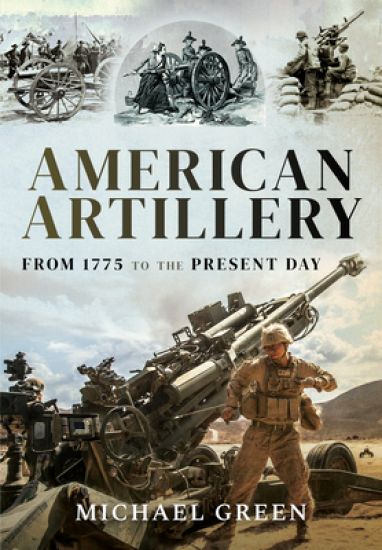
The first regiment of artillery in the American Continental Army was formed in 1775\. During the American Civil War (1861-1865) artillery evolved from the employment of individual batteries to massed fire of grouped batteries. In 1907, the US Army Artillery Corps was reorganized into the Field Artillery and the Coast Artillery Corps. During the First World War (1914-1918), a lack of American-made weapons saw the adoption of foreign artillery pieces. The Second World War demanded the introduction of many new field artillery pieces by the US Army. General Patton later commented, "I don't have to tell you who won the war, you know our artillery did." American artillery firepower also took a heavy toll of the enemy during the Korean and Vietnam Wars. During the Cold War American artillery continued to develop, embracing new weapons systems including tactical nuclear missiles which thankfully never had to be used. Conventional artillery proved highly effective during both Operation Desert Storm in 1991, and Operation Iraqi Freedom in 2003. This superbly illustrated and authoritative work covers the full range of artillery weaponry which has been in service with US armed forces.
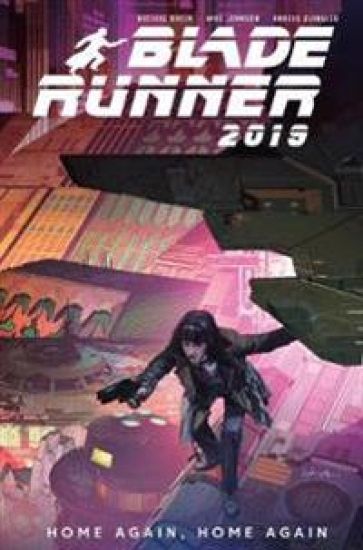
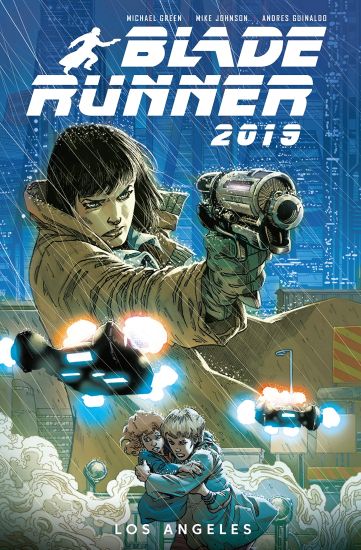
Winner of the 2020 SCRIBE AWARD for best Graphic Novel, this critically acclaimed graphic novel, is the official sequel to the cult classic 1982 science fiction film directed by Ridley Scott. Co-written by Michael Green, the Academy Award nominated screenwriter of Logan, Blade Runner 2049, and Murder on the Orient Express. The sins of the father are coming home. Ex-Blade Runner Ash and her charge, Cleo, have returned from the Off-World colonies to the rain-soaked dystopic future of Los Angeles, for a confrontation that will expose shocking secrets and reveal a terrifying conspiracy that could bring down an empire.
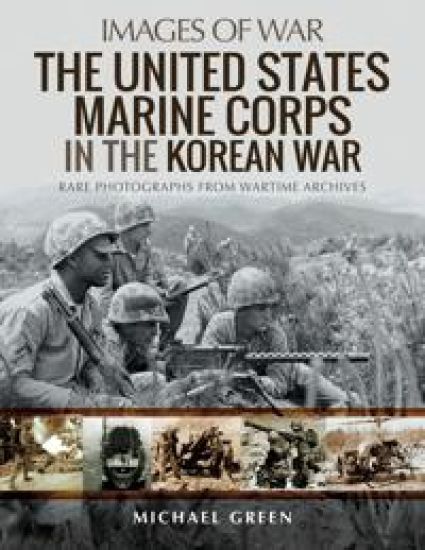
On June 25, 1950, the North Korean Army invaded South Korea. Among the US forces sent to South Korea was the 1st Marine Division. In September 1950, the Division audaciously landed deep behind enemy lines at Inchon port, throwing the North Korea Army into disarray. In November 1950, the Chinese Army invaded North Korea with eight divisions tasked with the destruction of the 1st Marine Division at the Chosin Reservoir. The Marines made a 78-mile fighting withdrawal in arctic conditions before being evacuated by the US Navy. In February 1951, the 1st Marine Division returned to combat assisting Eighth (US) Army to repulse five Chinese Army offensives over four months. By November 1951, the large-scale back and forth offensives operations by the opposing sides had ended, replaced by a stalemate which lasted until the 27 July, 1953 armistice. The bitter three-year conflict accounted for the death of 4,267 Marines with another 23,744 wounded. In classic Images of War style, expert author Michael Green describes the Marine Corps' outstanding contribution, organization, tactics, fighting doctrine and weaponry.
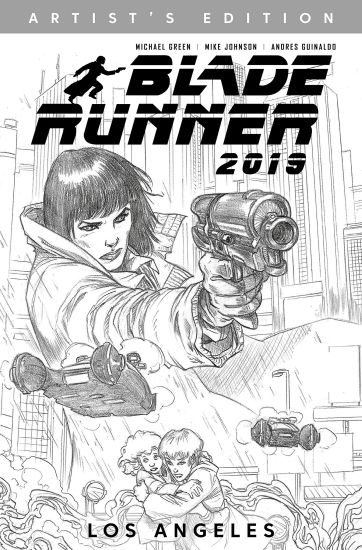
A 128-page collection of the black and white artwork from the smash-hit, critically acclaimed Blade Runner 2019 comic series drawn by artist, Andres Guinaldo, collecting together issues #1- 4 of the Los Angeles arc. This collection of Andres Guinaldo's artwork, previously unpublished in this form, includes never-before-seen layouts, roughs, thumbnails, sketches and cover roughs, giving a unique glimpse into the process of the artist. The collection also includes an interview between Andres and the writers Michael Green (screenplay writer of Blade Runner 2049, Logan, and Murder on the Orient Express) and Mike Johnson (New York Times-bestselling writer of Star Trek, Transformers, Superman/Batman and Picard).
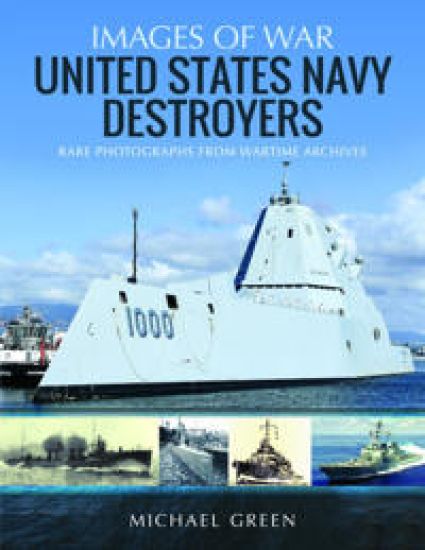
This classic Images of War book traces the key role played by destroyers of the United States Navy since the first order for 16 in 1898\. Prior to the USA's entry into the First World War a further 63 destroyers were commissioned and, due to the U-boat threat, 267 more were authorised by Congress once hostilities were joined. Between 1932 and Pearl Harbor ten new classes totalling 169 destroyers came into service. During the war years American shipyards turned out a further 334 vessels. Of the three classes, the 175 Fletcher-class were judged the most successful. The Cold War years saw the development of seven more classes. More recently 82 of the stealth shaped Arleigh Burke class have been ordered but the futuristic Zumwalt-class programme has been curtailed for cost reasons. Expert author Michael Green is to be commended for compiling this comprehensive account of the USN's impressive destroyer programme with its authoritative text and superb images.
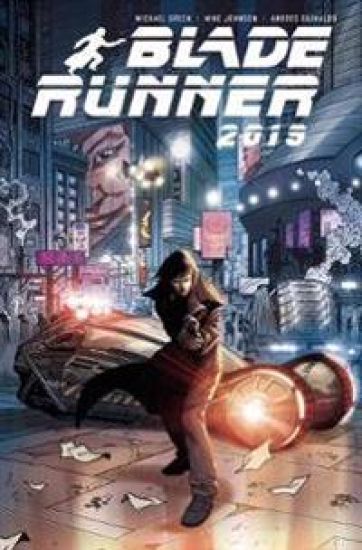
Return to the original world of Blade Runner 2019. From the rain soaked dystopic world of Los Angeles 2019 to the never-before-seen promised land of the Off-World colonies, Replicant-hating Blade Runner Ash' search for the runaway wife and child of a rich industrialist takes her where no other Blade Runner has ever gone before. Ash must deal with the life-changing after-effects of Titan Comics' Blade Runner 2019 storyline - but a powerful new threat puts her life in danger once more.
Huddersfield Drill Hall War Memorial 1914 to 1921
Scott Flaving; Michael Green
Valence House Publications
2020
pokkari
The Gospel according to Matthew is perhaps the most important single document of the New Testament, for in it we have the fullest and most systematic account of the birth, life, teaching, death and resurrection of the founder of Christianity, Jesus the Messiah. Michael Green shows how this very Jewish Gospel portrays the power and purpose of Jesus' life and work, which was to bring light to all nations. Matthew records Jesus as Son of God, Messiah, Son of David, Son of Man and supremely as God returning to Jerusalem as judge and redeemer. The consequences of this steady focus are as relevant now as then. We need Matthew's emphasis on the unity of God's revelation, old and new, its reaching on the life of discipleship and the meaning of the kingdom of heaven, and its insights into the people of the messiah, the end of the world and the universality of the Good News.
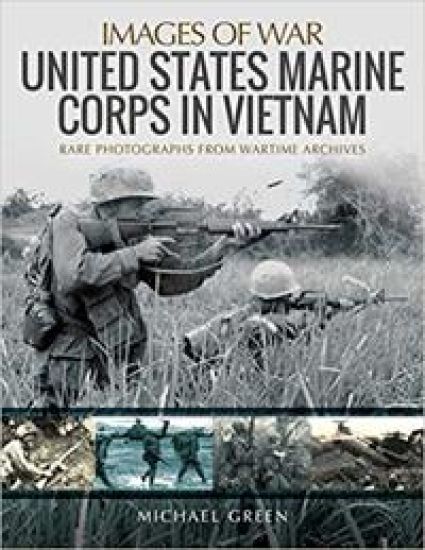
With the American-supported South Vietnamese government verging on collapse in early 1965, American President Lyndon Johnson decided to commit American conventional ground forces in the form of a United States Marine Corps (USMC) brigade of approximately 3,000 men on March 8, 1965. So began a massive and costly 10-year commitment. At its height in 1968, the USMC had 86,000 men in South Vietnam. Almost 500,000 Marines would eventually rotate in out of South Vietnam during their typical one-year tours of duty. In the end, the fighting during such well-known battles at Con Tien, Chu Lai, Hue, Khe Sanh and Dong Ha and thousands of now forgotten smaller-scale engagements would cost the USMC 13,070 killed in action and 88,630 wounded, more casualties than they suffered during the Second World War. In this book, well-known military historian Michael Green using hundreds of dramatic images tells the dramatic and gallant story of the Marines' contribution to an unwinnable war; the battles, their equipment, from rifles to helicopters and jets, and the strategy adopted by the Corps.
Experience the immortal poetry of the great Persian master paired with luminous illustrations “There is this matter of the light in my eyes. If you want to know the Friend, don’t expect elegant arguments! Demand a blessing from one who gives you joy.” —Hafiz (tr. Barks) “Hafiz is without peer!” exclaimed Goethe. Known as “The Tongue of the Hidden Mysteries,” Shams al-Din Muhammad Hafiz of Shiraz is the most revered of Persian poets. When the Sun of Infinite Reality dawned in his being, he poured forth mystic verse so sublime it touched the hearts of kings and commoners alike. Hafiz’s poems of intimate divine love spread through the East in his lifetime, then into the West, influencing such luminaries as Emerson, Brahms, Queen Victoria, Nietzsche, and Garcia Lorca. Today, nearly 700 years after his death, the unmatched genius and bold wit of Hafiz continues to ignite hearts and intoxicate souls everywhere. The Illuminated Hafiz brings together vivid translations by Coleman Barks, Robert Bly, Omid Safi, Meher Baba, Peter Booth, and others with the luminous art of Michael and Saliha Green, weaving them into a stunning contemporary presentation in the tradition of classical Persian illuminated manuscripts and unveiling the mysteries of the path of love. Come, raise a cup! Join with Hafiz and his incomparable love poems in a holy revel on the journey into light.
H. D.’s poetry continues to inspire generations of readers. Bringing together a number of never-before-published essays, this new collection of writings introduces H. D.’s compelling perspectives on art, myth, and the creative process. While H. D. is best known for her elemental poetry, which draws heavily on the imagery of natural and ancient worlds, her critical writings remain a largely underexplored and unpublished part of her oeuvre. Crucial to understanding both the formative contexts surrounding her departure from Imagism following the First World War and her own remarkable creative vision, Notes on Thought and Vision, written in 1918, is one of the central works in this collection. H. D. guides her reader to the untamed shores of the Scilly Isles, where we hear of powerful, transformative experiences and of her intense relationship with the paintings of Leonardo da Vinci. The accompanying essays, many published here for the first time, help color H. D.’s astute critical engagement with the past, from the city of Athens and the poetry of ancient Greece. Like Letters to a Young Painter (2017), also published in the ekphrasis series, this collection is essential reading for anyone interested in the creative process.
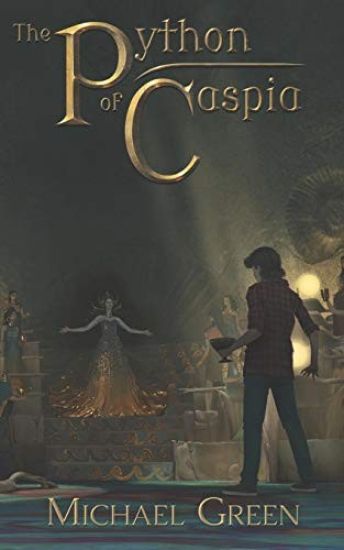
Letty, her friends, and a quarrelsome blue mouse, are hot on Andy's trail. Finally within reach ofDegoskirke, the greatest free city in the Netherscape, Letty must repay her debt by rescuing Andy. Buthow can they find one boy in a towering city of millions, teeming with enterprising mice, raucous goblins, and philosophers hungry for aggressive debate? Somewhere amid the winding streets and cheeringcrowds, in a city supposedly free of ryle and Seers, an unlikely pair has arrived. To prevent the city'sdestruction, Andy has allied with his captor, Ziesqe. But saving the city means enslaving it first. Abovethem all, Caspian, the failed God, usurper of countless Seer bodies, prepares to walk among the livingonce again
Blade Runner 2019 Volume 1
Michael Green; Mike Johnson
Titan Comics
2019
pokkari
Halvin toimitettuna 19,50 €
Return to the original world of Blade Runner 2019. Welcome to the rain soaked world of Los Angeles 2019 - a dystopic world of Replicants, Spinners and hardboiled future noir. There's a new Blade Runner in town, and she's out for blood. Replicant blood. This officially sanctioned sequel comic to the original Blade Runner film is written by Michael Green, the screenwriter of Blade Runner 2049.
A few weeks ago, Letty was a typical girl. She was popular, pretty, and her biggest concern was her reputation at school. But after being kidnapped, brainwashed, and finally rescued by Andy-the boy she once tormented-she has discovered the truth: she, Andy, and many like them are Seers, members of an ancient line, destined to defend humanity from the ryle. Now Andy needs her help. While Letty and her Caspian allies escape to the safety of the surface, Andy becomes prisoner to Ziesqe the Just, a ryle determined to use Andy to evade death and betray his race. With Andy in his clutches, and stalked by a ryle hunter tasked with retribution, Ziesqe races to achieve his ambition before Andy slips his chains, or his own blood is spilled. Letty has uncovered her power, and she must lead her friends back to the Netherscape-an underworld teeming with colossal insects and precocious mice-to save the boy who saved her.
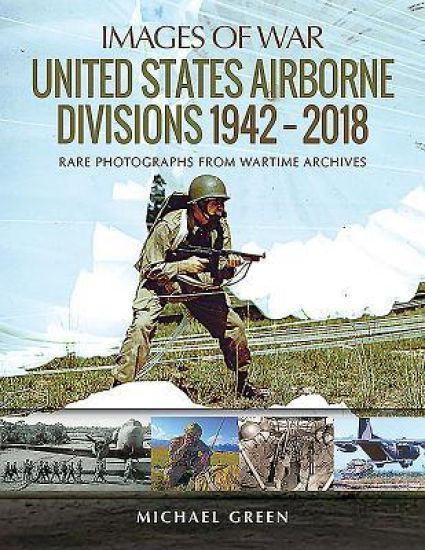
In 1942 the 82nd and 101st Airborne Divisions were formed and three more followed. 17th and 92nd (All American Division) and 101st (Screaming Eagles) fought in Sicily, D-Day, MARKET GARDEN and the Rhine Crossing (VARSITY). The 11th served in the Far East. The 13th did not see combat. Only the 82nd survived the post-war cull. The Screaming Eagles were reactivated in 1956 and both divisions served in Vietnam with the 101st becoming a helicopter delivered airmobile' division in 1968 before being re-designated an air assault' division in 1974. As this superbly illustrated book describes, both 82nd and 101st earned their reputations as crack' divisions at the forefront of US operations and military interventions, be it Grenada (URGENT FURY), Panama (JUST CAUSE), the Gulf Wars and most recently Afghanistan (ENDURING FREEDOM). Thanks to the Author's knowledge and research, this Images of War book gives the reader a full insight into the battles and the men and their equipment that have made these divisions the elite of the US Army.
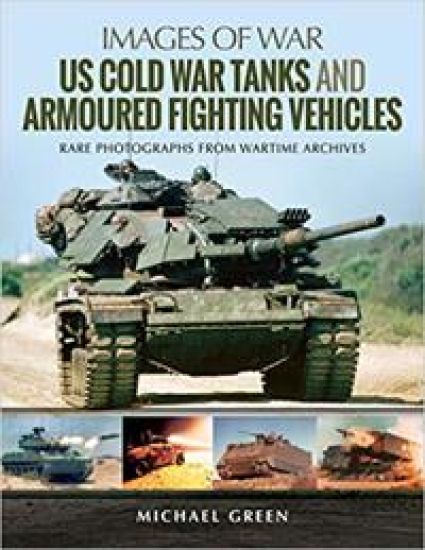
To counter the Soviet threat and that of their client States during the Cold War years 1949-1991, the American military deployed an impressive range of main battle tanks (MBTs) and armoured fighting vehicles (AFVs). The Patton series of medium MBTs (including the M46, M47 and M48) supplemented by the M103s Heavy Tank initially formed the core of the US tank fleet. In 1960 the M60 MBT with its British designed 105mm gun entered service and, in turn, was replaced by the M1 Abrams in 1980. In support were armoured reconnaissance vehicles, progressively the M41 bull dog (1951); the M114 (1961), the M551 Sheridan (1967) and M3 Bradley Cavalry Fighting Vehicle (1981). The armoured personnel carrier (APC) range included the ubiquitous M113 and its replacement the M2 Bradley, cousin of the M3. Expert author Michael Green covers all these vehicles and their variants in this informative and superbly illustrated Images of War series work.
Andy Vanavarre has it rough. In class, he's the target of constant ridicule, commanded by Letty, bully extraordinaire. But today something's different: he stood up for the new kid, challenged his classroom tormentor, and-if that's not enough-his eyes are changing color. Andy soon discovers that he is destined for a role in a timeless conflict; disguised and undetected, humanity's greatest threat culls the Seers. These potential champions are humankind's only defense-distinguished by their violet eyes, and the penetrating sight which they provide. After an ill-fated trip to the optometrist, Andy learns that Letty, another unwitting hero, has been captured by the enemy, and taken to the Netherscape. From floating cities to butler crabs, Andy encounters wonders and horrors that he could never have imagined. The trail of his one-time bully leads him to the city of Caspia, and to its mistress, the immortal Pythia: an oracle who exchanges prophecies for Seer children, and to whom Letty is now belongs. But Pythia has her own agenda, and soon Andy finds that his body-and his will-may not be his alone. Surrounded by enemies who hunt them by instinct, and allies morally shattered by endless conflict, Andy and Letty must retain their freedom-and their lives-as they race to flee the Netherscape.
Keto Diet Pressure Cooker Cookbook: Easy and Fast Ketogenic Recipes
Michael Green
Independently Published
2019
nidottu
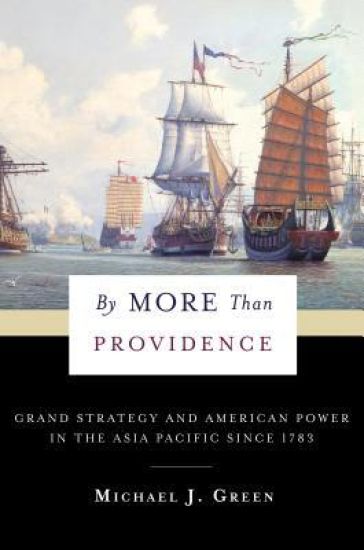
Soon after the American Revolution, certain of the founders began to recognize the strategic significance of Asia and the Pacific and the vast material and cultural resources at stake there. Over the coming generations, the United States continued to ask how best to expand trade with the region and whether to partner with China, at the center of the continent, or Japan, looking toward the Pacific. Where should the United States draw its defensive line, and how should it export democratic principles? In a history that spans the eighteenth century to the present, Michael J. Green follows the development of U. S. strategic thinking toward East Asia, identifying recurring themes in American statecraft that reflect the nation's political philosophy and material realities. Drawing on archives, interviews, and his own experience in the Pentagon and White House, Green finds one overarching concern driving U. S. policy toward East Asia: a fear that a rival power might use the Pacific to isolate and threaten the United States and prevent the ocean from becoming a conduit for the westward free flow of trade, values, and forward defense. By More Than Providence works through these problems from the perspective of history's major strategists and statesmen, from Thomas Jefferson to Alfred Thayer Mahan and Henry Kissinger. It records the fate of their ideas as they collided with the realities of the Far East and adds clarity to America's stakes in the region, especially when compared with those of Europe and the Middle East.