Kirjailija
Michael Gross
Kirjat ja teokset yhdessä paikassa: 33 kirjaa, julkaisuja vuosilta 1981–2026, suosituimpiin kuuluu Spillage. Vertaile teosten hintoja ja tarkista saatavuus suomalaisista kirjakaupoista.
Nimi esiintyy myös muodoissa: Michael Groß
33 kirjaa
Kirjojen julkaisuvuodet: 1981–2026.
Vorwort von Dr. Henry Jekyll Als Naturwissenschaftler hat unsereiner ja viel zu schreiben. Fachpublika tionen, Anträge auf Fördermittel etc. Im Laufe eines Wissenschaftlerlebens kommen leicht 200 Publikationen zusammen, in extremen Fällen können es auch an die 1000 werden. Ein gewisser Yuri Struchkov in Moskau war in den Jahren 1981-1990 Koautor von insgesamt 948 Publikationen, das macht knapp vier Tage für jede. Geht es nach der Resonanz, so wird er jedoch von dem Aids-Forscher Robert Gallo übertroffen, der in demselben Zeitraum zwar «nur» 428 Ver öffentlichungen erreicht hat, dessen Arbeiten aber im Schnitt 86mal von anderen Wissenschaftlern zitiert wurden (Struchkov kommt nur auf drei Zitierungen pro Publikation). Der Durchschnitt von 86 Zitierungen pro Veröffentlichung ist zwar ein traumhafter Spitzenwert, verglichen mit der Resonanz anderer Arbeiten. Er demonstriert aber gleichzeitig auch, wie klein unsere Leserschaft ist. Selten schreiben wir etwas, das mehr als 100 Menschen (weltweit) gewillt sind zu lesen oder auch nur verstehen könnten, wenn sie es lesen wollten. Wer versucht, für ein größeres Publikum zu schreiben, macht sich in unserer Zunft verdächtig, die Wissenschaft zu trivialisieren. Wer sich auf das Niveau des Laienpublikums herabläßt, ist ja vielleicht gar kein richtiger Wissenschaftler mehr, sondern nur noch ein Wissenschaftsjournalist. Ich muß Ihnen gestehen, mein alter ego, ein gewisser Mr. Hyde, ist auch so einer. Nachts, wenn alles schläft, holt er seinen tragbaren Computer hervor und frönt der niederen Journaille. Mir soll's ja recht sein, wenn es ihm Spaß macht.

Nach einem einführenden Kapitel über die Definition von Leben beginnt die Erkundung des Themas »Leben im Universum« mit der Geschichte des Universums, unter besonderer Berücksichtigung der Umstände, die die Entwicklung von Leben ermöglicht haben. Es fokussiert dann in ähnlicher Weise auf die Geschichte unseres Sonnensystems und der Erde. Im mittleren Teil des Buchs geht es um das Leben auf der Erde: wie konnte es entstehen, sich ausbreiten, und mehr als drei Milliarden Jahre lang überleben? Welche seiner Eigenschaften sind Zufall, und welche Notwendigkeit? Im letzten Drittel des Buchs werden die Erkenntnisse aus der irdischen Biologie angewandt auf die Suche nach Leben im übrigen Sonnensystem (Mars, Monde des Jupiter und Saturn) und nach lebensfreundlichen Planeten im Rest des Universums.
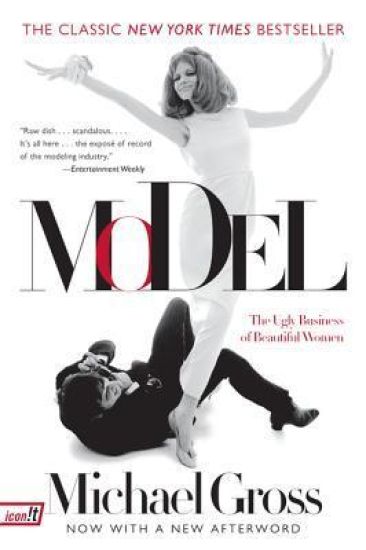
Investigative journalist Michael Gross delves into the history of models and takes us into the private studios and hidden villas where models play and are preyed upon, going beyond modeling's carefully constructed facade of glamour to expose the scandal and untold truths that permeate the seemingly glamorous business. Here for the first time is the complete story of the international model business--and its evil twin: legalized flesh peddling. It's a tale of vast sums of money, rape both symbolic and of the flesh, sex and drugs, obsession and tragic death. At its heart is the most unholy combination in commerce: beautiful, young women and rich, lascivious men. Fashion insider Michael Gross has interviewed modeling's pioneers, survivors, and hangers-on, and he tells the story of the greats: Lisa Fonssagrives; Anita Colby, Candy Jones; Dorian Leigh and her sister Suzy Parker; Jean Shrimpton and Twiggy; Veruschka and Lauren Hutton; and today's supermodel trinity, Christy, Naomi and Linda.
Why music doesn't add up, what The Simpsons can teach us about science, whether Juana la Loca wasn't crazy after all, and what's behind the gaseous veil of Saturn's moon Titan - these are just some of the questions addressed in the more than 70 reviews and essay reviews from the years 2000 to 2009 collected in this volume. They cover books about science, ranging from the academic to the popularized kind, but there are also books about cultural topics and even a few novels scattered in for good measure. Most of these books reviewed haven't found a massive amount of attention, although some of them should have, at least in the reviewer's opinion. And even if the book under review wasn't all that good, the format of an essay review allows the author to have a go at presenting the subject matter his own way. All in all, a reflection of what happened during the noughties in the worlds of science and culture, and off the beaten track.
740 Park: The Story of the World's Richest Apartment Building
Michael Gross
Crown Publishing Group
2006
nidottu
Halvin toimitettuna 25,40 €
Provides a close-up look at one of the world's most coveted addresses, the apartment building at seventy-four Park Avenue that was constructed by Jacqueline Kennedy Onassis's grandfather and has housed the Bouviers, Rockefellers, Saul Steinberg, Ronald O. Perelman, and other legendary icons. Reprint. 25,000 first printing.
Genuine Authentic: The Real Life of Ralph Lauren
Michael Gross
HARPER PERENNIAL
2004
nidottu
Halvin toimitettuna 23,20 €
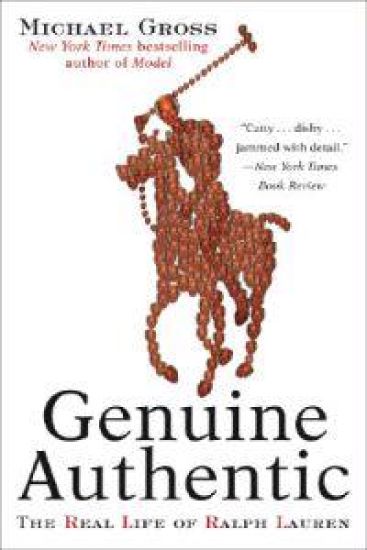
A fascinating and comprehensive look into the life of American fashion designer Ralph Lauren, now with an afterword." Deep-dish...sharp-clawed...honestly admiring."--New York TimesThere are at least two Ralph Laurens. To the public he's a gentle, modest, yet secure and purposeful man. Inside the walls of Polo Ralph Lauren, though, he was long seen by some as a narcissist, an insecure ditherer, and, at times, a rampaging tyrant. Michael Gross, author of the bestsellers Model and 740 Park, lays bare the truths of this fashion emperor's rise, and reveals not only the secrets of his meteoric success in marketing our shared fantasies, but also a widely unknown side that's behind the designer's chic fa ade.
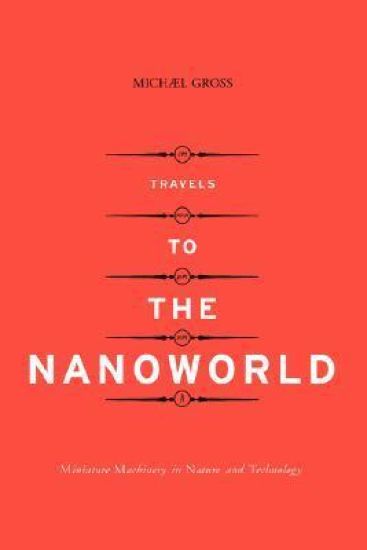
Our lives are about to be changed by new technologies that operate on a scale too small to be seen by even the most powerful optical microscopes. Devices measured in nanometers-billionths of a meter-have set off a nanotechnology revolution. In Travels to the Nanoworld , Michael Gross takes us deep into this miniature universe and describes natural processes and new technologies that will make modern machines look like relics from the Stone Age. Starting with the model of the living cell, whose vital processes are directed and carried out by structures with dimensions on the nanometer scale, Gross shows how biochemists are beginning to understand the mechanisms of the "nanotechnology of nature." Soon science will have the knowledge and technology to generate artificial systems that will perform similar tasks, and through them will find new treatments for disease, substitutes for toxic waste, and alternatives to carbon fuel.
Can life exist in the Antarctic ice, in the deep subsurface, in dilute sulfuric acid, in hot springs-even on Mars? What degree of high or low temperature, pressure, or salt concentration can living cells tolerate? In recent years, scientists have discovered many single-cell creatures that exist in-in fact, are perfectly adapted to-extreme environments that were considered uninhabitable just one or two decades ago. In Life on the Edge , author Michael Gross explores how microorganisms adapt to their hostile environments and how they affect our current definition of the "normal" conditions for life. He also describes the vast implications of these extremophiles and other amazing creatures-from potential breakthroughs in medicine and biotechnology to the search for life elsewhere in the universe.
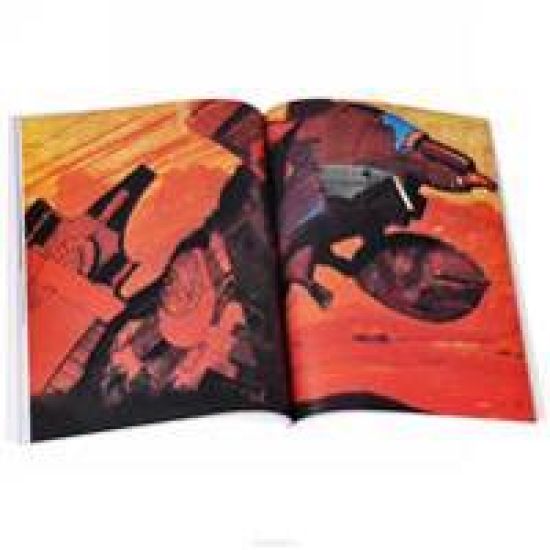
The Book of Alien is the definitive companion to the classic movie, taking you right behind the scenes of the production, including interviews with legendary designer HR Giger and director Ridley Scott. Lavishly illustrated with scores of stunning stills and pieces of production art unpublished elsewhere, the book graphically demonstrates just why the movie won an Oscar for its visual effects.
The Custom-Made Child?
Helen B. Holmes; Betty B. Hoskins; Michael Gross
Humana Press Inc.
1981
nidottu
Women most fully experience the consequences of human reproductive technologies. Men who convene to evaluate such technologies discuss "them": the women who must accept, avoid, or even resist these technologies; the women who consume technologies they did not devise; the women who are the objects of policies made by men. So often the input of women is neither sought nor listened to. The privileged insights and perspectives that women bring to the consideration of technologies in human reproduction are the subject of these volumes, which constitute the revised and edited record of a Workshop on "Ethical Issues in Human Reproduction Technology: Analysis by Women" (EIRTAW), held in June, 1979, at Hampshire College in Amherst, Massachusetts. Some 80 members of the workshop, 90 percent of them women (from 24 states), represented diverse occupations and personal histories, different races and classes, varied political commitments. They included doctors, nurses, and scientists, lay midwives, consumer advocates, historians, and sociologists, lawyers, policy analysts, and ethicists. Each session, however, made plain that ethics is an everyday concern for women in general, as well as an academic profession for some.
The Custom-Made Child?
Helen B. Holmes; Betty B. Hoskins; Michael Gross
Humana Press Inc.
1981
sidottu
Women most fully experience the consequences of human reproductive technologies. Men who convene to evaluate such technologies discuss "them": the women who must accept, avoid, or even resist these technologies; the women who consume technologies they did not devise; the women who are the objects of policies made by men. So often the input of women is neither sought nor listened to. The privileged insights and perspectives that women bring to the consideration of technologies in human reproduction are the subject of these volumes, which constitute the revised and edited record of a Workshop on "Ethical Issues in Human Reproduction Technology: Analysis by Women" (EIRTAW), held in June, 1979, at Hampshire College in Amherst, Massachusetts. Some 80 members of the workshop, 90 percent of them women (from 24 states), represented diverse occupations and personal histories, different races and classes, varied political commitments. They included doctors, nurses, and scientists, lay midwives, consumer advocates, historians, and sociologists, lawyers, policy analysts, and ethicists. Each session, however, made plain that ethics is an everyday concern for women in general, as well as an academic profession for some.
Birth Control and Controlling Birth
Holmes Helen B.; Hoskins Betty B.; Michael Gross
Humana Press Inc.
1981
sidottu
Women most fully experience the consequences of human reproductive technologies. Men who convene to evaluate such technologies discuss Itthem ": the women who must accept, avoid, or even resist these technologies; the women who consume technologies they did not devise; the women who are the objects of policies made by of women is neither sought nor listened to. The men. So often the input and perspectives that women bring to the privileged insights consideration of technologies in human reproduction are the subject of these volumes, which constitute the revised and edited record of a Workshop on "Ethical Issues in Human Reproduction Technology: Analysis by W omen" (EIR TAW), held in June, 1979, at Hampshire College in Amherst, Massachusetts. Some 80 members of the workshop, 90 percent of them women (from 24 states), represented diverse occupations and personal histories, different races and classes, varied political commitments. They included doctors, nurses, and scientists, lay midwives, consumer advocates, historians, and sociologists, lawyers, policy analysts, and ethicists. Each session, however, made plain that ethics is an everyday concern for women in general, as well as an academic profession for some.
Birth Control and Controlling Birth
Helen B. Holmes; Betty B. Hoskins; Michael Gross
Humana Press Inc.
1981
nidottu
Women most fully experience the consequences of human reproductive technologies. Men who convene to evaluate such technologies discuss Itthem ": the women who must accept, avoid, or even resist these technologies; the women who consume technologies they did not devise; the women who are the objects of policies made by of women is neither sought nor listened to. The men. So often the input and perspectives that women bring to the privileged insights consideration of technologies in human reproduction are the subject of these volumes, which constitute the revised and edited record of a Workshop on "Ethical Issues in Human Reproduction Technology: Analysis by W omen" (EIR TAW), held in June, 1979, at Hampshire College in Amherst, Massachusetts. Some 80 members of the workshop, 90 percent of them women (from 24 states), represented diverse occupations and personal histories, different races and classes, varied political commitments. They included doctors, nurses, and scientists, lay midwives, consumer advocates, historians, and sociologists, lawyers, policy analysts, and ethicists. Each session, however, made plain that ethics is an everyday concern for women in general, as well as an academic profession for some.