

Kirjailija
Michael Grzonka
Kirjat ja teokset yhdessä paikassa: 5 kirjaa, julkaisuja vuosilta 2015–2025, suosituimpiin kuuluu Lebensdienlich wirtschaften. Vertaile teosten hintoja ja tarkista saatavuus suomalaisista kirjakaupoista.
5 kirjaa
Kirjojen julkaisuvuodet: 2015–2025.
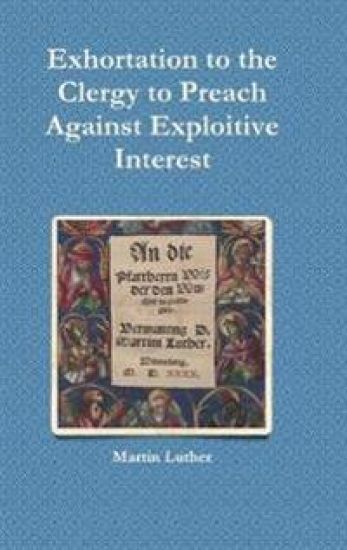
Exhortation to the Clergy to Preach Against Exploitive Interest (Usury)
Martin Luther; Michael Grzonka
Lulu.com
2020
sidottu
Martin Luther is known for inspiring the German Protestant Reformation in 1517 and giving birth to Protestantism. Beyond mere theology, Luther also frequently wrote about the economic conditions in which he lived, often criticizing the conditions the budding medieval money economy created for his less-fortunate contemporaries. This Exhortation of 1540 confirms Luther's keen understanding of the interplay between economic choice and its necessities far exceeding the limited grasp of the economy many will admit for a "mere monk". In reaction to an inactive government, Luther urges clergy to confront exploitive lenders (the usurers). Should these "devils in human shape" refuse to repent, Luther urges pastors to practically excommunicate unrepentant usurers. Luther's pastoral view on economy strikes us moderns as utterly naive, but arguably this is precisely what's missing from our contemporary discourse of a more just economy. For discounts and more visit us at www. LutherBibleStudies.com!
Lutherans teach that salvation is a free, unearned gift from God, bestowed on humans if only they believe in Him. This was earth-shattering, radical news at a time, and for many it still is today! The Catholic establishment abhorred Luther's teaching of salvation without any "good works". If people do not work to earn salvation, so they assured, this would promote idleness and cause all kinds of societal ills. Criticism grew quickly. In 1520 Luther responds: Good works are still done by believers. But these Good Works follow salvation and do not cause it. Good Works, Luther assured, are happily done by the already-rescued soul in gratitude - not to earn its salvation. The entire concept of "vocation", of one's profession, of one's "job" as a calling from God, originates here. Writing to be easily understood by the common man, Luther's fresh and engaging style has lost nothing of its clarity and vigor: we "moderns" readily understand it. And his message is as relevant as ever.
When Martin Luther nailed his Ninety-five Theses on the door of the Castle Church in 1517, the hammering in Wittenberg was heard across Europe. As we commemorate this event five hundred years later, the echos are still reverberating throughout Western civilization. This brief backgrounder explains for Lutherans and non-Lutherans why the Protestant reformation happened, what it meant at the time, and why it still remains relevant today - half a millennium later. The book focuses on the historic roots and context of the Reformations in Germany and England, as well as the key spiritual concepts behind them. Over 300 footnotes serve as pointers to original sources, many available online and for free. A kick-starter for your own Reformation research!
On Worldly Authority - to What Extent it Should be Obeyed
Martin Luther; Michael Grzonka
Lulu.com
2015
nidottu
The spiritual awakening of the German Reformation raised the bar for what Protestants expected from their rulers. With another Presidential election campaign on the way, today's believers also want to know: What is a politician's "job description"? What is a ruler or politician to do if he were himself a Christian, and willing to rule his land in a god-pleasing way? Luther elaborated on the subject of proper rule in a series of sermons preached in Wittenberg in October 1522. He later condensed these sermons into the treatise presented in this study guide. Grounding his logic in scripture alone, Luther wrote to be easily understood by the common man. Luther's fresh and engaging writing style has lost nothing of its clarity and vigor, and it is still just as easily understood by today's readers. This Study Guide makes it easy to study Luther's tract in a group setting. It features nine Lessons with Review and Study Questions, and a section with Leader's Notes. Order your review copy today!